For most people shopping for space heater-cooler combos, the DREO 42-inch heater and fan combo is the strongest pick: it combines 1,500 W of heat with 12 fan speeds, 120° oscillation and a stated 25 dB noise level. Its fan moves air, though; it does not provide air conditioning.
Key takeaways
Choose the DREO for the broadest stated fan and heater settings in this group.
A fan-only mode moves air; it does not lower the room’s temperature like an air conditioner.
A 1,500 W heater uses 1.5 kWh per hour at full power.
Plug an electric heater directly into a wall outlet and keep it 3 feet from combustibles.
Treat stated room coverage as a guide; insulation, ceiling height and outdoor temperature change results.
A heater-fan combo can save floor space and store away one seasonal appliance. The trade-off is that fan mode circulates room air rather than cooling it like an air conditioner.
The product details below support four picks. Choose by the room and the job you need the unit to do, not by claims of instant warmth or whole-room cooling.
Best Space Heater-Cooler Combos
#1Best Overall
DREO 42-Inch Heater and Fan
Best for Year-round use in bedrooms and offices
The DREO pairs 1,500 W of heat with 12 cooling fan speeds, so you get more airflow options than the simpler two-mode combos. Its 120° oscillation and stated 25 dB noise level suit a room where you want air moving without much sound.
Best for Small rooms where you want basic heat and airflow
Four thermostat settings—70°F, 75°F, 80°F or 85°F—make the OYLUS straightforward to set without dialing in a temperature. It also offers low and high fan modes, 40° oscillation and a remote, a practical mix for personal or supplemental use.
Best for Homes that prefer a bladeless tower-style combo
The KIAMI combines 1,400 W of heat with eight fan speeds and 80° oscillation, giving you a wider choice of airflow than a basic two-speed unit. Its timer runs from 1 to 9 hours, and the listed safety features include tip-over and overheat protection.
Heat output 1,400 WCooling fan power 40 WFan speeds 8Oscillation 80°Noise 40–50 dB
Why it made the cut
Eight fan speeds
80° oscillation
1-to-9-hour timer
Good to know
Listed noise level is 40–50 dB
Heating output is 1,400 W
Skip it if Skip it if low noise is your priority; the stated range is higher than the quieter picks here.
Best for Desk-side warmth with occasional fan-only airflow
This compact ceramic heater offers 1,500 W of heat, a thermostat and a fan mode, so it can provide personal warmth and some air movement in a small space. Its 35 dB stated noise level and remote suit desk or bedroom use, but the product data doesn’t specify fan speeds or oscillation.
Heat output 1,500 WFan mode YesNoise 35 dBTimer 24 hoursListed coverage Up to 200 sq.ft
Why it made the cut
1,500 W heat output
Thermostat and remote
Fan mode
Good to know
No fan-speed count or oscillation data
Fan mode isn’t air conditioning
Skip it if Skip it if your main goal is strong, adjustable summer airflow rather than compact supplemental heat.
Best for Built-in or wall-mounted supplemental heat with flame effects
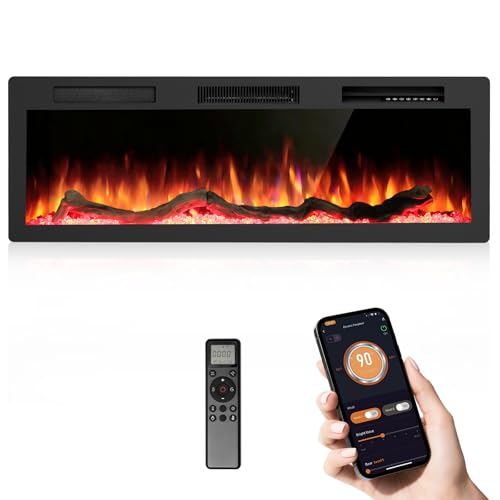
This electric fireplace offers 750 W and 1,500 W heat modes, with supplemental zone heating listed for up to 400 square feet. It has adjustable flame effects and several control options, but the product data doesn’t describe a cooling fan mode, so it isn’t a true heater-cooler combo.
Heat output 750 W / 1,500 WListed supplemental heating ar Up to 400 square feetTemperature range 59–95°FDimensions 50 in L × 17.32 in H × 5.71 in W
Why it made the cut
750 W and 1,500 W heat modes
Wall-mounted or recessed installation
Remote, touch, app and voice controls
Good to know
No cooling fan mode listed
Requires wall mounting or a suitable recessed opening
Skip it if Skip it if you want one appliance to provide both heat and cooling airflow.
An air cooler and heater combo usually means an electric heater with a fan-only mode, not a machine that cools air like an air conditioner. The fan can make you feel cooler by moving air across your skin, but it doesn’t remove heat from the room.
Model
Fan mode
Oscillation
DREO 42-inch
12 speeds
120°
OYLUS
2 modes
40°
KIAMI
8 speeds
80°
R.W.FLAME
Fan mode
Not specified
Fan settings and oscillation listed in the product data.
For more on the difference between a fan mode and actual cooling, see our explainer on heater-cooler combo units. The DREO gives you the most fan-speed choices among these listed models; OYLUS has fewer speeds, while KIAMI falls between them. R.W.FLAME includes a fan mode, but its data doesn’t specify speeds or oscillation.
Fan mode isn’t A/C
Fan-only mode circulates room air. It won’t lower the room’s temperature or pull heat outdoors; use an air conditioner when you need actual cooling.
From HeaterGuides · our own guidePage 6: heat only the rooms you use. Page 10 covers space-heater safety.Winter Heating Bill CutterSee what every heater in your home really costs, heat the rooms you use, and cut the waste in 30 days.Cost-per-hour tables for every heaterThermostat schedule and draft-proofing planRunning-cost and bill calculator (Excel)$14.99$9.99Get it for $9.99See what's inside and watch the 2-minute video →14-page printable PDF + Excel calculator · instant download · 30-day refund
Match Heat Output to the Room
For the best small space heaters among these combos, start with heat output: the DREO pairs 1,500 W of heat with 12 fan speeds and 120° oscillation. Its manufacturer-stated 40-foot airflow claim describes air movement, not a guarantee that it will heat a room that far away.
A 1,500 W setting is common for plug-in heaters; OYLUS offers both 750 W and 1,500 W settings, while KIAMI lists 1,400 W of heat. R.W.FLAME states coverage of 200 sq ft, but treat that as a product claim, not a universal sizing rule. Product data gives no room-size figure for OYLUS, DREO or KIAMI.
A Room With Drafts
Say your small room is used as a home office and has a drafty window. A heater’s wattage tells you its maximum heat output, but insulation, drafts and ceiling height affect how much that heat can do. Check those conditions before treating any stated coverage as a promise.
RoomA hypothetical small home office
CheckDrafts and insulation
UseSupplemental heat while occupied
For a small room heater, compare the heat setting and thermostat along with fan speeds and oscillation; airflow options help distribute warmth but don’t add heating power. Electric heaters for garages are a different decision: these indoor combos can provide supplemental heat in an occupied space, but they aren’t a substitute for correctly sized, garage-rated heat in a cold or poorly insulated garage.
Estimate the Running Cost
A typical plug-in space heater uses up to 1,500 watts while its heating element is on; at an assumed 17 cents per kWh, eight hours at full power costs about $2.04. The calculation is watts ÷ 1,000 × hours × electricity price per kWh. For a 1,500 W heater, that’s 1.5 × 8 × $0.17.
Heater
Watts
Per hour
Per day (8 h)
Per month (30 days)
1,500 W space heater
1,500 W
26¢
$2.04
$61.20
Calculated at 17¢ per kWh. Assumes the heater runs at full rated power for 8 hours every day and electricity costs $0.17 per kWh.
A thermostat can lower the average cost by switching the heating element off after the room reaches its set temperature. While the element is actively heating, though, the unit still draws its rated wattage; cycling changes how long it runs, not its draw while on.
An electric heater saves money only if its use replaces more expensive heating or avoids heating unused space; a combo doesn’t automatically use less energy than separate appliances. Your result depends on how long you run it, how often its thermostat cycles, your electricity rate and which devices it replaces. Use your utility bill’s price per kWh for a closer estimate.
Check Safety Before You Plug In
Safe space heaters plug directly into a wall outlet, sit at least 3 feet from anything that can burn and have the right safety features; heaters become dangerous when heat, electrical load or tip-over risk goes unmanaged.
Before Switching It On
Plug the heater straight into a wall outlet, never an extension cord or power strip.
Keep at least 3 feet of clearance around the heater, including from bedding, curtains and furniture.
Check the manual and product label for tip-over and overheat protection.
Look for a UL, ETL or CSA listing on the product or its documentation.
Use it only while you’re awake and at home unless the manufacturer says that specific model is designed for unattended use.
The safest space heaters are listed by a recognized testing organization and include tip-over and overheat protection, but those features don’t make an unsafe setup safe. Of the products in this guide, only R.W.FLAME’s supplied product data explicitly states ETL certification; don’t assume the others are certified just because they list safety features.
A 1,500 W heater draws about 12.5 A on a 120 V supply, so it can overload a circuit shared with other high-wattage appliances. If the plug or outlet becomes hot, stop using the heater and have the outlet checked; don’t keep running it to see if the heat goes away.
Stop If the Outlet Gets Hot
Unplug the heater if you can do so safely, and don’t use that outlet again until the cause has been checked. A hot plug or outlet can signal a loose or overloaded connection.
Choose Your Next Step
Choose an electric heater with a thermostat by the controls you’ll actually use; a programmable room heater or smart space heater is only a good fit if its own specifications confirm the scheduling and app features you want. Product data doesn’t establish programmable scheduling for every model.
1
Measure the room
Check the floor area and use the coverage figure as a guide, not a promise of even heat in every layout. R.W.FLAME states coverage of 200 sq ft and a noise level of 35 dB.
2
Check the outlet and circuit
Confirm the outlet is suitable and what else shares its circuit. Plug the heater directly into a wall outlet, not an extension cord or power strip.
3
Choose the controls
Pick DREO for the most stated fan-speed and oscillation options, OYLUS for selectable 750 W or 1,500 W heat and four thermostat settings, or KIAMI for eight fan speeds. Compare timer and control details on the specific model before buying; don’t assume every combo has a schedule.
4
Verify the safety details
Check the model’s listing, tip-over and overheat protection, and the manufacturer’s safety instructions. Read the manual before relying on how its timer or thermostat behaves.
5
Set it in place
Position the heater with at least 3 feet of clearance from anything that can burn, then follow the manual’s placement instructions.
Check Before You Set a Timer
A timer may shut a unit off without letting you program when it starts. Confirm the exact behavior in the model’s specifications and manual before planning around it.
Frequently Asked Questions
How many watts does a space heater use?
Most plug-in electric space heaters draw up to 1,500 W on high, while lower heat settings use less. Check the rating label for the exact draw; fan-only mode generally uses far less than the heating element.
What should I look for in an electric heater with a thermostat?
Choose a model with a thermostat you can set in clear temperature increments, plus tip-over and overheat protection. A thermostat cycles the heating element to maintain the set temperature; it doesn’t make the heater produce more heat than its rated wattage.
Are space heaters dangerous if they run overnight?
They can be, so don’t run one while you sleep unless the manufacturer says that specific model is designed for unattended overnight use. Keep it at least 3 feet from anything that can burn, plug it directly into a wall outlet, and don’t use a damaged cord or heater.
Can a programmable room heater reduce electricity use?
Yes, if its schedule lowers the set temperature or turns the heater off when you don’t need heat. The savings depend on how long it avoids running; programming won’t reduce the electricity used while the heater is actively producing the same amount of heat.
Before you go · a welcome giftGet the Winter Heating Bill Cutter for $4.99See what every heater in your home really costs, heat the rooms you use, and cut the waste in 30 days. Normally $14.99; your welcome price saves $10.00. We'll email your link right now.or buy it now for $9.99 without the gift →One email with your link now. We never share your address.



 Winter Heating Bill CutterSee what every heater in your home really costs, heat the rooms you use, and cut the waste in 30 days.Cost-per-hour tables for every heaterThermostat schedule and draft-proofing planRunning-cost and bill calculator (Excel)