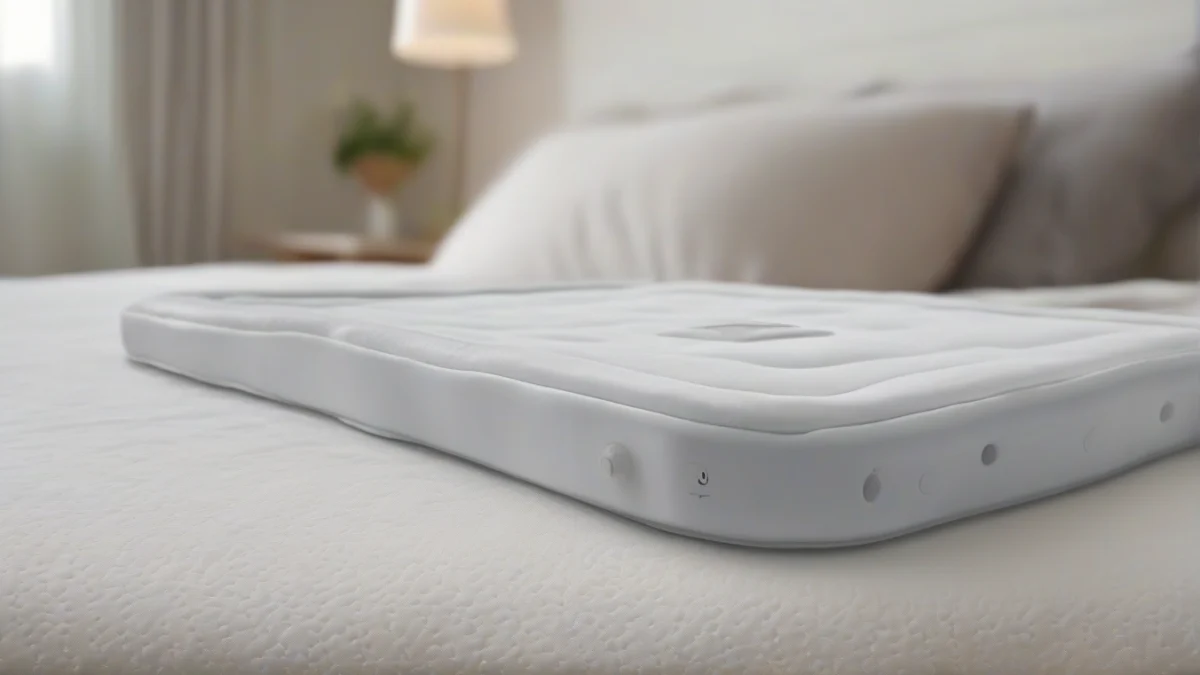
Heated mattress pads for cold nights warm the bed surface directly, so you feel heat faster than you do from a room heater. An infrared heater is a heater that warms objects and people directly rather than the air. A queen pad on low can be a modest electric load, but safety features and fit matter more than the setting number on the controller.
Say your bedroom runs cold at 62°F and you only need warmth for eight hours a night. A 100 W pad uses 0.8 kWh in that stretch; at 17 cents per kWh, that is about 14 cents a night before you count the blanket and the rest of the room.
Heated mattress pads make sense when your bed feels chilly but the rest of the house is tolerable. They are poor substitutes for fixing a drafty window or heating an uninsulated room, and they are a great way to spend less on the one place your body actually notices first.
Key takeaways
A heated mattress pad warms you through the bed, so it usually costs less to run than heating the whole room.
Look for ETL or similar listing, overheat protection, and auto shut-off before you care about heat settings.
Use one in bedrooms, guest rooms, and RV beds; skip it if you need to warm an open space.
Dual controls help couples who want different bed temperatures.
Do not bunch, fold, or use the pad with a damaged cord or controller.
Heated Mattress Pads For Cold Nights
Heated mattress pads for cold nights are best when your bedroom is tolerable but the bed itself feels cold; they warm the mattress surface and your body through contact, so the heat feels faster and gentler than heat blown across the room. Heated pads suit bedrooms and beds, not open rooms or whole-house heating, because they warm your sleeping surface instead of the surrounding air.
A heated mattress pad provides warmth for cold nights.
A pad sits beneath the sheet and transfers heat by contact with your body, while a room heater must warm the air first. That direct path is why a low setting can feel useful before the bedroom feels noticeably warmer. The pad is especially practical when the room is already close to comfortable and only the sheets have the personality of a refrigerated drawer.
Product
What It Warms
Best Fit
Heated mattress pad
Mattress surface and the person lying on it
A bed in a mildly cold bedroom
Electric blanket
The blanket and the person under it
Flexible personal warmth while resting
Room heater
The air and nearby room surfaces
Warming a room, sitting area or small enclosed space
The main difference is where the electrical heat goes.
Infrared heat means heat that warms objects and people directly rather than warming the air first. A heated pad mainly works through contact, so calling it an infrared heater would describe a different heating method; the useful comparison is direct bed warmth versus room warmth.
In short
Pick a heated pad for a cold sleeping surface in a reasonably comfortable bedroom. Pick a room heater when the air itself is too cold, because a pad won’t warm the rest of the room.
Choosing the next step
If you want to compare fit, controls and dual-zone options, start with our best heated mattress pads buying guide. Keep the bed size and the number of sleepers in mind; a controller that fits the wrong mattress is a small appliance with a surprisingly large attitude.
How Much Heat And Power You Actually Need
A heated pad usually needs modest power because it warms the bed surface directly, and the right setting is the lowest one that takes the chill off. Higher settings warm faster, but overnight comfort depends more on even coverage and a useful controller range than on maximum wattage.
100 W
A low bed-warmer setting
For comparison, a 1,500 W plug-in space heater draws about 15 times as much power while running. A standard 120 V outlet circuit sees about 12.5 A from a 1,500 W heater; a 100 W pad draws far less.
Worked example
Say a guest room is 12 by 14 feet and the air feels acceptable once the door is closed, but the mattress stays cold. A 100 W pad used for 8 hours can warm the sleeping surface without trying to heat the whole room. If the room itself remains uncomfortable, the pad is solving the wrong problem and a properly sized room heater belongs in the comparison.
Room12 × 14 ft guest room
Pad setting100 W
Use8 hours per night
Best matchCold bed, mildly cold room
Heater
Watts
Per hour
Per day (8 h)
Per month (30 days)
100 W heated mattress pad
100 W
1.7¢
14¢
$4.08
1,500 W space heater
1,500 W
26¢
$2.04
$61.20
Calculated at 17¢ per kWh. Comparison assumes 8 hours per night for 30 days at $0.17 per kWh; actual use changes with the setting and local electric rate.
Best-rated heated pads should earn that description through even warmth, dependable controls and a fit that stays flat on your mattress, rather than through a high wattage number. Preheating on a higher setting and then lowering it can make sense if the manual allows it; overnight, use the lowest comfortable setting and keep the controller range in mind when comparing models.
Two Mattress-Pad Picks Worth Checking
Both are queen-size pads with dual controls for overnight use; the main differences are heat settings and shut-off timing.
Deep-pocket bed warmer
MASVIS Queen Heated Mattress Pad
Product 1 combines dual controls with 9 heat settings, so two people can choose separate comfort levels. Its deep-pocket design fits mattresses up to 21 inches thick, while the 9-hour auto-shutoff and overheat protection add useful safeguards for overnight warming.
Product 2 gives each side its own controller and offers 10 heat settings, which helps when one sleeper wants more warmth than the other. Its 10-hour auto-shutoff, overheat protection, and machine-washable construction suit regular overnight use.
Safety starts with an intact pad, a clear controller, flat bedding and a working automatic shut-off—not with turning the dial to its highest number. Plug the pad directly into a wall outlet, never an extension cord or power strip, and use it only if the label shows a UL, ETL or CSA listing when that information is available.
People searching for heated knee pads for arthritis should treat the warmth as comfort, not treatment. Heated knee pads can burn skin when sensation is reduced, so anyone who can’t feel heat well should avoid heated bedding and similar products unless a clinician says it’s appropriate.
Before Bedtime
Inspect the cord, plug, controller and fabric for cuts, scorch marks, exposed wires or loose connections.
Keep the controller on a bedside surface where it can breathe; don’t trap it under the mattress, pillow or thick bedding.
Lay the pad flat under the sheet, with no folds, bunches or sharp creases.
Confirm the automatic shut-off time and make sure the controller responds before settling in.
Plug it directly into a wall outlet and keep the cord away from walkways and pinch points.
Keep The Controller Clear
Never fold or bunch the pad, and don’t pile a thick mattress topper, blanket or pillow over the controller area. Heat that can’t escape can damage the control or pad. Remove the controller before washing, then follow the drying instructions; a damp controller is a particularly poor bedmate.
Myth
More heat means safer, deeper sleep.
Fact
Lower settings reduce the heat load, while an intact controller and automatic shut-off provide the safety controls. A higher setting won’t fix a damaged cord, bunched wiring or a controller buried under blankets.
Stop using the pad if it smells hot, develops a discolored spot, cycles oddly or shows any wire damage. Don’t repair the wiring yourself; replace the pad instead.
From HeaterGuides · our own guidePage 6: warm the person, not the house, and cut the bill with it.Winter Heating Bill CutterSee what every heater in your home really costs, heat the rooms you use, and cut the waste in 30 days.Cost-per-hour tables for every heaterThermostat schedule and draft-proofing planRunning-cost and bill calculator (Excel)$14.99$9.99Get it for $9.99See what's inside and watch the 2-minute video →14-page printable PDF + Excel calculator · instant download · 30-day refund
Which Heated Mattress Pad Fits Your Bed
The best rated heated pads still need to fit your mattress and sleeping arrangement, so compare pocket depth, controller layout, shut-off time, settings and washing instructions before choosing one. A pad that fits poorly can bunch under the sheet, which is a bad trade for a few extra temperature choices.
Choosing the right controller is essential for comfort.
Feature
Product 1
Product 2
Mattress fit
Deep-pocket design for mattresses up to 21 inches
Deep-pocket design; measure your mattress because no maximum depth is stated in the supplied specifications
Machine washable; remove controller and tumble dry low
Machine washable
Main trade-off
Listed as a queen-size pad
More settings mean a more involved controller
Check the mattress depth and controller arrangement before ordering.
Product 1 suits a queen bed where ETL certification, a deep-pocket fit up to 21 inches and a 9-hour auto-off matter most. It has dual control and machine-washable care, but the listed queen size limits it for other bed sizes; verify the dimensions before buying.
Useful for a deep queen mattress
MASVIS Heated Mattress Pad Queen Size with Dual Control
Choose Product 1 when your mattress is up to 21 inches deep and you want ETL certification with a 9-hour shut-off rather than a longer menu of controls.
Product 2 is the better match for couples who want separate controllers and finer adjustment across 10 heat settings. Its ETL/FCC certification, overheat protection, 10-hour shut-off and machine-washable construction cover the practical basics, though you’ll need to measure your mattress because the supplied specifications don’t give a maximum pocket depth.
Good For
Product 1: deep-pocket queen fit up to 21 inches, ETL certification and 9-hour auto-off.
Product 2: 10 heat settings, dual controllers and a 10-hour auto-off.
Both: machine-washable designs with removable-controller care instructions.
Check First
Product 1 is listed in queen size, so it may not suit another bed size.
Product 2 gives no stated maximum mattress depth in the supplied specifications.
Neither pad is a room heater; it warms the bed surface rather than the bedroom air.
Where Heated Mattress Pads Make Sense
Heated pads suit bedrooms, guest rooms and RV beds because the warmth stays under the person using it instead of trying to heat empty air. They’re a poor choice for garages, living rooms or any space where you need the room itself to become warmer.
An upstairs bedroom with a chilly mattress is a good match: the room can remain cool while the bed surface takes the edge off. A drafty basement room is different; if the concrete floor and moving air leave you cold while you’re dressed, a pad won’t fix the room. Choose a properly rated space heater for whole-room warmth, following its clearance and outlet rules.
Upstairs Bedroom Versus Basement
Say the upstairs bedroom is comfortable once you’re under the covers, but the sheets feel cold at bedtime. A heated pad targets that small area. In a drafty basement, you may need warmer air around your hands, face and clothing, so a bed warmer alone leaves the main problem untouched.
Air-conditioning doesn’t rule out a bed warmer. A pad can make a cold bedroom more comfortable while the air conditioner runs, but the room still needs to be safe and livable, with clear exits and no need to use the pad as emergency heat.
Useful for couples and RV beds
SurChic Queen Size Heated Mattress Pad with Dual Control
Product 2 suits a shared bedroom or RV bed when two sleepers want separate settings, since its dual controllers and 10-hour auto shut-off address those exact jobs.
If your goal is warm sheets, choose a pad. If your goal is warmer air across the room, choose a space heater sized for that room instead.
What To Do Next
Heated knee pads won’t answer a cold-bed problem, so start by checking the mattress and the pad you actually plan to use. Follow this order before buying or plugging in.
1
Measure the mattress
Measure its depth from the base to the top surface, then compare that number with the pad’s stated pocket range. Confirm the pad size matches the mattress.
2
Check the controls and timer
Decide if you need dual controls for different sleeping preferences, then confirm the automatic shut-off time in the product specifications.
3
Inspect the electrical parts
Before buying or plugging in, check that the cord and controller are undamaged and that the product carries a recognized UL, ETL or CSA listing. Product 2 lists ETL and FCC certification.
4
Set it up flat
Lay the pad flat under the sheet, connect the controller as directed, test it on low first and keep bedding from covering the controller area. Remove the controller before washing if the instructions require it.
In short
If you need heat in the bed only, buy a heated mattress pad. If you need heat in the room, buy a heater.
Frequently Asked Questions
Are heated mattress pads safe to sleep on all night?
They can be, but only if the manufacturer permits overnight use and the pad has the required automatic shut-off. Inspect the wiring and controller before bed, keep the pad flat under the sheet, and don’t use it if you can’t reliably feel heat or respond to discomfort.
What setting should I use on a heated mattress pad?
Start on a low setting and raise it only until the cold spot disappears. Preheating the bed before you lie down can let you turn the pad down sooner; heat, sweating or skin redness means the setting is too high.
Do heated mattress pads use a lot of electricity?
Usually, the label wattage tells you more than the number of heat settings. For example, a 100-watt pad running for 8 hours uses 0.8 kWh; at 17 cents per kWh, that would cost about 14 cents for the night. Use watts ÷ 1,000 × hours × your electric rate for your own estimate.
Can I use a heated mattress pad in an RV or guest room?
Yes, if the pad is approved for the available power supply and fits the bed without bunching at the edges. In an RV, check the pad’s voltage and the circuit or inverter capacity before plugging it in; in a guest room, leave the controls and shut-off instructions where the next sleeper can find them.
What is the difference between a heated mattress pad and an electric blanket?
A heated mattress pad lies on the mattress under your fitted sheet, so it warms the surface beneath you. An electric blanket goes over your body and warms from above; don’t fold, bunch or tuck either product in a way the manufacturer prohibits.
Do I need dual controls for a heated mattress pad?
Dual controls are useful on a shared queen or king bed when each sleeper wants a different setting. A single control costs less and is simpler for one sleeper, a guest bed or a smaller mattress, but both sides will receive the same setting.
What should I check before buying a heated mattress pad?
Measure the mattress length, width and pocket depth, then confirm the pad matches those dimensions and the fitted-sheet design. Look for automatic shut-off, overheat protection and a UL, ETL or CSA listing, and read the washing instructions before buying; a pad that can’t be washed the way you need won’t stay useful for long.
Before you go · a welcome giftGet the Winter Heating Bill Cutter for $4.99See what every heater in your home really costs, heat the rooms you use, and cut the waste in 30 days. Normally $14.99; your welcome price saves $10.00. We'll email your link right now.or buy it now for $9.99 without the gift →One email with your link now. We never share your address.


 Winter Heating Bill CutterSee what every heater in your home really costs, heat the rooms you use, and cut the waste in 30 days.Cost-per-hour tables for every heaterThermostat schedule and draft-proofing planRunning-cost and bill calculator (Excel)