

When choosing gas space heaters for garages, consider size, efficiency, safety features, ventilation needs, and fuel type to ensure effective heating and safety.
Choosing the right gas space heater for your garage requires careful thought. You need to balance heating power, safety, and installation needs. This guide covers everything you must know before buying.

Mr. Heater
Mr. Heater 50,000 BTU Forced-Air Unit Heater…
- Ceiling-mounted forced air unit heater turns garages, barns, and workshops into heated workspaces
- 50,000 BTUs heat up to 1,667 sq ft, or approximately a 3-car garage
- Compatible with standard 24-volt or new Wi-Fi enabled thermostats (sold separately)
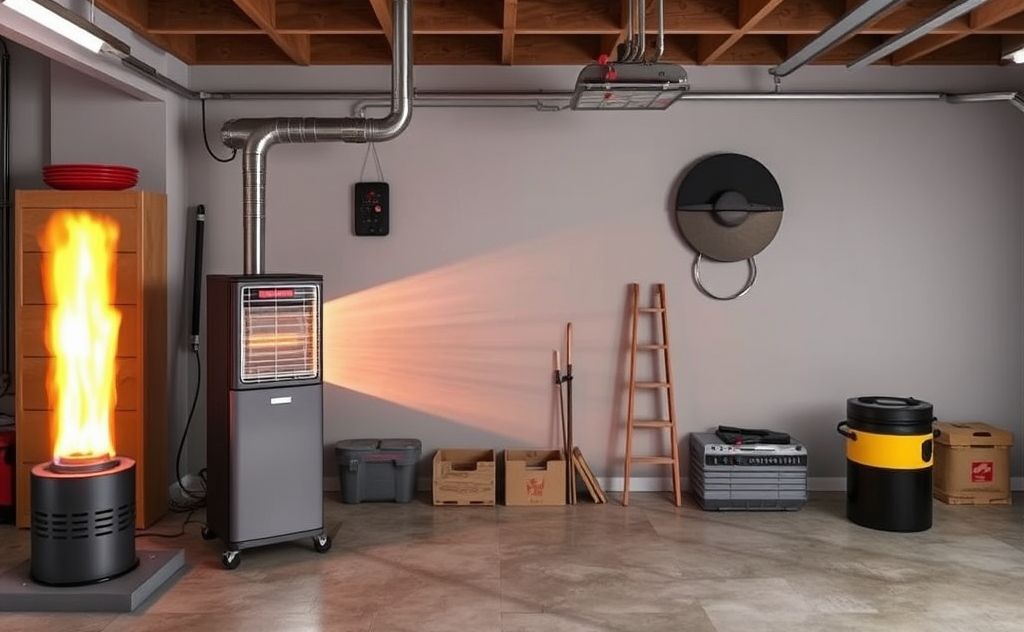
Heater Size and BTU Output
Garage heaters come in various sizes. The right BTU output depends on your space:
- Small garages (1-car): 30,000-50,000 BTU
- Medium garages (2-car): 50,000-75,000 BTU
- Large garages (3+ cars): 75,000-100,000 BTU
For example, the Reddy Heater 150,000 BTU works well for oversized spaces. But smaller garages need less power.
Calculating Your Needs
Use this simple formula:
BTU = (Garage Length x Width x Height x 0.133) + (Window BTU Loss)
Ventilation Requirements
Proper ventilation prevents dangerous gas buildup. Consider these options:
| Vent Type | Best For | Installation |
|---|---|---|
| Direct Vent | Permanent installs | Professional |
| Power Vent | Large spaces | Moderate skill |
| Vent-Free | Temporary use | DIY |
According to The Wood Whisperer, sealed combustion chambers work best for dusty environments.
Safety Features to Demand
Never compromise on these safety elements:
- Tip-over switch
- Oxygen depletion sensor
- Overheat protection
- Flame failure device
The best built-in gas heaters include all these protections. Portable models should too.
Fuel Type Options
Gas heaters use different fuel sources:
Natural Gas
Requires permanent gas line. Lowest operating cost.
Propane
Uses portable tanks. More expensive than natural gas.
Dual Fuel
Works with both. Offers flexibility but costs more.
Installation Factors
Consider these installation requirements:
- Clearance from walls/ceilings
- Gas line access
- Electrical needs
- Mounting options
As noted in electrical forums, some units need dedicated circuits.
Maintenance Needs
Regular maintenance keeps heaters running safely:
- Clean burners monthly
- Check gas connections quarterly
- Inspect vents annually
- Replace filters as needed
Proper care extends heater life and prevents hazards.
Cost Considerations
Budget for these expenses:
| Cost Type | Range |
|---|---|
| Unit Price | $200-$1,500 |
| Installation | $300-$2,000 |
| Annual Fuel | $100-$500 |
High-efficiency models cost more upfront but save on fuel.
Related pick: Check today's price on Amazon

I am a mechanical engineer and love doing research on different home and outdoor heating options. When I am not working, I love spending time with my family and friends. I also enjoy blogging about my findings and helping others to find the best heating options for their needs.
Related guides
Gas Space Heater Pilot Lights: How They Work & Safety Tips
The pilot light in gas space heaters is a small flame that ignites the gas to heat the…

5 Game-Changing Ventless Natural Gas Garage Heaters You Must See
Cheap heaters fail to warm spaces—but Mr. Heater delivers comfort. When it comes to heating your space efficiently,…
Do Gas Wall Heaters Use a Lot of Energy?
Wall heaters typically use moderate amounts of gas, depending on their efficiency and usage frequency, but they can…
