

You wake up at 6:30 AM, check your phone, and the forecast says 74°F. But when you step outside, the air feels like 88°F, and your shirt is damp before you reach the car. Sound familiar? That gap between the forecast and what your body actually feels isn’t a glitch — it’s your regional temperature pattern at work. Coastal breezes, urban concrete, elevation, and even the angle of the sun in your latitude all twist the numbers into something uniquely local.
Most climate conversations stay abstract, stuck on global averages and polar ice charts. This article zooms in to your block, your commute, your sleep cycle, and your wallet. You’ll learn how regional temperature patterns impact daily life in ways you might not have connected yet — and what you can actually do about it, starting tomorrow morning.
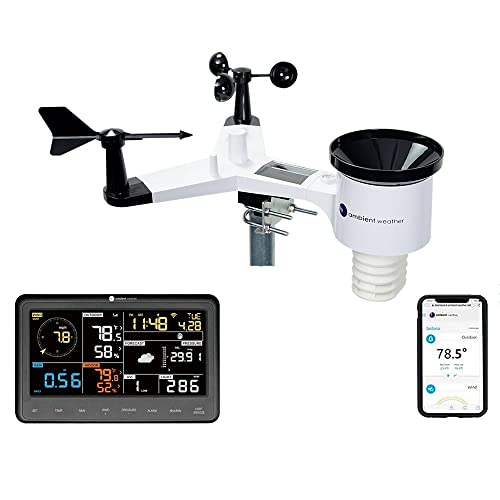
Ambient Weather
Ambient Weather WS-2902 Wi-Fi Smart Weather Station
- COMPLETE WEATHER STATION: (1) Osprey Sensor Array with Rain Cup, and (1) Brilliant, Easy-to-Read LCD Color Display
- AUTHENTIC HYPER-LOCAL DATA: Monitor your actual home and backyard weather conditions with our wireless and Wi-Fi-enabled sensor ar…
- SMART HOME READY: Set up alerts, access your data remotely, and program your home based on weather conditions using IFTT, Google H…
One tool that helps close that gap between forecast and reality is a personal weather station. The Ambient Weather WS-2902 sits in your yard and records temperature, humidity, wind, and rainfall every few seconds. It won’t change the weather, but it tells you exactly what your microclimate is doing right now — not what the airport reported an hour ago.

The Invisible Hand: How Temperature Dictates Your Day

Temperature doesn’t just make you uncomfortable. It rewires your decisions. The 6 AM runner in Phoenix starts at 5 AM in July because pavement temps hit 140°F by noon. The Seattle commuter keeps a jacket in the car year-round because marine air drops 15 degrees in twenty minutes. These aren’t preferences — they’re survival adaptations.
Your body’s internal thermostat works overtime when regional patterns push extremes. Blood vessels dilate in heat, forcing your heart to pump faster. Cold air constricts airways, making asthma worse. Even a 10°F deviation from what your body expects can shift your energy levels, appetite, and patience.
Think about your last grocery bill. Leafy greens cost more in July if you live in a desert region where heat stress kills crops. Eggs spike in winter when hens lay less in reduced daylight. Regional temperature patterns impact daily life through your food budget, your utility bill, and your mood — often without you noticing the connection.
Here’s the uncomfortable truth: most people react to weather instead of planning for it. They pay the peak electricity rate on the hottest afternoon, then wonder why the bill doubled. They schedule outdoor work at 2 PM in August, then lose two hours to heat exhaustion. A little foresight changes that math.
Beyond the Thermometer: Regional Variations in Daily Life
Two places can share the same average annual temperature yet feel completely different. The average hides the rhythm — the daily swing, the humidity, the wind. That rhythm determines everything from how you dress to how you sleep.
Coastal vs. Continental Climates
San Francisco and St. Louis both hover around 60°F annually. But San Francisco’s temperature swings maybe 10 degrees between day and night, year-round. St. Louis swings 20 degrees in a single day during spring, and 60 degrees between January and July. The coastal city needs no air conditioning; the continental city runs it five months straight.
Coastal climates moderate because water absorbs heat slowly and releases it slowly. Continental climates sit on land that heats and cools fast. The practical difference? In a coastal climate, you can plan a picnic two weeks out. In a continental climate, you check the forecast twice a day and still get surprised.
Altitude adds another layer. Denver at 5,280 feet gets intense UV radiation but cool nights that let buildings shed heat. A 90°F day in Denver feels tolerable in the shade; the same temperature in humid Houston feels like a wet blanket. Your body cools itself through sweat evaporation, and high humidity stops that process cold.
Urban Heat Islands vs. Rural Cool Zones
Drive from downtown Atlanta to a rural farm 30 miles away on a July evening. The city will read 92°F; the farm, 78°F. That’s the urban heat island effect — concrete, asphalt, and rooftops absorb solar radiation all day and release it slowly at night. Rural areas with vegetation and bare soil cool off quickly after sunset.
This matters most at night. When the temperature doesn’t drop below 80°F, your body can’t fully recover from daytime heat. People in heat islands sleep worse, recover slower from exercise, and face higher risk of heatstroke during prolonged events. A 2026 study in Phoenix found nighttime temperatures in the city core ran 10°F warmer than surrounding desert — enough to keep indoor spaces from cooling without AC.
The urban heat island also shifts when you can do outdoor work. Gardeners in rural zones can water at dusk and let the soil absorb it overnight. City gardeners must water before dawn, because the pavement radiates heat all night and evaporates moisture before roots can drink. Small difference, real consequence.
The Ripple Effect on Health and Productivity
Your body clock runs on temperature cues. Core body temperature drops about 1 to 2 degrees at night to trigger sleep. If your bedroom stays above 75°F, that drop doesn’t happen fully, and your sleep quality suffers — even if you don’t wake up.
Sleep Disruption and Cognitive Performance
Research from the University of Copenhagen shows that people sleeping in rooms above 77°F lose about 10% of their deep sleep. That compounds. A week of poor sleep drops reaction time by 20%, roughly the same as a blood alcohol level of 0.05%. For a commuter or a construction worker, that’s a real safety margin lost.
Hot nights also raise your resting heart rate. Your cardiovascular system works harder just to maintain baseline function. Over months, this contributes to higher blood pressure and increased strain on your heart. The link between cardiovascular health and temperature isn’t theoretical — emergency room visits for heart issues spike during heatwaves in every city studied.
Cognitive work suffers too. A 2026 study in PLoS Medicine tracked student exam scores across 10 years and found that a 1°F increase in average weekly temperature reduced math scores by 0.4%. The effect was strongest for students without air conditioning. Your brain literally runs slower when it’s hot — not a feeling, a measurable drop in processing speed.
Mental Health and Seasonal Mood Shifts
Temperature patterns affect mood through multiple pathways. Heat increases irritability and aggression — violent crime rates rise 2-4% for each 5°F increase in average temperature. Cold, gray winters trigger seasonal affective disorder in about 5% of Americans, with symptoms ranging from lethargy to clinical depression.
The less obvious effect is disruption. When weather keeps you indoors for weeks, your social life contracts. You skip the gym, cancel walks with friends, eat worse. That cascade amplifies the direct physiological effects. The behavioral influence of temperature runs deeper than most people assume.
One more layer: anticipation. People living in regions with predictable seasons adapt better than those in chaotic climates. A Midwesterner expects January to be brutal. A resident of the Pacific Northwest, where winter can mean 40°F rain or 25°F snow depending on the week, faces more uncertainty stress. Predictability, it turns out, is its own coping mechanism.
Economic Shifts in Your Local Economy
Temperature patterns don’t just hit your body — they hit your bank account. The effects ripple through local economies in ways that feel random until you see the pattern.
Agriculture and Food Prices
Every crop has a temperature sweet spot. Wheat thrives between 55-75°F during grain fill; above 85°F, yields drop sharply. Corn pollination fails when daytime highs exceed 95°F for more than two days. When regional temperatures push these thresholds, supply drops and prices climb.
The 2026 Pacific Northwest heatwave baked Washington’s cherry crop, destroying 80% of the harvest in some orchards. Grocery prices for cherries jumped 30% nationwide that summer. You don’t need to farm to feel this — every trip to the produce aisle reflects your region’s temperature history from the last few months.
Livestock suffers too. Dairy cows produce 10-20% less milk when temperatures exceed 80°F. Heat-stressed chickens lay smaller eggs. These reductions show up in your breakfast costs, usually with a lag of a few weeks that makes the connection hard to trace.
Small Business and Tourism Vulnerability
Tourism is the most weather-exposed industry. A ski resort in Vermont needs sustained cold and snow; a beach town in Florida needs sun but not hurricanes. One bad season — one warm winter or one rainy July — can cut annual revenue by 25-40% for small operators.
Outdoor recreation businesses feel it daily. Kayak rental shops on rivers depend on water levels that temperature controls through snowmelt and evaporation. Golf courses in the South lose players when afternoon heat exceeds 95°F — they move tee times to 7 AM, compressing revenue into fewer hours.
Local supply chains break in weird ways. A bakery that sources flour from a drought-stricken region pays more. A brewery that relies on local barley switches to imported grain. These costs pass to you, the customer, with a lag that obscures the cause. Regional temperature patterns impact daily life through your spending, whether you notice it or not.
Adapting Your Routine: A Practical Playbook
Knowledge without action is just trivia. Here’s how to adjust your days to your specific regional temperature reality.
Optimizing Commute and Outdoor Exercise
Shift your schedule to the coolest parts of the day. In summer, that means exercising before 8 AM or after 8 PM — not because it feels better, but because your body’s core temperature is lower, letting you work harder with less cardiovascular strain.
For commutes, consider the sun’s angle, not just the air temperature. East-west roads expose you to direct sun for longer stretches. A 10-minute detour through tree-lined streets can drop your perceived temperature by 10-15°F. In winter, the reverse applies — take the sunny route to reduce cold exposure.
If you work outdoors, adopt the two-hour rule: 50 minutes of work, 10 minutes of rest in the shade when the heat index exceeds 90°F. The military uses this protocol to prevent heat casualties. It’s not laziness; it’s preserving your ability to work tomorrow.
Home Energy Efficiency and Smart Landscaping
Your house is a thermal battery. It absorbs heat during the day and releases it at night. In hot climates, you want to slow that absorption. In cold climates, you want to capture every watt of solar gain.
Simple changes: close blinds on south-facing windows during summer afternoons. Open them in winter. Install a programmable thermostat that raises the setpoint 5°F during work hours — you’ll save 10-15% on cooling costs without noticing the difference. Ceiling fans let you raise the thermostat another 4°F while maintaining comfort.
Landscaping does heavy lifting. Deciduous trees on the south and west sides of your house block summer sun but let winter light through. A mature oak can reduce your cooling bill by 25%. Evergreens on the north side block winter winds. The heating and cooling efficiency gains from this approach are substantial.
Track your own microclimate before investing in upgrades. A personal weather station like the Ambient Weather WS-2902 shows you the actual temperature swings in your yard — not the airport data. You’ll see whether your patio hits 100°F while the forecast says 92°F, which tells you exactly where to plant shade trees or add awnings.
Future-Proofing Your Community
Individual adaptation helps, but the biggest wins come from community-level design. Cities that plan for their regional temperature reality reduce heat deaths, cut energy demand, and make daily life more tolerable.
The Role of Green Infrastructure
Tree canopy is the most effective cooling tool available. A single mature tree can transpire 40 gallons of water daily, providing the cooling equivalent of five air conditioners running 20 hours. Cities with 30% canopy cover run 5-10°F cooler than nearby treeless neighborhoods.
Cool roofs do similar work. White or reflective roofing materials bounce 60-70% of solar radiation back to space, versus 10-20% for dark asphalt shingles. Los Angeles found that cool roofs cut peak energy demand by 15% in residential areas. The material costs 10-15% more, but pays back in two to three years through reduced AC bills.
Permeable pavement lets rainwater soak into the ground instead of running off. That water evaporates, cooling the pavement like sweat cools skin. A parking lot with permeable pavement runs 8-12°F cooler than standard asphalt on a sunny afternoon.
Community-Level Adaptation Strategies
Heat action plans work. When New York City opened cooling centers and extended pool hours during the 2026 heatwave, heat-related deaths dropped 40% compared to similar events in 2026. The key was communication — notifying vulnerable populations through community networks, not just social media.
Vulnerable populations need the most attention. Elderly people living alone, low-income households without AC, and outdoor workers face disproportionate risk. Community programs that check on elderly neighbors during heatwaves and provide free fans or AC units save lives.
Building codes are shifting too. Miami-Dade County now requires reflective roofs on new construction. Phoenix mandates cool pavement on all new residential streets. These changes cost little upfront but compound over decades. The question isn’t whether your community can afford adaptation — it’s whether it can afford not to.
What You Can Do Starting This Week
You don’t need to wait for your city council to act. Here’s a short list you can execute immediately:
- Track your home’s actual temperature for one week using a thermometer or weather station — you’ll likely find your bedroom is 5-8°F warmer than the forecast
- Move your outdoor exercise to the coolest two hours of the day — your performance will improve noticeably
- Close south-facing blinds during summer afternoons and open them in winter — zero cost, immediate effect
- Water your garden before dawn in hot climates to reduce evaporation loss by up to 30%
- Check on elderly neighbors during heatwaves and cold snaps — a five-minute visit can prevent a hospital trip
- Plant a deciduous tree on the south side of your house — it takes years to mature, so start now
- Set your thermostat 4°F higher in summer and lower in winter while you’re away — you’ll save 10-15% on energy bills
Regional temperature patterns impact daily life in thousands of small ways. Once you start noticing them, you can’t unsee them. The 6 AM runner, the afternoon crash, the mysterious grocery price spike — they all connect to the same invisible force. You can’t control the weather, but you can control your response to it. That’s the whole game.
Frequently Asked Questions
Why does the same temperature feel different in different regions?
Humidity is the main culprit. At 80°F with 30% humidity, sweat evaporates easily and you feel comfortable. At 80°F with 80% humidity, sweat beads on your skin and you feel clammy and hot. Wind also matters — a 10 mph breeze can drop your perceived temperature by 5°F in summer. Your body responds to the rate of heat exchange, not just the number on the thermometer.
How much does urban heat island effect raise nighttime temperatures?
Typically 5-10°F compared to surrounding rural areas, but it can reach 15°F in dense city cores during heatwaves. The effect is strongest at night because concrete and asphalt release stored heat slowly. This is why city dwellers suffer more during prolonged heat events — they never get a cool break to recover.
Can I train my body to tolerate higher temperatures?
Yes, but it takes about two weeks. Heat acclimatization involves gradual exposure to heat for 1-2 hours daily, which increases your sweat rate, lowers your resting heart rate, and improves your body’s ability to cool itself. Athletes use this before competing in hot locations. The adaptation reverses after about a week away from heat, so it requires maintenance.
What’s the ideal sleeping temperature for deep rest?
Most sleep researchers recommend 65-68°F for the bedroom. Your core body temperature needs to drop by 1-2°F to initiate deep sleep. If the room is above 75°F, that drop is impaired, and you spend less time in restorative slow-wave sleep. If the room is below 60°F, you may wake from shivering. The range matters more than the exact number.
How do regional temperature patterns affect local food prices?
They affect supply, which drives price. A heatwave during pollination season reduces crop yields, and lower supply means higher prices at the store. The effect typically appears 2-4 weeks after the temperature event. Livestock products like milk and eggs also drop in production during heat stress, adding to the price pressure. The impact varies by region — a drought in California affects national produce prices because of the state’s outsized role in agriculture.

HeaterGuides covers home heating, water heating and HVAC: how the equipment works, what it costs to run, and how to use it safely.
