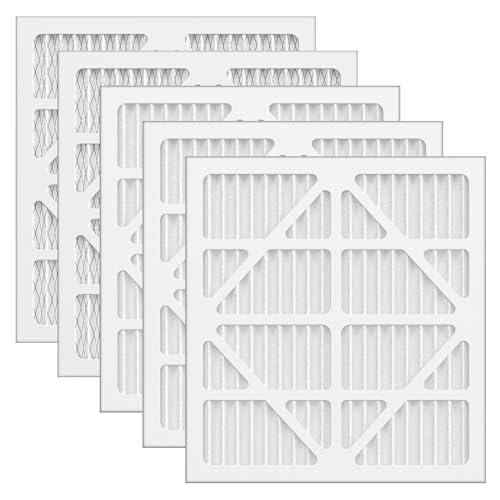
You bought the most expensive filter at the hardware store, slapped it in your furnace, and waited for the air to feel cleaner. A month later, your energy bill jumped and the system runs louder. The air doesn’t feel any different. What happened?
You fell for the rating without understanding the physics. The highest-rated filter isn’t the best filter for your HVAC system. It’s often the worst thing you can install. This guide breaks down the real engineering differences between HEPA and MERV filters—efficiency, airflow resistance, static pressure, and what your blower can actually handle. You’ll walk away knowing exactly which filter to buy for allergies, pets, smoke, or just keeping the system alive.

Demiwise
Demiwise Air Vent Filters,20''x90''Cut to Fit Air…
- Keep Your Air Clean & Fresh:Keep your home cleaner and healthier with our vent filters. Designed to capture dust, pet hair, pollen…
- Cut to Size Air Filter:With 1800 sq. inches of cut-to-fit air filter material(20" x 90"), our vent filters for home floor easily f…
- MERV 8 Triple Layer Filtration:Our floor vent filter uses MERV 8 filtration to block up to 85% of airborne particles. The 3-layer…
If you’re dealing with a specific vent or return grille rather than the main furnace slot, a cut-to-fit solution like Demiwise air vent filters gives you MERV 8 protection in a roll you trim to size. It’s a practical middle ground for floor and ceiling vents where a rigid panel won’t fit.

The Short Answer: Which Filter Wins?
For a typical home HVAC system, MERV 13 wins. It captures the vast majority of harmful particles—pollen, dust mites, mold spores, smoke—without choking your blower. True HEPA is overkill for ducted systems and will cost you in airflow and energy.
HEPA wins only for specific rooms with severe allergies or immune-compromised individuals, and even then, it’s better as a standalone air purifier than a furnace filter.
Here’s why, and the numbers behind it.
How Air Filters Actually Work (MERV vs. HEPA)
Both filter types use the same basic mechanism: a fibrous mat that catches particles as air pushes through. The difference is fiber density and pore size. Denser fibers catch smaller particles but resist airflow more.
Think of it like a coffee filter. A paper filter stops fine grounds but slows the pour. A metal mesh lets water through fast but lets fines through. Air filters work the same way—it’s a direct trade-off between filtration and flow.
MERV stands for Minimum Efficiency Reporting Value. It’s a standard from ASHRAE that rates how well a filter catches particles between 0.3 and 10 microns. HEPA stands for High-Efficiency Particulate Air, and it’s a specific standard, not a brand.
MERV Filters Explained: The 1-16 Scale
MERV ratings run from 1 to 16. Here’s what each tier catches:
- MERV 1-4: Catches particles over 10 microns—dust, lint, pollen. These are the cheap fiberglass filters. Minimal airflow resistance.
- MERV 5-8: Catches particles 3-10 microns—mold spores, dust mites, pet dander. This is the sweet spot for most homes. MERV 8 is the minimum recommended by most HVAC manufacturers.
- MERV 9-12: Catches particles 1-3 microns—fine dust, smoke, some bacteria. Better filtration, noticeably more resistance.
- MERV 13-16: Catches particles 0.3-1 micron—bacteria, smoke, virus carriers. This is hospital-grade filtration. MERV 13 is the highest most residential blowers can handle.
MERV 13 filters are the practical ceiling for ducted systems. They catch about 85% of particles in the 0.3-1 micron range and over 90% of larger allergens. That’s enough for most allergy sufferers.
HEPA Filters Explained: The “True” Standard
True HEPA is a specific standard: it must catch 99.97% of particles at 0.3 microns. That 0.3 micron size is the most penetrating particle size—the hardest to catch. Particles smaller and larger actually get caught more easily.
Here’s the catch: true HEPA filters are thick, dense media designed for high-pressure systems. A residential HVAC blower simply doesn’t have the static pressure capacity to push air through them effectively.
There’s also a marketing trap: “HEPA-type” or “HEPA-like” filters. These are not true HEPA. They might catch 85-90% at 0.3 microns—which is basically MERV 13 performance—but they’re sold at a premium. Check the label. If it doesn’t say “True HEPA” or “H13/H14,” you’re overpaying for a MERV 13 filter.
HEPA vs. MERV: The 4 Critical Differences
Filtration Efficiency (Particle Size)
True HEPA catches 99.97% at 0.3 microns. MERV 13 catches about 85% at that size. MERV 8 catches almost nothing at 0.3 microns—it’s designed for larger particles.
For practical purposes: MERV 13 handles allergens, smoke, and most bacteria. HEPA handles viruses and the finest particulates. Unless you’re in a cleanroom or caring for someone with a severe respiratory condition, the difference won’t matter in a home.
Airflow Resistance & Static Pressure
This is where most people get burned. Static pressure is the resistance your blower must overcome to move air. Every filter adds resistance. Denser filters add more.
A MERV 8 filter has an initial pressure drop of about 0.15-0.25 inches of water column. A MERV 13 is 0.3-0.5. A true HEPA filter for residential use? Often 1.0 or higher—more than most residential blowers can handle.
When the blower can’t move enough air, you get: reduced airflow, frozen coils in summer, overheating in winter, and a compressor that cycles too often. The system works harder and dies sooner.
HVAC System Compatibility
Most residential HVAC systems are designed for filters rated MERV 8 or lower. The ductwork, blower motor, and static pressure are all sized for that resistance.
You can usually step up to MERV 13 without major issues, especially if you change filters frequently. Going to HEPA in the main return duct is almost always a mistake—you’ll need a separate blower or a bypass system to make it work.
If you want whole-home HEPA, you need a dedicated air purification system installed by an HVAC professional, not a filter swap.
Cost & Replacement Frequency
MERV 8 filters cost $5-15 each. MERV 13 runs $15-30. True HEPA filters for residential use? $50-100 or more, and they need replacement every 6-12 months depending on load.
HEPA filters also clog faster because they catch more. A clogged filter increases pressure drop dramatically. You’ll replace a HEPA filter 2-3 times more often than a MERV 13, and each one costs more.
Run the math over a year: MERV 13 costs about $60-120 annually. HEPA in a ducted system costs $200-400 and risks damaging your HVAC equipment. Not a smart trade.
The “Sweet Spot” Argument: Why MERV 13 Often Wins for Homes
MERV 13 hits the intersection of high filtration and acceptable airflow resistance. It catches 85% of the particles that matter for allergies—pollen, dust mites, mold spores, pet dander—and it catches smoke and bacteria.
It’s also the highest rating most blowers can handle without significant efficiency loss. A MERV 13 filter will increase energy consumption by about 5-10% compared to MERV 8. A HEPA filter can increase it by 20-30% or more.
For most homes, the cost-benefit analysis lands squarely on MERV 13. You get near-HEPA filtration for a fraction of the cost and without the airflow penalty.
If you have pets, MERV 13 is the right choice. It catches dander and the hair that MERV 8 misses. Check out this HVAC filter guide for pet owners for more specifics on managing fur and dander.
When HEPA Is the Only Real Option (and How to Use It)
There are legitimate cases for HEPA: someone with severe asthma triggered by fine particulates, immune-compromised individuals, or homes near wildfire zones with persistent smoke.
But don’t put a HEPA filter in your furnace. Instead, use a standalone HEPA air purifier in the room where the person spends the most time. These units have their own fans designed for the high static pressure HEPA media requires. They’re far more effective than trying to force HEPA through your existing ductwork.
For whole-home smoke or virus protection, consider a dedicated HEPA bypass system installed by an HVAC professional. These add a separate blower and filter housing to the return duct, bypassing the main system’s static pressure limitations.
The Hidden Problem: Filter Bypass and Poor Fit
Here’s something most guides ignore: a filter is only as good as its seal. If air flows around the filter instead of through it, your expensive MERV 13 or HEPA filter is doing almost nothing.
Filter bypass happens when the filter doesn’t fit snugly in the slot. Gaps of even a quarter inch allow unfiltered air to pass through. In a typical return duct, bypass can reduce effective filtration by 50% or more.
Fix this before upgrading your filter. Measure your filter slot precisely. Use foam tape or a gasket to seal the edges. For non-standard openings, a cut-to-fit option like the Demiwise vent filter roll lets you trim the media to the exact size and secure it with the included adhesive hooks, eliminating gaps on floor and ceiling vents.
Also check the filter’s fit in its frame. A filter that’s too small for the slot is worse than a lower-rated filter that fits perfectly.
Final Verdict: A Practical Decision Matrix
Use this table to match your situation to the right filter. It’s not about the highest rating—it’s about the right rating for your system and your needs.
| Scenario | Recommended Filter | Why | Replacement Interval |
|---|---|---|---|
| Basic home, no allergies, no pets | MERV 8 | Catches dust and pollen with minimal airflow resistance | Every 3 months |
| Mild allergies or one pet | MERV 11-13 | Catches dander, mold spores, and fine dust | Every 3 months |
| Heavy allergies, smoke, or multiple pets | MERV 13 | Near-HEPA filtration without choking the blower | Every 2-3 months |
| Severe respiratory conditions, immune-compromised | True HEPA (standalone purifier) | 99.97% at 0.3 microns, but needs its own fan | Every 6-12 months |
| Older HVAC system (10+ years) | MERV 8 max | Older blowers can’t handle higher static pressure | Every 3 months |
| Non-standard vent or return grille | Cut-to-fit MERV 8 (like Demiwise) | Custom fit eliminates bypass and gaps | Every 2-3 months |
One more thing: change your filter on a schedule, not when you remember. Write the date on the filter frame when you install it. Set a reminder on your phone. A clogged filter—even a MERV 8—restricts airflow more than a clean MERV 13.
If you’re still unsure about what your system can handle, check your furnace manual or look for the static pressure rating on the blower motor. And if you want to understand how filters affect your system’s health, read about the role of filters in preventing HVAC repairs.
Frequently Asked Questions
Can I use a HEPA filter in my furnace?
Technically yes, but you shouldn’t. The static pressure required to push air through true HEPA media exceeds what most residential blowers can deliver. You’ll get poor airflow, higher energy bills, and potential damage to the compressor or heat exchanger. Use a standalone HEPA purifier instead.
What’s the difference between “HEPA-type” and “True HEPA”?
True HEPA catches 99.97% of particles at 0.3 microns and is independently tested. “HEPA-type” or “HEPA-like” filters catch far less—often 85-90%—and are essentially MERV 13 filters with a premium price tag. Always look for “True HEPA” or an H13/H14 rating on the label.
Is MERV 13 worth the extra cost over MERV 8?
For most people, yes. MERV 13 catches smoke, bacteria, and fine particulates that MERV 8 misses. The cost difference is about $10-15 per filter, and the energy penalty is small—roughly 5-10% higher fan energy. If you have allergies, pets, or live near wildfire-prone areas, it’s a worthwhile upgrade.
Will a higher MERV rating damage my HVAC system?
It can. Filters rated MERV 14-16 have pressure drops that most residential blowers can’t overcome. The reduced airflow can cause the heat exchanger to overheat in winter and the evaporator coil to freeze in summer. Both lead to expensive repairs. Stick with MERV 13 as the maximum for ducted systems.
How often should I replace a MERV 13 filter?
Every 2-3 months, depending on your home’s conditions. If you have pets or heavy dust, check it monthly. A filter that looks dirty from the upstream side is ready for replacement. Don’t wait for the system to tell you—by then, airflow is already compromised.
What to Do Next
- Check your current filter’s MERV rating and its fit in the slot. Seal any gaps with foam tape.
- If you have allergies, pets, or smoke concerns, upgrade to MERV 13. Don’t go higher.
- For severe health issues, buy a standalone true HEPA purifier for the bedroom or living room.
- For non-standard vents, use a cut-to-fit MERV 8 roll like the Demiwise filter to eliminate bypass.
- Mark your calendar with a replacement schedule. Every 3 months for MERV 8, every 2-3 months for MERV 13.
- Watch your energy bill after changing filter ratings. If it jumps significantly, your system is struggling—step back a rating.
- Remember: a clean, well-sealed MERV 8 outperforms a bypassed, clogged MERV 13 every time.

I am a mechanical engineer and love doing research on different home and outdoor heating options. When I am not working, I love spending time with my family and friends. I also enjoy blogging about my findings and helping others to find the best heating options for their needs.
Related guides

HVAC Filter Replacement: How Often & Why It Matters
HVAC filters should be replaced every 1 to 3 months, depending on usage, filter type, and indoor air…
7 Powerful Benefits of Clean HVAC Filters You Can’t Ignore
Clean HVAC filters improve air quality, enhance system efficiency, reduce energy costs, and prolong equipment lifespan, ensuring a…
When to Replace HVAC Filters? A Professional Guide to Filter Schedules
Expert DIY advice on when to replace HVAC filters. Keep your home's air clean and efficient with actionable…