Skip to content

Expert home heating guides, reviews & repairs

Heater GuidesHeaterGuides
Troubleshooting

Does a Basement Electric Water Heater Need GFCI Protection?

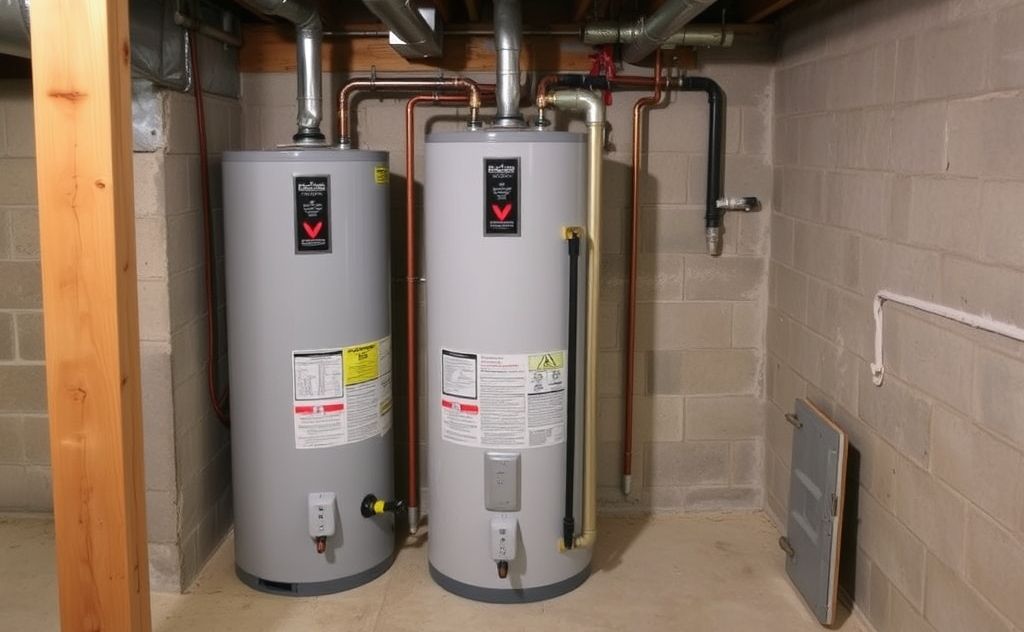
You just finished the basement. New drywall, fresh paint, and a brand-new 50-gallon electric water heater sitting in the mechanical room. Your inspector walks over, glances at the panel, and asks if the circuit is GFCI-protected. You freeze. You thought you did everything right.

This situation plays out more often than you’d think. The confusion stems from a simple mismatch between what the National Electrical Code (NEC) requires for receptacles and what it requires for hardwired appliances. The answer isn’t a blanket yes or no—it depends entirely on how the heater is wired and where it sits. This guide walks through the exact code sections, the 2026 update silence, and what actually trips a GFCI so you can pass inspection and sleep at night.

Fextaoty

1800W Immersion Water Heater for Pool with…

  • Portable Power, Instant Hot - Our 1800W Immersion Heater offers fast, efficient heating with smart auto-hold, food-grade 304 stain…
  • Smart Temperature Control Made Simple & Convenient - Set your desired temperature and let the bathtub heater do the rest—the intel…
  • GFCI-Protected & Fully Submersible-The built-in GFCI plug instantly cuts power if a leak is detected, overload protection prevents…

You’ll walk away knowing precisely whether your setup needs protection, how to handle a retrofit, and what to do when nuisance trips drive you crazy.

If you’re dealing with a temporary setup or a portable heater for a spa, pool, or livestock tank, a unit like the Fextaoty 1800W immersion water heater already includes a built-in GFCI plug and overload protection. That’s a different category from a fixed tank, but the safety principle is the same.

does a basement electric water heater need gfci protection

Does a Basement Electric Water Heater Need GFCI? The Short Answer

Here’s the blunt truth: a hardwired 240-volt electric water heater does not require GFCI protection under the NEC. A 120-volt cord-and-plug unit sitting in the same basement does. That distinction confuses almost everyone, including some electricians.

The code cares about the receptacle, not the appliance. If the heater plugs into a 125-volt, 15- or 20-amp receptacle in a basement, that receptacle needs GFCI protection. If the heater is direct-wired to a 240-volt branch circuit, the code does not mandate a GFCI breaker for that circuit—at least not under the current rules.

This isn’t a loophole. It’s a deliberate decision by the code-making panels based on how these appliances fail and where people actually interact with them.

Decoding the NEC: 210.8(A) vs. 210.8(D)

The confusion comes from reading the wrong section. Most homeowners and even some pros grab NEC 210.8(A), which lists all the locations requiring GFCI protection for receptacles. Basements are on that list. But that section applies to 125-volt, single-phase, 15- and 20-amp receptacles only.

Then there’s 210.8(D), which specifically addresses electric water heaters. That section requires GFCI protection for electric water heaters rated 125-volts, 15- and 20-amps. In plain English, it covers the small, plug-in units—the 120-volt point-of-use heaters you might find under a basement sink or a small tank unit.

Your standard residential electric water heater runs on 240 volts. It pulls 18 to 25 amps on a dedicated 30-amp circuit. Neither 210.8(A) nor 210.8(D) applies to that setup. The code simply does not require a GFCI breaker for a hardwired 240-volt tank.

Why 240-Volt Hardwired Heaters Are Exempt

The exemption isn’t an oversight. The code panel reasoned that a hardwired 240-volt heater has no exposed receptacle, no cord, and no user-facing connection point. The risk of someone touching a live part is minimal compared to a cord-and-plug unit you can unplug and handle.

There’s also a practical engineering angle. GFCI breakers work by comparing current on the hot and neutral wires. A 240-volt circuit has two hot legs and no neutral in many configurations. Ground-fault detection on these circuits is more complex and historically less reliable, leading to nuisance trips that leave homeowners without hot water.

So the code leaves 240-volt hardwired heaters alone. That doesn’t mean they’re unsafe—it means the risk profile doesn’t justify the added device.

The 125-Volt Receptacle Rule (Cord-and-Plug Units)

Flip the scenario. You have a 120-volt, 15-amp water heater on a cord. It plugs into a standard receptacle in the basement. That receptacle is now subject to 210.8(A), which mandates GFCI protection for all 125-volt receptacles in unfinished basements, crawl spaces, and similar locations.

Even if the basement is finished, the requirement still applies. The code defines a basement as a basement, regardless of whether you’ve added carpet and a TV. The GFCI requirement for basements has been in place since the 1975 code cycle, so this isn’t a new rule.

If your 120-volt heater plugs into a non-GFCI receptacle today, that’s a code violation. You have two options: replace the receptacle with a GFCI outlet or install a GFCI breaker in the panel. The receptacle route is cheaper and works fine if the circuit only feeds that one outlet.

Is Your Basement a ‘Dwelling Unit’ Location?

You’ll see the phrase “dwelling unit” all over the NEC. It matters here because the GFCI requirements in 210.8 apply to dwelling units. A basement in a single-family home qualifies. A basement in a commercial building or a shared laundry room in an apartment complex might not fall under the same rules.

For a typical homeowner, this distinction rarely changes the outcome. Your basement is part of your dwelling unit. The same rules apply whether you use the basement for storage, a workshop, or a home theater.

But if you have a detached garage with a water heater or a separate structure on your property, check whether that building is considered part of the dwelling unit. Sometimes it is, sometimes it isn’t. The safe move is to treat it as a dwelling unit and add the GFCI anyway—it’s cheap insurance.

What About the 2026 NEC Update? (And Local Amendments)

The 2026 NEC kept the 240-volt exemption intact. There was discussion about extending GFCI requirements to all water heater circuits, but the proposal didn’t make it into the final code. So the answer remains the same: hardwired 240-volt heaters still don’t require GFCI protection under the national code.

Here’s where it gets tricky. Local jurisdictions can amend the NEC. Your city, county, or state might have adopted stricter requirements. Some areas now require GFCI breakers on all water heater circuits, including 240-volt hardwired units, as a local amendment.

Before you wire anything, call your local building department and ask. A quick phone call saves you from failing an inspection and having to rewire a 30-amp circuit. The Authority Having Jurisdiction (AHJ) has the final say, and their interpretation can differ from what the national code says.

If you’re in an area with stricter rules, a GFCI breaker for a 240-volt circuit is available. They cost more and take up more panel space, but they exist. Plan for it if your local code demands it.

GFCI vs. Standard Breaker: What Actually Trips?

People assume a GFCI trips only when you touch a live wire. In reality, it trips whenever it detects a current imbalance of 4 to 6 milliamps between the hot and neutral conductors. That imbalance means some current is leaking to ground somewhere—through a heating element, through water, or through your body.

On a water heater, the most common cause of a GFCI trip is a failing heating element. Elements develop pinhole leaks over time. Water seeps into the element, creates a path to ground, and the GFCI sees that leakage as a fault. The breaker trips, cutting power to the entire heater.

A standard breaker won’t catch this until the leak gets bad enough to cause a short circuit or overcurrent condition. By then, you might have a serious problem. The GFCI catches it early, which is why some electricians recommend them even when the code doesn’t require them.

Troubleshooting Nuisance Trips on Water Heaters

If your GFCI breaker trips repeatedly, don’t just reset it and hope. That’s how you end up with a flooded basement or a fried element. Follow this sequence:

  1. Turn off the breaker and disconnect the heater’s wiring at the junction box.
  2. Reset the breaker. If it holds, the problem is downstream—likely the heater.
  3. Test each heating element with a multimeter. Check for resistance between the terminal and the tank. Any reading other than infinite resistance means the element is leaking to ground.
  4. Check the thermostat. A faulty thermostat can also cause a ground fault.
  5. Inspect the wiring for nicks or abrasions where it passes through the knockout.
  6. Replace the faulty element or thermostat, then retest.

One more thing: moisture in the junction box can cause trips too. If the heater sits in a damp basement, condensation can collect in the wiring compartment. Dry it out, seal the box properly, and the trips might stop.

If you’re not comfortable working inside the heater’s wiring compartment, call a licensed electrician. Water and electricity don’t mix, and a mistake here can be fatal.

Tankless Water Heaters: Are They Different?

Tankless units change the math slightly. Most residential tankless electric water heaters run on 240 volts and are hardwired. Under the NEC, they fall into the same category as tank-style units: no GFCI required for the hardwired 240-volt circuit.

But tankless units draw a lot of power—often 60 to 120 amps across multiple circuits. Each circuit needs its own breaker, and none of them require GFCI protection under the national code. However, some manufacturers now include internal ground-fault detection in their units, and some local codes require GFCI breakers on these high-power circuits.

The other consideration is that tankless units have more electronics: circuit boards, flow sensors, and control panels. These components can cause nuisance trips on a GFCI breaker because they create tiny, normal leakage currents. If you install a GFCI on a tankless unit and it trips randomly, the electronics are often the culprit, not the heating elements.

For a deeper look at whether these units need other equipment, check out this tankless water heater guide for maintenance considerations.

Grandfathered Installations: Do You Need to Upgrade?

If your water heater was installed before the current code took effect, you’re generally grandfathered. You don’t have to rip out a compliant installation just because the code changed. The rules apply to new installations and major renovations.

But there’s a catch. If you remodel your basement and pull a permit, the inspector may require you to bring the electrical system up to current code. That could mean adding GFCI protection to existing circuits, even if they were fine before.

Replacing the water heater itself is a gray area. Some jurisdictions treat a replacement as a like-for-like swap and don’t require circuit upgrades. Others treat it as a new installation and demand full compliance. Ask your inspector before you buy the new unit.

One practical note: if you have a 120-volt cord-and-plug heater in the basement and it’s not on a GFCI, upgrade it now. Don’t wait for a remodel. The cost is under $20 for a GFCI receptacle or under $50 for a breaker, and it could save your life.

Final Verdict: Safety vs. Code Compliance

Code compliance and safety are not always the same thing. The NEC sets a minimum standard. You can exceed it, and for a basement water heater, exceeding it is a reasonable choice.

A GFCI breaker on a 240-volt hardwired heater adds protection against element leaks that could otherwise go unnoticed. It will trip before the leak causes significant damage or creates a shock hazard. The downside is nuisance tripping, which is annoying but not dangerous.

My opinion: if you’re installing a new heater in a basement, spend the extra $60 to $100 on a GFCI breaker, even if your local code doesn’t require it. The protection is worth the occasional nuisance trip. But if you’re on a tight budget and your code allows it, a standard breaker is not a safety violation.

For a broader look at the requirements for all water heater types, this GFCI protection guide covers the full picture.

FAQ: Quick Answers for Homeowners

Can I plug my 240-volt water heater into a GFCI outlet?

No. A 240-volt heater needs a 240-volt receptacle, which is a different shape and configuration. GFCI outlets rated for 240 volts exist, but they’re rare and expensive. You’re better off using a GFCI breaker in the panel if you want protection.

Will a GFCI breaker protect against a heating element leak?

Yes. That’s exactly what it does. It detects the current leaking to ground through the water and shuts off the circuit. A standard breaker won’t catch this until the leak causes a short or overload.

Does a gas water heater need GFCI protection?

Gas heaters still use electricity for the control valve and igniter. If the unit is hardwired on a 120-volt circuit, the code does not require GFCI for the circuit itself, but the receptacle it’s connected to might need it. Check your local code.

How do I know if my current water heater circuit is GFCI-protected?

Look at the breaker in your panel. A GFCI breaker has a test button on it. If you don’t see one, check the receptacle if the unit is cord-and-plug. A GFCI receptacle has test and reset buttons on its face.

Is it worth upgrading to a GFCI breaker even if the code doesn’t require it?

For a basement installation, yes. The added protection against element failures is real, and the cost is modest compared to the potential water damage. Just be prepared for the occasional nuisance trip that requires a reset.

What Most People Get Wrong

The biggest mistake is assuming one rule covers everything. It doesn’t. The code draws a hard line between 125-volt receptacles and 240-volt hardwired circuits. Mixing those up leads to either unnecessary expense or a failed inspection.

Another common error is ignoring local amendments. The national code is a baseline, not the ceiling. Your city might have stricter rules. Always verify with your local building department before you commit to a wiring plan.

Finally, don’t ignore nuisance trips. They’re not random. A GFCI that trips repeatedly is telling you something is wrong with the heater or the wiring. Investigate it, or call someone who can.

Take the time to get this right. A water heater is one of the few appliances in your home that can cause catastrophic damage if it fails. A little upfront effort on the electrical side is worth it.

Share
Written by Joye

I am a mechanical engineer and love doing research on different home and outdoor heating options. When I am not working, I love spending time with my family and friends. I also enjoy blogging about my findings and helping others to find the best heating options for their needs.

Keep reading

Related guides

Free newsletter

Heater deals and guides, worth opening

Price drops, new guides and safety recalls. One email, only when it matters.

No spam. Unsubscribe in one click. Privacy policy.