You hear a rumbling noise from the utility room. The pressure relief valve on your water heater started dripping last week, and now there’s a small puddle on the floor. Your first thought is that the tank is old and needs replacing. But the real problem might not be the tank itself. It might be the difference between an open and closed hot water system.
Most homeowners never think about whether their plumbing is open or closed. It’s not something you see. It’s something that happens inside the pipes, quietly, every time the heater fires up. And getting it wrong can cost you a new tank years before it should fail. In worse cases, it can turn a water heater into a pressure bomb.

Ready Hot
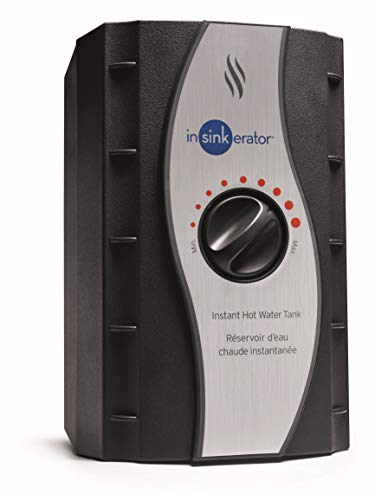
Ready Hot Compact Instant Hot Water Dispenser…
- INSTANT HOT WATER DISPENSER TANK ONLY : The Ready Hot compact instant hot water dispenser can dispense 60 plus cups of near boilin…
- MANUAL TEMPERATURE CONTROL: Manual temperature control knob allows you to adjust your desired temperature on the hot water machine…
- COMPACT STAINLESS STEEL DESIGN: Designed for under sink installation, the compact design of the 2.5-quart stainless steel dispense…
This article walks through the mechanical differences between open and closed systems, what happens inside the tank during a heating cycle, and how to figure out which one you have. You’ll also learn why the temperature and pressure (T&P) relief valve isn’t the safety net most people assume it is, and what an expansion tank actually does. By the end, you’ll know exactly what to check in your own home and when to call a plumber.
If you’re dealing with a small, localized hot water issue rather than a whole-house problem, a compact under-sink unit like the Ready Hot Compact Instant Hot Water Dispenser Tank can sidestep the main tank entirely. It’s a 2.5-quart stainless steel tank that mounts under a sink and delivers near-boiling water on demand, with a manual temperature dial from 140°F to 200°F. It’s not a replacement for a main system, but it’s a useful workaround for kitchens or offices where you want hot water fast without involving the whole-house plumbing.

What Defines an Open vs. Closed Hot Water System?
The difference comes down to one thing: whether water can flow backward out of your hot water tank into the municipal supply or well system.
An open system has a direct, unobstructed path from the water heater back to the supply line. When water heats up and expands, the extra volume pushes backward into the city main or the well pressure tank. The system absorbs that expansion naturally. No pressure spike.
A closed system has a one-way valve or device that blocks that backward path. A check valve, backflow preventer, or pressure-reducing valve (PRV) with a built-in check all create closed loops. Water can come in, but it can’t go back out. When the heated water expands, it has nowhere to go except against the tank walls and the pipes.
Here’s the part that catches people off guard: modern plumbing codes in many jurisdictions require backflow prevention at the main water line. That means a lot of homes that were originally open systems became closed systems the day a plumber installed a backflow preventer. The water heater didn’t change. The plumbing around it did.
You can also create a closed system accidentally. A failing check valve on a well pump, a pressure-reducing valve set to maintain a fixed pressure, or even a single-lever faucet with integral check valves can all block thermal expansion. The tank doesn’t know why the path is blocked. It just experiences the pressure.
How a Backflow Preventer Creates a Closed Loop
A backflow preventer does exactly what its name says. It lets water flow in one direction and stops it from flowing back. That’s great for keeping contaminated water out of the city supply. It’s terrible for thermal expansion.
Think about a 50-gallon tank set to 140°F. Cold water enters at 50°F. When that water heats up, it expands by roughly 2% of its volume. In a 50-gallon tank, that’s about one gallon of extra water volume that needs somewhere to go.
In an open system, that gallon pushes back into the supply line. The city main is essentially an infinite reservoir. The pressure barely moves.
In a closed system, that gallon has no exit. The backflow preventer blocks the return path. So the water compresses slightly, and the pressure climbs. It doesn’t climb linearly. It climbs exponentially as the tank walls resist further expansion.
Calculating the Pressure Spike: Why 150 PSI Happens
Let’s put real numbers on this. A typical home water pressure is 50 to 60 PSI. A water heater in a closed system can see pressure spikes to 150 PSI or more during a heating cycle.
Here’s the physics. Water is nearly incompressible. But it’s not perfectly incompressible. At 60°F, water has a bulk modulus of about 320,000 PSI. That means for every 320,000 PSI of pressure increase, the water volume decreases by 1%. The thermal expansion from a 50°F to 140°F temperature rise is about 2%. To absorb that 2% expansion by compression alone, you’d need a pressure increase of roughly 6,400 PSI. The tank would burst long before that.
So what actually happens? The tank walls stretch. The pipes flex. The air pocket at the top of the tank compresses. All of these absorb a little bit of the expansion, but not enough. The pressure rises until something gives.
That something is usually the T&P valve. It opens at 150 PSI (or 210°F) and dumps water. The pressure drops. The valve reseats. The cycle repeats. Every heating cycle, the valve spits out a little water. Over months, that’s a lot of water on the floor and a valve that’s one step closer to failing.
Why the T&P Valve is Not Your Primary Safety Net
The temperature and pressure relief valve is a critical safety device. It’s also routinely misunderstood.
People see the T&P valve dripping and think it’s a minor nuisance. They assume it’s doing its job. It is, technically. But a T&P valve that opens on every heating cycle is a symptom, not a solution.
The valve is designed to prevent catastrophic failure. It’s a last resort. It opens at 150 PSI or 210°F, whichever comes first. Those are extreme conditions. A properly functioning system should never get anywhere near those limits.
When a T&P valve discharges during normal operation, it means the pressure is spiking to 150 PSI on a regular basis. That’s a massive stress on the tank. The tank’s rated working pressure is usually 150 PSI, so the valve is opening right at the edge of the tank’s design limit.
Here’s the other problem. T&P valves are mechanical devices. They have springs and seats that wear. Every time the valve opens and reseats, it deposits a little bit of mineral scale on the seat. Eventually, the valve can fail to reseat properly, causing a constant drip. Worse, it can fail to open when needed.
A T&P valve that’s been leaking for months should be replaced, not just tightened. The valve is cheap, usually under $30. The tank it protects is not.
But replacing the valve doesn’t fix the underlying problem. The pressure spike is still there. You’ve just replaced the safety valve that was doing its job. The real fix is to give the expanding water somewhere to go.
Open System Risks: Backflow and Contamination
Closed systems get most of the attention because of thermal expansion. But open systems have their own set of problems.
The biggest risk in an open system is backflow. If the municipal supply loses pressure for any reason, water from your hot water tank can flow backward into the city main. That water may contain sediment, corrosion byproducts, or bacteria that grew in the tank. In a worst-case scenario, it can contaminate the supply for your neighbors.
This is why backflow preventers exist in the first place. They’re not just code. They’re a public health measure. Most municipalities require them on new installations or major renovations.
There’s also the issue of water quality in the tank itself. In an open system, water can flow back and forth between the tank and the supply line. That constant movement can pull in fresh, oxygenated water that accelerates corrosion inside the tank. Anode rods in open systems often wear out faster for this reason.
So you’re stuck with a trade-off. Open systems avoid thermal expansion pressure spikes but risk backflow contamination. Closed systems prevent backflow but create the pressure problem.
The solution isn’t to choose one over the other. The solution is to have a closed system with proper thermal expansion control. That means an expansion tank.
Identifying Your System: A Simple Homeowner Checklist
Before you can fix anything, you need to know what you’re dealing with. Here’s a step-by-step way to identify your system. You’ll need about 15 minutes and a flashlight.
- Find your main water shutoff valve. It’s usually where the water line enters the house, often near the water meter or where the pipe comes through the foundation.
- Look for a backflow preventer or check valve. It looks like a brass or bronze fitting with a cap on top, often with a test port. If you see one on the main line, you have a closed system.
- Check for a pressure-reducing valve (PRV). It’s a bell-shaped device with an adjustment screw on top. Many PRVs have a built-in check valve. If you have a PRV, assume you have a closed system unless you can confirm otherwise.
- Look for an expansion tank. It’s a small tank, usually 2 to 5 gallons, mounted near the water heater. It looks like a small propane tank with a connection at the bottom. If you have one, you already have the fix in place.
- Test the water hammer. Turn on a hot water tap and let it run for a minute. Turn it off quickly. If you hear a loud bang or thud in the pipes, that’s water hammer, which is often a sign of high pressure from a closed system.
- Check the T&P valve discharge pipe. If it’s wet or has mineral deposits around the end, the valve has been opening. That’s a strong indicator of thermal expansion pressure.
If you found a backflow preventer or PRV and you don’t have an expansion tank, you have a closed system with an unresolved thermal expansion problem. That’s the scenario that causes premature tank failure.
For a quicker fix in a single location, a mini tank water heater under a sink bypasses the main system entirely. It doesn’t solve the expansion issue, but it gives you hot water while you sort out the main tank.
The Fix: Sizing and Installing an Expansion Tank
An expansion tank is a small pressure vessel that gives the expanding water a place to go. It’s a simple device: a steel tank with a rubber diaphragm inside. One side is connected to the water system. The other side is pre-charged with air to a specific pressure.
When the water heater heats up and the water expands, the extra volume pushes into the expansion tank. The diaphragm compresses the air on the other side. The pressure rises, but only slightly, because the air is compressible. The water has somewhere to go.
Sizing is critical. An undersized tank will fill completely and then the pressure will spike anyway. An oversized tank works fine but wastes money and space.
The rule of thumb is 1 gallon of expansion tank capacity for every 10 gallons of water heater capacity, for a typical 50 PSI system. A 50-gallon tank needs a 5-gallon expansion tank. A 40-gallon tank needs a 4-gallon tank. If your supply pressure is higher, say 80 PSI, you need a larger tank because the air is already compressed more and has less room to expand.
There’s a formula that plumbers use, but the 10% rule gets you in the ballpark for most residential systems. If you have a high-pressure system or a very large tank, get a professional to do the calculation.
The air pressure in the expansion tank needs to be set to match your water pressure. You check it with a tire gauge on the valve at the top of the tank. You set it with a bike pump or air compressor. The tank must be empty of water when you check it. The procedure is: turn off the water, open a hot water tap to drain the tank, check the air pressure, adjust it to match your static water pressure, then close the tap and turn the water back on.
Installation is straightforward for a plumber. The tank mounts on the cold water supply line, ideally within a few feet of the water heater. It needs to be supported, because a 5-gallon tank full of water weighs about 40 pounds. Most tanks come with a mounting bracket or can be strapped to the wall.
If you’re handy, you can install it yourself. But if you’re not comfortable working with copper or PEX pipe, this is a good job to hand to a professional. The cost of the tank is usually between $50 and $150. Professional installation adds another $150 to $300. Compare that to the $1,200 to $2,500 cost of a new water heater, and it’s a cheap insurance policy.
For homes with a tankless system, the same principles apply. Tankless heaters still experience thermal expansion when they fire up. The expansion is smaller because there’s less water in the heat exchanger, but it’s not zero. If you have a closed system, you still need an expansion tank. The circulating pump setup in a tankless system doesn’t change that.
Code Requirements and Professional Inspection Guidelines
Building codes have caught up with the physics. The International Plumbing Code (IPC) and the International Residential Code (IRC) both address thermal expansion in closed systems.
IRC Section P2903.4 states that a water system with a check valve, backflow preventer, or pressure-reducing valve shall have an expansion tank or other approved device to control thermal expansion. The IPC has a similar requirement in Section 607.3.
What does this mean in practice? If you’re installing a new water heater in a home with a closed system, the inspector will likely require an expansion tank. If you’re replacing a water heater and the old one didn’t have an expansion tank, the inspector may flag it. Many jurisdictions now require expansion tanks on all new water heater installations, regardless of whether the system is open or closed, because they can’t easily verify the absence of a check valve.
The expansion tank itself also needs to be inspected. The air charge should be checked annually. The tank has a lifespan of 5 to 10 years, depending on water quality and how often it cycles. A failed expansion tank has a waterlogged bladder. It fills completely with water and provides no cushioning. The symptoms are the same as having no tank at all: T&P valve discharge and high pressure.
You can test your expansion tank easily. Tap it with a wrench. If it sounds solid, it’s full of water and needs replacement. If it sounds hollow, it still has an air charge. You can also check the air pressure with a tire gauge. It should match your water pressure.
If you’re hiring a plumber for any water heater work, ask them to verify the expansion tank charge and the T&P valve function. A good plumber will do this without being asked. A mediocre one won’t.
Open vs. Closed: A Side-by-Side Risk Comparison
Here’s a table that lays out the differences clearly. It’s worth bookmarking for reference.
| Feature | Open System | Closed System |
|---|---|---|
| Backflow path to supply | Yes, unobstructed | No, blocked by check valve or PRV |
| Thermal expansion pressure | Minimal, absorbed by supply line | Can spike to 150+ PSI |
| Primary risk | Backflow contamination | Premature tank failure, T&P valve discharge |
| T&P valve behavior | Normally inactive | May discharge on every heating cycle |
| Expansion tank required | No | Yes, per IRC/IPC |
| Tank lifespan impact | Normal, but faster anode wear | Significantly reduced without expansion tank |
| Code compliance | Varies, older installations | Required for new installations |
| Typical failure mode | Corrosion from oxygenated water | Leaking T&P valve, bulged tank bottom |
The table makes the trade-off obvious. Neither system is inherently better. Both are manageable with the right components. The problem is when a system is converted from open to closed without adding the expansion tank.
That conversion happens more often than you’d think. A homeowner installs a backflow preventer to pass a code inspection. Or a water utility adds a check valve at the meter. The water heater doesn’t know why the path is blocked. It just starts seeing pressure spikes. The expansion tank is the missing piece that makes a closed system safe.
Frequently Asked Questions on System Safety
How can I tell if my water heater is in a closed system?
Look for a backflow preventer or pressure-reducing valve on your main water line. If either is present, you have a closed system. You can also check for an expansion tank near the water heater. If you don’t have one, and you have a backflow preventer, you have an unresolved thermal expansion problem.
Why does my T&P valve leak water?
A T&P valve that drips or leaks is usually opening due to high pressure, not high temperature. That’s a classic sign of thermal expansion in a closed system. The valve opens at 150 PSI, releases water, and reseats. It’s doing its job, but it shouldn’t have to. The fix is an expansion tank.
Can I just cap off the T&P valve discharge pipe?
No. Absolutely not. The T&P valve is a safety device. Capping it means that if the tank overpressurizes, it will rupture instead of venting. That can cause a steam explosion that can destroy your house. If your T&P valve is leaking, fix the pressure problem, don’t silence the alarm.
How often should I replace the anode rod?
Most manufacturers recommend inspecting the anode rod every 2 to 3 years and replacing it when it’s more than 50% consumed. In an open system, the rod may wear faster due to fresh oxygenated water entering the tank. In a closed system, the rod is less critical for expansion issues, but still important for corrosion control.
Does a tankless water heater need an expansion tank?
Yes, if it’s in a closed system. The volume of water in a tankless heat exchanger is small, but the temperature rise is fast. The thermal expansion is real, though smaller than a tank heater. Many tankless installers include an expansion tank as standard practice. Check your local code, because many jurisdictions require it.
What happens if I ignore the problem?
You’ll shorten the life of your water heater. The repeated pressure spikes stress the tank welds and the internal lining. The T&P valve will wear out and may start leaking constantly. In the worst case, the tank will develop a stress fracture and leak. You’ll be replacing a 5-year-old tank that should have lasted 12 to 15 years.
If you’re already dealing with a slow hot water problem in one fixture, the issue might be separate from the expansion problem. A mini tank water heater can resolve a slow-flow issue without touching the main system.
What to Do With This Information
You now know more about hot water tank safety than most homeowners. Here’s the short version to act on.
- Check your main water line for a backflow preventer or PRV. If you find one, you have a closed system.
- Look for an expansion tank near your water heater. If it’s missing, that’s your problem.
- Watch for T&P valve discharge. A dripping valve is a warning sign, not a nuisance.
- Size the expansion tank at roughly 10% of your water heater capacity. A 50-gallon tank needs a 5-gallon expansion tank.
- Set the expansion tank air pressure to match your static water pressure. Check it annually.
- Replace a T&P valve that has been leaking. They don’t reseat perfectly after repeated discharge.
- If you’re unsure, hire a licensed plumber to do a thermal expansion assessment. It’s a cheap inspection that can save you a thousand dollars in premature tank replacement.
The cost of an expansion tank and installation is a fraction of the cost of a new water heater. It’s one of the few upgrades that pays for itself by preventing a failure you might not see coming. Now you know what to look for.

I am a mechanical engineer and love doing research on different home and outdoor heating options. When I am not working, I love spending time with my family and friends. I also enjoy blogging about my findings and helping others to find the best heating options for their needs.
Related guides
Fixing the Red Blinking Light on Your Honeywell Water Heater
That red blinking light on your Honeywell water heater is a call for help. It's the system's primary…
Can You Safely Enclose a Furnace and Water Heater Together?
You just finished framing the new utility closet. It looks clean, hides the mechanicals, and frees up floor…

Why Is My Rheem Electric Water Heater Dripping From Power Box?
A Rheem electric hot water heater may drip from the power supply box due to loose connections, damaged…