How Daily Temperature Swings Reshape Urban Planning
On this page 9 sections
- The Hidden Stress of Daily Temperature Swings
- Why Diurnal Range Matters More Than Peak Heat
- How Urban Form Amplifies or Dampens Thermal Swings
- Retrofitting Existing Neighborhoods for Thermal Balance
- The Economics of Thermal Resilience
- Case Studies: Cities Winning the Battle Against Thermal Volatility
- A Framework for Integrating Diurnal Data into Urban Planning
- What This Means for the Next Decade
- Frequently Asked Questions
You step outside at 8 AM and the air has that crisp, almost cold bite. By 3 PM, the same street feels like a brick oven. That swing — 20, 30, even 40 degrees Fahrenheit in a single day — is the real story of urban climate. Most planning conversations focus on the maximum temperature, the record-breaking heat wave. But the fluctuation itself, the rapid rise and fall, is what stresses our bodies, our buildings, and our power grid.
This article walks through the mechanics of diurnal temperature range (DTR), the difference between daytime high and nighttime low. You’ll learn why nighttime heat retention is a public health issue, how thermal fatigue cracks our roads and rails, and what cities are actually doing to buffer these swings. We’ll cover zoning codes, cool pavement, green infrastructure, and the economics of retrofitting old neighborhoods. You’ll leave with a framework for thinking about thermal buffering, not just cooling.
For anyone managing a chronic condition like diabetes, temperature swings aren’t just a comfort issue — they’re a safety issue. Insulin degrades when it gets too hot or too cold. A product like the HIMDUZE insulin cooler travel case addresses this directly. It maintains a stable internal temperature using insulated EVA material and reusable ice packs, with a built-in thermometer display so you know exactly what’s happening inside. It’s a practical tool for a very specific problem.
The Hidden Stress of Daily Temperature Swings
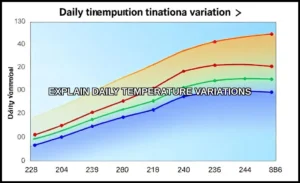
Heat waves grab headlines. Diurnal swings don’t. But consider the numbers: a desert city might see a 30°F swing between noon and midnight. A humid coastal city might see only 10°F. That difference isn’t trivial. It changes how buildings behave, how people sleep, and how much energy we burn.
The urban heat island effect (UHI) doesn’t just raise temperatures; it compresses the diurnal range. Concrete and asphalt absorb solar radiation during the day and release it slowly at night. A rural field cools off quickly after sunset. A city street does not. The result is a smaller temperature drop overnight, which means the body never gets a chance to recover from daytime heat.
This is where the concept of thermal buffering comes in. Instead of just trying to lower the peak temperature, urban planners are now looking at ways to widen the diurnal swing back toward a natural state. The goal is to let cities cool off at night, not just shade them during the day.
Why Diurnal Range Matters More Than Peak Heat
The maximum temperature tells you how hot it gets. The diurnal range tells you how much stress the system is under. A city that hits 100°F every day but drops to 70°F at night is far healthier than a city that hits 95°F and only drops to 85°F. The latter scenario offers no relief.
The Public Health Toll of Unrelenting Nighttime Heat
Human bodies need a temperature drop to initiate deep sleep. When nighttime lows stay above 80°F, sleep quality plummets. The body’s core temperature needs to fall for melatonin production and restorative cycles. If it doesn’t, you get a population that is chronically sleep-deprived, which leads to increased cardiovascular stress, impaired cognitive function, and higher rates of heat-related illness.
Studies on extreme heat events show that mortality rates spike when nighttime temperatures fail to drop below a certain threshold. It’s not the daytime high that kills; it’s the lack of overnight recovery. The body can handle a few hours of peak heat. It cannot handle 48 hours of unrelenting warmth without a break.
This is why temperature regulation strategies are shifting from simply shading streets to actively promoting nocturnal cooling. The goal is to restore the natural temperature drop that pavement and buildings suppress.
The Structural Fatigue on Roads, Rails, and Grids
Human comfort isn’t the only casualty. Infrastructure suffers from thermal fatigue. Every material has a coefficient of thermal expansion. Concrete expands in heat and contracts in cold. When that cycle happens daily, it creates micro-cracks. Over years, those micro-cracks become potholes.
Road pavement is particularly vulnerable. A study of asphalt performance shows that the number of freeze-thaw cycles matters less than the sheer frequency of large temperature swings. A road in a high-DTR environment will degrade faster than one in a stable climate, even if the average temperature is the same.
Rail tracks face a different problem. Steel rails expand when hot and contract when cold. If the ballast (the gravel bed) is too stiff, the rail has nowhere to go and buckles, causing derailments. Rail operators already monitor track temperature and impose slow orders during heat waves. But the daily swing means the track is constantly moving, loosening fasteners and stressing welds.

Power grids also suffer. Transmission lines sag when hot, reducing clearance from trees and structures. The daily cycle of expansion and contraction causes connectors to loosen over time. A grid designed for a 20°F swing is now facing 35°F swings in many regions, accelerating wear and tear.
How Urban Form Amplifies or Dampens Thermal Swings
The shape of a city determines its thermal behavior. A dense downtown with tall buildings creates canyons that trap heat. A sprawling suburb with lawns and trees behaves differently. The materials matter, but so does the geometry.
The Albedo Effect and Heat Storage in Building Materials
Albedo is a measure of how much solar radiation a surface reflects. A white roof has high albedo (reflects most light). A black asphalt road has low albedo (absorbs most light). Low-albedo surfaces absorb heat during the day and re-radiate it at night, reducing the diurnal swing.
Building materials also have thermal mass. Concrete and brick are heavy and hold heat for hours. Wood and lightweight steel cool off faster. A building made of high-thermal-mass materials will keep its interior warm long after the sun sets, which is great in winter but terrible in summer. The heat stored during the day radiates into the night, keeping the surrounding air warm.
The fix isn’t to abandon concrete. It’s to manage the thermal mass. Using phase-change materials (PCMs) in walls — materials that absorb heat as they melt and release it as they solidify — can buffer the swing. A PCM wall might absorb solar heat during the day and release it slowly at night, smoothing out the temperature curve. It’s not a new idea, but it’s gaining traction in urban environmental design.
The Role of Vegetation and Soil Moisture in Thermal Lag
Vegetation doesn’t just provide shade. It actively cools the air through evapotranspiration. Water evaporates from leaves, absorbing heat in the process. This creates a thermal lag: a tree canopy can delay the peak temperature by an hour or two and extend the cooling period into the evening.
Soil moisture matters too. Wet soil has a higher heat capacity than dry soil. It absorbs heat during the day and releases it slowly at night. Parks with irrigated lawns and rain gardens act as thermal sponges, moderating the local diurnal range. This is why urban forestry is a core strategy for heat resilience, not just an aesthetic choice.
The catch is water. In arid regions, irrigating enough vegetation to create a meaningful thermal buffer is water-intensive. Cities like Phoenix are experimenting with drought-tolerant native plants that still provide some evapotranspiration without requiring constant watering. It’s a trade-off between cooling and water conservation.
Retrofitting Existing Neighborhoods for Thermal Balance
New developments can be designed for thermal performance from day one. Existing neighborhoods are harder. Retrofitting means tearing up roads, changing building codes, and convincing residents to modify their homes. It’s slow, expensive, and politically tricky. But it’s necessary, because most of the urban fabric in 2050 is already built.
Zoning Codes and Mandates for Thermal Performance
Zoning codes are the legal lever cities have to force change. Some are starting to require cool roofs on new buildings — roofs with high albedo that reflect sunlight. A few, like Los Angeles, mandate cool roofs on all new residential construction. But cool roofs only address the daytime peak, not the nighttime swing.
More advanced codes are starting to address thermal mass and ventilation. For example, a code might require that buildings in a high-DTR zone have operable windows on opposite sides to allow cross-ventilation at night. Or it might restrict the use of dark paving materials in parking lots. These are incremental changes, but they accumulate.
The real challenge is enforcement. A code that requires a certain albedo is easy to check. A code that requires a building to be designed for natural nighttime ventilation is harder to verify. It requires performance modeling, which adds cost and time to the permitting process.
Smart Surfaces and Cool Pavement Strategies
Cool pavement is a broad term for materials that reflect more solar radiation than standard asphalt. Some are coatings applied on top of existing roads. Others are engineered mixes that use lighter-colored aggregates. The effect is a lower surface temperature during the day, which means less heat stored and less re-radiated at night.
But cool pavement isn’t a silver bullet. It can increase glare for drivers, and some reflective coatings reduce skid resistance. It also doesn’t help if the pavement is dirty — the albedo drops significantly once the surface gets covered in grime and tire residue. Cities like Los Angeles and Phoenix have pilot programs that show promise, but the long-term durability is still being tested.
Another strategy is permeable pavement, which allows water to drain through and evaporate, providing a cooling effect similar to soil. It works well in parking lots and low-traffic streets, but it’s not suitable for high-speed roads where structural strength is critical.
The Economics of Thermal Resilience
Spending money on thermal buffering is a hard sell when budgets are tight. The benefits are diffuse and long-term, while the costs are immediate and concrete. But the math changes when you account for emergency response costs and lost productivity.
Cost-Benefit Analysis of Green Infrastructure vs. Emergency Response
One heat wave triggers a cascade of costs: emergency room visits, ambulance runs, cooling center operations, and overtime for utility workers. A single city can spend millions on a week-long heat event. Green infrastructure — trees, green roofs, cool pavement — spreads that cost out over decades.
A 2026 analysis of Philadelphia’s urban forest found that every dollar spent on tree planting and maintenance returned $2.50 in benefits, mostly from reduced energy costs and improved air quality. The heat mitigation value is harder to quantify, but it’s real. Trees that shade a building reduce its cooling load, which reduces the strain on the grid, which reduces the risk of blackouts during heat waves.
The problem is that green infrastructure benefits are distributed unevenly. A tree planted in a wealthy neighborhood helps the people who live there. A tree planted in a low-income neighborhood helps the people who need it most, but those neighborhoods often lack the political capital to secure the funding. Heat vulnerability is a social justice issue, and thermal resilience planning has to account for that.
Case Studies: Cities Winning the Battle Against Thermal Volatility
Melbourne, Australia, suffered a series of brutal heat waves in the 2000s. Their response was a comprehensive urban forest strategy, aiming to increase canopy cover from 22% to 40% by 2040. They’ve planted thousands of trees in high-vulnerability neighborhoods and are using heat mapping to target the hottest spots.
Singapore takes a different approach. They’ve installed extensive green roofs and vertical gardens on public housing blocks. The city-state has also experimented with a district cooling system that uses seawater to chill water, which is then piped to buildings to provide air conditioning without individual compressors. This reduces the waste heat dumped into the streets.
Paris has been retrofitting its schoolyards, replacing asphalt with soil, trees, and water features. The goal is to create cool islands that children and elderly residents can use during heat waves. The projects also manage stormwater, killing two birds with one stone.
These cities share a common trait: they treat temperature fluctuation as a design problem, not a weather event. They measure the diurnal range, identify where it’s most compressed, and target interventions there.
A Framework for Integrating Diurnal Data into Urban Planning
Planners need data, not just anecdotes. A useful framework starts with heat mapping. A city should deploy a network of low-cost temperature sensors across different neighborhoods to measure the diurnal range, not just the daily high. This data reveals which districts have the most compressed swings and where the most vulnerable populations live.
Next, overlay that data with land surface temperature from satellite imagery. This shows where the heat-absorbing surfaces are concentrated. Combine that with building footprints and material types to create a thermal model of the city. This model can simulate the impact of different interventions — planting trees here, painting a roof white there, replacing a parking lot with permeable pavement.
Finally, use the model to prioritize projects. A neighborhood with high heat vulnerability, a compressed diurnal range, and a low tree canopy should get funding first. This is a data-driven way to allocate scarce resources.
This approach is not perfect. Models require calibration and assumptions. But a rough model is better than no model. The alternative is making decisions based on political pressure and anecdote, which is how we got here in the first place.
One practical note for anyone living with temperature-sensitive medications: the same principles of thermal buffering apply to your daily life. Daily temperature cycles in urban areas can expose your medicine to harmful extremes. A portable cooler, like the one mentioned earlier, gives you a micro-climate you control.
What This Means for the Next Decade
The conversation is shifting. Cities are starting to realize that managing the peak temperature is only half the battle. The other half is managing the recovery. A city that cools off at night is a city that can reset. A city that stays hot is a city that accumulates stress.
Here are the actionable takeaways for planners, policymakers, and residents:
- Measure the diurnal range, not just the daily high. Deploy sensors to find where the swing is most compressed.
- Prioritize nighttime ventilation. Design buildings and streets that allow heat to escape after sunset.
- Invest in cool pavement and high-albedo surfaces, but budget for maintenance and cleaning to preserve their effectiveness.
- Plant trees strategically in high-vulnerability neighborhoods, focusing on canopy coverage over streets and buildings.
- Update zoning codes to require thermal performance, not just energy efficiency. Operable windows and thermal mass management should be part of the standard.
- Use cost-benefit analysis that includes emergency response savings, not just energy savings, when evaluating green infrastructure projects.
- Treat thermal resilience as a social justice issue. Direct funding to neighborhoods with the highest heat vulnerability and the least existing green space.
These steps won’t eliminate daily temperature swings. They will, however, make them more survivable. And that’s the goal.
Frequently Asked Questions
What is a healthy diurnal temperature range for a city?
There’s no single number, but a range of 15-25°F is typical for many inland cities. Coastal cities naturally have smaller swings, often 10-15°F. When the swing drops below 10°F in a hot climate, that’s a red flag for heat retention. The goal is to restore the natural range for your specific geography, not to hit an arbitrary target.
How does the urban heat island effect specifically alter the diurnal range?
The UHI effect raises nighttime temperatures more than daytime temperatures. Buildings and pavement absorb heat during the day and release it slowly at night, so the city never fully cools off. This compresses the diurnal range, meaning the difference between high and low temperatures shrinks. The peak might be similar to the surrounding area, but the low is much higher.
Can cool roofs really make a difference in a dense city?
Yes, but only if they’re widespread. A single white roof has a negligible effect. If an entire block converts to cool roofs, the ambient temperature can drop by 1-2°F during the day. That’s not huge, but it reduces the heat stored in the building mass, which means less heat radiated at night. It’s a compounding effect.
What’s the cheapest way to reduce nighttime heat retention?
Planting trees is usually the most cost-effective over the long term. Trees provide shade, cool the air through evapotranspiration, and don’t require ongoing energy input. The maintenance cost is real, but it’s far less than the cost of repaving roads with cool pavement or retrofitting buildings. The challenge is finding space for roots in dense urban areas.
How do daily temperature swings affect energy demand?
Every degree of temperature swing requires energy to counter it. A building that experiences a 30°F swing needs a heating and cooling system sized for the extremes, which is less efficient than a system designed for a 15°F swing. This is why daily temperature shifts affect HVAC efficiency so much. The grid must also handle the rapid ramping of demand in the late afternoon as everyone turns on AC simultaneously.