Copper pipes have long been trusted for plumbing, but hot water systems expose them to corrosion that can lead to leaks and water damage. This guide covers what causes copper corrosion, how to detect it early, and practical maintenance steps to extend your system’s life.
You’ll learn how to inspect your pipes, maintain your water heater, and avoid common mistakes that worsen corrosion. Some tasks are DIY-friendly, while others need a licensed pro, especially when permits are required.
Copper in Hot Water Systems: Causes and Prevention
Copper pipes in hot water systems often face heat and mineral buildup, which can cause corrosion over time. You can slow this down by controlling water temperature, using proper pipe insulation, and treating hard water. Regular checks help catch early signs before leaks start.
Copper corrosion usually appears in two forms. Uniform corrosion removes metal gradually across a broad area, while pitting corrosion attacks tiny spots and can eventually punch through the wall as a copper pipe pinhole leak. Pitting is the sneaky one: the pipe may look sound until a small wet spot appears.
Low or high pH can make water more corrosive, and dissolved oxygen gives corrosion reactions what they need to continue. Chlorine can also attack copper, especially when its concentration, water temperature, or contact time is high. Hard water may leave scale that sometimes shields the pipe, but heavy deposits can restrict flow and create local hot or turbulent spots; very soft, low-alkalinity water can be more aggressive.
Heat speeds most chemical reactions, so hot water generally corrodes copper faster than cold water when the other conditions are the same. A water heater set hotter than necessary, a long recirculation loop, or water sitting hot for hours can increase exposure. Follow the heater manufacturer’s temperature guidance and local requirements instead of turning the thermostat up to solve a slow-heating problem.
Galvanic corrosion starts when dissimilar metals are electrically connected while water bridges them. Copper joined directly to steel or another less-noble metal can become the metal that corrodes faster, particularly at fittings and transitions. Use the connection method, dielectric separation, and materials required by the pipe and heater manufacturers and local code.
Excessive flow velocity and turbulence can strip away the protective surface film on copper. Undersized pipe, sharp changes in direction, partly closed valves, and poorly arranged recirculation can concentrate that damage near elbows, tees, and fittings.
Water-heater conditions matter as much as the pipe itself: high temperature, sediment, frequent fresh-water replacement, and air entering through leaks can all worsen the environment around copper. A written service schedule makes those checks easier; the central hot water system maintenance guide covers the heater-side work that supports the pipework.
Inspect Copper Pipes for Corrosion and Damage
Look for greenish or bluish stains, white deposits, or pitting on copper pipes. These signs point to corrosion or mineral buildup. Check joints and fittings for leaks or discoloration, and listen for dripping sounds that signal a problem.

Start With A Cold, Dry Inspection
- Let the pipes cool, then use a bright flashlight to inspect straight sections, elbows, tees, soldered joints, compression fittings, and the area beneath valves. Don’t handle a hot pipe or loosen a fitting under pressure.
- Wipe accessible pipe surfaces and joints with a dry paper towel. A new damp mark, green residue, crust, or white deposit is evidence to investigate; don’t scrape hard enough to thin the pipe.
- Look for tiny dark spots, shallow craters, or a pinhole spraying a fine stream. A copper pipe pinhole leak can hide under insulation or a green crust, so check the floor, cabinet base, and wall below the pipe too.
- Open a nearby cold-water tap and note pressure and color. Low pressure can result from a partially closed valve, clogged aerator, or a leak, so treat it as a clue rather than proof of corrosion.
Metallic taste or blue-green water can point to copper dissolving into the water, but taste and color alone can’t measure the concentration. Water that sits in copper plumbing overnight may show more discoloration on the first draw, while a persistent change at several fixtures needs testing.
Check Joints Without Making A Leak
Keep a bucket and shutoff location in reach before touching a suspect joint. Never tighten or twist a hot, wet, or visibly weakened fitting during a first inspection; mark the location, photograph it, and shut off the local valve or main supply if water is escaping. A small seep can become a spray when a weakened pipe is disturbed.
Know When To Test The Water
Have the water tested for copper when blue-green staining or metallic taste keeps returning, several fixtures show the same problem, a pinhole leak has appeared, or the plumbing has been disturbed and the water remains discolored after flushing. Use a certified laboratory or your water utility’s sampling instructions, and ask how to collect both a first-draw sample and a flushed sample when requested.
Maintain Your Hot Water System to Protect Copper Pipes
Keep your hot water system working well by flushing the tank annually to remove sediment, which protects copper pipes from damage. Set the water heater thermostat to about 120°F to reduce corrosion risk and save energy. Inspect anode rods and replace them when worn to extend tank life.

Flush Sediment Once a Year
Sediment holds heat against the tank bottom and can make the burner or element work harder, while disturbed deposits can travel toward valves and fittings. Turn off the fuel or electrical supply, let the water cool, connect a garden hose to the drain valve, and discharge the water to a safe drain. Open a hot-water tap before opening the drain, then keep flushing until the water runs clear; follow the heater manual if its procedure differs.
Check And Replace The Anode Rod
Replace the water heater anode rod when inspection shows that much of its sacrificial metal is gone, because the rod corrodes in place of the steel tank. Shut down the heater, close the cold-water supply, relieve pressure, and use the manufacturer’s instructions; a rod can be difficult to remove when overhead clearance is tight. Never disturb the T&P valve or cap its discharge line during this work.
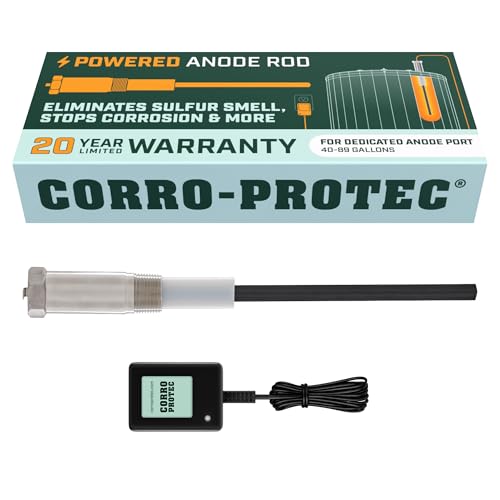
Product 1 is designed to replace a hex-head anode, reduce sediment buildup, and address sulfur odor in hot water. Its powered design avoids routine replacement of a depleted magnesium or aluminum rod, but installation still needs the correct port, electrical connection, and heater compatibility.
Separate Dissimilar Metals
Use dielectric unions where copper connects to steel or galvanized components. The union interrupts the electrical path between dissimilar metals, reducing galvanic corrosion at the connection; confirm that the fitting is installed in the correct direction and remains accessible for inspection.
Treat The Water You Actually Have
Test the incoming water before buying treatment equipment. A pH neutralizer can correct acidic water, a filter can remove particular contaminants, and a softener can reduce hardness, but softened water can be more corrosive to some systems if the installation and chemistry aren’t managed correctly. Match treatment to the test result, then keep checking it after installation.
Common Mistakes That Cause Copper Pipe Damage and Leaks
Avoid raising water temperature too high; it speeds corrosion. Don’t use chemical drain cleaners that can harm pipes. Skipping regular maintenance lets sediment build up, which wears copper faster. Tightening fittings too much can crack pipes or joints, causing leaks.
Connecting Copper Directly To Steel
Copper connected directly to steel or galvanized pipe can create galvanic corrosion at the joint because the dissimilar metals form an electrical path in the presence of water. Install the correct dielectric union between them, and don’t treat ordinary thread sealant as a substitute for that separation.
Ignoring The Anode Rod
An anode rod that has been consumed can no longer protect the steel tank, so corrosion may progress toward the tank wall and connected fittings. Skipping that check can turn a replaceable rod into a leaking water heater.
Running The Heater Too Hot
Setting the water heater above 120°F (49°C) increases scald risk and adds thermal stress to the system. Higher temperature also accelerates many water-chemistry reactions, so don’t raise the setting to compensate for a circulation or insulation problem without checking the cause.
Skipping Water Tests And Tank Flushing
Ignoring pH, hardness, dissolved minerals, or other local water conditions leaves the actual corrosion driver unknown. Sediment buildup then adds another problem by insulating the tank bottom and encouraging noisy, inefficient heating. Test the water, choose treatment from the result, and flush the storage tank annually rather than waiting for a leak.
When to Call a Licensed Pro and Obtain Permits
Call a licensed plumber if you find leaks, severe corrosion, or if your system shows pressure loss. Permits are required for major plumbing work to meet local codes and ensure safe installation. Professionals can test water quality and recommend treatments to protect copper pipes.
Call a licensed plumber for water heater repair when the tank leaks, the T&P valve discharges, a gas connection needs attention, or a repair requires opening the pressurized vessel. Gas connections and venting need the right leak checks and draft requirements; electrical connections and 240 V circuits are jobs for a licensed electrician in most places.
Stop Before Opening The System
A professional inspection is also the sensible next step after a flood, overheated tank, repeated pressure relief, or suspected cross-connection. The repair may look small from the basement floor and still involve code, combustion, or scald hazards.
Pre-Use Checklist for Copper Hot Water Systems
Frequently Asked Questions
What causes copper pipes to corrode faster in hot water systems?
How often should I replace the anode rod in my water heater?
Can I install a powered anode rod myself?
Why does my hot water sometimes have a metallic taste?
Is it safe to repair copper pipe pinhole leaks on my own?
What water temperature is best to prevent copper pipe corrosion?
Do I need a permit to replace copper pipes in my home?

I am a mechanical engineer and love doing research on different home and outdoor heating options. When I am not working, I love spending time with my family and friends. I also enjoy blogging about my findings and helping others to find the best heating options for their needs.
Related guides

My Rheem Water Heater Outdoor Jacket Upgrade Cut Energy Bills!
Slash your energy bills with a Rheem water heater outdoor jacket insulation upgrade that cuts standby losses and…
Excel On Demand Water Heater Flashing Red Light? Fix It Fast
If your Excel on-demand hot water heater is flashing a red light, it typically indicates a fault; check…
Rheem Water Heater Retrofit Kit Review: Upgrade 40-Gal Gas to 50-Gal Electric
Ready to upgrade? See how the Rheem water heater retrofit kit swaps your old 40-gal gas model for…