

Convection heaters provide rapid heating through circulating warm air, making them ideal for quick warmth in small spaces, while oil-filled radiators offer steady, long-lasting heat with greater energy efficiency, suitable for larger areas or prolonged use.
Choosing between a convection heater and an oil filled radiator can be tricky. Both have unique benefits depending on your heating needs. This guide breaks down the key differences to help you decide.

PELONIS
PELONIS Radiator Heater for Large Space, Electric…
- 𝑭𝒂𝒔𝒕 𝑯𝒆𝒂𝒕𝒊𝒏𝒈, 𝑳𝒂𝒔𝒕𝒊𝒏𝒈 𝑪𝒐𝒎𝒇𝒐𝒓𝒕: The 1500W power heats the whole house rapidly and the hot air circulation delivers long-lasting and…
- 𝑬𝒏𝒆𝒓𝒈𝒚 𝑬𝒇𝒇𝒊𝒄𝒊𝒆𝒏𝒕: Equipped with 3 heating modes 600W/900W/1500W, which can also be used in combination to help save energy bills i…
- 𝑾𝒉𝒊𝒔𝒑𝒆𝒓-𝑸𝒖𝒊𝒆𝒕: Lacking of fan construction, PELONIS oil heater is super quiet, perfect for bedrooms, offices, rooms and other indo…
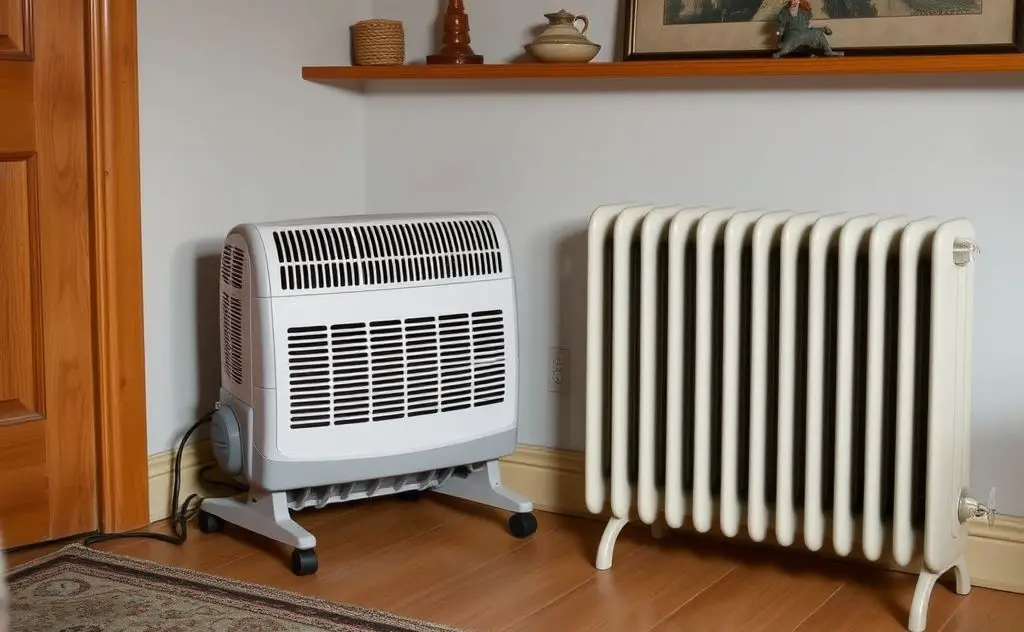
How Convection Heaters Work
Convection heaters use an electric element to warm air inside the unit. The hot air rises, creating a current that circulates warmth throughout the room. Many models include fans to speed up this process.
Key Features of Convection Heaters
- Fast heating – warms rooms quickly
- Lightweight and portable
- Often include fans for better air circulation
- Some models have adjustable thermostats
For those needing more details on convection technology, we have an in-depth guide.
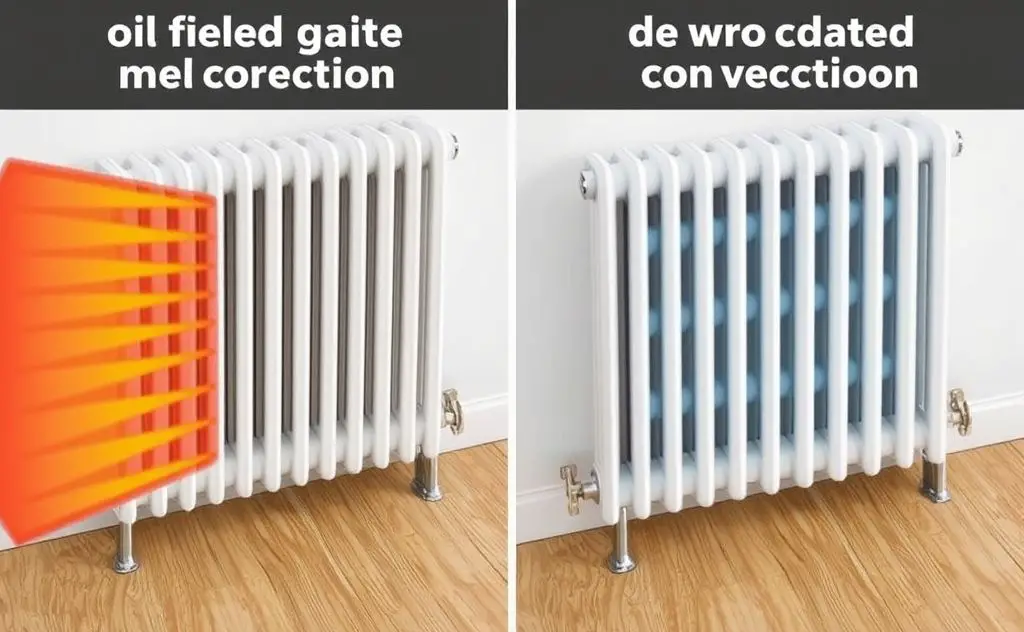
How Oil Filled Radiators Work
Oil filled radiators heat diathermic oil inside sealed columns. The oil retains heat well, continuing to warm a room even after the unit turns off. Learn more about oil radiator operation in our dedicated article.
Key Features of Oil Radiators
- Long-lasting heat retention
- Silent operation (no fans)
- Stable, even heat distribution
- Often include timers and thermostats
Head-to-Head Comparison
| Feature | Convection Heater | Oil Filled Radiator |
|---|---|---|
| Heating Speed | Fast (minutes) | Slow (30+ minutes) |
| Heat Retention | Poor (cools quickly) | Excellent (hours) |
| Energy Efficiency | Lower (constant power needed) | Higher (cycles on/off) |
| Noise Level | Moderate (with fan) | Silent |
| Safety | Hot surfaces | Cooler surfaces |
Which is More Cost Effective?
Both types consume the same wattage when running. However, oil radiators often cost less to operate because:
- They retain heat longer between cycles
- They maintain temperature with less power
- Their thermostats are more precise
According to Energy.gov, proper use of thermostats can reduce heating costs by up to 10% annually.
Best Use Cases
When to Choose a Convection Heater
- Quick heat needed in small spaces
- Temporary or occasional heating
- Areas where portability matters
When to Choose an Oil Radiator
- Long heating sessions
- Bedrooms or living areas
- Quiet environments
- Energy efficiency priority
Safety Considerations
Both types are generally safe when used properly. Oil radiators have cooler surfaces, making them better for homes with children or pets. Convection heaters should never be covered or placed near flammable materials.
For those considering other heating options, our guide on oil radiator pros and cons provides additional insights.
Maintenance Requirements
Convection heaters need occasional dusting of internal elements. Oil radiators require no maintenance beyond surface cleaning. Neither type needs refilling – the oil in radiators is permanently sealed.
According to Consumer Reports, proper maintenance can extend heater lifespan by several years.
Environmental Impact
Both types run on electricity. Their environmental impact depends on your local power source. Oil radiators may have a slight edge by using less electricity overall.
Related pick: Check today's price on Amazon

I am a mechanical engineer and love doing research on different home and outdoor heating options. When I am not working, I love spending time with my family and friends. I also enjoy blogging about my findings and helping others to find the best heating options for their needs.
Related guides

PETSITE 1500W Oil Filled Radiator Heater: Comfort Meets Safety!
Stay warm this winter with the PETSITE 1500W Oil Filled Radiator Heater. Find out why it’s the perfect…
Optimus H-6003 Heater: Compact Comfort for Cold Spaces
Stay warm this winter with the Optimus H-6003 Portable Oil Filled Radiator Heater. Read our review to find…
Does Home Heating Oil Go Bad? Shelf Life & Storage Tips
Home heating oil can go bad over time, typically within 18 to 24 months, due to factors like…
