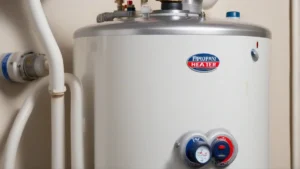
How to Increase Your Bradford White Water Heater Temperature
On this page 5 sections
You’re looking at your Bradford White water heater and wondering if you can crank up the heat. Maybe your showers aren’t as hot as you’d like, or your dishwasher needs a boost. The short answer is yes, you can often increase your Bradford White water heater temperature above the common 140F setting. But it’s not a simple dial-twist without consequences.
This process involves understanding your specific model, locating the temperature adjustment dial, and weighing significant safety and efficiency trade-offs. For a precise adjustment, having the right tools helps. Many professionals recommend using a tool like the Check price on Amazon for accurate temperature readings and safe access. Let’s walk through what you need to know to make an informed decision.

Understanding Bradford White Temperature Settings

Your Bradford White water heater is designed with specific manufacturer’s recommendations in mind. Most residential models have a thermostat range that typically spans from about 120F to 150F or 160F. The “A-B-C” or “Hot” dial you see isn’t arbitrary. Each letter or setting corresponds to a temperature range, often detailed on the unit’s energy guide label or inside the thermostat access panel.
It’s crucial to distinguish between gas and electric models, as their adjustment mechanisms differ. Gas units usually have a single control knob. Electric models have two thermostatsone for the upper heating element and one for the lower. Both must be set to the same temperature for proper operation. newer models with digital displays or advanced scald prevention features, like the Scald Guard technology on some Bradford White heaters, operate differently than older analog units.
Safety Considerations for Higher Temperatures
Increasing your hot water temperature above 140F introduces real risks. The primary concern is scald injury. At 150F, it takes just about 1.5 seconds for a serious burn to occur. This is especially dangerous for children, the elderly, or anyone with reduced sensitivity.
Higher temperatures also accelerate mineral buildup (scale) inside the tank and on the heating elements. This reduces efficiency, increases energy costs, and can shorten the lifespan of your unit. There’s also increased pressure on the safety valve (the T&P valve) and internal components. Before you consider an increase hot water temperature, ask yourself if the need is genuine. Often, issues like running out of hot water are solved by other means, like checking the thermostat settings or considering a larger unit, as discussed in our comparison of Bradford White vs Rheem water heaters.
Step-by-Step Temperature Adjustment Guide
If you’ve assessed the risks and still need to proceed, follow this guide carefully. Always turn off the power to an electric heater at the circuit breaker, or set a gas heater to the “Pilot” setting before beginning.
1. Locate and Access the Thermostat
Find the thermostat access panel on the side of your water heater. You’ll need a screwdriver to remove the cover. For electric models, you will see two panelsone for each thermostat. Carefully remove the insulation to reveal the temperature control dial.
2. Adjust the Temperature Dial
Using a flat-head screwdriver, gently turn the dial to your desired setting. Common markings include:
- Hot (or “A”): ~120F
- Very Hot (or “B”): ~130F
- C (or “Hotter”): ~140F
- D (or “Very Hotter”): ~150F+
For a precise setting, use a thermometer at a faucet after the tank has fully reheated. Run the hot water for a few minutes, then measure. This is where a tool like the EWH-00 Water Heater thermometer is invaluable.
3. Reset and Reassemble
For electric heaters, ensure both thermostats are set identically. Replace the insulation and screw the access panel back on securely. Restore power or turn the gas valve back to “On.”
Common Issues and Troubleshooting
Even after adjusting water heater heat, you might encounter problems. Here are a few common scenarios:
- Temperature Doesn’t Change: The thermostat might be faulty. On electric models, a failed heating element will also prevent the water from heating, regardless of the thermostat setting.
- Water is Too Hot at Faucet: Your heater may be set correctly, but a faulty tempering valve or anti-scald device at the faucet could be the culprit.
- Inconsistent Temperature: This often points to a failing thermostat or, in gas models, a problem with the gas control valve. Sediment buildup can also cause erratic heating.
Understanding these nuances is part of what defines how good Bradford White water heaters arethey’re built to last, but components can wear.
 Water Heater Owner's ToolkitFix the common faults yourself, keep it running for years, and know when a repair is money wasted.No-hot-water flowcharts, gas and electricFlush, anode, relief valve and descaling stepsRepair-or-replace calculator (Excel)
When to Contact a Professional
Some situations clearly call for expert help. Contact a licensed plumber if:
- You are uncomfortable working with electrical components or gas lines.
- The adjustment dial is stuck, broken, or shows signs of corrosion.
- You suspect a malfunctioning thermostat or heating element.
- Your model has a digital control system or integrated scald guard adjustment that isn’t user-serviceable.
- You have a commercial-grade Bradford White unit. Commercial vs residential differences are significant, and these systems often have complex controls and higher manufacturer temperature limits.
A professional can ensure the adjustment is done safely and diagnose any underlying issues affecting your hot water supply. They can also verify that your unit’s safety valve is rated for the new, higher temperature setting.
Balancing Heat with Efficiency
Remember, every 10F increase in temperature can raise your water heating costs by 3-5%. Finding the right balance is key. The Department of Energy recommends 120F for optimal energy efficiency and safety. If you need hotter water for specific appliances like dishwashers without a booster heater, consider installing point-of-use heaters for those tasks instead of raising the whole tank’s temperature.
For the most authoritative information on your specific model, always refer to the official Bradford White website for manuals and technical specifications.
Final Thoughts on Temperature Adjustment
You can increase your Bradford White water heater’s temperature above 140F. The physical process of adjust water heater thermostat is straightforward. However, the decision to do so should not be taken lightly. The trade-offs in safety, component stress, and operating costs are real.
Always prioritize a safe and efficient home. Start by troubleshooting why you feel you need hotter water. Is it a capacity issue? A sediment-clogged tank? A faulty dip tube? Addressing the root cause is often better than simply turning up the dial. Your water heater is a workhorsetreat it with informed care, and it will serve you reliably for years.