

You bought a pound of snow crab, ate half, and now the rest sits in the fridge. Or you pulled a bag of frozen king crab legs out of the deep freeze with no plan. The instinct is to nuke them for two minutes and hope for the best. That’s how you get rubbery, salty, sad meat that tastes like the ocean left a bad review.
Reheating crab legs is a moisture game. The meat is already cooked — your only job is to bring it to serving temperature without squeezing out the natural juices or turning the proteins tough. Heat too fast or too dry, and the muscle fibers contract and expel water. Heat gently with steam or a sealed pouch, and you get tender, juicy meat that tastes almost as good as fresh.
Kenmore
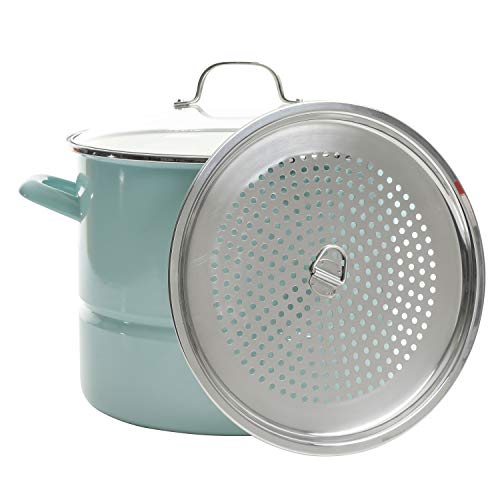
Kenmore Broadway 16-Quart Stock Pot With Steamer…
- STEAM TO PERFECTION: Stainless steel insert seamlessly fits over steamer pot for perfectly steamed tamales, lobster, mussels, clam…
- BEAUTIFUL AND CAPABLE: Durable steel pot construction promotes quick, precise heating; brilliant blue hard enamel exterior cleans…
- LARGE STURDY HANDLES: Make lifting and moving the pot easy even when fully loaded
This guide ranks the five practical methods by speed, moisture retention, and flavor. You’ll get exact times for frozen vs. thawed crab, visual cues for doneness, and a workflow that goes straight from freezer to table without a thawing step. No guesswork.
For steaming large batches — which is the best overall method — a wide pot with a steamer insert makes the job easier. The Kenmore Broadway 16-quart stock pot with steamer insert holds a full pound of legs in a single layer, and the stainless insert keeps the meat above the water line so you’re steaming, not boiling.

Why Reheating Crab Legs the Right Way Matters
Crab meat is mostly protein and water. When you reheat it, you’re balancing two competing goals: getting the center warm enough to enjoy (around 145°F internal) and not letting the surface get hot enough to toughen. The window is narrow.
Overcooked crab gets a texture people describe as rubbery or stringy. That’s the protein denaturing and squeezing out moisture. Once that happens, no amount of butter can fix it. The good news is that gentle heat — steam, a covered oven, or a microwave with a damp paper towel — stays inside that window.
There’s also a food safety angle. Leftover crab should be refrigerated within two hours of cooking and eaten within three to four days. Reheat it to an internal temperature of at least 145°F to kill any surface bacteria that grew during storage. You can safely reheat crab once. Twice is pushing it — each cycle degrades texture and increases risk. If you have a huge batch, split it and reheat only what you’ll eat.
The Best Overall Method: Steaming (Step-by-Step Guide)
Steaming wins because it’s gentle, fast, and adds no extra fat. The steam surrounds each leg evenly, so you don’t get hot spots like you do in a microwave. It’s the method most seafood restaurants use for a reason.
- Add about two inches of water to a pot with a steamer basket or insert. The water should not touch the bottom of the basket.
- Bring the water to a rolling boil over high heat, then reduce to medium so it maintains a steady simmer.
- Arrange the crab legs in the basket in a single layer. Overlapping is fine, but don’t stack them more than two deep.
- Cover the pot and steam for 4-6 minutes for thawed legs, 8-10 minutes for frozen. Start checking at the lower end.
- Remove one leg, crack it open, and test the thickest part. It should be hot and moist, not steaming like a volcano.
Pro tip: add a bay leaf or a splash of white wine to the water. The steam carries a hint of flavor into the meat without overpowering it.
How to Steam Frozen vs. Thawed Crab Legs
Frozen legs need roughly double the time. For a 1-pound bag of frozen snow crab, steam for 9-11 minutes. For thawed legs, cut that to 4-6 minutes. The key is to check early — frozen crab can go from perfect to overcooked in about 90 seconds once it’s hot.
If you have time, thaw in the fridge overnight. The texture is marginally better because the meat heats more evenly. But if you’re in a hurry, steaming from frozen works fine. Just add a few minutes and don’t walk away.
How to Reheat Crab Legs in the Oven (For Large Batches)
Oven reheating is the best choice when you’re feeding a crowd. You can do three to four pounds at once on a sheet pan, and the dry heat is easy to control. The downside is that the surface can dry out if you’re not careful.
- Preheat the oven to 350°F.
- Arrange the crab legs in a single layer on a rimmed baking sheet.
- Cover the pan tightly with aluminum foil. This traps steam and keeps the meat moist.
- Bake for 10-12 minutes for thawed legs, 15-18 minutes for frozen.
- Check the thickest joint — it should be hot to the touch and the shell should feel warm, not scalding.
The Foil Pouch Trick to Lock in Moisture
Skip the open pan entirely. Lay out a large sheet of foil, place the crab legs in the center, and pour two tablespoons of water or melted butter over them. Fold the foil into a sealed packet, leaving a little air space. This creates a mini-steamer inside the oven.
Foil pouches reheat faster than an open pan — about 8 minutes at 350°F for thawed legs — and the meat comes out noticeably juicier. The trade-off is that you can’t check doneness without opening the packet, so err on the side of shorter time. You can always put it back in.
The Quickest Method: Microwaving (Without Drying Them Out)
Microwaving is the fastest option, but it’s also the easiest to mess up. The microwave’s uneven heating can turn the thin parts of the leg rubbery while the thick joint stays cold. That said, you can get decent results if you follow a specific protocol.
- Place the crab legs in a microwave-safe dish.
- Cover them with a damp paper towel. The towel adds moisture and prevents the surface from drying out.
- Microwave on 50% power (medium) for 30-45 seconds per 4 ounces of crab.
- Flip the legs over and microwave for another 30-45 seconds.
- Check the thickest part. If it’s not hot, add 15-second bursts.
The damp paper towel is non-negotiable. Without it, you’ll get dry, chewy meat. Also, don’t use high power — the difference between 50% and 100% is the difference between tender and tough.
How to Reheat Crab Legs on the Grill (For a Smoky Flavor)
Grilling adds a smoky char that changes the flavor profile entirely. It’s not traditional, but it works surprisingly well for king crab legs. The key is to use indirect heat and a foil barrier so the meat doesn’t dry out.
- Preheat the grill to medium (about 350°F).
- Wrap the crab legs in a double layer of heavy-duty foil with a tablespoon of butter or water.
- Place the foil packet on the cooler side of the grill, away from direct flames.
- Cook for 6-8 minutes for thawed legs, 12-15 minutes for frozen, turning once.
- Open the packet carefully — steam will escape.
If you want a more direct smoky flavor, grill the legs unwrapped for the last minute. Watch them closely; the thin shell can burn quickly.
How to Reheat Crab Legs in Boiling Water (The Fastest Traditional Way)
Boiling is fast and foolproof, but it’s the easiest way to overshoot. The water is at 212°F, which is well above the temperature where crab protein toughens. You have to be precise.
- Bring a large pot of water to a rolling boil.
- Turn off the heat completely.
- Drop in the crab legs and cover the pot.
- Let them sit for 4-5 minutes for thawed legs, 7-8 minutes for frozen.
The residual heat does the work without the aggressive bubbling. This is the same technique chefs use for poached eggs — gentle, controlled heat. If you leave the burner on, you’ll overcook the crab in under a minute.
How to Reheat Frozen Crab Legs Without Thawing
You can go straight from the freezer to the table with any of the methods above. Here’s the timing cheat sheet:
- Steam: 9-11 minutes
- Oven (foil pouch): 15-18 minutes at 350°F
- Microwave (50% power): 2-3 minutes per pound, flipping every 45 seconds
- Boil (off-heat method): 7-8 minutes
The one thing you shouldn’t do is thaw frozen crab in the microwave before reheating. That partially cooks the thin parts and leaves you with uneven texture. Go straight to the final cooking method.
How to Tell When Reheated Crab Legs Are Done (Visual Cues)
You can’t rely on a timer alone. Here’s what to look for:
- Shell color: The shell should be bright red or orange, not dull or gray. A dull shell means it’s been heated too long.
- Steam output: When you open the pot or foil, you should see a steady wisp of steam, not a billowing cloud. Heavy steam means it’s already past optimal.
- Meat appearance: Crack one leg open. The meat should be opaque white with a slight sheen. If it looks dry or flaky, it’s overcooked.
- Internal temperature: If you have a thermometer, aim for 145°F in the thickest muscle. That’s the safe zone and the texture sweet spot.
When in doubt, pull it out early. Carryover heat continues to cook the crab for another minute or two after you remove it from the heat source.
Pro Tips for Serving: Butter, Sauces, and Seasonings
Reheated crab needs a good dipping sauce. Clarified butter is the classic — it has a higher smoke point and a richer flavor than regular butter. Melt it slowly over low heat and skim off the milk solids.
For a quick garlic butter, melt half a stick of butter with one minced garlic clove and a pinch of Old Bay. Warm it gently for two minutes; don’t let the garlic brown. For a lighter option, mix melted butter with fresh lemon juice and a dash of smoked paprika.
If you’re reheating a large batch, warm the sauce in a small saucepan while the crab steams. That way everything hits the table at the same temperature.
Seasoning goes on after reheating, not before. Salt draws moisture out of the meat, so if you season before heating, you’ll end up with drier crab. Sprinkle a little sea salt and Old Bay right before serving.
Method Comparison Table
| Method | Time (Thawed) | Time (Frozen) | Moisture Retention | Best For |
|---|---|---|---|---|
| Steaming | 4-6 min | 9-11 min | Excellent | Best overall; even heat |
| Oven (foil pouch) | 8-10 min | 15-18 min | Very good | Large batches, crowds |
| Microwave | 1-2 min | 2-3 min | Fair (with damp towel) | Single serving, speed |
| Grill | 6-8 min | 12-15 min | Good (with foil) | Smoky flavor, outdoor cooking |
| Boiling (off-heat) | 4-5 min | 7-8 min | Good | Fast, no special equipment |
Frequently Asked Questions About Reheating Crab Legs
Can I reheat crab legs more than once?
Technically yes, but you shouldn’t. Each reheating cycle degrades the texture and increases the risk of bacterial growth. Reheat only the amount you’ll eat in one sitting. If you have leftovers from your leftovers, use them cold in a salad or crab cake rather than reheating again.
Why do my crab legs turn out rubbery no matter what I do?
You’re using too much heat. The protein in crab meat coagulates at around 140°F and gets tough at 150°F. High heat — boiling on a live burner, microwaving on full power — pushes the surface well past that point before the center warms up. Drop the heat and extend the time.
Is it better to reheat crab legs in the shell or out?
In the shell, always. The shell acts as a natural barrier that slows heat transfer and traps moisture. Shucked meat reheats much faster and dries out quickly. If you’ve already removed the meat, wrap it in a damp paper towel and microwave at 50% power for 20-30 seconds.
Can I reheat crab legs in an air fryer?
You can, but it’s not ideal. Air fryers circulate hot dry air, which is the opposite of what crab needs. If you insist, wrap the legs in foil with a splash of water and cook at 300°F for 5-7 minutes. The results are decent but not better than steaming.
How long can I keep cooked crab legs in the fridge before reheating?
Three to four days, stored in an airtight container. After that, the quality drops noticeably and the risk of spoilage rises. Smell it before reheating — if it smells strongly of ammonia, it’s past its prime and should be thrown out.
What Actually Works: A Quick Recap
Here’s the short version for anyone who skimmed to the bottom:
- Steaming is the best all-around method — 4-6 minutes for thawed, 9-11 for frozen.
- For large batches, use the oven with a foil pouch at 350°F.
- Microwave at 50% power with a damp paper towel — never full power.
- Boil with the heat off, not on. Residual heat is enough.
- Frozen legs take about double the time of thawed, and you can skip thawing entirely.
- Pull the crab out when the shell is bright and the meat is opaque with a sheen.
- Reheat only once. Cold leftovers are better as crab salad than as a second reheating.
For more detail on specific crab types, check out the king crab leg guide or the cooked crab leg guide. Both cover the same principles with species-specific timing.

I am a mechanical engineer and love doing research on different home and outdoor heating options. When I am not working, I love spending time with my family and friends. I also enjoy blogging about my findings and helping others to find the best heating options for their needs.
Related guides

Best Aquatic Turtle Heater — A Hidden Gem?
Need reliable warmth for your pet? Get the Best Aquatic Turtle Heater that maintains steady temps and keeps…
Best hardwood pellets for heating: Worth the investment!
Heat your home efficiently with the best hardwood pellets for heating. Find top-rated options that deliver warmth and…
7 Best Propane Heaters for Garage: Stay Warm & Efficient
The best type of propane heater for a garage is a vent-free infrared heater, as it efficiently warms…
