

You step into your garage on a 20-degree morning. The air hits you like a wall. Your hands go numb before you find the light switch. You tell yourself you’ll just work through the cold, but ten minutes later you’re back inside sipping coffee, getting nothing done. Sound familiar?
Garage heating gets treated like a luxury, but for anyone who works with tools, parks a car, or runs a home gym, it’s really a productivity tool. The problem is most advice online is either too vague (“buy a big heater”) or too specific to one setup. This guide walks through the actual math, the fuel costs, and the safety rules so you can pick the right system for your space and your habits. You’ll leave with a clear decision, not a shopping list.

COMFORT ZONE
Comfort Zone Hard-Wired Ceiling Mount Garage Space…
- OPTIMAL SPACE UTILIZATION: Maximize your available floor space with the space-saving design of this fan-forced heater. Specificall…
- ROBUST STEEL BUILD: Constructed with high-quality heavy gauge steel, the body of this commercial heater is built to withstand the…
- PRECISE AIRFLOW CONTROL: Experience targeted heating with the adjustable louvers and variable mounting angle of this heater. The l…
One option that solves the floor-space problem immediately is a hard-wired ceiling mount unit. The Comfort Zone CZ230ER hangs overhead, pushes 7,500 watts of fan-forced heat across up to 1,250 square feet, and includes a remote and digital thermostat. It’s a solid fit for a two-car garage where you don’t want a heater taking up floor space.
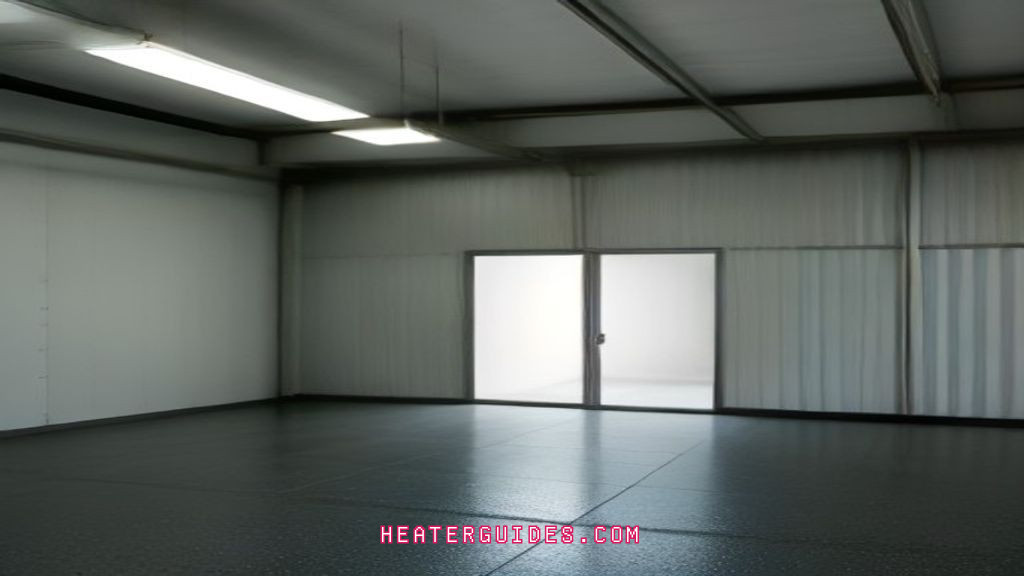
Why 2026 Changes the Garage Heating Equation
Three things shifted in the last couple years that make garage heating a different decision than it was in 2026.
First, electric resistance heat got more expensive. Natural gas prices spiked in 2026 and stayed volatile. Propane followed. But electricity rates also climbed, so the old “gas is always cheaper” rule needs rechecking against your local utility numbers. The gap between fuels is narrower now.
Second, heat pump technology improved. Mini-split heat pumps now work down to -13°F or lower in some models. That wasn’t true a decade ago. For mild climates, they’re suddenly the most versatile option because they also cool your garage in July.
Third, building codes tightened. More jurisdictions now require hard-wired heaters to be on dedicated circuits with specific clearance from combustible materials. Some require carbon monoxide detectors for any attached garage with a fuel-burning appliance. If you’re DIY-installing, you need to check local amendments, not just the manufacturer’s manual.
That last point matters more than most people think. A garage is not a living room. It has a concrete slab, often poor insulation, a big metal door, and sometimes flammable liquids sitting on a shelf. The heating strategy that works in a bedroom can be dangerous in a garage.
Calculate Your Exact BTU Requirements (Don’t Guess)
Every heater you look at will list a square footage rating. Ignore it. Those ratings assume average ceiling height, average insulation, and average climate. Your garage is none of those things.
The standard formula for heat loss in BTUs per hour is:
BTU/hr = (Square Footage × Ceiling Height × ΔT × R-Factor Multiplier) / 1.1
Let’s walk through a real example. A 24×24 garage is 576 square feet. With 10-foot ceilings, volume is 5,760 cubic feet. In Chicago, the design temperature (coldest expected day) is about -4°F. If you want 60°F inside, ΔT is 64°F.
For a moderately insulated garage (R-13 walls, R-19 ceiling, insulated door), the multiplier is roughly 0.5. For an uninsulated garage with a steel door, it’s closer to 1.0. Plugging in the insulated numbers:
576 × 10 × 64 × 0.5 / 1.1 = 167,564 BTUs per hour
That’s a lot. It’s why uninsulated garages eat heaters alive. If you only heat when you’re working, you might get away with a smaller unit and accept a longer warm-up time. If you’re maintaining 50°F overnight, the load drops because ΔT shrinks.
The 5 Variables That Alter Your Heat Load
- Insulation R-value: The single biggest factor. A garage with R-19 walls needs roughly half the BTUs of an identical uninsulated one. Blown-in cellulose or rigid foam board on the walls pays for itself in one winter.
- Ceiling height: Heat rises. A 12-foot ceiling holds 20% more air than a 10-foot one. Forced-air units handle this better than infrared, which heats objects, not air.
- Garage door material: Steel doors with no insulation have an R-value around 1.5. A foam-core steel door jumps to R-8 or higher. Wood doors sit somewhere in between, but they also warp over time. Aluminum doors conduct heat fastest of all. If your door is single-skin steel, that’s your biggest leak.
- Air sealing: The gap under the door, the weatherstripping around the man-door, the electrical outlets on exterior walls. A candle flame flickering near a gap means you’re paying to heat the neighborhood. Spray foam and new seals are cheap fixes.
- Attached vs. detached: An attached garage shares one or two walls with the house. Those walls gain some residual heat. A detached garage loses heat in all directions. That changes your calculation by 15-25%.
Run your own numbers before you buy anything. The uninsulated garage guide on this site covers the worst-case scenario in more depth.
The 7 Best Heating Methods Ranked for 2026
No single method wins for everyone. Your decision hinges on three questions: How often do you use the garage? How well is it insulated? And what fuel is cheapest where you live?
Here’s how the options stack up.
1. Radiant Tube Heaters (The Efficiency King)
A radiant tube heater burns natural gas or propane inside a sealed tube. The tube glows red-hot and emits infrared radiation that warms objects and people directly, not the air. That’s a huge advantage in a drafty garage.
You feel warm almost immediately, even if the ambient air temperature is still 40°F. That’s why machine shops and auto garages use them. They’re also the most efficient option for high ceilings because they don’t waste energy heating air that’s just going to stratify at the roof.
The downsides: installation is not a DIY job. You need gas line work, venting, and often a building permit. The upfront cost is $1,500 to $3,000 installed. But operating costs are roughly half of electric resistance in most regions.
2. Mini-Split Heat Pumps (The Dual-Purpose Winner)
A mini-split is a ductless heat pump. It moves heat from outside air into your garage using a compressor and refrigerant. For every 1 kW of electricity it consumes, it delivers 2.5 to 3.5 kW of heat. That’s a coefficient of performance (COP) of 2.5 to 3.5, versus 1.0 for electric resistance.
Modern cold-climate models keep working down to -13°F, though efficiency drops as the temperature falls. Below about 20°F, the COP might drop to 2.0. Still better than resistance heat.
The real kicker: it’s also an air conditioner. If your garage gets stuffy in July, a mini-split solves both problems. Installation runs $2,000 to $4,500 depending on line length and electrical work. It requires a 240V circuit and a wall-mounted indoor unit, which takes up interior wall space.
3. Forced-Air Unit Heaters (The Fast-Acting Workhorse)
This is the classic “garage heater” — a box with a big fan that blows air over a heat exchanger. They run on natural gas, propane, or electric. The Comfort Zone CZ230ER mentioned earlier is an electric version of this category, hung from the ceiling and hard-wired.
Forced-air units heat the air quickly and distribute it evenly. They’re great for a workshop where you’re moving around and want the whole space warm, not just one spot. The fan noise is noticeable — typically 55 to 65 decibels at 10 feet, which is louder than a refrigerator but quieter than a lawnmower. You’ll hear it running, but it’s not obnoxious.
Gas versions are cheaper to run but need venting to the outside. Electric versions are simpler to install but cost more per BTU. For a well-insulated garage under 1,000 square feet, an electric unit like the CZ230ER is often the sweet spot because installation is just a 240V circuit and a mount.
4. Electric Infrared Panels (The Spot-Heating Specialist)
Infrared panels are flat radiant heaters that warm whatever they face. Mount one above your workbench and you’ll feel heat on your hands and torso within seconds, even if the garage is 35°F.
They’re cheap to buy ($100 to $300), silent, and require no venting. But they only heat what’s in their line of sight. Move to the other side of the garage and you’re cold again. They also don’t heat the air, so tools and metal surfaces stay cold until they absorb direct radiation.
Best use case: a small workbench area in a large, uninsulated garage where heating the whole space is impractical. You heat yourself, not the building.
5. Propane Convection Heaters (The Portable Option)
A portable propane heater on wheels or a small radiant unit gives you instant heat with zero installation. You can roll it out in winter and store it in summer.
The catch is ventilation. Any unvented propane heater releases carbon monoxide and water vapor into the air. In a tightly sealed garage, that’s a recipe for condensation on tools and a real CO risk. You need a cracked door or window, which defeats the purpose on a windy day.
Vented propane heaters exist but they’re essentially small furnaces that need a chimney. For occasional use, a portable unit with a carbon monoxide detector running nearby is acceptable. For regular use, pick something hard-wired.
6. Radiant Floor Heat (The Luxury Upgrade)
Hydronic or electric radiant floor systems embed heating cables or tubes in the concrete slab. The floor becomes a giant radiator, warming the space from the ground up. Your feet stay warm, which makes a huge difference in perceived comfort.
It’s the most comfortable option by far, but it’s also the most expensive to retrofit. You’re looking at $8 to $15 per square foot for electric mats, plus the cost of cutting and patching concrete. It only makes sense if you’re pouring a new slab or doing a major renovation.
7. Extending Existing HVAC (The Risky Shortcut)
Running a duct from your house furnace into the garage sounds easy. It rarely works well. Most residential furnaces are sized for the house, not an extra 500 square feet of leaky space. You’ll starve the garage of heat and strain the furnace.
Building codes often prohibit connecting a garage to house HVAC unless the garage is fully insulated and the ductwork includes a fire damper. You also create a pressure imbalance that can backdraft combustion appliances. Skip this unless a licensed HVAC contractor runs the numbers and says your system has surplus capacity.
Fuel Cost & Efficiency Showdown (2026 Price Data)
Let’s compare the cost to deliver 100,000 BTUs of heat, which is roughly the amount a small garage needs on a cold day. These are national averages from early 2026; your local rates will vary.
| Fuel Source | Price Unit | Cost per 100k BTUs | Efficiency | Best For |
|---|---|---|---|---|
| Natural Gas (vented) | $1.20/therm | $1.20 | 80-95% AFUE | Attached garages with existing gas line |
| Propane (vented) | $2.80/gallon | $3.10 | 80-95% AFUE | Rural areas without natural gas |
| Electric Resistance | $0.16/kWh | $4.69 | 100% | Small, well-insulated garages |
| Heat Pump (mini-split) | $0.16/kWh | $1.50-$2.35 | COP 2.0-3.5 | Mild climates, dual heating/cooling |
| Wood/Pellet Stove | $250/ton pellets | $1.80 | 70-85% | Detached garages with good venting |
Two things jump out. Natural gas is still the cheapest fuel per BTU, but the gap with heat pumps has narrowed. And electric resistance is the most expensive way to heat, period. If you’re planning to run a garage heater more than a few hours a week, the operating cost difference between electric and gas will pay for a more expensive unit within two winters.
One more cost angle: the “heat only when working” vs. “maintain minimum temperature” debate. Say your garage needs 20,000 BTUs per hour to maintain 50°F on a 20°F day. If you only heat it for 4 hours in the evening, you’ll use 80,000 BTUs, but you’ll also spend the first 30 minutes waiting for the space to warm from 20°F. That warm-up period actually pulls more BTUs than steady-state operation.
For a hobbyist using the garage 3 evenings a week, intermittent heating wins. For a daily workshop, maintaining 45°F around the clock uses less total energy than repeatedly reheating a cold slab. Concrete has high thermal mass — it takes a long time to warm up and a long time to cool down. Use that to your advantage.
Safety Checklist: Combustibles, Venting, and CO Risks
Garages contain things that living rooms don’t: gasoline, paint thinner, solvents, aerosol cans, and a car with a fuel tank. Every one of those is a fire hazard if you heat the space wrong.
Clearance from flammables: Any heater with a glowing element or open flame needs at least 18 inches of clearance from combustible materials on all sides. That means no stacking cardboard boxes next to a radiant tube heater. For ceiling-mounted forced-air units, the clearance is usually 6 feet from the floor to the unit, which keeps it above most storage shelves.
Flammable liquid storage: Gasoline and solvents give off vapors that are heavier than air. They pool at floor level. A floor-level heater can ignite those vapors. That’s why ceiling-mounted heaters are safer in a garage than portable floor units. Keep all flammables in sealed, approved containers, and never store them directly under a heater.
Venting rules: Any fuel-burning heater (gas, propane, wood) must be vented to the outside. Unvented units dump carbon monoxide and water vapor into your garage. A single car running for 5 minutes produces more CO than an unvented heater running for an hour, but that’s not an excuse. Install a CO detector in any attached garage with a fuel-burning heater. Detached garages need one too if you spend significant time inside.
Attached vs. detached codes: Attached garages are subject to stricter fire codes. The wall between the house and garage typically needs a fire rating of 45 minutes or more. If you’re installing a heater that penetrates that wall, you may need a fire-rated chase or a licensed contractor. Detached garages are more lenient, but they still require proper clearances and often a permit for gas line work.
Electrical safety: A 240V heater needs a dedicated circuit. You can’t just swap a breaker and plug it into a dryer outlet. The wire gauge, breaker size, and connector type all matter. If you’re not comfortable working in a live panel, hire an electrician. The cost is $200 to $500 and it’s non-negotiable for safety.
Installation Guide: DIY vs. Professional (With Code Rules)
You can install an electric ceiling-mounted heater yourself if you’re comfortable with basic wiring. The Comfort Zone CZ230ER, for example, requires a 240V circuit with a 40-amp breaker and 8-gauge wire. That’s heavier than standard household wiring. Most garages have a subpanel or a dedicated 240V outlet for a welder or EV charger, but even then, you need to check the breaker size.
Here’s the step-by-step for a hard-wired electric unit:
- Turn off the power at the main panel. Verify with a multimeter that the circuit is dead.
- Mount the unit to ceiling joists using the included hardware. Ensure it’s level and has the required clearance from walls and storage.
- Run 8-gauge, 3-conductor wire from the panel to the unit. Use conduit if the wire is exposed.
- Connect the wire to the unit’s junction box. Match colors: black to black, white to white, green to ground.
- Install the correct breaker in the panel (40A for this unit).
- Turn the power back on and test.
If that list makes you nervous, hire a professional. The same goes for any gas-powered heater. Gas line work, venting, and combustion air supply are not DIY projects. A mistake can cause a gas leak, a fire, or carbon monoxide poisoning.
One thing people skip: permits. Many municipalities require a permit for any new 240V circuit or gas line. The permit costs $50 to $150 and includes an inspection. That inspection can catch mistakes you didn’t know you made. It’s worth the money.
For a deeper look at the full range of options, check the garage heating guide on this site for more comparisons.
Smart Thermostats and Zoning for Garage Heat
Garage heaters get used on a schedule: weekday evenings, weekend mornings, maybe not at all in March. A smart thermostat turns that schedule into automatic savings.
Most hard-wired heaters with a digital thermostat, like the CZ230ER, let you set a temperature and a 12-hour timer. That’s a start. But a smart thermostat adds two things: geofencing and voice control.
Geofencing uses your phone’s location to trigger the heater. You leave work, the heater turns on, and the garage is warm by the time you pull in. No wasted energy heating an empty space. Voice control via Alexa or Google Assistant lets you adjust the temperature without walking to the thermostat, which is handy when your hands are covered in grease.
Zoning matters in a multi-use garage. If you have a workbench on one side and a car on the other, you don’t need to heat the whole space to the same temperature. A radiant panel aimed at the workbench plus a small forced-air unit for the rest gives you two zones. Each zone runs on its own thermostat, so you’re not heating the car bay to 65°F when you’re only working at the bench.
Smart scheduling also handles the thermal mass problem. Set the heater to run at 50°F overnight if you plan to work in the morning. The concrete slab absorbs heat slowly, so starting the heater 2 hours before you need it is more efficient than cranking it to 70°F when you walk in.
Final Verdict: The Best Way to Heat Your Garage
After all the math and comparisons, here’s the honest answer for 2026.
- If your garage is attached, well-insulated, and you use it daily: a mini-split heat pump is the best long-term investment. It heats, cools, and uses 60% less electricity than resistance heat.
- If you have natural gas available and high ceilings: a radiant tube heater delivers the most comfortable heat at the lowest operating cost. It’s the choice of professional shops for good reason.
- If you want simplicity, no gas line, and a modest budget: a hard-wired electric ceiling unit like the Comfort Zone CZ230ER gets the job done. It’s not the cheapest to run, but it’s safe, quiet enough, and frees up floor space.
- If your garage is uninsulated and you only need to warm a workbench: an infrared panel aimed at your workspace is the most practical option. Don’t waste money heating a leaky building.
- If you’re on a tight budget and use the garage occasionally: a portable propane heater with a CO detector works, but treat it as a temporary solution, not a permanent one.
Whatever you pick, fix the insulation and air sealing first. A $200 investment in foam board and weatherstripping cuts your heating bill by 30-50%. That’s better than any heater upgrade you can buy.
Frequently Asked Questions
Is it safe to run a garage heater overnight?
Yes, but only if the heater is designed for continuous operation and has proper safety features like overheat protection and a tip-over switch. Hard-wired ceiling units are safer than portable ones because they’re out of reach of combustibles. Never run an unvented propane heater overnight. The CO risk is too high.
What size heater do I need for a 2-car garage?
A typical 2-car garage is 400 to 600 square feet. With 10-foot ceilings and moderate insulation, you need roughly 30,000 to 45,000 BTUs. That’s around 9,000 to 13,000 watts of electric heat. The Comfort Zone CZ230ER at 7,500 watts covers a smaller or well-insulated space; for a cold, drafty garage, you’ll want a second unit or a gas heater.
Should I heat my garage to the same temperature as my house?
No. Most garages don’t need to exceed 55-60°F. Tools and cars don’t care about comfort. Your body does, but you’ll be moving around and wearing work clothes. Set the thermostat to 50-55°F and use a small radiant heater at your workbench if you need extra warmth.
Can I use a regular space heater in my garage?
You can, but you shouldn’t. Standard household space heaters aren’t rated for garage conditions: dust, cold, and the risk of tipping. They also lack the clearance you need around flammable materials. Buy a heater specifically rated for garage or workshop use, like a ceiling-mounted unit or a commercial forced-air heater.
Will a garage heater increase my electric bill a lot?
It depends on usage. A 7,500-watt heater running 4 hours a day at $0.16/kWh costs about $4.80 per day. That’s $144 a month if you use it daily. A mini-split heat pump would cut that to about $60. A gas heater would be closer to $40. The best way to reduce the bill is to improve insulation first, then choose the most efficient heater your fuel options allow.
For more on keeping your garage comfortable year-round, look at the heating and cooling guide for a system that works in every season.

I am a mechanical engineer and love doing research on different home and outdoor heating options. When I am not working, I love spending time with my family and friends. I also enjoy blogging about my findings and helping others to find the best heating options for their needs.
Related guides

These Are the Best Blinds for Reducing Heat in Summer!
Beat the summer heat with the best blinds designed to keep your space cool. Find stylish options that…
Why the H!Fiber SFP+ DAC 10G Cable Stands Out for Networking
Get the lowdown on the H!Fiber SFP+ DAC 10G Cable—fast, reliable, and perfect for your networking needs. See…
Cheap Large-Room Heaters That Produce Strong, Even Heat
Imagine a chilly winter evening, and your large living room feels more arctic tundra than cozy haven. You…
