


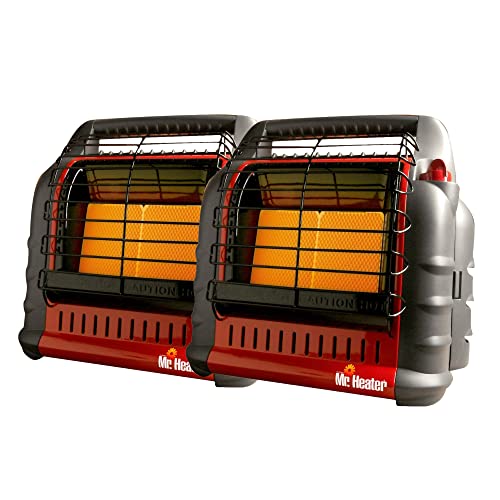


Heating an uninsulated garage is a challenge because the space loses heat fast through walls, doors, and ceilings. The wrong heater wastes money, delivers little warmth, or risks safety.
Choosing the right heater means matching its output to your garage’s size and leakiness, understanding installation needs, and balancing running costs. This guide gives you clear picks and practical advice for 2026.
Compare Garage Heater Features
| Model | Best for | Heat Output | Fuel Type | Installation | Best For | Price |
|---|---|---|---|---|---|---|
| Comfort Zone Hard-Wired Ceiling Garage Heater CZ230ER | Best Hard-Wired Option | 7,500 Watt | Electric | Hard-wired ceiling mount | Two-car garages needing powerful heat | Check price on Amazon |
| Mr. Heater 50,000 BTU Propane/Natural Gas Unit Heater | Best Gas-Powered Unit | 50,000 BTU | Propane or Natural Gas | Ceiling mount | Large garages/workshops up to 1,667 sq ft | Check price on Amazon |
| Mr. Heater Big Buddy Propane Portable Heater | Best Portable Propane | 4,000 to 18,000 BTU | Propane | Portable | Garages up to 450 sq ft needing portable heat | Check price on Amazon |
| DAHTEC 1500W Greenhouse Garage Electric Fan Heater | Best Small Electric Fan | 1,500 Watt | Electric | Portable | Small garages or workshops needing quick spot heat | Check price on Amazon |
| shinic 2-Pack 1500W/750W Ceiling Mounted Electric Heater | Best Dual Pack Ceiling Heater | 1,500 W / 750 W | Electric | Ceiling mounted | Garages needing direct radiant heat and lighting | Check price on Amazon |
Top Heaters for Uninsulated Garages in 2026
Comfort Zone Hard-Wired Ceiling Garage Heater CZ230ER
Mr. Heater 50,000 BTU Propane/Natural Gas Unit Heater
Mr. Heater Big Buddy Propane Portable Heater
DAHTEC 1500W Greenhouse Garage Electric Fan Heater
shinic 2-Pack 1500W/750W Ceiling Mounted Electric Heater
Choose the Right Heater Type for Your Garage
Electric, propane, and diesel heaters each have distinct advantages and installation needs that make them suitable for different garage setups.
Electric heaters are popular for garages because they plug into existing wiring or can be hard-wired, offering clean, quiet heat with no emissions. Forced-air electric models circulate warm air quickly but need a 240 V circuit for higher wattages, typically topping out around 5,000 watts or 17,000 BTU. Ceiling-mounted units like the Comfort Zone CZ230ER save floor space and work well for two-car garages up to 400 sq ft.
Propane heaters provide strong radiant or forced-air heat and are favored for quick warming of large or drafty garages. They run on portable tanks or fixed gas lines. Radiant propane models heat objects and people directly, which feels warmer even if the air stays cooler. Venting is critical indoors to prevent carbon monoxide buildup; models with oxygen depletion sensors are essential for safety. These heaters can deliver 30,000 to 50,000 BTU, covering garages over 500 sq ft.
Diesel heaters are less common but effective for well-vented garages or workshop spaces with external exhaust. They require a fuel supply and proper venting through a wall or roof. Their heat output ranges widely but typically covers large spaces efficiently. Installation is more complex, involving fuel lines and exhaust flues.
Propane heaters suit garages without electrical upgrades but need careful ventilation. Diesel heaters work best where venting is feasible and reliable fuel is available. Electric heaters shine where installation space, cleanliness, and simple operation matter most.
For an uninsulated garage, the best way to heat it usually combines safety, ease of installation, and effective coverage — which often points to a hard-wired electric heater, especially if you want to avoid fuel storage and combustion risks.
Calculate Heater Size and Understand Running Costs
Sizing your heater starts with estimating how much heat your uninsulated garage loses in winter. The basic formula multiplies the garage’s volume by a heat loss factor between 4 and 6 BTU per cubic foot for uninsulated spaces.
Say your garage is 24 by 24 feet with an 8-foot ceiling: that’s 4,608 cubic feet. Multiply by 5 BTU (a mid-range factor) and you get about 23,040 BTU needed to keep it warm.
Converting BTU to watts (1 watt equals 3.412 BTU), you’d need around 6,750 watts, or 6.75 kW. That’s more than a typical 1,500 W plug-in heater and usually calls for a hard-wired 240 V electric heater or a propane model with a similar BTU rating.
Electric heaters run on 240 V circuits because delivering more than 12.5 amps (about 1,500 W at 120 V) risks tripping breakers or overheating wires. A 6,750 W heater draws about 28 amps, which means you’ll need a dedicated double-pole breaker rated for 30 amps or higher.
Running costs depend on fuel price and heater efficiency. Electricity costs about 17 cents per kWh nationally. Running a 1,500 W heater for 8 hours daily uses 12 kWh, costing roughly $2.04 per day. Propane runs about $3 per gallon, with one gallon delivering about 91,500 BTU. For 23,040 BTU needed, you’d burn roughly 0.25 gallons daily, costing about 75 cents — less than half the electric cost for the same heat output, though propane heaters waste some energy and need ventilation.
The cheapest way to heat your garage depends on your local rates and installation costs. Propane may be cheaper fuel-wise but adds ventilation and tank maintenance. Electric heaters cost more to run but are simpler and safer indoors.
Choosing the most efficient heater for your garage means matching heater size to heat loss and considering the fuel cost and installation constraints. Many find that a hard-wired electric heater offers the best balance of convenience and safety for uninsulated garages.
For more on efficient heating options, see efficient way to heat garage.
Follow Safety and Certification Standards When Installing
Installing heaters in an uninsulated garage demands strict attention to safety and certification standards to avoid electrical fires, carbon monoxide poisoning, and other hazards.
Electric garage heaters require a dedicated 240 V circuit and breaker sized to the heater’s amperage, typically 15 to 20 amps for common units. This ensures the circuit won’t overload, which could trip breakers or cause wiring damage. Never use extension cords or plugs for these heaters; hard-wired installation by a licensed electrician is the safest approach.
Gas heaters—whether propane or diesel—must have adequate ventilation and clearance from combustibles. A 3-foot clearance from walls and flammable materials is standard. Propane heaters for indoor use need an oxygen depletion sensor (ODS) that shuts the unit off if oxygen drops below safe levels. Carbon monoxide detectors are essential anywhere combustion heaters operate indoors, including garages.
Only models certified by UL or ETL listings for garage or indoor use meet the standards for safe performance. These certifications confirm the heater has built-in safety features like tip-over switches, overheat protection, and tested electrical components.
Radiant heat in the garage floor is uncommon and costly to install but can provide efficient, comfortable warmth. It requires professional installation of electric or hydronic tubing below a suitable floor surface, plus proper insulation beneath the slab to prevent heat loss into the ground. It’s not a DIY project and far more involved than wall- or ceiling-mounted units.
Gas heaters bring risks unique to combustion: carbon monoxide and fuel leaks. Using only indoor-rated heaters with ODS sensors and following the manufacturer’s clearance and venting instructions reduces risk. Never run outdoor-only heaters inside. Electric heaters avoid combustion risks but demand proper wiring and circuit protection.
Seal and Insulate to Reduce Heat Loss Before Buying
An uninsulated garage loses most heat through walls, ceiling, and gaps around the door, making any heater work harder and cost more to run.
Weatherstripping your garage door closes the biggest air leak and can reduce heat loss dramatically. Adding insulation to the ceiling and, if possible, the walls slows heat transfer to the cold outdoors. For example, a 24 by 24-foot garage with 8-foot ceilings might lose roughly 5,000 to 7,000 BTU per hour through unsealed gaps; sealing and insulating can cut that by half or more.
It’s usually cheaper to seal and insulate first than to buy a bigger heater. Adding insulation lowers your heater’s running time, saving fuel or electricity month after month. A 1,500-watt electric heater running 8 hours costs about $2 a day at 17 cents per kWh; cutting run time by half saves you $30 monthly.
Some believe electric heaters aren’t effective in uninsulated spaces. The fact is, they do produce the same heat output, but without sealing, much of that heat escapes quickly, making them less efficient and more expensive to run. Adding insulation improves their effectiveness dramatically.
The best way to heat and cool a garage starts with controlling heat loss and gain through the building envelope. Supplemental heating options can then work efficiently without oversizing. Among ways to heat a garage, combining sealing, insulation, and a properly sized heater gives the most consistent, affordable warmth.
What to Do Next: Plan, Choose, and Install Your Garage Heater
Heating an uninsulated garage starts with measuring its length, width, and height to calculate volume and estimate heat loss. That tells you how powerful your heater needs to be.
Next, check your electrical panel’s capacity for a 240 V circuit if you’re going electric, or confirm gas line size and pressure for propane or diesel units. The panel or gas system must safely support the heater’s demand.
Pick a heater that fits your garage size, use, and budget from the top recommended models. For example, a hard-wired ceiling mount like the Comfort Zone CZ230ER works well for typical two-car garages, saving floor space and providing steady warmth.
Hire a licensed electrician to install hard-wired or high-voltage electric heaters, and a licensed plumber for gas hookups. Proper installation avoids fire, shock, and carbon monoxide hazards.
Install carbon monoxide alarms if you use fuel-burning heaters indoors, and follow the manufacturer’s instructions for clearance, mounting height, and ventilation. That keeps you safe and your heater running efficiently.
Heating and cooling a garage effectively can mean combining a heater with ventilation or a mini-split AC if you need year-round comfort. Electric heaters provide clean, quiet heat, while fuel heaters add warmth quickly but need ventilation and CO alarms.
More Questions, Answered
Can I use a 1,500-watt space heater to warm my uninsulated garage?
What size propane heater do I need for a two-car garage?
Is it safe to run a gas heater in a garage with stored flammable materials?
How much does it cost to run a 7,500-watt electric heater for 4 hours?
Do I need a special circuit to install a ceiling-mounted electric garage heater?
Will sealing my garage door really reduce heating costs?

I am a mechanical engineer and love doing research on different home and outdoor heating options. When I am not working, I love spending time with my family and friends. I also enjoy blogging about my findings and helping others to find the best heating options for their needs.
Related guides

Perfect 300W Aquarium Heater: Reliable and Efficient!
Searching for the best 300W aquarium heater? Keep your fish thriving with our top picks and expert tips…
Extreme Heat Clothing Guide: What to Wear When Temperatures Rise
For outdoor workers and winter adventurers, the best clothes for extreme heat prevent dangerous cold. Modern heated apparel,…
Top 5 Cordless Neck Massagers with Heat for Tension Relief
Find instant, soothing relief for tight muscles with the best cordless neck massager with heat, your personal portable…
