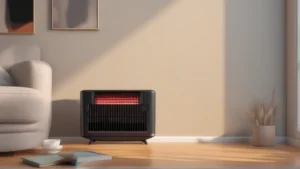
The best way to heat a workshop is usually a natural gas unit heater if you have gas and proper venting, and a plug-in electric heater only for small spaces or spot heat. A 1,500 W space heater makes about 5,100 BTU/hr, which is why it feels fine in a small room and weak in a drafty shop.
A 30 × 12 workshop has 360 square feet to warm, and that changes the whole answer. A heater that is fine for a bedroom can be underpowered here, especially if the roll-up door leaks like a colander.
The right choice depends on fuel access, insulation, and how many hours you actually sit out there. The wrong choice usually shows up as a cold floor, a hot electric bill, and a heater running flat out anyway.
What to remember
Use natural gas heat for the strongest mix of output and operating cost if the shop already has gas and proper venting.
Use electric heat for small workshops, short sessions, or spot warming near a bench.
A 1,500 W plug-in heater is about 5,100 BTU/hr, so it will not carry a leaky 30 × 12 shop by itself.
Pick infrared if you heat people and tools in one work zone, not the whole room.
Skip any fuel-burning heater indoors unless it is rated for indoor use and the manual gives the ventilation rules.
Best Way To Heat A Workshop
For most workshops, the best way to heat the whole space is a properly installed natural-gas unit heater when gas and venting are available. For small spaces or spot heating, an electric workshop heater is simpler; infrared heat makes sense when you need warmth at the workbench instead of heating every cubic foot.
5,100 BTU/hr
Output from a 1,500 W heater
A 1,500 W electric heater draws about 12.5 amps on a 120 V circuit and converts to roughly 5,100 BTU/hr. That can handle a small enclosed room, but air leaks, high ceilings and an uninsulated workshop can carry heat away faster than the heater supplies it.
Natural gas is good for
Heating the entire workshop instead of one work zone
Delivering more heat without putting the full heating load on a 120 V outlet
Keeping electric resistance heaters from running continuously in a large, leaky shop
Natural gas is not for
Needs a gas line, approved venting and suitable installation
Requires indoor-rated equipment and a working carbon-monoxide alarm
May be restricted if your local code limits vent-free gas heaters
Electric is good for
Small workshops, temporary heat and one occupied work area
Simple installation with no combustion gases or fuel line
Spot heating when you don’t need the whole shop warm
Electric is not for
A typical 1,500 W model uses about 12.5 amps on a 120 V circuit
One unit can feel weak in a drafty or uninsulated shop
Must plug straight into a wall outlet, never an extension cord or power strip
In short
Choose natural gas for whole-shop heat if the installation is allowed and properly vented. Choose electric for a small room or short work sessions, and consider infrared when the work area matters more than the air across the shop.
If you want to compare models after choosing the heat source, use this guide to best workshop heaters for efficient safe heating; match its capacity and safety features to your shop rather than buying by appearance.
Natural Gas Workshop Heater Pros And Cons
A natural gas workshop heater is often the practical choice for heating in an uninsulated workshop because it can deliver substantial heat without asking a 120 V circuit to carry the entire load. The tradeoff is a more involved installation: gas piping, combustion air where required, venting and licensed work may all be part of the job.
Factor
Natural gas
Electric plug-in
Heat output
Suited to whole-shop heating when correctly sized
Usually suited to small rooms or spot heat
Install burden
Gas line, venting and approved indoor equipment
Plug into a wall outlet; no combustion vent
Circuit load
Heating fuel supplies the heat; the fan and controls use electricity
A 1,500 W heater draws about 12.5 A at 120 V
Running-cost factors
Gas rate, heater efficiency and runtime
Wattage, hours of use and electric rate
The installation and utility rates decide which option wins in your shop.
Combustion safety
Use only an indoor-rated gas heater with the venting required by its manual, and install a working carbon-monoxide alarm. Never use an outdoor, patio or construction heater inside the workshop.
Check local code
Vent-free gas heaters are restricted or banned in some states and cities. Check local code before buying, and use a licensed professional for gas connections or venting work where required.
Gas also loses its advantage if the shop has no service line, the flue route is impractical, or the installation cost outweighs the number of hours you heat. A small electric heater can be the cleaner answer for occasional work, provided the outlet, clearance and heater protections are suitable.
Infrared Heat For A Work Zone
Infrared is the useful workshop heater when you need one bench or person warm, because it heats people and surfaces directly instead of first warming all the air. That makes drafts less troublesome than they are with a fan heater, but the rest of an uninsulated workshop can stay cold.
For heating in an uninsulated workshop, direct warmth can make a cold work zone usable without heating every cubic foot. If you need warm air everywhere, infrared alone will disappoint.
For a garage or approved workshop space
Outdoor Electric Patio Heater
Product 1 provides focused infrared heat at 500 W or 1,000 W, with oscillation and adjustable positioning for a work area. Use it as supplemental heat, not as a whole-shop replacement.
The 500 W setting suits close-up work or shorter sessions; 1,000 W spreads more warmth but still behaves like spot heat. Keep the heater at least 3 feet from combustibles, plug it directly into a wall outlet, and use its tip-over and overheat protection as backup—not permission to leave it running unattended.
Check the space
A product described for a garage or workshop belongs indoors only if that space is approved by the manufacturer. Don’t use a patio heater in a sleeping area, and don’t run any electric heater on an extension cord or power strip.
From HeaterGuides · our own guidePage 4 shows what each heater costs per hour; the 30-day plan on page 11 cuts the bill.Winter Heating Bill CutterSee what every heater in your home really costs, heat the rooms you use, and cut the waste in 30 days.Cost-per-hour tables for every heaterThermostat schedule and draft-proofing planRunning-cost and bill calculator (Excel)$14.99$9.99Get it for $9.99See what's inside and watch the 2-minute video →14-page printable PDF + Excel calculator · instant download · 30-day refund
Running Cost And Size Reality
For a 30 × 12 workshop, the most efficient way to heat it is a properly sized whole-shop heater; the best way to heat a workshop depends on insulation, air leakage, ceiling height, and whether you heat the whole room or one person.
Worked example
A 30 × 12 workshop has 360 square feet of floor area, but floor area doesn’t tell you the heat load by itself. A high ceiling adds air volume, an open door replaces heated air with outdoor air, and missing insulation lets heat escape through the walls and roof.
Heater
Watts
Per hour
Per day (8 h)
Per month (30 days)
1,500 W electric heater
1,500 W
26¢
$2.04
$61.20
Calculated at 17¢ per kWh. Uses $0.17 per kWh. The calculation is watts ÷ 1,000 × hours × days × electricity rate.
A short spot-heating run costs far less than carrying heat through a full shift: 1,000 W for 2 hours uses 2 kWh, or about $0.34 at $0.17 per kWh. By comparison, a 5,000 W electric heater running 8 hours uses 40 kWh, or about $6.80 at that same rate, and generally needs a suitable 240 V circuit rather than a standard 120 V outlet.
Fuel cost needs the heater’s input rating, burn rate, and your local fuel price, so don’t compare BTU labels alone. A unit that runs briefly near your bench can win in practice, while a properly vented larger heater makes more sense when the entire shop must stay warm.
Measure the leaks first
Check door seals, wall and roof insulation, and the ceiling height before comparing brands. Those losses can swing the result more than a small efficiency difference between heaters.
Who Should Skip This Setup
The best way to heat a workshop changes when the shop is large, leaky, occupied all day, or unable to support safe venting. In an uninsulated workshop, plug-in electric heat suits short spot-heating sessions; it struggles as whole-shop heat.
Skip this
Choose or arrange instead
Plug-in electric heat for a large, drafty shop or long daily runtimes
A hardwired unit heater or properly sized mini split
Any portable heater without its own dedicated wall circuit
A circuit that matches the heater nameplate, installed by an electrician if needed
Fuel-burning heat without compliant venting or a working CO alarm
An indoor-rated, correctly vented system—or no fuel-burning heater
Unapproved heat in an attached garage or mixed-use space
A code review covering fire separation, clearances, and the appliance listing
The heater has to fit the building, electrical supply, and occupancy—not only the room size.
Attached spaces need extra care
An attached garage can share air with living areas through doors, walls, and ductwork. Local building and fire code may restrict appliance placement, fuel storage, vent routes, and openings between the garage and house. Ask the building department or a qualified HVAC professional before installing a heater.
Carbon monoxide is a hard stop
Skip fuel-burning heat if you can’t install the venting the manual requires or keep a working CO alarm in the occupied area. Never bring a patio, torpedo, construction, or other outdoor-rated heater into a workshop.
Before You Buy Or Light It
A workshop heater is ready only after the fuel, circuit, clearances, venting, and alarms all check out; a natural gas workshop heater also needs a proper gas connection and approved flue.
Preflight check
Fuel supply: confirm the gas line, propane cylinder, or other fuel matches the heater and has the required shutoff; use 1-K kerosene only in a kerosene heater.
Breaker size: read the heater nameplate and confirm the breaker and wiring are suitable; don’t assume a larger breaker fixes an undersized circuit.
Clearance: measure the listed distance from walls, shelving, sawdust, lumber, and finishes. Portable electric heaters need 3 feet of clearance.
Venting: confirm the flue route, termination, and combustion-air requirements before lighting any fuel-burning heater.
CO alarm: install a working carbon monoxide alarm in the occupied area and test it.
Outlet type: plug a portable electric heater directly into a grounded wall outlet—never an extension cord or power strip.
A licensed gas or HVAC professional should handle gas connections and venting; an electrician should handle new 240-volt circuits or other hardwired electrical work. Keep the manual and heater nameplate available for the installer.
In short
Buy a properly vented natural-gas unit heater for a whole workshop when gas service and code-compliant installation are available. Choose a plug-in electric heater only for a small, lightly used area or brief spot heat, and plug it straight into the wall.
Questions People Ask
Is a natural gas heater the best way to heat a workshop?
Often, yes, if natural gas, safe venting, and a suitable installation are available. A vented unit heater can warm the whole shop without loading a 120-volt circuit, but gas connections and venting should follow local code and be handled by a qualified professional.
Will a 1,500 watt heater warm a 30 by 12 workshop?
Usually not as a whole-shop heater, especially if the space is drafty or poorly insulated. The heater produces about 5,100 BTU per hour, so it may take the chill off near a workbench while leaving the rest of a 360-square-foot shop cold.
Can I use a propane heater in a workshop?
Only use a propane heater indoors if the model is specifically indoor-rated and the manual allows workshop use. Follow its ventilation requirements, use a working carbon monoxide alarm, and never bring an outdoor, patio, or construction heater inside.
Is infrared heat good for an uninsulated workshop?
Infrared heat works well for a person or bench because it warms surfaces directly instead of trying to heat every cubic foot of leaky air. Keep the required clearance from combustibles, and don’t expect one infrared heater to provide even whole-shop temperatures.
What size heater do I need for a workshop?
Size the heater from the shop’s heat loss, considering floor area, insulation, ceiling height, air leakage, climate, and how often the doors open. A heating contractor or the manufacturer’s sizing guidance can turn those details into a BTU-per-hour rating; guessing from square footage alone often oversizes a tight shop or undersizes a leaky one.
Before you go · a welcome giftGet the Winter Heating Bill Cutter for $4.99See what every heater in your home really costs, heat the rooms you use, and cut the waste in 30 days. Normally $14.99; your welcome price saves $10.00. We'll email your link right now.or buy it now for $9.99 without the gift →One email with your link now. We never share your address.


 Winter Heating Bill CutterSee what every heater in your home really costs, heat the rooms you use, and cut the waste in 30 days.Cost-per-hour tables for every heaterThermostat schedule and draft-proofing planRunning-cost and bill calculator (Excel)