Best Way to Heat a Pole Barn for Year-Round Comfort
On this page 8 sections
- Heating System Comparison for Pole Barns
- Top Heating Systems for Pole Barns
- BTU Requirements for Heating Your Pole Barn
- Choosing the Right Heating System for Your Pole Barn
- Why Insulation and Moisture Control Are Critical Before Heating
- How to Manage Heat Distribution and Airflow in High Ceilings
- Comparing Long-Term Running Costs and Maintenance by Heater Type
- Questions People Ask
Heating a pole barn isn’t like heating a house — metal walls, high ceilings, and open doors change everything. Many people waste energy and money by buying the wrong heater or skipping insulation.
This guide cuts through the confusion with clear BTU sizing rules, heater type pros and cons, and cost comparisons so you can pick the right system fast and avoid common mistakes that drive up your bills and leave you cold.
Heating System Comparison for Pole Barns
| Model | Best for | Heat Output (BTU) | Energy Efficiency | Coverage Area (sq ft) | Special Features | Price |
|---|---|---|---|---|---|---|
| Albott 12,000 BTU Mini Split AC & Heater SEER2 18 | Best for Energy Savings | 12,000 | SEER2 18 | 750 | Quiet operation and dehumidifying mode | Why it is here |
| Albott 18,000 BTU Mini Split AC & Heater SEER2 18 | Best for Larger Barns | 18,000 | SEER2 18 | 1,250 | Remote control and self-cleaning function | Why it is here |
| COSTWAY 18,000 BTU Mini Split AC & Heater | Best for Versatile Modes | 18,700 | 19 SEER2 cooling, 9 HSPF2 heating | 1,250 | Multiple modes including ECO and sleep | Why it is here |
| Electactic 12,000 BTU Wifi Mini Split AC & Heater | Best for Smart Control | 12,000 | 22 SEER2 | 750 | Wifi app control and vertical airflow | Why it is here |
| WINHL 1500W Electric Space Heater with Thermostat | Best Portable Electric Heater | 5,118 | — | — | Portable with thermostat and safety shut-offs | Why it is here |
Top Heating Systems for Pole Barns

Albott 12,000 BTU Mini Split AC & Heater SEER2 18
Albott 18,000 BTU Mini Split AC & Heater SEER2 18

COSTWAY 18,000 BTU Mini Split AC & Heater
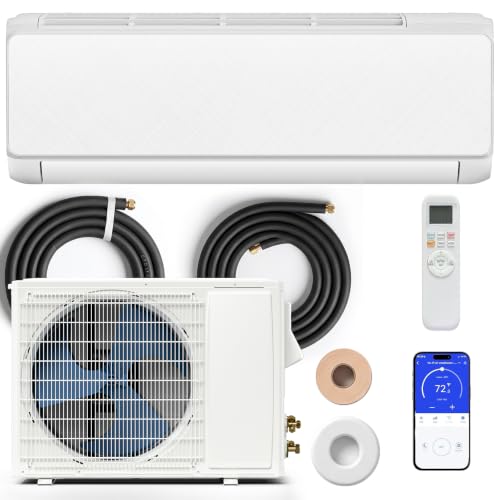
Electactic 12,000 BTU Wifi Mini Split AC & Heater

WINHL 1500W Electric Space Heater with Thermostat
BTU Requirements for Heating Your Pole Barn
The number of BTUs needed to heat a pole barn depends primarily on the barn’s volume, not just its floor area. Because pole barns often have high ceilings, calculating BTUs based on cubic feet is more accurate than square footage alone.

Start by measuring the length, width, and height of your barn to find the cubic footage. For example, a 30 by 40 foot barn with a 16-foot ceiling has 19,200 cubic feet. Heating requirements are then calculated per cubic foot, adjusting for insulation and air leakage.
A typical rule of thumb is 0.5 to 1.0 BTU per cubic foot for an insulated barn. Poorly insulated or uninsulated buildings need closer to 1.0 BTU per cubic foot or more. So for the 19,200 cubic foot barn, you’d need between 9,600 and 19,200 BTUs depending on insulation quality.
Volume matters because warm air rises. In a tall barn, heat can stratify near the ceiling, meaning you must heat the entire air volume to keep the space comfortable. Sizing by floor area alone risks underheating.
For quick reference, a 1,000 square foot pole barn with 12-foot ceilings (12,000 cubic feet) typically requires about 6,000 to 12,000 BTUs with good insulation. If the ceiling is 20 feet or the insulation is poor, target at least 15,000 BTUs.
Air leaks and drafts increase heating needs. Sealing gaps and adding insulation can lower BTU requirements by reducing heat loss. Spray foam insulation is especially effective in pole barns for this purpose.
Using multiple heaters sized to the total BTU need can improve distribution and flexibility. For example, two 75,000 BTU units often outperform one 150,000 BTU unit in a large barn, allowing zoned heating and easier maintenance.
Choosing the Right Heating System for Your Pole Barn
The best heater type for a pole barn depends on its size, ceiling height, insulation, and how you use the space. Radiant infrared heaters, forced air systems, and mini-split heat pumps each have strengths and trade-offs.
Radiant heaters warm people and objects directly instead of heating the air. This makes them energy-efficient for tall pole barns because they reduce heat loss from stratification. Infrared tube heaters can save 30–50% energy compared to forced air in open spaces.
Forced air heaters warm the air quickly and can reach set temperatures faster. But warm air rises, creating temperature differences of 7 to 20°F between floor and ceiling in barns with 20-foot ceilings or more. This stratification wastes energy and causes uneven comfort.
Forced air systems with blowers that pull combustion air from outside improve safety and efficiency but add cost and installation complexity. If you keep doors open frequently, forced air heat may be less effective due to rapid warm air loss.
Mini-split heat pumps are excellent for year-round comfort, providing heating in winter and cooling in summer. They avoid combustion risks, are energy efficient, and offer zoned temperature control. Models like the Albott 12,000 BTU Mini Split or COSTWAY 18,000 BTU units are good for pole barns with moderate insulation.
A hybrid approach often works best. Use radiant heaters for core comfort and mini-splits for temperature control and air quality. Forced air can supplement for quick warm-up in very cold weather or large, well-sealed barns.
Choosing the right system means matching heater type to your barn’s volume, insulation level, and door usage patterns. Radiant heat is best in drafty, tall spaces; mini-splits excel with insulation and closed doors; forced air works for quick heat but struggles with stratification.
Combining options can cut energy bills while keeping your barn comfortable year-round. For example, a mini-split plus radiant tubes cover cooling, heating, and energy savings effectively.
Consider your budget, maintenance comfort, and local fuel availability. Radiant infrared heaters have fewer moving parts and lower maintenance than forced air, while mini-splits require electrical work but offer cleaner indoor air and cooling.
For more on choosing and sizing mini-split systems, see mini-split ac heat systems and for forced air options, check best forced air heating system for cozy winters.
Why Insulation and Moisture Control Are Critical Before Heating
Insulating your pole barn before adding heat is the most cost-effective way to cut energy bills and improve comfort. Without insulation, warm air escapes quickly through the roof, walls, and doors, forcing your heater to work harder and longer.
Start with the roof, where heat loss is greatest due to rising warm air. Use spray foam or rigid foam board insulation to seal gaps and provide a continuous thermal barrier. Walls come next; fiberglass batt or spray foam insulation can fill stud cavities and block drafts. Don’t forget insulated, weather-stripped doors—they’re a common weak point where cold air leaks in and warm air leaks out.
A correctly placed vapor barrier is essential to stop condensation from forming inside the walls and ceiling. In a pole barn, install the vapor barrier on the warm side of the insulation—usually the interior face in winter. This prevents moisture from migrating into cold framing where it can cause rot, mold, and metal rust.
Moisture control doesn’t stop at vapor barriers. Ventilation plays a key role in managing humidity and fresh air. Ridge vents, soffit vents, and powered circulation fans help exhaust moist air and bring in dry air, reducing condensation risks. Mechanical ventilation is especially important if your barn houses animals or uses water indoors, which raise moisture levels.
Neglecting insulation or moisture control leads to higher heating costs, uneven temperatures, and building damage over time. Fix these issues first, and your heating system will perform better, lasting longer while keeping your pole barn dry and comfortable all year.
How to Manage Heat Distribution and Airflow in High Ceilings
Heat stratification in pole barns with tall ceilings means warm air rises to the roof, leaving the floor chilly and wasting energy. This happens because warm air is lighter and naturally moves upward, creating a temperature difference of 7 to 20 degrees Fahrenheit between floor and ceiling.
Ceiling fans set to run slowly in reverse can push warm air down without creating drafts. This circulation mixes the air layers, reducing stratification and making the lower space feel warmer. Adding ductwork or fans to forced air systems improves airflow and distributes heat more evenly throughout large volumes.
Using multiple smaller heaters spaced around the barn beats one large heater for heat distribution. For example, two 75,000 BTU units placed strategically warm the area more uniformly than a single 150,000 BTU heater. This setup also offers flexibility to heat only the zones you use, saving fuel and electricity.
Open doors cause major heat loss by letting warm air escape and cold air rush in. If you must keep doors open, consider installing strip curtains or air curtains to reduce drafts. Position heaters near entrances to create warm air barriers that slow heat escape and increase comfort near busy doorways.
Proper airflow and heat management reduce wasted energy and cold spots, making your pole barn more comfortable and efficient to heat. Combine fans, zoned heating, and careful door management to keep warm air where you need it most.
Comparing Long-Term Running Costs and Maintenance by Heater Type
Running costs for pole barn heaters vary widely by type, fuel, and efficiency. For example, a 1,500 W electric radiant heater running 8 hours daily uses 12 kWh; at 17 cents per kWh, that’s about $1.96 a day. A propane heater burning 1 gallon per 12 hours costs roughly $3.50 per gallon, so running 8 hours costs about $2.33. Mini-split heat pumps typically draw less power for the same heat output, often cutting electric costs by 30 to 50% compared to resistance heaters.
Maintenance differs by heater type. Electric radiant heaters need little more than dusting and inspection of cords. Forced air systems require annual duct cleaning, blower motor checks, and filter changes to maintain airflow and safety. Mini-splits need biannual coil cleaning and filter maintenance, plus professional servicing every few years to check refrigerant levels and electrical components.
Fuel choice impacts both cost and convenience. Propane is widely available and easy to store in tanks but fluctuates in price. Electricity rates depend on your utility and time of use; some regions offer lower rates at night. Wood stoves, common in large or remote poles barns, have low fuel costs but demand daily loading, ash removal, and chimney sweeping to prevent creosote buildup. Kerosene or diesel heaters require proper ventilation and fuel storage considerations.
Energy efficiency favors radiant and mini-split systems, especially in barns with high ceilings and open doors. Radiant heaters warm objects, reducing wasted heat gain in rising air. Mini-splits transfer heat efficiently with less electricity by moving heat instead of creating it. Forced air units lose heat to stratification and often run longer to maintain floor-level warmth, increasing operating costs.
Safety and environmental factors should guide your choice. Electric heaters pose no combustion risk but must be plugged directly into outlets, not extension cords. Gas and fuel-burning units need fresh combustion air, an oxygen depletion sensor if indoors, and a carbon monoxide alarm. Wood and pellet stoves produce emissions requiring proper venting and regular chimney inspections to avoid fire hazards. Choosing a low-emission, efficient heater reduces your carbon footprint and keeps your pole barn safer year-round.