Best Water Heater for Hard Water: About 12 Years Lifespan
On this page 8 sections
- Water Heater and Tool Comparison for Hard Water
- Top Water Heaters and Tools for Hard Water Areas
- How Hard Water Damages Your Water Heater
- Choosing the Right Water Heater for Hard Water
- Maintenance That Extends Life in Hard Water Areas
- Running Costs and Long-Term Savings
- Checklist Before Buying or Maintaining Your Heater
- More Questions, Answered
Hard water causes mineral deposits that reduce your water heater’s efficiency and lifespan. Picking the right heater and maintenance tools cuts replacement costs and keeps your hot water flowing.
Choosing a water heater without considering hard water can mean early failure, higher bills, and frustrating repairs. This guide focuses on models and accessories proven to tackle hard water issues effectively.
Water Heater and Tool Comparison for Hard Water
| Model | Best for | Type (Tank/Tankless) | Tank Material | Anode Rod Type | Maintenance Needs | Price |
|---|---|---|---|---|---|---|
| Aqua-Pure AP430SS Whole House Scale Inhibitor | Best Scale Inhibitor | — | — | — | Replace cartridge regularly to maintain scale inhibition | Why it is here |
| Waterdrop AP431 Whole House Scale Inhibitor | High Flow Rate | — | Stainless steel T-fitting | — | Replace cartridge every 6 months, depending on water quality | Why it is here |
| Turbo Tank Cleaner Water Heater Cleaning Tool | Best Sediment Remover | Tank | — | — | Physical sediment removal tool, periodic cleaning needed | Why it is here |
| Coituer Koire 2000W Portable Immersion Water Heater | Auto Shut-Off Safety | Portable immersion heater | — | — | Auto shut-off requires periodic function checks | Why it is here |
| Suwdjpwo 2000W Portable Immersion Water Heater | Compact & Efficient | Portable immersion heater | — | — | Requires full submersion and routine safety checks | Why it is here |
Top Water Heaters and Tools for Hard Water Areas

Aqua-Pure AP430SS Whole House Scale Inhibitor

Waterdrop AP431 Whole House Scale Inhibitor

Turbo Tank Cleaner Water Heater Cleaning Tool

Coituer Koire 2000W Portable Immersion Water Heater
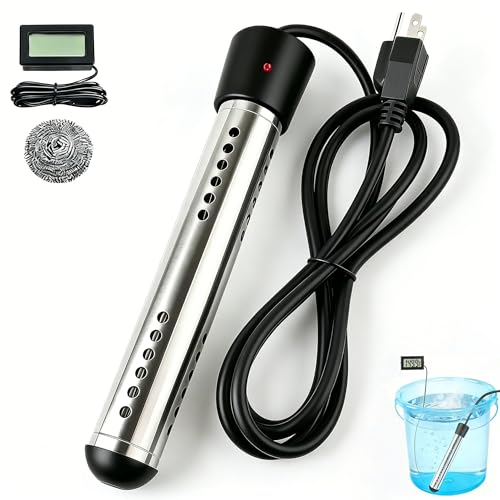
Suwdjpwo 2000W Portable Immersion Water Heater
How Hard Water Damages Your Water Heater
Hard water causes problems for water heaters by depositing calcium and magnesium minerals as limescale inside the tank and on heating elements.
This scale buildup acts like insulation, making heating elements work harder and less efficiently, which raises your energy bills and shortens the heater’s life.
In tankless water heaters, the small internal parts and narrow heat exchangers clog quickly without treatment, risking failures within just a couple of years in hard water areas.
Glass-lined tanks resist corrosion but can crack over time, letting water damage the steel underneath. Stainless steel tanks handle corrosion better but come at a higher price.
Choosing a water heater designed to handle hard water helps avoid frequent repairs, maintain efficiency, and extends the overall lifespan of your system.
 Water Heater Owner's ToolkitFix the common faults yourself, keep it running for years, and know when a repair is money wasted.No-hot-water flowcharts, gas and electricFlush, anode, relief valve and descaling stepsRepair-or-replace calculator (Excel)
Choosing the Right Water Heater for Hard Water
The best water heater for hard water combines durable materials, effective scale resistance, and appropriate design for your home’s water conditions.

Stainless steel tanks outperform glass-lined ones in hard water. Stainless steel resists corrosion longer, while glass-lined tanks depend heavily on the coating holding up without cracking.
Anode rods protect steel tanks from corrosion. Magnesium rods work well in soft water but degrade fast in hard water. Powered anode rods and titanium elements last longer and offer better protection in mineral-rich water.
Tankless water heaters save space and energy but need careful attention to flow rates and heat exchanger design. Their smaller parts clog faster, so models with scale inhibitor compatibility and easy maintenance are essential.
Electric tankless models may require upgrading your home’s electrical system to handle their high power draw, sometimes up to 20–30 amps per unit, especially if switching from gas.
Look for water heaters with warranties that cover hard water damage or scale buildup. These warranties signal better engineering to withstand mineral deposits over time.
Among current options, the Rheem tankless water heater stands out for hard water thanks to its stainless steel construction, durable heat exchanger, and proven scale resistance features.
If you want to explore electric models that handle hard-water conditions well, consider checking dedicated resources on electric water heaters designed for mineral-heavy water.
Maintenance That Extends Life in Hard Water Areas
Flushing your water heater at least twice a year is crucial in hard water zones to prevent limescale and sediment buildup. This routine clears mineral deposits that reduce heating efficiency and can cause damage over time.
Using a sediment removal tool like the Turbo Tank Cleaner helps agitate and flush sediment from tank water heaters more effectively than plain flushing. It blasts air into the tank, loosening the compacted particles that settle at the bottom.
Powered anode rods offer superior corrosion protection compared to traditional sacrificial rods. They use an external power source to maintain a protective electric current, slowing tank rust and scale buildup, which is especially beneficial in hard water conditions.
Choosing between water softeners and scale inhibitors affects maintenance and cost. Softeners remove minerals but require salt replenishment and upkeep. Scale inhibitors don’t remove minerals but change their form to reduce scaling. Both help, but softeners demand more ongoing care and higher costs.
A well-maintained water heater with regular flushing and the right anode rod can last years longer in hard water areas. Skipping these steps accelerates wear and risks early failure, negating any initial savings on a cheaper unit.
Running Costs and Long-Term Savings
Hard water scale can cut your water heater’s efficiency by up to 30%, pushing energy bills higher as the heater works harder to reach set temperatures.
Water softeners reduce scale buildup, which can save money on repairs and energy use, but you’ll pay for salt and extra maintenance. The trade-off depends on your water hardness and willingness to maintain the system.
Electric tankless heaters use energy only when hot water flows, saving money over storage tanks. However, switching from gas to electric tankless may require costly electrical upgrades to handle the increased load safely.
Regular maintenance like flushing, sediment removal, and anode rod replacement prevents efficiency loss, lowers repair expenses, and extends heater lifespan. These savings add up over the heater’s life, often covering the cost of softeners or maintenance tools.
| Heater | Watts | Per hour | Per day (3 h) | Per month (30 days) |
|---|---|---|---|---|
| 1,500 W water heater running 3 hours/day | 1,500 W | 26¢ | 77¢ | $22.95 |
Balancing upfront costs, maintenance time, and energy savings guides the best choice for each home. A Rheem tankless unit with a powered anode rod, combined with periodic flushing and a scale inhibitor, often hits the sweet spot for hard water areas.
Check your home’s electrical panel capacity before upgrading to an electric tankless heater to avoid surprises. Adding dedicated circuits or higher amperage breakers is common but not cheap or simple.
Understanding these cost dynamics helps avoid sticker shock and ensures your water heater lasts through the coldest nights without breaking the bank.
For a closer look at electric water heaters designed for hard water, consider the models detailed in electric water heaters that handle hard-water conditions.
Checklist Before Buying or Maintaining Your Heater
Start with confirming the tank material and anode rod type. Stainless steel tanks paired with titanium or powered anode rods resist corrosion and limescale better than glass-lined tanks and traditional rods, especially in hard water.
Check if your chosen water heater is compatible with scale inhibitors. Some models work well with inline scale inhibition systems like the 3M Aqua-Pure or Waterdrop AP431, which slow mineral buildup without affecting warranty coverage.
Plan your maintenance tools in advance. Flushing your heater twice a year is vital, but sediment removal tools like the Turbo Tank Cleaner help clear calcium deposits and sediment efficiently, extending heater life.
Review warranty terms carefully. Hard water can void coverage if the manufacturer’s maintenance schedule isn’t followed or if you use incompatible treatment systems. Look for warranties that explicitly mention protection or exclusions related to hard water use.
If you’re considering an electric tankless water heater, evaluate your home’s electrical capacity first. These units often require a 240 V supply and can draw 40 to 50 amps, which might mean upgrading your breaker panel or wiring.

