

You step outside at 7 AM, coffee in hand, and the grass already looks tired. By noon, it’s lying flat, and by dinner, you see those telltale blue-gray patches. At 100 degrees, your lawn isn’t just thirsty—it’s fighting for survival. Most watering advice falls apart at this temperature because it ignores what extreme heat does to soil, roots, and water itself.
This guide gives you a practical survival plan. You’ll learn when to water, how long to run your sprinkler, how to adjust for clay or sandy soil, and how to read what your grass is telling you. You’ll also get a strategy for letting your lawn go dormant when fighting the heat just isn’t worth the water bill.

Orbit
Orbit Programmable Digital Hose Watering Timer -…
- Smart Automatic Watering Control: The Orbit Programmable Digital Hose Watering Timer transforms a faucet into an automatic waterin…
- Water-Saving Irrigation Scheduling: Program a consistent irrigation timer with adjustable watering duration to maintain healthy la…
- Simple Digital Programming: A clear LCD screen and easy-to-read display allow quick programming of watering schedules, helping hom…
If you want precise control over your watering schedule without standing outside with a hose, a simple programmable hose timer handles the job. Set the duration and frequency once, and it turns your faucet into an automatic system. The built-in rain delay helps you avoid watering when nature beats you to it.
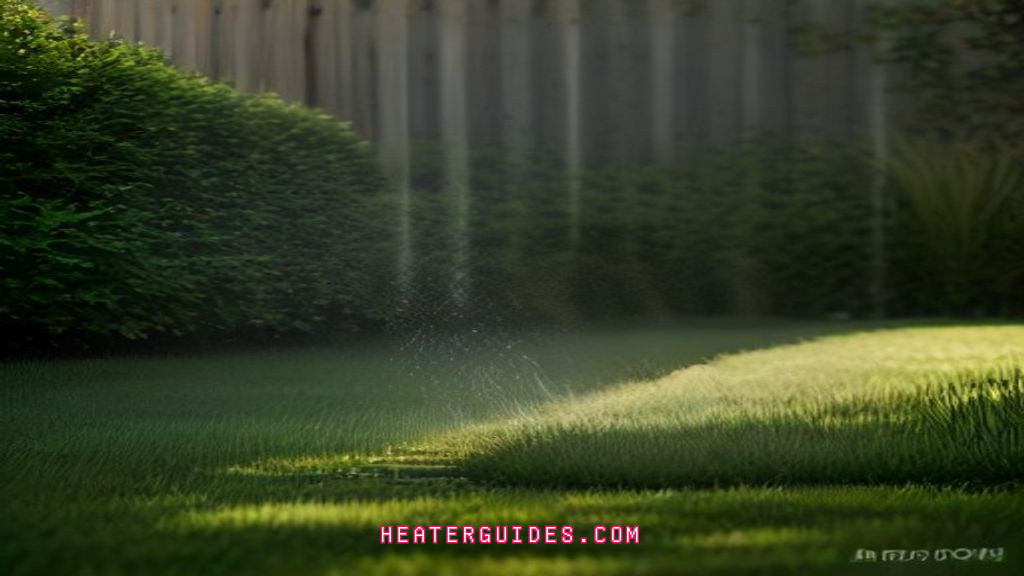
The 100-Degree Rule: Why Your Watering Strategy Must Change
At 100°F, evaporation rates double compared to a mild 70°F day. A sprinkler running at noon loses up to 40% of its water to the air before it hits the ground. That’s not just wasteful—it’s dangerous because your lawn gets less water than you think.
Heat stress also changes how roots behave. When soil temperatures climb above 85°F, cool-season grasses like fescue and bluegrass slow root growth dramatically. Warm-season grasses like Bermuda and Zoysia handle it better, but even they have limits. Your goal is to keep moisture in the root zone, not just wet the surface.
So the first rule of extreme heat watering: water deeper, less often, and at the right time. Shallow daily sprinkling creates shallow roots. Shallow roots dry out faster, which means you water more, which wastes more water. It’s a vicious cycle.
The Golden Window: Why Early Morning Beats Evening (and Night)
Water between 4 AM and 8 AM. That’s the sweet spot. The air is cool, wind is usually calm, and water has time to soak in before the sun starts baking the soil. You lose almost nothing to evaporation.
Evening watering seems logical—cooler, less sun—but it has a hidden problem. Grass blades stay wet all night, which invites fungal diseases like brown patch and dollar spot. In humid summer heat, that’s a fast way to ruin a lawn. Night watering is even worse because dew plus standing water creates a fungal paradise.
If you can’t get up at dawn, set a timer. That’s where a digital hose timer earns its keep. It starts the sprinkler at 5:30 AM without you lifting a finger. You sleep in, the lawn gets watered, and you avoid the fungal risk of evening watering.
How Long and How Often? A Simple Schedule for Extreme Heat
There’s no universal answer because soil type and grass type change everything. But here’s a starting point for 100-degree conditions:
- Warm-season grass (Bermuda, Zoysia): Water every 2–3 days, 1 to 1.5 inches per session.
- Cool-season grass (Fescue, Bluegrass): Water every 1–2 days, 1.5 to 2 inches per session.
- Newly seeded or sodded lawn: Water daily, lightly, for the first two weeks. Roots haven’t established yet.
How do you know when you’ve applied an inch? Set out three or four flat-bottomed tuna cans in the sprinkler’s path. Run the sprinkler, and check the time it takes to fill each can to 1 inch. That’s your baseline duration. Most oscillating sprinklers need 45–60 minutes to deliver an inch; rotary sprinklers often take longer.
Adjusting for Your Soil Type (Clay vs. Sandy)
Clay soil holds water like a sponge but absorbs it slowly. If you run a sprinkler for 30 minutes on clay, most of the water pools and runs off into the street. Sandy soil is the opposite—it drinks fast but drains quickly, leaving roots dry in a day.
For clay soil, run shorter cycles with breaks. Water for 10 minutes, wait 30 minutes, then water again. This lets each batch soak in before the next one lands. You’ll use less water and get deeper penetration.
For sandy soil, water more frequently but for shorter durations. Every other day won’t cut it. Try every day for 20–30 minutes, depending on your sprinkler’s output. The goal is to keep moisture in the root zone without flushing it past the roots.
The “Cycle and Soak” Method for Sloped Lawns
Slopes are the worst case for runoff. Water runs downhill before it penetrates. Cycle and soak solves this. Split your total watering time into three or four shorter cycles, spaced 30–60 minutes apart.
Example: your lawn needs 45 minutes of watering. Instead of one long run, do three 15-minute cycles starting at 5 AM, 6 AM, and 7 AM. Each cycle wets the soil, then the pause lets it absorb. You’ll see runoff disappear and deep penetration improve.
This method also helps compacted soil. If water pools on level ground after 5 minutes, your soil is compacted. Aerate in early fall, and use cycle and soak in the meantime to get water down where roots can reach it.
Is Your Lawn Thirsty or Drowning? How to Read the Signs
Overwatering is as common as underwatering in 100-degree heat. People see crispy grass and assume it needs more water, but often it’s getting too much. Here’s how to tell the difference.
| Symptom | Underwatered | Overwatered |
|---|---|---|
| Color | Blue-gray or dull green | Yellow-green, especially in patches |
| Footprints | Stay visible after walking | Spongy, springy feel underfoot |
| Blade texture | Dry, brittle, folded in half | Soft, mushy, matted down |
| Soil feel | Dry and crumbly 2 inches down | Wet, muddy, or sour-smelling |
| Growth | Slow, grass lies flat | Fast, but weak and pale |
Check the soil before you water. Stick a screwdriver or finger 3–4 inches into the ground. If it’s dry down there, water. If it’s moist, wait a day. Your grass will tell you more than any calendar.
The Dormancy Option: When to Stop Fighting the Heat
Here’s an uncomfortable truth: keeping a cool-season lawn lush and green through a 100-degree stretch is expensive and water-intensive. Sometimes the smartest move is letting it go dormant.
Dormancy is natural. Your grass stops growing, turns brown, and conserves energy. It’s not dead—the crown and roots stay alive. When temperatures drop in fall, it will green up again with regular watering.
To trigger dormancy safely, stop watering entirely. Give the lawn one deep watering (about 1 inch) to help it transition, then leave it alone. Dormant grass needs about 1/4 inch of water every 2–3 weeks to keep the roots alive. That’s a fraction of what a green lawn demands.
The trade-off: your lawn looks dead for a month or two. Neighbors might raise eyebrows. But you’ll save hundreds of gallons of water and avoid stressing the grass further. In fall, water deeply for a week straight to wake it up.
If you choose to keep it green, commit fully. Going back and forth—watering one week, not the next—is worse than either extreme. Inconsistent moisture stresses grass more than steady drought.
Emergency Recovery: Reviving a Lawn That’s Already Crispy
You missed a watering day, or the sprinkler failed, and now the lawn looks like straw. Don’t panic, and don’t drown it. A sudden flood of water can shock the roots and cause more damage.
Start with syringe watering. This means lightly misting the lawn for 5–10 minutes in the late afternoon or early evening, just enough to cool the grass blades and canopy. The goal isn’t deep watering—it’s reducing leaf temperature and preventing heat stress from cooking the plant. Do this once or twice a day for a few days.
After 2–3 days of syringe watering, return to a normal deep watering schedule. Water early morning, 1 to 1.5 inches total, and let the soil dry between sessions. You’ll see new growth within a week if the roots survived.
One caution: if the lawn is completely brown and crunchy, check the roots. Pull up a small patch. If the roots are white and firm, it’s dormant and will recover. If they’re brown, mushy, or smell rotten, that section is dead and needs reseeding in fall.
The Bottom Line on Beating the Heat
- Water between 4 AM and 8 AM to beat evaporation and avoid fungal disease.
- Water deeply (1–1.5 inches) and less often—shallow daily watering creates weak roots.
- Adjust for your soil: clay needs cycle and soak, sandy soil needs more frequent lighter watering.
- Use tuna cans to measure your sprinkler’s output and set a baseline duration.
- Read your lawn’s signs—blue-gray color and lingering footprints mean thirsty; yellowing and spongy turf mean too much water.
- Let cool-season grass go dormant if water is scarce; it will recover in fall with regular watering.
- For already-crispy lawns, syringe water to cool the canopy before resuming deep watering.
Extreme heat doesn’t have to destroy your lawn. It just requires a smarter approach than cranking up the sprinkler. Watch the soil, read the grass, and adjust as conditions change. Your lawn—and your water bill—will thank you.
How long should I run my sprinkler at 100 degrees?
It depends on your sprinkler’s output and soil type. Measure with tuna cans: run the sprinkler until cans collect 1 inch of water. For most oscillating sprinklers, that’s 45–60 minutes. Divide that into cycles if you have clay soil or a slope.
Is it okay to water my lawn in the afternoon during a heatwave?
Technically you can, but you’ll waste 30–40% of the water to evaporation, and the water droplets can act like tiny magnifying glasses, scorching grass blades. Morning watering is far more efficient and safer for the plant.
Should I water every day when it’s 100 degrees?
Not necessarily. Daily watering encourages shallow roots that dry out faster. For most established lawns, watering every 2–3 days with a deep soak is better. New lawns are the exception—they need daily light watering until roots establish.
What does a lawn look like when it’s overwatered in extreme heat?
Yellow-green patches, a spongy feel underfoot, and a sour smell from the soil. The grass may grow fast but look weak and pale. Check soil moisture before watering—if it’s wet 3 inches down, skip the session.
Can I revive a lawn that’s already turned brown and crispy?
If the roots are white and firm, yes. Start with syringe watering to cool the canopy, then resume deep watering after a few days. If the roots are brown and mushy, that area is dead and will need reseeding in cooler weather.

I am a mechanical engineer and love doing research on different home and outdoor heating options. When I am not working, I love spending time with my family and friends. I also enjoy blogging about my findings and helping others to find the best heating options for their needs.
Related guides

Warm Up Your Space: Best 120V Baseboard Heater Ever!
Looking for the best 120V baseboard heater? Find efficient options that keep your space cozy and warm this…
Naturally the Best Heat Gun for Home Projects!
Ready to tackle your DIY projects? Find the best heat gun for home use that delivers power and…
Unbeatable Heat Resistance: The Best Spatula for Every Cook!
Looking for the best heat resistant spatula? Find the perfect tool to elevate your cooking game and handle…
