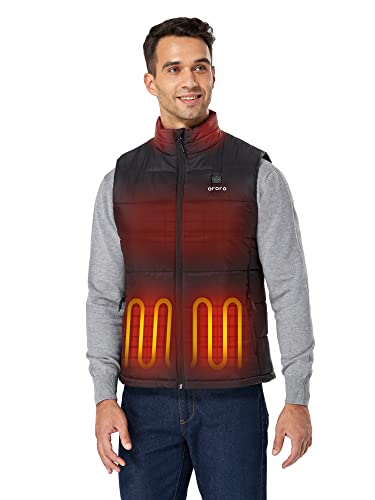
For most people who want to stay warm without adding a bulky coat, the ORORO Men’s Heated Vest is the strongest everyday pick: its four heating zones, three heat settings and battery runtime of up to 10 hours on low suit commuting and daily layering. Choose a heated jacket instead if you need full-arm coverage.
What to remember
Choose the ORORO for everyday layering and up to 10 hours on low.
The Hecusma lists nine heating zones and up to 8–9 hours on low.
A heated vest warms your torso; wear a warm base layer and outer layer when conditions call for them.
Seal drafts and cover cold floors before using a portable electric heater to warm a whole room.
Follow the care label and remove the battery before washing.
The common mistake is buying by the biggest battery number alone. Runtime also depends on heat setting, and a vest that fits poorly can leave you cold even with plenty of battery capacity.
These picks focus on listed features, not independent warmth tests. A heated vest warms your core; layers, draft control and a properly sized room heater still do separate jobs.
Five Heated Vests Worth Comparing
#1Best Everyday Vest
ORORO Men’s Heated Vest, 4-Zone Puffer
Best for Commuting, daily layering and changing winter weather
The lightweight puffer design works as an outer layer or under a heavier coat, while four carbon-fiber heating zones cover the collar, mid-back and pockets. Three heat settings, one-button control and up to 10 hours on low make it the easiest everyday choice for commuting and regular winter wear.
Heating system 4 carbon fiber heating zonesHeat settings 3 adjustable settingsBattery 7.38V 4800mAh, 35.424WhListed runtime Up to 10 hours on lowCare Machine washable; remove battery before washing
Why it made the cut
Up to 10 hours on low
Water- and wind-resistant shell
UL-certified battery with USB-C convenience
Good to know
Only four heating zones
Listed battery capacity is 4800mAh
Skip it if Skip it if you need heated sleeves or more extensive body coverage.
Best for Core warmth for outdoor work, camping and fishing
Nine heating zones cover more of the vest than the other vest options here, and the 4-in-1 controller lets you customize the heated areas. Its fleece fabric, fleece lining and stand-up collar suit extended outdoor wear when you want warmth without a bulky coat.
Heating zones 9Controller 4-in-1 smart controllerBattery 7.4V 16000mAhListed runtime 8-9 hours on low; 5-6 hours on mediumFabric Fleece with fleece lining
Why it made the cut
9 heating zones
Heats in 3 seconds
Machine- and hand-washable after removing the battery
Good to know
Low-setting runtime is listed as 8-9 hours
The included battery is larger than the one in some lighter vests
Skip it if Skip it if a streamlined commuting vest matters more than maximum heated coverage.
Best for Windy commutes and light wet-weather daily wear
The quilted, abrasion-resistant shell is windproof and water-resistant, giving this vest more weather protection than a simple fleece layer. Eight heating sheets cover the neck, chest, abdomen, back and waist, with three settings and a listed runtime of 3-10 hours.
Heating sheets 8Heat settings 3Battery UL-certified 10000mAh rechargeable batteryListed runtime 3-10 hoursShell Abrasion-resistant, windproof and water-resistant quilted fa
Why it made the cut
Windproof and water-resistant
8 heating sheets
Includes a UL-certified 10000mAh battery pack
Good to know
Runtime varies widely by heat setting
The thick quilted design may layer less easily than a lightweight vest
Skip it if Skip it if you want the longest specifically stated low-setting runtime.
Best for Hunting, walking, fishing and layering under a jacket
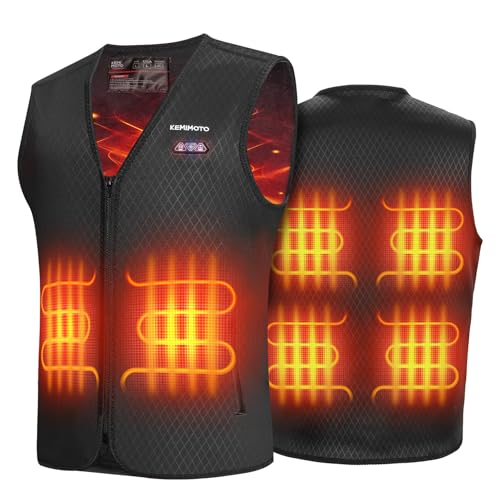
Six heated pads focus on the abdomen, waist and back, while the soft velvet inner fabric makes the vest comfortable against a base layer. Two control switches let you adjust three heat levels and the heating zones for outdoor work or home use.
Heating zones 6Heat settings 3 heating levelsControls 2 control switchesListed runtime Up to 8 hoursInner fabric Soft velvet
Why it made the cut
Soft velvet inner fabric
6 heated pads
Up to 8 hours of listed warmth
Good to know
Heating is concentrated on the abdomen, waist and back
Two control switches may take more effort to adjust
Skip it if Skip it if you want heating in the collar or pockets for commuting.
Best for Fuller coverage when a heated vest leaves your arms cold
This is a heated jacket rather than a vest, so it adds sleeves and a detachable hood for broader winter coverage. Two 10000mAh batteries power nine heated areas, with a listed runtime of 12-13 hours on low and protection against wind, snow and light rain.
Heating areas 9Heat settings 3Battery 2 10000mAh UL-certified rechargeable batteriesListed runtime 12-13 hours on low; 8-9 hours on medium; 6-6.5 hours on highCoverage Detachable hood and heated jacket design
Why it made the cut
9 heated areas
Two 10000mAh battery packs
Detachable hood and weather-resistant design
Good to know
A jacket is less flexible to layer than a vest
The slim-fit design may leave less room for thick layers
Skip it if Skip it if you specifically want a lightweight sleeveless layer for unrestricted arm movement.
A heated vest adds targeted warmth to your core; it isn’t a substitute for an insulated coat in severe cold. If you’re looking for a great way to stay warm in winter, choose a vest for layering and check its heating layout, controls, battery claims and shell before buying. It won’t mount on a wall, and it isn’t a room heater.
For everyday layering, the ORORO Men’s Heated Vest has four heating zones, three heat settings and a stated runtime of up to 10 hours on low. The Hecusma Fleece Heated Vest for Men lists nine zones and a low-setting runtime; more zones don’t prove greater warmth without comparable test results. FERNIDA lists a quilted, water-resistant, windproof shell, while KEMIMOTO’s six-zone hunting vest suits shoppers looking for coverage in a hunting-oriented design.
Option
Listed detail
Could suit
ORORO Men’s Heated Vest
4 zones; 3 settings; up to 10 hours on low
Everyday layering and longer low-setting use
Hecusma Fleece Heated Vest for Men
9 zones; low-setting runtime stated
Shoppers comparing zone coverage
FERNIDA Men’s Heated Vest
Quilted, water-resistant, windproof shell
Windy or damp conditions
KEMIMOTO Heated Hunting Vest
6 heating zones
Hunting-oriented use
QTREE Women’s Heated Jacket
Women’s heated-jacket option; 2 batteries in product name
Shoppers wanting arm coverage
These are listed product details, not results from independent warmth testing.
Searching for a heated vest for women or a heated women’s vest? QTREE is the women’s heated-jacket option in this lineup, not a vest. Check the fit, where the battery sits, and the seller’s return terms before choosing; a battery placement that bothers you won’t improve with wishful thinking.
For electric heated coats for men, look at a jacket that covers the arms; a vest is sleeveless. The men’s vest options here include ORORO, Hecusma, FERNIDA and KEMIMOTO. If you’re comparing Top Heated Vests for Men, match the shell and stated runtime to your use rather than treating zone count as a warmth score. For a coat roundup, see top heated coats for men.
Check Before You Buy
Compare heating-zone placement with the areas you want warmed.
Read the runtime claim for the heat setting you expect to use.
Check shell and lining details against your usual conditions.
Confirm fit, battery placement and return terms.
Runtime Claims
Runtime figures are manufacturer claims, not independently measured results in this guide. Actual runtime can vary with heat setting and conditions.
Stay Warm Indoors Without Turning Up the Heat
To stay warm without turning up the heat, warm yourself and reduce heat loss before adding room heat. Wear loose layers; wool is a useful option, and add a waterproof outer layer when you go outside. These steps also help if you’re figuring out how to stay warm at home without a heater, how to stay warm in winter without a heater, or how to stay warm without heat.
To naturally warm a house or make a room naturally warm, use daylight, shut out nighttime drafts and improve the surfaces around you. Open curtains while useful daylight reaches the room, then close them after dark. Floor-length curtains can help trap heat at windows; a rug adds thermal resistance between a cold hard floor and your feet. Neither creates heat, but both can make a room feel warmer.
1
Check the edges
Look and feel around window and door edges, and check the letterbox for moving air. Work around the whole frame; a small gap can make the room feel colder.
2
Seal suitable gaps
Use weatherstripping or draught-proofing tape where it fits the gap and surface. Put a draught excluder at the bottom of a drafty door.
3
Set the room for the season
Open curtains for useful daylight and close them after dark. If your ceiling fan supports a winter setting, use that setting; don’t assume every fan has one.
For cold feet, start with dry socks and slippers. A warm foot bath can help, but dry your feet thoroughly afterward; lingering moisture can leave them feeling colder. A way to stay cool is likely an unrelated search here: this guide is about staying warm.
Useful Room Changes
Block moving air at windows, doors and the letterbox.
Close floor-length curtains after dark.
Put a rug over a cold hard floor.
Keep socks and slippers dry.
What Passive Changes Can’t Do
Draft control, curtains and rugs can improve comfort, but they won’t replace a heater when the room remains too cold. If these changes aren’t enough, compare options in our guide to warm your space with a heater.
Size a Portable Heater and Check the Cost
A portable electric heater can be worth running for a few hours in one occupied room, but it’s an expensive fix for a drafty whole house. A 1,500 W model draws about 12.5 A at 120 V, so room size alone won’t tell you whether it can keep up; drafts, insulation and the heater’s own specifications matter.
An electric water tank stores hot water, which loses heat over time. How long the water stays warm depends on the tank’s insulation, starting temperature, room temperature and how much water you use. Check the tank label or manual for its heat-loss information rather than relying on a universal number.
Estimate the Heater’s Running Cost
Use this formula: watts ÷ 1,000 × hours × electricity rate. At an assumed rate of $0.17 per kWh, running a 1,500 W heater for 4 hours costs 1.5 × 4 × $0.17 = $1.02. That’s a short-term comfort boost, not a cheap way to heat every room.
Heater
Watts
Per hour
Per day (4 h)
Per month (30 days)
1,500 W portable heater
1,500 W
26¢
$1.02
$30.60
Calculated at 17¢ per kWh. Assumes 4 hours of use daily for 30 days and electricity at $0.17 per kWh.
Before You Choose a Heater
Use it to warm one occupied room or provide a short comfort boost.
Check the heater’s specifications and consider drafts and insulation; don’t assume an exact square-foot capacity without product data.
Compare the expected running cost with warming yourself: a battery-powered heated vest warms your body, while a plug-in heater warms the room. Neither replaces the other.
Use Heated Clothing and Electric Heaters Safely
A hot water bottle needs careful handling: follow its instructions, check for damage or leaks, and don’t use boiling water if the manufacturer warns against it. Keep it from direct contact with your skin, and don’t use it while asleep. There’s no universal fill temperature; use the one in the product instructions.
For gas-safe warmth, use only a gas-burning heater rated for indoor use, follow its ventilation requirements and keep a working carbon monoxide alarm in service. Outdoor, patio and construction heaters aren’t indoor substitutes.
Keep Plug-In Heaters Clear
Plug an electric heater directly into a wall outlet—never an extension cord or power strip—and keep at least 3 feet of clearance around it. Choose a model with tip-over and overheat protection and a UL, ETL or CSA listing. Don’t sleep with it running or leave it on while you’re away unless the manufacturer says that model is designed for it.
Check Before Use
Heated garment: Follow its manual and use the supplied or specified battery. Keep the battery and connectors dry; remove the battery before washing if the instructions require it.
Heated garment: Don’t assume it has automatic shutoff or a safety certification unless the product information says so. The FERNIDA vest’s battery is described as UL-certified; that claim doesn’t apply to the other vests here.
Hot water bottle: Follow the product’s filling and use instructions, and stop using it if you find damage or a leak.
Electric heater: Check the clearance, plug connection, safety features and listing before switching it on.
Layer for Indoors, Commuting and Outdoor Work
Without electricity, a battery-powered heated vest only helps while its battery is charged; it isn’t a lasting no-power heat source. To stay warm without electricity, propane, or a wood fire, wear dry loose layers, use blankets, reduce drafts, and move to a safe warm location if you can. A heated vest won’t solve a cold home during an extended outage.
For an ordinary cold day, layer a base layer under wool or fleece, add a charged heated vest if you want targeted warmth, then wear a waterproof outer layer in wind or wet weather. Open or remove layers indoors before you sweat; damp clothing can leave you colder outside. For cold feet, thick dry socks help, and best rechargeable heated socks are another battery-dependent option, not a no-power fix.
Layer
Best use
What to check
Heated vest
Core warmth with arms free
Fit over inner layers; battery is charged
Insulated jacket
More coverage in cold weather
Sleeves, collar or hood, and water resistance
Quilted jacket or packable puffer
Light insulation for everyday layering
Fit over layers; fabric and weather protection
A vest leaves your arms exposed. An insulated outer layer covers more of you, but warmth depends on its construction and fit.
A lightweight insulated jacket, quilted jacket, or packable puffer isn’t automatically warmer than a heated garment. Compare coverage, fit over your layers, water resistance, and whether a stand collar or hood suits the job. The listed vest and jacket claims don’t include comparable independent warmth tests, so there’s no verified warmth ranking among them.
Commute With Indoor And Outdoor Stops
Say you walk to work in cold, windy weather, then spend the day indoors. Start with a dry base layer and fleece, add the charged vest for the walk, and put a waterproof shell over it if it’s wet or windy. Remove the shell and switch off the vest indoors if you’re getting too warm.
OutsideAdd weather protection over your layers
IndoorsRemove a layer before you sweat
For a 150-square-foot cabin at 30 below, area alone can’t produce a reliable BTU answer. Insulation, air leakage, ceiling height, and your target indoor temperature all change the heat loss. Use only an indoor-rated heater sized according to its manufacturer’s guidance, and follow its ventilation instructions; never bring an outdoor, patio, or construction heater inside.
During A Power Outage
Dry layers and blankets can help during a heating outage, but never use a camp stove, grill, patio heater or other outdoor heater inside. Fuel-burning heaters can produce carbon monoxide; indoors, use only a model rated for indoor use, follow the manual’s ventilation requirements and keep a working CO alarm nearby. If your home becomes unsafe or dangerously cold, go to a safe warm location instead of improvising.
Questions People Ask
How can I stay warm without electricity or a heater?
Use dry layers, with wool next to your skin if you have it, and add a waterproof outer layer if you’re outside. Close interior doors, block drafts with a towel or draught excluder, and gather in one smaller room; never use an outdoor propane heater, grill or generator indoors for warmth.
How many BTUs does a propane heater need for a 150-square-foot cabin at 30 below?
There isn’t a safe BTU figure from floor area and outdoor temperature alone; insulation, air leaks, ceiling height and the cabin’s indoor temperature target all change the heat loss. Have a qualified HVAC professional size the heater, and use only a model rated for indoor use with the ventilation its manual requires and a working carbon monoxide alarm.
How can I keep my feet warm on cold floors?
Put a rug over stone or hardwood to add thermal resistance, then wear dry wool socks and insulated slippers. If your feet get damp, change into dry socks; moisture can make them feel colder even in a warm room.
How long does water stay warm in an electric water heater tank?
A tank’s insulation and the amount of hot water drawn determine how quickly it cools, so there’s no single number that fits every model. Check the tank label or manual for its standby-loss information; if hot water runs out quickly during normal use, a heating element, thermostat or undersized tank may be the issue.