The best propane infrared garage heater for most readers is the indoor ventless wall unit with thermostat and ODS protection, because it gives you 28,000 BTU, no flue work, and steady control in a real garage. A 28,000 BTU heater can burn through a 20 lb cylinder fast, so output matters more than marketing.
Key takeaways
Choose the heater that matches your venting and fuel before you chase BTU numbers.
Skip outdoor-only tank-top heaters for indoor garages; carbon monoxide is the deal-breaker.
If you want steadier comfort, look for a thermostat and a lower-to-higher output range, not just a single maximum BTU rating.
For most attached garages, an indoor-rated ventless wall heater with ODS protection is the safer fit.
Check your cylinder size, room size, and clearance space before you buy. The manual gets the final say.
A garage heater has to match the space, the fuel setup, and the way you actually use the room. A shiny 30,000 BTU tag means very little if the unit is outdoor-only or needs a ceiling height you do not have.
The real decision is simple: pick the heater that fits your fuel, venting, and clearance limits first, then check output and control. The wrong one is a nice box full of regret.
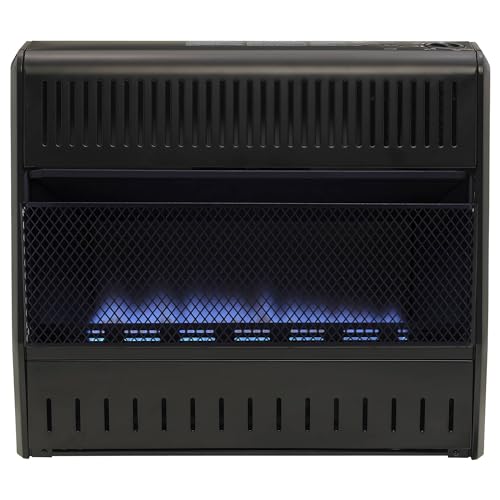
BILT HARD Ventless Infrared Wall Heater 28,000 BTU
Best for Indoor wall-mount heating with thermostat and ODS safety
This ventless propane heater delivers 28,000 BTU of radiant heat and heats up to 1,300 sq. ft., making it ideal for garages. It includes a thermostat with multiple settings to maintain steady warmth while conserving fuel. The built-in Oxygen Depletion Sensor (ODS) adds a vital safety layer for indoor use without venting. Its slim wall-mount design fits well in real garage spaces and needs no electricity, so it works during outages.
Heat output 28,000 BTUFuel Propane, ventlessCoverage Up to 1,300 sq. ft.Safety Oxygen Depletion Sensor (ODS)Mounting Wall mount with base feet
Why it made the cut
Reliable thermostat control with high/medium/low settings
ODS safety shuts off heater if fresh air is low
No vent or chimney needed, 99.9% fuel efficient
Ceramic plaques provide natural radiant heat
Good to know
Limited to 28,000 BTU output, which may be low for very large garages
Requires wall mounting, not portable
Skip it if Skip this if you need a portable heater or more than 1,300 sq. ft. coverage.
ProCom Dual Fuel Ventless Blue Flame Heater 30,000 BTU
Best for Garages needing natural gas or propane with thermostat control
This heater runs on propane or natural gas and outputs 30,000 BTU with 99.9% efficiency. Its blue flame warms the air first, then circulates heat like a central system, which suits garages where air movement helps spread warmth. The built-in thermostat and push-button ignition offer easy control and convenience. It features a cool touch cabinet for safety during use indoors.
Best for Heating garages up to 1,667 sq. ft. with forced air and thermostat
This ceiling-mounted forced-air heater puts out 50,000 BTU, enough for a 3-car garage or workshop. It works with propane or natural gas and supports 24-volt or Wi-Fi thermostats for precise temperature control. The low profile needs at least 10 ft. ceilings and requires 8 ft. clearance from the floor, so it fits larger, taller spaces. Safety features include a high temperature shut-off and flame sensor for reliable operation.
Heat output 50,000 BTUFuel Propane or natural gasCoverage Up to 1,667 sq. ft.Safety High temp shut-off, flame sensorMounting Ceiling
Why it made the cut
High output heats large garages and workshops
Thermostat compatibility including Wi-Fi models
Safety shut-off and flame sensor included
Low profile design saves space
Good to know
Requires high ceiling minimum and clearance
Color may vary, which may affect aesthetics
Skip it if Skip if your garage ceiling is below 10 ft. or you want a wall-mounted unit.
Mr. Heater 170,000 BTU Quiet Burner Forced Air Heater
Best for Huge garages or workshops needing up to 4,250 sq. ft. coverage
This powerful forced-air heater produces 170,000 BTU and can heat spaces up to 4,250 sq. ft., making it the top choice for large garages or industrial workshops. It runs on standard 100 lb. propane tanks and features Quiet Burner Technology to reduce noise. Variable heat output lets you adjust performance to your needs. Assembly is quick, so you can get it running fast.
Heat output 170,000 BTUFuel Propane, 100 lb. tanksCoverage Up to 4,250 sq. ft.Noise Quiet Burner TechnologyControl Variable heat output
Why it made the cut
Massive 170,000 BTU output for very large areas
Quiet Burner Technology reduces noise
Variable heat output for control
Compatible with large propane tanks for long run time
Good to know
Requires large 100 lb. propane tanks, not portable
Likely overkill for typical home garages
Skip it if Skip if your garage is smaller or you want a wall-mounted indoor heater.
Best for Outdoor use with portable floor mount and 20 lb. tanks
This portable floor-mounted propane heater is built for outdoor use and runs on 20 lb. cylinders. It offers variable heat output from 18,000 to 30,000 BTU and has independent swivel heads for directing radiant infrared heat where you need it. The tip-over safety shuts off the unit if it falls. No electricity is required, so it works well for outdoor job sites or open garages.
How To Pick A High Efficiency Propane Garage Heater
The most efficient propane garage heaters are those that deliver heat exactly where you need it without wasting fuel on the wrong type of heat for the space. Efficiency here means making propane burn smarter, not just hotter.
Propane heaters come in three main heat styles: infrared radiant, blue flame, and forced-air. Infrared radiant heaters warm objects and people directly, like the sun on your skin, which is ideal for garages where you want immediate, focused warmth. Blue flame heaters heat the air by burning propane in a visible blue flame, then circulating that warm air quietly. Forced-air heaters use a fan to blow hot air into the space, which warms the air faster but can stir up dust and dry the air.
Choosing between ventless, vented, and outdoor-only heaters is critical. Indoor garages need indoor-rated propane heaters equipped with an oxygen depletion sensor (ODS) to shut off if oxygen runs low. Ventless models release combustion gases into the room but must be carefully sized and installed. Vented heaters exhaust outdoors, safer but requiring flue work. Outdoor-only heaters, like the Reddy Heater Double Tank Top, belong outside and should never be used in closed garages because they lack safety features for indoor air quality.
Myth
A ventless propane heater with 99.9% efficiency is always the best choice for a garage.
Fact
Even a highly efficient ventless heater can be unsafe or illegal in tight spaces or areas with local restrictions on vent-free gas appliances. Efficiency doesn’t override ventilation and code compliance.
Product mismatch
Outdoor tank-top propane heaters are designed for open-air use. Using one inside a closed garage risks carbon monoxide buildup and violates safety codes.
How Big A Garage It Can Heat
Sizing a propane garage heater depends more on your garage’s volume and insulation than the heater’s marketing label. Ceiling height, air leaks, and whether the space is insulated shift the BTU you actually need.
The basic rule is about 30 to 50 BTU per square foot for an average insulated garage with an 8-foot ceiling. Higher ceilings or uninsulated garages push that number toward the top of the range. For example, a two-car garage that’s 24 by 24 feet with an 8-foot ceiling has 4,608 cubic feet of space.
Sizing Example for a 24×24 ft Garage
A typical two-car garage with an 8-foot ceiling and average insulation needs around 30,000 BTU to maintain comfortable warmth. If the ceiling is higher or the garage is drafty, 50,000 BTU might be necessary.
Room size24 × 24 ft
Ceiling height8 ft
Volume4,608 cu ft
BTU needed28,000 to 30,000
That’s why the 28,000 to 30,000 BTU wall-mounted ventless infrared heaters suit smaller enclosed garages. They deliver steady radiant heat without needing flue work. On the other hand, a 50,000 BTU forced-air unit heater shines in larger garages or workshops, where the volume or poor insulation demands more output to keep the space warm.
Portable tank-top propane heaters like the Reddy Heater Double Tank Top focus on spot heat for jobsites or quick warm-ups rather than heating the whole garage. They’re handy but won’t replace a fixed unit for consistent comfort.
Heater
Watts
Per hour
Per day (8 h)
Per month (30 days)
30,000 BTU heater (ventless)
8,800 W
70¢
$5.63
$168.96
Calculated at 8.0¢ per kWh. Approximate propane running cost assuming 91,500 BTU per gallon and $3.50 per gallon propane price.
To estimate propane cost yourself, divide the heater’s BTU input by 91,500 (the BTU in 1 gallon of propane) to get gallons burned per hour. Multiply by your local propane price and hours used. For example, a 30,000 BTU heater burns about 0.33 gallons per hour; at $3.50 per gallon, that’s $1.16 per hour.
Choosing the best garage heaters propane models depends on your garage size and insulation. Fixed wall heaters with thermostats work for whole garages; portable propane heaters are best for spot heating or temporary setups.
Safety Checks That Matter Indoors
Indoor propane heaters require the manual’s clearances, a working carbon monoxide alarm, and ventilation exactly as the manufacturer specifies. Without these, you risk dangerous CO buildup or fire hazards.
If your propane garage heater won’t stay lit, check that the oxygen depletion sensor (ODS) isn’t triggered by poor ventilation or drafts. The ODS cuts gas flow if oxygen levels drop, preventing carbon monoxide poisoning. Piezo ignitions and flame sensors also ensure the burner lights safely and shuts off if the flame goes out.
Vent-free propane heaters must meet local codes, which vary widely. Some states and cities restrict or ban them indoors due to CO risks. Before buying, confirm your local regulations. Installing a vent-free or vented heater without following these rules can cause fines or worse.
Vent-Free Gas Restrictions
Propane heaters that don’t vent combustion gases outside can be dangerous indoors. Only use models specifically rated for indoor use with an oxygen depletion sensor. Follow all ventilation instructions exactly, and always operate with a working carbon monoxide alarm nearby. Never run outdoor-only or unvented heaters inside enclosed spaces.
Clearance to combustibles is non-negotiable. Follow the manual exactly for side, top, and front clearances. Keep combustibles like boxes, paints, or gas cans well away. The tip-over switch on some portable units adds safety but doesn’t replace clearance rules.
Outdoor-only heaters — like tank-top and patio-style models — can deliver plenty of heat but belong strictly outside. Using them indoors risks CO poisoning and fire.
Wall-mounted propane heaters often require professional gas hookups and might need venting, pushing installation into licensed plumber or HVAC territory. Always follow local codes on gas piping and venting, or you risk leaks, fire, or CO hazards.
Safety Checklist for Indoor Propane Heaters
Install a working carbon monoxide alarm near the heater and sleeping areas
Follow the heater’s manual for clearance distances
Confirm local codes allow your heater type indoors
Ensure ventilation meets the manufacturer’s requirements
Never use outdoor-only propane heaters inside
Consider professional installation for gas hookups or venting
In short
Your propane garage heater must have fresh air and clearances per the manual, a working CO alarm, and meet local codes. Don’t use outdoor-only models inside.
What The Rankings Leave Out
The quietest propane garage heaters usually have no blower fan; forced-air units trade quiet for faster whole-space heat circulation. If noise matters, pick a radiant infrared model without a noisy blower.
Each heater suits a specific setting: wall-mounted ventless units are best for indoor garages, forced-air big heaters heat large workshops fast, portable tank-top heaters work outdoors or in well-ventilated spaces, and large forced-air units with quiet burner tech handle backup heat during outages.
The top-rated propane garage heaters deliver the best balance of heat output, safety features, and ease of installation. The most efficient models put heat where you stand instead of wasting fuel warming the whole volume.
Heater Type
Best Use
Noise Level
Installation Notes
Indoor Ventless Wall Unit
Garages and indoor shops
Quiet, no blower
Wall mounted, may need pro gas hookup
Forced-Air Unit Heater
Large workshops
Louder blower noise
Requires venting and pro installation
Portable Tank-Top Heater
Outdoors or very ventilated areas
Moderate noise
Plug and play, no venting
Large Quiet Burner Forced Air
Backup or big spaces
Quieter forced air
Professional install, venting required
How Heaters Fit Different Needs
Smart thermostat compatibility only helps if your heater supports the type of thermostat you already own or plan to install. Don’t buy smart-ready heaters without checking compatibility first.
The ranking logic goes like this: the best overall heater balances heat output, safety, and easy mounting; the best for large rooms has high BTU forced air; the quietest avoids blowers; the best budget is usually a portable unit; and the best for smart controls supports common thermostat types.
1
Measure Your Garage
Calculate the volume and insulation level to size the heater properly.
2
Check Venting and Local Codes
Confirm which heater types and venting setups are allowed indoors.
3
Match Heater Type to Use
Choose radiant for quiet indoor use, forced air for big spaces, or portable outdoor heaters accordingly.
4
Buy and Install Carefully
Follow the manual for clearances, gas hookups, and venting. Consider pro installation.
In short
Most efficient propane garage heaters focus heat where you need it. Pick quiet or powerful models based on your space. Check venting rules, match heater type, then install to the manual.
Frequently Asked Questions
What is a propane infrared garage heater?
A propane infrared garage heater uses infrared radiation to warm objects and people directly, rather than heating the air first. This method is efficient for garages because it reduces heat loss through air movement and ventilation. Infrared heaters deliver comfortable warmth quickly and maintain it steadily.
Which propane heater is best for a two-car garage?
For a two-car garage, a propane heater with at least 28,000 to 30,000 BTU output is usually sufficient, depending on insulation and volume. A ventless indoor-rated unit with a thermostat and oxygen depletion sensor (ODS) offers steady heat without venting hassles. Make sure the heater’s clearance and safety requirements fit your space.
Can I use a tank-top propane heater indoors?
Tank-top propane heaters are designed mostly for outdoor or well-ventilated spaces and generally lack the safety features required for indoor use. Using one indoors risks carbon monoxide buildup and oxygen depletion unless it’s specifically rated for indoor use with an ODS sensor. Always check the manufacturer’s label before considering indoor use.
How much propane does a 30,000 BTU heater use?
A 30,000 BTU heater uses about 0.83 gallons of propane per hour. That comes from dividing 30,000 BTU by propane’s energy content of roughly 91,500 BTU per gallon. Running it continuously for 8 hours would consume about 6.6 gallons, so a 20 lb cylinder (about 4.7 gallons) won’t last a full day at full output.
Do I need a vent for a ventless propane garage heater?
Ventless propane heaters are designed to operate without an external vent, but they still require proper clearance and ventilation as specified by the manufacturer. They include oxygen depletion sensors to shut off if oxygen levels fall dangerously low. You must also have a working carbon monoxide alarm in the garage for safety.
What size propane heater do I need for a 24 by 24 garage?
A 24 by 24-foot garage with an 8-foot ceiling is about 4,600 cubic feet. Using 20 BTU per cubic foot as a rough guide for an uninsulated space requires about 92,000 BTU total. Since most portable propane heaters top out near 30,000 BTU, you’ll need multiple units or a larger commercial system. Insulation reduces this demand significantly.
Why does my propane garage heater keep shutting off?
Frequent shutdowns often happen because the oxygen depletion sensor (ODS) is detecting low oxygen or the heater is overheating due to insufficient clearance or blocked airflow. Check that the heater has the required clearance, fresh air supply, and that the propane pressure is correct. Dirty or faulty sensors can also cause shutdowns.