Best Propane Boilers Residential Reviews: About 150k BTU Output Models
On this page 9 sections
- Compare Propane Boilers by Key Specs
- Top Propane Boilers for Residential Heating Reviewed
- Choose a Propane Boiler by Efficiency, Size, and Features
- Calculate the Right Size and Estimate Running Costs for Your Home
- Check Safety, Certification, and Installer Expertise Before Buying
- Consider Control Systems and Maintenance Specific to Propane Boilers
- Choose a Propane Boiler by Efficiency, Size, and Features
- Choose a Propane Boiler by Efficiency, Size, and Features
- Questions People Ask
Compare Propane Boilers by Key Specs
| Rank | Model | Best for | BTU Output | AFUE Efficiency | Combi Function | Price |
|---|---|---|---|---|---|---|
| 1 | Rinnai I-SERIES Plus 150k BTU Solo BoilerBest for Efficiency | Homeowners wanting high efficiency and multizone heating | 150,000 | 96% | — | Check price |
| 2 | Rinnai I-SERIES Plus 150k BTU Combi BoilerBest for Hot Water | Homes needing both space heating and instant hot water | 150,000 | 96% | Yes | Check price |
| 3 | Rinnai I-SERIES Plus 90k BTU Combi BoilerBest for Smaller Homes | Smaller residences needing combined heat and hot water | 90,000 | 96% | Yes | Check price |
| 4 | Rinnai I-SERIES Plus 199k BTU Combi BoilerBest for Large Homes | Large homes or commercial spaces needing high output and hot water | 199,000 | 96% | Yes | Check price |
| 5 | Rinnai I-SERIES Plus 175k BTU Combi BoilerBest for Mid-Size Homes | Mid-size homes requiring both heat and hot water | 175,000 | 96% | Yes | Check price |
Propane boilers are a solid choice for residential heating, especially where natural gas isn’t available. They come in condensing and combi models, balancing efficiency with hot water needs.
Choosing the right model depends on your home size, heating zones, and whether you want combined hot water supply. This guide cuts through the specs and real features to help you select quickly.
Top Propane Boilers for Residential Heating Reviewed

Rinnai I-SERIES Plus 150k BTU Solo Boiler
Rinnai I-SERIES Plus 150k BTU Combi Boiler
Rinnai I-SERIES Plus 90k BTU Combi Boiler
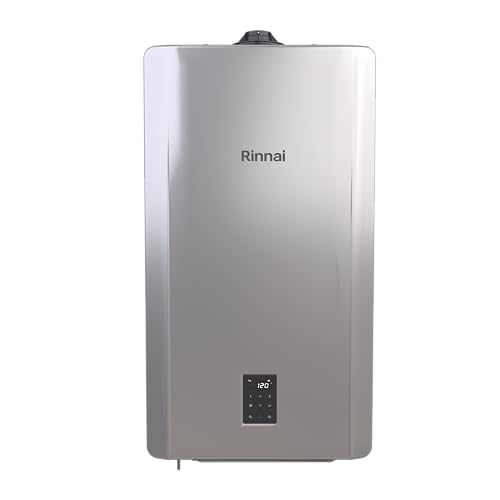
Rinnai I-SERIES Plus 199k BTU Combi Boiler
Rinnai I-SERIES Plus 175k BTU Combi Boiler
Choose a Propane Boiler by Efficiency, Size, and Features
The best propane boilers for residential use deliver high efficiency, the right size output, and features that match your home’s heating style.
Boiler efficiency is measured by the AFUE rating—the Annual Fuel Utilization Efficiency percentage. Federal regulations set a minimum at 80%, but high efficiency propane boilers can reach 95% or more by using condensing technology. That means more heat from every gallon of propane and lower fuel bills.

Condensing boilers trap heat from exhaust gases that traditional models lose, pushing efficiency into the mid-90s. Cast iron boilers, by contrast, are durable and work well with older steam or hot water radiator systems but usually run at 80% to 85% AFUE. Choosing between condensing and cast iron depends on your home’s heating distribution and budget.
| Boiler Type | Typical AFUE | Best For |
|---|---|---|
| Condensing | 90–98% | Modern homes with hydronic heating |
| Cast Iron | 80–85% | Older homes with steam or cast iron radiators |
BTU output is your next consideration. It should match your home’s heating load to avoid wasting fuel. Small homes may need a boiler rated around 75,000 to 100,000 BTU, while larger or poorly insulated homes often require models rated 150,000 BTU or more. Oversizing increases fuel use and shortens the boiler’s lifespan.
You’ll also see ‘combi’ boilers versus ‘solo’ boilers. Solo boilers focus solely on space heating and require a separate water heater for domestic hot water. Combi boilers combine both functions, saving space and installation cost but may have lower maximum output. Combi boilers are ideal for smaller homes or where space is tight.
High efficiency propane boilers residential buyers favor include the Rinnai IP150S I-SERIES Plus, with 96% AFUE and smart controls, and the U.S. Boiler Company Alpine condensing model, which offers 95% AFUE. These models lead in reliability and fuel savings.
 Heating System Upgrade PlannerChoose between a heat pump, a furnace, a boiler or a hybrid with your own numbers, and hire the right installer.Every system compared side by side25 questions for contractors, red flagsRunning-cost, payback and quote calculator (Excel)
Calculate the Right Size and Estimate Running Costs for Your Home
Sizing your propane boiler starts with calculating your home’s heating load, then estimating fuel costs to keep your budget on track.
The heating load depends on your home’s square footage, insulation quality, window type, and climate. A rough rule is 30 to 50 BTU per square foot for average insulation. For example, a 2,000 square foot home with average insulation needs between 60,000 and 100,000 BTU per hour of heat output. Choose a boiler close to that range.
Running costs hinge on propane burn rate, hours of operation, and local fuel prices. Propane contains about 91,500 BTU per gallon. A 100,000 BTU boiler running at 80% efficiency uses roughly 1.37 gallons per hour (100,000 ÷ 91,500 ÷ 0.8). At $3.50 per gallon, that’s about $4.80 per hour.
| Boiler Output (BTU) | Efficiency | Burn Rate (gal/hr) | Cost/hr (@$3.50/gal) |
|---|---|---|---|
| 100,000 | 80% | 1.37 | Estimate your monthly propane fuel cost by multiplying your boiler’s average consumption by local propane prices, which vary widely by region. |
| 150,000 | 90% | 1.10 | Running costs depend on your boiler’s efficiency and how much propane you use, so check local fuel prices to get an accurate estimate. |
| 200,000 | 85% | 1.31 | Calculate fuel expenses based on your boiler’s burn rate and current propane prices in your area for a realistic monthly cost. |
Compare that with natural gas, which averages about $1.10 per therm and contains 100,000 BTU. A natural gas boiler at 90% efficiency burns about 1.11 therms per hour, costing roughly $1.22 per hour—significantly less than propane.
Oil boilers typically cost more per gallon of fuel but deliver higher BTU per gallon. Your choice depends on fuel availability, price stability, and installation considerations.
Medium homes commonly use propane boilers rated between 100,000 and 150,000 BTU. Large homes or those in cold climates may need models over 175,000 BTU. The Rinnai IP150S I-SERIES Plus fits many medium to large homes with versatile output and high efficiency, making it a solid choice.
Calculating your home’s heating needs accurately and understanding running costs helps you select a boiler that balances comfort and operating expenses without surprises.
Check Safety, Certification, and Installer Expertise Before Buying
Safety and proper installation are crucial when choosing propane boilers residential use. Propane-fired boilers for home heating must meet strict standards to ensure safe operation indoors.
Look for key certifications like Energy Star and CSA, which verify efficiency and safety compliance. These labels are your first assurance that the boiler meets federal and industry regulations.
Propane boilers often require specific venting setups. Direct vent models draw air from outside and exhaust combustion gases outside, reducing indoor air contamination risks. Power vent boilers use a fan to force exhaust through a vent pipe, allowing more flexible placement but requiring electricity to run that fan.
Boiler installation demands experience with propane systems. The installer must size the boiler correctly, handle fuel connections safely, and set up venting per local codes. Choosing the best propane burner for your boiler system depends heavily on this expertise, as improper installation risks carbon monoxide leaks or inefficient combustion.
Consider Control Systems and Maintenance Specific to Propane Boilers
The best control systems to optimize propane boiler efficiency include modulating burners and outdoor reset controls. Modulating burners adjust flame size to match heating demand precisely, avoiding wasteful on/off cycling.
Outdoor reset controls measure the outside temperature and adjust the boiler’s water temperature accordingly. This fine-tuning prevents overheating and reduces fuel consumption by matching heat output to actual needs.
Smart controls and zoning improve comfort and efficiency by allowing room-by-room temperature management. Zoning valves or thermostats let you heat only occupied areas, cutting propane use.
Routine maintenance for propane boiler systems includes annual burner tune-ups, inspecting venting and combustion air supply, and checking for leaks or corrosion in fuel lines. Propane-specific issues often stem from burner nozzle clogging or improper air-fuel mix, which a professional can correct during service.
Choose a Propane Boiler by Efficiency, Size, and Features
The best propane boilers for residential use combine high efficiency ratings, the right output size around 150,000 BTU, and features tailored to your home’s heating needs. Models like the Weil-McLain Ultra and Burnham MPO-IQ offer 95% AFUE efficiency and modulating burners that adjust fuel use to heat demand, saving you money on fuel bills.
Look for boilers with easy-to-use control systems and compatibility with outdoor reset controls to optimize performance through the heating season. Wall-mount options save space in smaller mechanical rooms, while floor-standing models typically provide higher output capacities.
Reviews often highlight durability, quiet operation, and service support as key factors. The best boilers balance upfront cost with long-term fuel savings and reliability.
Choose a Propane Boiler by Efficiency, Size, and Features
Among the best propane boilers for home heating, high efficiency models with modulating burners stand out for their fuel savings and comfort. Look for boilers rated 90% AFUE or higher and with output sizes that match your home’s heating load, typically near 150,000 BTU for mid-sized houses.
Features like outdoor reset controls and easy maintenance access improve operational efficiency and reduce service costs. Brands like Lochinvar Knight and Navien have models praised for these qualities.