Best Plug-In Heaters for Large Rooms in 2026
On this page 9 sections
- Plug-In Heater Comparison for Large Rooms
- Top Plug-In Heaters for Large Rooms
- How Much Power Heaters Need for Large Rooms
- Which Heater Types Work Best in Large Rooms
- Smart Features and Thermostat Control Improve Efficiency
- Safety Features You Must Have in Large Room Heaters
- What Matters Most in Large Room Plug-In Heaters
- What To Do Next for Your Large Room Heating
- More Questions, Answered
Plug-In Heater Comparison for Large Rooms
| Rank | Model | Best for | Heat Output (Watts) | Noise Level (dB) | Room Coverage (sq ft) | Price |
|---|---|---|---|---|---|---|
| 1 | DREO 42″ Space Heater Fan ComboBest for Versatility | Large rooms up to 270 sq ft needing year-round use | 1500 | 25 | 270 | See it on Amazon |
| 2 | DREO 25″ Electric Space HeaterQuiet and Precise | Large rooms up to 270 sq ft needing quiet, steady heat | 1500 | 25 | 270 | See it on Amazon |
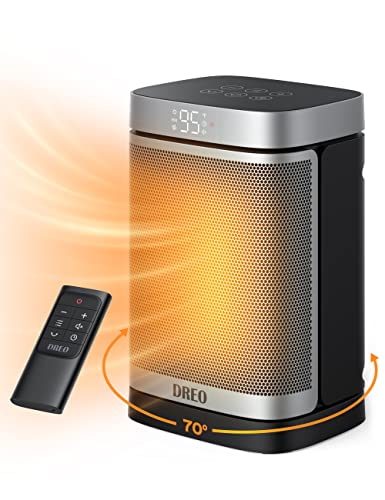
| 3 | DREO Portable Electric Heater with ThermostatEnergy Efficient | Medium to large rooms needing wide coverage and quiet heat | 1500 | 37.5 | — | See it on Amazon |
| 4 | GiveBest Smart Wall Heater 1500WBest Space-Saver | Rooms up to 200 sq ft with limited floor space | 1500 | — | 200 | See it on Amazon |
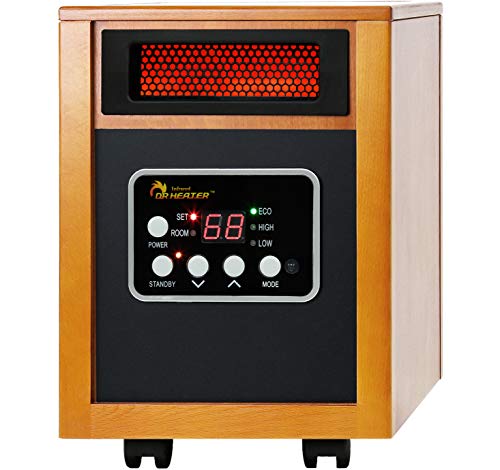
| 5 | Dr Infrared Heater DR-968 PortableInfrared Dual Heat | Large rooms needing infrared plus PTC heating | 1500 | 39 | — | See it on Amazon |
Finding a plug-in heater that can handle a large room’s demands without wasting energy or making noise is a challenge. Most plug-in heaters top out at 1500 watts, so the key is how they deliver and spread heat, plus the smart features that keep running costs down.
This guide highlights the best plug-in heaters built for large rooms, explains what specs really matter, and points out safety features you can’t skip. You’ll also get practical advice on sizing and running costs to make your purchase straightforward.
Top Plug-In Heaters for Large Rooms

DREO 42″ Space Heater Fan Combo

DREO 25″ Electric Space Heater
DREO Portable Electric Heater with Thermostat

GiveBest Smart Wall Heater 1500W
Dr Infrared Heater DR-968 Portable
How Much Power Heaters Need for Large Rooms
Plug-in heaters typically max out at about 1,500 watts, which sets the upper limit for heating large rooms with this type of device.
A 1,500 W heater can cover roughly 150 to 270 square feet depending on how well it distributes heat and the room’s insulation.

Say your room is 270 square feet with standard 8-foot ceilings—using a simple rule of thumb, you need about 10 watts per square foot for basic warmth, totaling 2,700 watts. A single plug-in heater can’t provide that alone.
That means plug-in heaters work best as supplemental heat in large rooms or for spot heating specific areas, not as the sole heat source unless the room is very well insulated or you’re in a mild climate.
Factors like insulation quality, ceiling height, outside temperature, and whether the heater runs constantly or intermittently all affect how much power you really need.
For a room volume of 150 cubic meters (about 5,300 cubic feet), the 1,500 W max is still a useful spot heater but won’t replace central heating entirely.
The best electric heater for a large room is one that matches this wattage need and heats evenly without wasting energy. The DREO 42″ Space Heater, for example, covers up to 270 sq ft at full power with smart temperature control to avoid overheating.
Which Heater Types Work Best in Large Rooms
Ceramic fan heaters heat large rooms fastest because they blow warm air across the space and most oscillate to spread it evenly. They reach temperature in minutes, and models like the DREO 42″ Space Heater run at 25 dB—quieter than a whisper.
Oil-filled radiators heat more slowly but keep radiating warmth for 20 to 30 minutes after the thermostat clicks off, cycling less often and holding steadier temperatures overnight. They’re silent except for the occasional relay click.
Infrared heaters warm people and furniture directly with radiant heat, the way sunlight does. That makes them useful in drafty or high-ceiling rooms where convection heaters lose warm air to the rafters, but they won’t raise the air temperature evenly wall to wall.
For whole-room warmth in a space up to about 250 sq ft, choose a 1,500 W ceramic fan heater with oscillation. The fan spreads heat quickly and the oscillation prevents hot and cold zones.
For overnight heating in a bedroom, an oil-filled radiator is the better pick: it holds temperature without the fan noise and won’t wake you when the compressor cycles.
Infrared suits a reading chair or a workbench in a garage or basement—anywhere you need direct warmth in a spot the heater can see, especially when the surrounding space is cold or poorly insulated.
| Type | Heats in | Noise | Best for |
|---|---|---|---|
| Ceramic fan | 5–10 min | 25–40 dB | Whole room, fast |
| Oil-filled | 20–30 min | Silent | Overnight, steady |
| Infrared | Instant (radiant) | Silent | Spot heating, drafty |
Smart Features and Thermostat Control Improve Efficiency
Smart features on plug-in heaters, like thermostat control and scheduling, make a big difference in how efficiently they warm large rooms. Thermostats cycle the heater on and off to keep a steady temperature, avoiding wasted energy from overheating. This kind of precise control is standard on models like the DREO 42″ Space Heater.
ECO modes adjust the heat output based on room conditions, lowering power use when full heat isn’t needed. Instead of running flat out, the heater gently pulses, saving energy while keeping you comfortable. This automatic temperature adjustment prevents running costs from spiraling even though electric resistance heating is 100% efficient in turning electricity into heat.
Wi-Fi connectivity and remote controls add convenience that can also cut costs. Preheating a room from your phone before you arrive means the heater isn’t running all day. You can also set schedules to turn the heater off during work hours or at night, reducing unnecessary consumption.
In Australia, energy efficient electric heaters for large rooms often highlight these smart controls in reviews because they target both comfort and running cost. They won’t shrink your power bill dramatically, but by cutting off heat when you don’t need it, they prevent wasted electricity.
Look for heaters that combine smart features with solid thermostat control. These make it easier to maintain even warmth in rooms up to 270 sq ft without overspending on energy.
Safety Features You Must Have in Large Room Heaters
A tip-over switch and overheat protection are the two safety features every plug-in heater must have. The tip-over switch cuts power the instant the heater falls, preventing it from heating carpet or wood while lying on its side. Overheat protection shuts the unit down if internal temperatures climb too high—usually because a vent is blocked or a fan fails.
UL, ETL or CSA certification confirms the heater passed third-party safety testing for electrical and fire hazards. These marks appear on the heater’s label or base. Skip any model without one of these three.
Cool-touch housing keeps the exterior safe to brush against, which matters in a high-traffic room or a home with children and pets. Oil-filled radiators stay warm to the touch even after they cycle off, but their surface temperature rarely exceeds 160°F—hot, but not an instant burn. Ceramic and infrared heaters with plastic grilles stay cooler still.
Keep 3 feet of clearance on all sides—no curtains, furniture or stacked boxes within that circle. Place the heater on a hard, level surface, never on a rug that can bunch under it or block the bottom intake. Don’t leave a heater running while you sleep or leave the house unless the manual explicitly says the model is designed for unattended use; most plug-in heaters are not.
What Matters Most in Large Room Plug-In Heaters
Plug-in heaters won’t replace your central system, but they excel at supplemental heating where you actually sit. The win is warming your living room to 72°F while the rest of the house stays at 65°F. That keeps the furnace from cycling on and off all evening, which is where the savings show up.
Placement changes everything. A heater shoved into a corner warms the wall; one placed four feet from the center of the room, clear of furniture, pushes heat where people are. Oscillation matters more in a large room than specs suggest—it’s the difference between a 68°F room and a 68°F room with a 74°F pocket by the heater and a 62°F zone near the door.
Noise floors are lower than most pages admit. The DREO 42″ runs at 25 dB and the Dr Infrared at 39 dB, both quieter than a refrigerator hum. That makes them practical for bedrooms and home offices, not just garages and basements.
Open-concept spaces are harder to heat than a closed 300 sq ft room of the same size. A heater rated for 270 sq ft will struggle in an open loft where warm air drifts up a stairwell or into an adjoining kitchen. Enclosed rooms trap heat; open plans need a second heater or a higher-output fuel unit.
Portability trades against reach. A 42-inch tower with wheels covers more space but weighs 15 to 20 pounds. Compact models slip under a desk but rarely oscillate wide enough or throw heat far enough to warm anything larger than a bedroom. Pick for the room, not the carry.
What To Do Next for Your Large Room Heating
Start by measuring your room’s square footage and ceiling height. Multiply width by length, then multiply by ceiling height to understand the volume you need to heat. This helps you pick a heater with adequate coverage.
Decide whether you want fast spot heat or steady whole-room warmth. Fan heaters provide quick heat but can be noisy. Oil-filled radiators and large panel heaters deliver steady, silent warmth, ideal for long-term comfort.
Match the heater’s coverage specs to your room size. Models like the DREO 42″ Space Heater cover up to 270 square feet efficiently. Choosing a heater rated below your room size means you’ll get uneven warmth and higher running costs.
Verify all safety features before buying. Tip-over switches, overheat protection, and UL or ETL certifications are non-negotiable. These features prevent accidents and ensure safe operation in large spaces.
Plan placement to maximize airflow. Keep the heater at least 3 feet from combustibles and avoid blocking vents or air circulation paths. Mounting a large radiant heater on a sturdy wall bracket in a living room can keep it out of the way while warming the entire space evenly.
Use the heater’s thermostat and ECO modes to manage running costs. Set the temperature just high enough for comfort and let the heater cycle on and off. Scheduling can prevent waste by turning the heater off when you’re not home.
If you want detailed buying help tailored to your large room, check out powerful heaters that warm large rooms quickly for tested models and sizing advice.