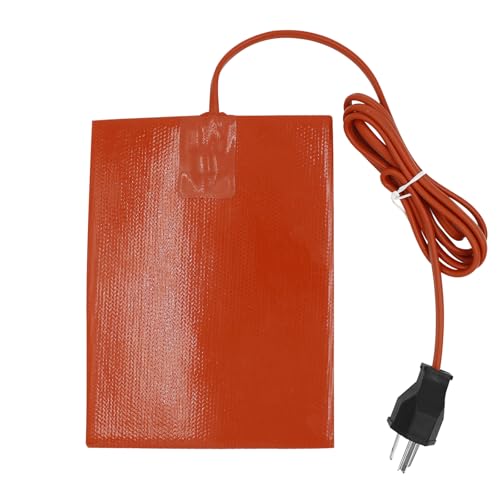
For most readers searching air heater in diesel engine, the best pick is a 150W magnetic oil pan heater because it warms the oil you’re trying to move, draws only about 1.25 amps at 120V, and is easier to use than a full block-heater install.
A bigger heater is only half the story; the other half is where the heat lands. An oil pan pad warms the lubricant at the sump, which helps the pump move thicker oil on a cold morning.
Readers also mix up heaters and fuels a lot here. Kerosene, diesel, heating oil, and engine oil are not interchangeable, and a plug-in pad is a heater, not a burner.
Best for Daily drivers and light trucks in single-digit mornings
The 150-watt output strikes the practical middle ground: enough heat to warm a few quarts of oil in 15 minutes without tripping a household circuit or needing a dedicated line. The 4-by-5-inch footprint fits most passenger-car and light-truck oil pans, and the 72-inch cord reaches from the undercarriage to a garage outlet without an extension cord. Silicone construction resists oil and water, so it survives the spray and drips under a daily driver.
Wattage 150 WVoltage 120 VPad size 4 × 5 inchesCord length 72 inchesMaterial Silicone with oil, acid, and water resistance
Why it made the cut
150 watts draws about 1 amp, safe for any standard 15-amp circuit
72-inch cord long enough for most garage and driveway setups
Silicone coating resists oil, acid, and water for years of undercarriage use
Good to know
No built-in thermostat; runs continuously until you unplug it or add an external timer
Recommended for metal surfaces only, limiting placement options
Skip it if If your engine takes more than 6 quarts or you park outdoors in subzero cold, step up to the 300-watt pad.
Best for Diesel pickups and larger engines that hold 8+ quarts
This pad delivers 300 watts and covers a 6-by-8-inch area, heating larger oil pans or diesel blocks faster. It includes a built-in cutoff that stops heating at 194°F to prevent overheating and restarts automatically when the temperature falls to about 40°C. The glass-fiber-reinforced silicone construction handles high heat and tough undercarriage conditions well. Its size suits truck or SUV oil pans.
300 watts cuts preheat time roughly in half compared to smaller pads
Shuts off automatically at 194°F and restarts near 40°C to prevent overheating
6-by-8-inch pad covers larger oil pans on diesels and V8 trucks
Good to know
300 watts draws 2.5 amps; still safe on a 15-amp circuit but leaves less margin for other devices on the same line
Higher heat output can scorch paint or plastic if misplaced
Skip it if If you’re heating a small four-cylinder or you already run other devices in the garage, the 150-watt pad draws half the current and does the job overnight.
Wattage, pad size, and how much steel the pad touches matter more than any marketing phrase on the box. A magnetic oil pan heater clamps to the bottom of an oil pan and warms the oil from the outside, so the metal-to-metal contact and the heat output determine how quickly your engine is ready to crank. Both the 150 W and 300 W pads run on standard 120 V household current, which means you’ll plug into a wall outlet or a heavy-duty outdoor extension cord rated for the load.
The 150 W pad suits smaller oil pans—motorcycles, compact cars, small tractors—and situations where you’re warming a targeted area overnight. It draws about 1.25 amps, heats a patch roughly four to six inches across, and raises oil temperature enough to thin the viscosity without stressing a thinner pan. The 300 W pad covers more surface area, typically six by eight inches, and puts twice the heat into the metal. That extra wattage helps on larger diesel engines, trucks, or any pan thick enough to absorb and spread the heat without creating a hot spot.
Wattage
Typical pad size
Current draw
Best for
150 W
4–6 inches
≈1.25 A
Small pans, overnight warming, targeted heat
300 W
6–8 inches
≈2.5 A
Larger pans, diesel engines, faster warm-up
Both run on 120 V; choose by pan size and how much time you have before starting the engine.
Outlet location and cord reach decide whether the heater actually works in your driveway or barn. Most pads ship with a six-foot cord, so measure the distance from the pan to the nearest GFCI-protected outlet before you order. If you need an extension cord, use a 12-gauge outdoor-rated cord no longer than 25 feet to keep voltage drop under control and prevent the cord jacket from melting in freezing weather.
Myth
The highest wattage heats the engine fastest and is always the better choice.
Fact
A 300 W pad on a thin or small pan can create a hot spot that distorts the metal or damages the gasket, while a 150 W pad spreads the heat more gently and still brings oil temperature up enough for a clean start. Match wattage to pan size and thickness, not to impatience.
Check the magnet strength
A pad with weak magnets will slide or fall off when the engine vibrates during warm-up. Look for a product listing that mentions neodymium or rare-earth magnets, and confirm the pad sits flat against clean, unpainted steel before you leave it plugged in overnight.
How Long To Run It Before A Cold Start
Plan to plug in a magnetic oil pan heater two to four hours before you need to drive, though overnight works better when temperatures drop below 20°F. These pads warm slowly and steadily, raising oil temperature enough to thin the viscosity and reduce the load on your starter and battery. They’re not cabin heaters or instant-start shortcuts—they’re preheaters designed to ease cold-weather starts in diesel engines and older vehicles where thick oil is the main problem.
A 150 W pad draws 0.15 kW, so running it for eight hours uses 1.2 kWh. At 17 cents per kWh, that’s about 20 cents per night. Double the wattage to 300 W and you’ll spend about 41 cents for the same stretch. The difference matters if you’re plugging in every night from November through March, but the cost stays modest either way.
Heater
Watts
Per hour
Per day (8 h)
Per month (30 days)
150 W magnetic pad
150 W
2.6¢
20¢
$6.12
300 W magnetic pad
300 W
5.1¢
41¢
$12.24
Calculated at 17¢ per kWh. Monthly cost for an eight-hour overnight preheat routine in a typical garage or driveway.
Heavier cold snaps or larger oil pans can justify longer preheat times. A two-gallon pan on a diesel pickup in single-digit weather may need six to eight hours to bring the oil up from ambient, while a compact sedan in mild 35°F mornings might only need two. If you’re searching for the best Alaskan engine block and oil pan heater setup, expect to pair the pad with a block heater and run both overnight—the pad alone won’t deliver instant cranking at 20 below.
In short
Two to four hours is enough for most moderate-winter starts; eight hours or overnight works better when it’s truly cold. Running a 150 W pad all night costs about 20 cents.
Safety, Mounting, And Power Details
Magnetic oil pan heaters stick to metal surfaces only and need clean, flat contact to transfer heat without creating hot spots or damaging the adhesive. An engine magnet heater left loose at one edge or mounted over paint flakes will overheat in that spot, and the silicone pad can degrade or peel. Wipe the pan with degreaser, let it dry, then press the pad firmly to push out any air pockets before you plug it in.
No extension cords or power strips
Plug these heaters straight into a wall outlet. Extension cords and power strips add resistance, heat up under sustained load, and create a fire risk with any device that runs for hours at a time.
Even pads with a built-in thermostat or overheat shutoff get extremely hot—150°F or more at the surface. Keep the pad away from plastic drain plugs, rubber hoses, wiring harness clips, and anything that can melt or catch fire. Route the power cord so it won’t drape over hot exhaust components or rub against sharp edges. Some readers ask “can you use waste engine oil in a space heater” or “can I use waste engine oil to run a heater”—the answer is no. These magnetic pads are electric resistive heaters, not oil burners, and pouring used oil near them creates a mess and a fire hazard.
Before you plug it in
Degrease and dry the oil pan where the pad will sit
Press the pad flat with no air bubbles or loose corners
Check clearance to hoses, wiring, and plastic parts
Route the cord away from exhaust and sharp metal
Plug directly into a grounded wall outlet, never an extension cord
Mounting spot
Stick the pad to the flattest part of the oil pan, usually near the center or toward the drain plug. Avoid curved, ribbed, or painted sections that reduce contact area and heat transfer.
What Diesel, Kerosene, And Engine Oil Mean Here
Engine oil, kerosene, heating oil, and diesel are different fluids with different jobs, and mixing them up can wreck an engine or leave you stranded on a cold morning. Engine oil lubricates moving parts inside your crankcase. Diesel fuel burns in the combustion chamber to make power. Kerosene and heating oil (also called furnace oil or No. 2 fuel oil) are refined for furnaces and space heaters, not engines.
A magnetic oil pan heater doesn’t burn anything. It sticks to the outside of the steel oil pan and warms the metal, which in turn warms the oil inside so it flows when you turn the key. No fuel goes into the heater, and the heater never touches the oil directly.
Myth
Heating oil and diesel are the same thing, so you can swap them or run waste engine oil in a diesel.
Fact
Heating oil and off-road diesel share similar refining, but heating oil has no lubricity additives and may contain higher sulfur, which will damage a modern diesel engine’s fuel system and emissions equipment. Waste engine oil contains metal particles, soot, and breakdown products that clog injectors and wreck fuel pumps. Use only on-road diesel or the fuel your engine manual specifies.
Fuel-burning heaters need ventilation
If you’re looking at a forced-air kerosene or diesel heater to warm a shop or jobsite, remember that those units exhaust combustion gases and need the ventilation the manual requires. Outdoor torpedo heaters are not safe for enclosed garages, tents, or vehicle cabins without proper venting and a working carbon monoxide alarm.
Kerosene space heaters burn 1-K kerosene only and are a different category entirely; they’re for indoor use when rated and vented correctly. Engine oil never goes into any heater as fuel. When search results mix these terms together, it’s usually someone trying to solve a cold-start problem and landing on the wrong kind of heater or wondering if leftover fluids are interchangeable. They’re not.
When A Plug-In Pad Is The Wrong Fix
Magnetic oil pan heaters help cold oil flow, but they won’t fix every winter starting problem. If your coolant jacket or engine block itself is the cold-soak issue—common in older diesels or anything parked outdoors in single-digit temperatures—a true block heater that threads into the coolant passage and warms the block from inside will do more than a pad stuck to the outside of the pan.
Air-intake heaters solve a different problem: they warm the incoming air so diesel fuel vaporizes and ignites more easily on a cold start. Block heaters warm coolant and the metal around it. Oil-pan pads warm only the oil. Each addresses a different part of the cold-start puzzle, and some trucks need more than one.
Engine oil in the radiator is a fault
If you’re finding engine oil in the coolant or radiator, that’s a head gasket leak, a cracked block, or a failed oil cooler, not something a heater will fix. Diagnose and repair the leak before cold weather makes the problem worse.
Readers who need a block heater for coolant warming or an intake heater for combustion air will find those covered in the magnetic engine block heater and diesel air intake heater guides. Magnetic pads work well when oil viscosity is the main cold-start obstacle and you’ve got a clean, flat steel pan to stick them to.
Stack solutions for extreme cold
In climates where overnight lows drop below zero, combining an oil-pan heater with a block heater and a battery tender gives you the best shot at a reliable start without idling the engine for twenty minutes.
Frequently Asked Questions
Can you use waste engine oil in a space heater?
Only in purpose-built waste-oil furnaces designed for shop and commercial heating, which atomize the oil, burn it at high temperature, and vent the exhaust outside. Pouring used motor oil into a kerosene heater, torpedo heater, or any consumer space heater will produce toxic smoke, ruin the wick or burner, and create a serious carbon monoxide and fire hazard.
Is engine oil and kerosene the same thing?
No. Engine oil is a thick lubricant made from petroleum base stock and additives; it reduces friction inside an engine and does not burn cleanly in a heater. Kerosene is a refined fuel with a flash point around 100°F, formulated to burn in wicks and burners, and it will not lubricate metal-on-metal contact the way motor oil does.
Can heating oil be used in a diesel engine?
Heating oil and off-road diesel share a similar base, but heating oil may contain higher sulfur levels, fewer detergent additives, and sometimes dye to mark it as untaxed fuel. Running it in a modern diesel with emissions controls can clog the diesel particulate filter and may be illegal on public roads in most states, even if the engine starts and runs for a while.
Can furnace oil be used in a diesel engine?
Furnace oil is another name for heating oil, so the same cautions apply: higher sulfur, fewer engine-protecting additives, and potential legal trouble. Older mechanical-injection diesels might tolerate it in an emergency, but engines built after 2007 with DPF and ultra-low-sulfur requirements will suffer catalyst and filter damage that costs thousands to repair.
What is the best engine block heater for cold weather?
A freeze-plug block heater that replaces a core plug and sits in direct contact with engine coolant warms the whole block faster and more evenly than a magnetic pad, making it the strongest choice when winter temperatures stay below zero for days at a time. Installation requires draining coolant and access to the block, so many drivers pick a 200 W to 400 W magnetic pad instead for ease of installation and adequate warm-up in most cold-weather conditions.