The best pick for most readers is Product 1 because it gives you a large 22 x 20 inch warming surface, 3 heat settings, and a 2-hour auto-off in a soft pad that works for both feet and under-desk use.
The essentials
Choose Product 1 for the broadest foot warming surface and the simplest under-desk use.
Choose Product 3 if you need a wrap that stays on an ankle or heel.
Look for ETL, FCC, or similar listing, plus overheat protection and auto shut-off.
Plug electric foot warmers directly into a wall outlet; avoid extension cords or power strips to reduce fire risk.
If your feet are cold because the room is cold, a small heater may cost less than running a pad all night.
Say your bedroom floor is cold at 6 a.m. and you want warm feet without heating the whole house; a 22 x 20 inch pad with an auto-off timer is the simple buy that covers both feet and shuts itself down.
If you need a wrap for one ankle or heel instead of a flat warmer, the fit matters more than the size. Pick the shape that matches the sore spot, or you’ll end up heating the blanket, the dog, and everything else before the foot.
Best for Large warming surface for feet and under-desk use
This pad offers a large 22 x 20 inch surface that easily fits two pairs of feet or doubles for under-desk warmth. It has 3 heat settings and a 2-hour auto-off timer for safety and energy savings. The ultra-soft flannel on both sides keeps heat in while protecting your skin, and the 10-foot cord adds placement flexibility. ETL and FCC certifications confirm its safety for home and office.
Best for Versatile use as a large heating pad or foot warmer with many heat levels
This 22 x 33 inch pad doubles as a heating pad or foot warmer thanks to zippers and snaps. It offers 6 heat levels up to 149℉ and a 4-hour auto-off timer. Two plush washable covers and extra inner fabric make it feel like a soft heated blanket. Ideal if you want a large versatile pad with fine control over heat and long auto-off safety.
Best for Focused heat and massage for ankle and foot pain relief
Designed to fit ankles 7 to 14 inches in circumference, this wrap-style pad heats quickly and includes a massage ball for added relief. It has 3 heat levels and 5 timer settings with automatic shutoff for safety. The adjustable straps and breathable neoprene provide a secure, comfortable fit. It’s perfect if you need targeted heat therapy with massage rather than general foot warming.
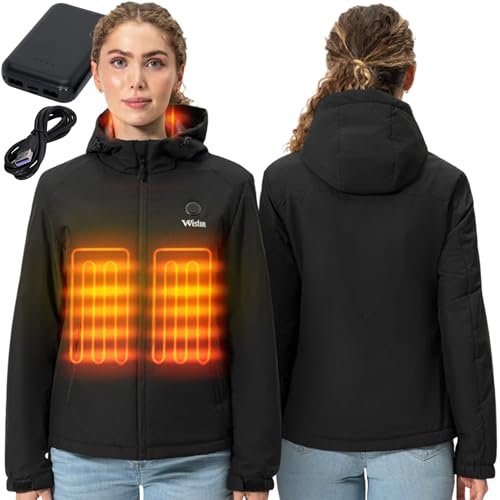
Best for Hands-free warmth with four heating zones in a stylish jacket
This rechargeable heated jacket has four heating zones and three heat levels up to 130°F, powered by a 7.4V battery. It’s water-resistant and machine washable with the battery removed. Ideal for outdoor use or when you want warmth without wires or a pad under your feet.
Heating zones 4Heat levels 3Battery 7.4V rechargeableCord length —
Why it made the cut
Four heating zones for even warmth
Rechargeable battery for cordless use
Water-resistant and machine washable
Slim, tailored fit
Good to know
Not a dedicated foot heating pad
Battery life limits continuous heat duration
Skip it if Skip if you want a dedicated foot heating pad rather than wearable heat.
Best for Powerful heating in a water-resistant coat with four zones
This men’s heated coat features four heating zones and three heat levels up to 130°F, running on a 7.4V rechargeable battery. It’s water-resistant and machine washable with battery removed. Built to withstand -25°C, it’s great for very cold outdoor conditions where you need full-body warmth rather than just feet.
Heating zones 4Heat levels 3Battery 7.4V rechargeableCord length —
Why it made the cut
Four heating zones for full-body warmth
Rechargeable battery for mobility
Water-resistant and machine washable
Designed for extreme cold
Good to know
Not designed for foot warming specifically
Battery limits continuous heat time
Skip it if Skip if you need a simple electric foot warmer instead of a heated coat.
Heating Pads for Feet: How to Choose the Right One
Heating pads for feet provide targeted heat that’s often more energy-efficient and effective than heating the whole room. The best pick for most readers is the Foot Warmer Electric, Heating Pad King Size Ultra Soft Flan because its 22 x 20 inch size comfortably covers both feet, with 3 heat settings and a 2-hour auto-off timer that fits most daily needs.
If you need heat specifically for an ankle, Achilles, or heel area rather than the whole foot, consider the sticro Foot Heating Pad. Its wrap design targets those spots better than a flat pad.
Worked example
Say you work at a desk over a cold floor for 8 hours a day. Running a 1,500 W space heater for that long uses 12 kWh. At 17 cents per kWh, that costs about $2.04 daily. A 100 W foot heating pad uses 0.8 kWh daily, or about 14 cents. Heating pads focus heat where you need it, saving energy and money.
Feature
Foot Heating Pad
Space Heater
Power Use
Around 100 W
1,200 to 1,500 W
Coverage
Feet only
Whole room
Typical Run Cost (8 hr)
Under 20 cents
Over medium cost
Safety Features
Auto-off timer, low wattage
Tip-over switch, overheat protection
Heated Foot Pads vs Room Heaters
Choose The Right Foot Warmer Shape
Exothermic heat pads for feet come mainly in two shapes: flat pads and wraps. A flat 22 x 20 inch pad suits both feet together on a desk or floor. Wrap styles fit better around one ankle or heel, offering more focused heat where you need it.
Three heat settings usually provide enough flexibility for foot warmth, since feet rarely need extreme heat. Timers matter more when you plan to use the pad for hours, especially at night or at your desk, to avoid overheating and save electricity.
Cord length affects placement. A 10-foot cord versus 9.5 feet might seem close, but that extra 6 inches can mean the difference between reaching a distant outlet under your desk or having to move your setup.
What to check before buying
Fit: flat pad for both feet or wrap for one ankle/heel
Cord reach: at least 9.5 feet for typical desk setups
Timer: 2-hour auto-off recommended for safety and energy
Washability: removable cover or water-safe material
Measure before you buy
Measure your foot or ankle circumference and the space where you’ll use the pad. This avoids buying a pad that’s too small, too big, or has a cord too short for your setup.
Check Safety Labels Before You Plug In
Heating pads for feet must meet safety standards to protect you from shocks, burns, and fire hazards. Always plug your electric foot warmer directly into a wall outlet, never an extension cord or power strip, which can overheat or cause voltage drops.
Look for safety certifications like ETL, UL, FCC, or CSA on the product or its packaging. These indicate the pad has passed testing for electrical safety. For example, Product 1 lists ETL and FCC, while Product 3 includes an overheat shutoff feature, which adds a layer of protection.
Heated pads often have auto shut-off timers and overheat protection to reduce risks, but those features don’t replace careful use. Never leave a heating pad running unattended, and do not sleep with one on unless the manufacturer specifically says it’s safe.
Safety Warning
Using a foot heating pad without checking its safety label or plugging it into an unsuitable outlet can cause electric shock or fire. Always follow the manufacturer’s instructions and inspect the cord and pad for damage before use.
Myth
It’s safe to leave a heated foot pad on all night because it has an auto shut-off.
Fact
Auto shut-off helps prevent overheating but doesn’t guarantee safety if the pad is old, damaged, or misused. Follow all safety guidelines and never sleep with a heating pad unless the manual allows it.
Power Source
Most foot warmers run on standard 120 V household current. Avoid battery-operated or USB heating pads for continuous foot heating; they usually don’t provide enough heat or have reliable safety features.
Size The Heat To Your Room And Power Bill
Heating pads for feet use much less power than space heaters, making them a cost-effective choice when you want to warm just yourself or a small area. A typical foot pad might use around 100 watts, compared to up to 1,500 watts for a standard space heater.
Worked example
Say you run a 100 W foot heating pad for 8 hours. That’s 0.8 kWh of electricity. At 17 cents per kWh, it costs about 14 cents. By contrast, an 1,500 W space heater running for 8 hours uses 12 kWh, costing $2.04.
Heater
Watts
Per hour
Per day (8 h)
Per month (30 days)
100 W foot heating pad
100 W
1.7¢
14¢
$4.08
1,500 W space heater
1,500 W
26¢
$2.04
$61.20
Calculated at 17¢ per kWh. Monthly cost comparison assuming 8 hours daily use at 17 cents per kWh.
If your whole room feels cold, a space heater might be a better choice despite the higher cost, because it warms the air around you instead of just your feet. But if your goal is simply to warm your feet while sitting or working, a foot heating pad is more efficient and cheaper to run.
Before You Buy Or Plug It In
Heating pads for feet vary enough that a quick checklist before purchase or use saves you trouble.
Pre-Use and Pre-Purchase Checklist
Confirm the shape: wraps support ankles, flat pads cover both feet simultaneously.
Check cord length to ensure it reaches your plug without stretching or tripping hazards.
Look for a timer feature, ideally auto-off after 1 to 2 hours, to prevent overheating.
Verify the pad has UL, ETL, or CSA safety listing to reduce risk of shock or fire.
Confirm washability of the cover or pad itself for hygiene and maintenance.
Note if the product is sized for one foot or both to match your needs.
Pad Use Safety
Never fold or bunch the heating pad while it’s on, as this concentrates heat and risks burns or damage.
Choose a heating pad for foot or feet by the body part you want to warm first. Then compare heat settings and other features to match your comfort and safety preferences.
More Questions, Answered
What is the best heating pad for feet?
The best heating pad for feet balances size, heat settings, and safety features. A large warming surface around 20 inches and multiple heat levels let you find comfortable warmth quickly. Automatic shut-off after about two hours adds safety, preventing burns or fire risks if you forget to turn it off.
What is the difference between a foot warmer and a heating pad for foot pain?
Foot warmers usually provide steady, gentle heat to keep feet warm, while heating pads for foot pain target sore muscles with adjustable heat settings and sometimes massage functions. The pain relief models often have more precise temperature control and sometimes come shaped to wrap the foot for better coverage.
Can I sleep with a heating pad for feet on all night?
Most heating pads are not designed for all-night use because continuous heat can cause skin irritation or burns. Look for models with automatic shut-off timers and follow the manufacturer’s guidance. If you need warmth overnight, consider using a heated blanket designed for safe extended use instead.
Do heated foot pads use a lot of electricity?
Heated foot pads generally use between 20 and 60 watts, far less than space heaters that run around 1,500 watts. Running a 50-watt pad for 8 hours costs about 7 cents at 17 cents per kWh, making them very energy-efficient for personal warmth.
Should I buy a flat foot pad or an ankle wrap?
Choose a flat foot pad if you want to warm the soles while sitting or under a desk. An ankle wrap is better for targeted warmth around the ankle joint or if you need heat therapy for foot pain. Your choice depends on where you want heat and how you plan to use it.