Skip to content

Expert home heating guides, reviews & repairs

Heater GuidesHeaterGuides
Space Heater

Low-Energy Space Heaters That Still Feel Warm

At a glance
For most readers, the best low-energy space heater is the PELONIS 23″ oscillating ceramic tower, because it gives you 1500W heat with ECO mode, oscillation, and a thermostat that can trim waste without turning the room into a science project. In a normal 120V outlet, 1500W draws about 12.5A, so it is about as much as a plug-in heater can safely pull.
Top picks, ranked
1
Best OverallPELONIS Ceramic Tower Heater
Bedrooms and living rooms from 106 to 167 sq ft
Check price on Amazon
2
Lowest WattageGaiatop 500W Desk Heater
Desks, dorms, offices, and small apartments
Check price on Amazon
3
Best Small-Room PickGiveBest Portable Ceramic Heater
Personal heating and rooms up to 200 sq ft
Check price on Amazon
4
Quiet Large-Room PickDR-968 Infrared Space Heater
Large rooms where quiet operation and remote control matter
Check price on Amazon
5
Best For Easy MobilityDR-123 Infrared Space Heater
Large rooms where you move the heater often
Check price on Amazon

Low-energy does not mean weak. It means the heater matches the room instead of dumping power into empty air, and that is why a 500W desk heater can make sense in a small office while a 1500W tower is the better buy for a drafty bedroom.

The trick is simple: pick the wattage for the room, then check the controls, noise, and safety gear. A heater that cycles cleanly at 300W or 450W in ECO mode can save more over a season than a louder unit that you keep turning up because the thermostat is sloppy.

Compare The Low-Energy Heater Picks

ModelBest forWattageRoom fitNoiseControlsPrice
PELONIS Ceramic Tower HeaterBest Overall1,500W106-167 sq ft50dBHigh, Low, ECO; thermostat, remote, oscillation, 8-hour timerCheck price on Amazon
Gaiatop 500W Desk HeaterLowest Wattage500WSmall rooms, dorms, offices, apartments—PTC ceramic heater; LED light indicationCheck price on Amazon
GiveBest Portable Ceramic HeaterBest Small-Room Pick900W Low or 1,500W HighUp to 200 sq ft≤45dBFan, Low, HighCheck price on Amazon
DR-968 Infrared Space HeaterQuiet Large-Room PickLarge room39dBHigh and Low; electronic thermostat, remote, 12-hour shut-off timer—Check price on Amazon
DR-123 Infrared Space HeaterBest For Easy Mobility1,500W——Eco, High, Low; digital thermostat, remote, 12-hour timerCheck price on Amazon

Best Low-Energy Space Heaters

#1Best Overall

PELONIS Ceramic Tower Heater

Best for Bedrooms and living rooms from 106 to 167 sq ft
The PELONIS tower gives you High, Low, and ECO modes, with ECO adjusting power around the room temperature to reduce waste. Oscillation spreads heat across the room, while the remote, thermostat, and 8-hour timer make it easier to hold a steady temperature. It’s the strongest fit for readers who want low-energy controls without giving up whole-room coverage.
Power 1,500WCoverage 106-167 sq ftModes High, Low, ECONoise 50dBVoltage 110V
Why it made the cut
ECO mode adjusts power based on ambient temperature
Oscillation, remote control, thermostat, and 8-hour timer
Tip-over switch and overheat protection
Good to know
50dB working noise
Coverage is listed at 106 to 167 sq ft
Skip it if Skip it if you need a small desk heater or a unit for a room larger than 167 sq ft.
Check price on AmazonPaid link · live price on Amazon
#2Lowest Wattage

Gaiatop 500W Desk Heater

Best for Desks, dorms, offices, and small apartments
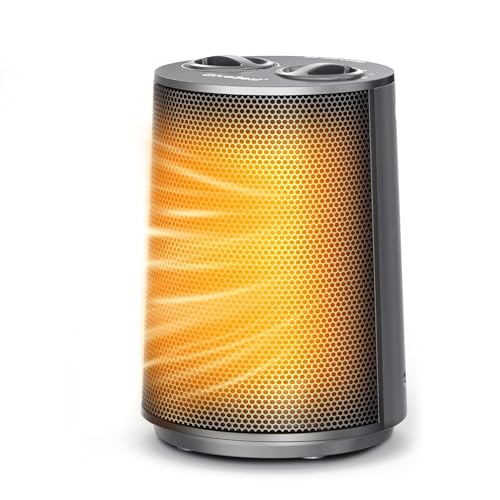
The Gaiatop uses 500W, so it draws far less power than a full-size 1,500W heater when a small personal area is all you need. Its PTC ceramic element heats in 2 seconds, and the compact body fits on a desk without taking over the room. Choose it for close-range warmth rather than whole-room heating.
Power 500WHeat-up time 2 secondsHeating type PTC ceramicProtection 45° tip-over and overheating protection
Why it made the cut
500W power use
Compact design for desks and small rooms
45° tip-over protection and overheating protection
Good to know
Best suited to personal heating and small spaces
No thermostat or timer is listed
Skip it if Skip it if you need to heat a living room or spread warmth across a large area.
Check price on AmazonPaid link · live price on Amazon
#3Best Small-Room Pick

GiveBest Portable Ceramic Heater

Best for Personal heating and rooms up to 200 sq ft
The GiveBest is a practical portable heater with 900W Low and 1,500W High settings, so you can use less power when full heat isn’t needed. Its 6.4 by 6.4 by 8.9-inch body and built-in handle suit desks, office floors, and bedside tables. Whisper-silent operation rated at 45dB also makes it a sensible choice for work or rest.
Power settings Fan, 900W Low, 1,500W HighCoverage Up to 200 sq ftNoise ≤45dBSize 6.4 × 6.4 × 8.9 inchesProtection Tip-over and overheat protection
Why it made the cut
900W Low setting for reduced power use
Compact 6.4 by 6.4 by 8.9-inch design with handle
Tip-over and overheat protection with UL certification
Good to know
No thermostat or ECO mode is listed
High mode still uses 1,500W
Skip it if Skip it if you want automatic temperature control or oscillation.
Check price on AmazonPaid link · live price on Amazon
#4Quiet Large-Room Pick

DR-968 Infrared Space Heater

Best for Large rooms where quiet operation and remote control matter
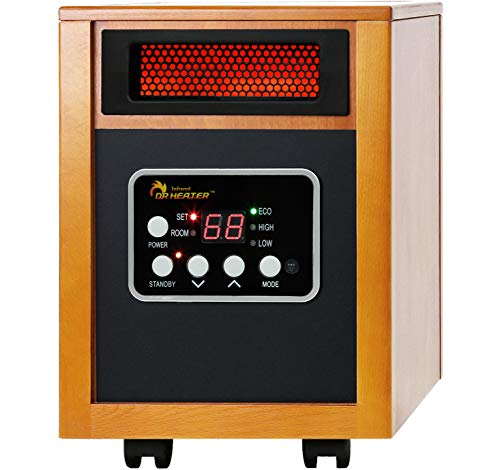
The DR-968 combines an infrared quartz tube with PTC heating and is rated around 5,200 BTU, giving it a better large-room brief than a tiny personal heater. Its electronic thermostat covers 50 to 85 degrees, while the remote, caster wheels, and 12-hour automatic shut-off make daily adjustments easier. The listed 39dB noise level is its clearest advantage for quiet rooms.
Power 1,500WCurrent 12.5 ampsHeating output Around 5,200 BTUNoise 39dBThermostat 50 to 85 degrees
Why it made the cut
Dual infrared quartz and PTC heating systems
39dB noise level
50 to 85-degree electronic thermostat and remote control
Good to know
Uses 1,500W and 12.5 amps
The product data doesn’t give a square-foot coverage figure
Skip it if Skip it if your main goal is the lowest possible wattage for desk-level heat.
Check price on AmazonPaid link · live price on Amazon
#5Best For Easy Mobility

DR-123 Infrared Space Heater

Best for Large rooms where you move the heater often
Four caster wheels make the DR-123 easier to move between seating areas, and its remote control and 12-hour timer save you from crossing the room for every adjustment. Eco, High, and Low modes work with the digital thermostat to trim power as the room reaches your setting. The dual infrared quartz and PTC system suits readers who want broad, portable warmth.
Power 1,500WModes Eco, High, LowThermostat range 30°F-99°FTimer 12 hoursPower cord 6 feet
Why it made the cut
Four caster wheels for moving the heater
Eco, High, and Low modes with digital thermostat
12-hour timer, remote control, and 6-foot power cord
Good to know
Uses 1,500W
The product data doesn’t provide a noise rating or room-size figure
Remote requires 2 AAA batteries, not included
Skip it if Skip it if you need a 500W personal heater or a heater with a listed noise rating.
Check price on AmazonPaid link · live price on Amazon

How To Pick The Right Low-Energy Heater

The right low-energy heater matches wattage to the space and uses its thermostat to stop heating once you’re warm. For a small personal area, a low wattage small space heater under 500W can be enough; bigger bedrooms and living spaces usually need 900W to 1500W, depending on insulation and drafts.

12.5 A
What a 1,500 W heater draws
At 120V, a 1,500W heater draws about 12.5A. That’s close to the practical limit of a standard 15A household circuit, so a full-power heater belongs directly in a wall outlet, never an extension cord or power strip.
Heater drawBest fitWhat to expect
Under 500WDesk, bathroom, small enclosed personal spaceLower circuit load and quick spot heating, but limited room coverage
500W to 900WSmall bedroom or officeUseful for a closed, reasonably insulated room
900W to 1,500WLarger bedroom or living spaceMore heating capacity for cold walls, drafts and higher ceilings
These are practical starting points, not a substitute for the room’s insulation, drafts and heater placement.

A low power space heater is useful when you heat one occupied area instead of the whole house, but low wattage doesn’t create extra heat. A 500W heater supplies one-third as much electrical power as a 1,500W heater, so it needs a smaller job. That’s why a low watt space heater can feel excellent beside a chair and disappointing across a drafty living room.

Worked Example
Say your office is small, the door stays closed and you only need warmth at your desk. A 500W model is a sensible starting point. If the room has cold exterior walls or a noticeable draft, stepping up to 900W gives the thermostat more heating capacity without automatically running at full power all day.
Personal spaceUnder 500W
Small room with some draftsAbout 900W
Larger bedroom or living space900W to 1,500W

Choose PTC Ceramic For Fast Warmth

PTC ceramic heating usually feels warm sooner because the ceramic element heats in roughly 2 to 3 seconds and its electrical resistance rises as it gets hotter. That self-regulation helps limit the element’s demand as it warms, while the fan moves heated air into the room. The Gaiatop Mini Space Heater, for example, uses 500W and is specified to heat in about 2 seconds.

Ceramic heating isn’t a loophole around the wattage: 1,500W of ceramic heat and 1,500W of another electric resistance heater use roughly the same power at full output. The practical advantage is response. A PTC ceramic low wattage space heater can warm your immediate area quickly, then let its thermostat cycle the element instead of running continuously.

Useful for a desk or small personal zone
Gaiatop Mini Space Heater
The Gaiatop Mini Space Heater is the better fit when you want a compact 500W low wattage heater for quick, close-range warmth rather than whole-room heating.
Check price on Amazon

Pay Attention To The Controls

ECO mode, a digital thermostat and oscillation are the controls that reduce wasted runtime and spread heat more evenly. ECO modes can cycle a heater down to roughly 300W or 450W after the room approaches the set temperature, instead of holding full output. The exact behavior varies by model, so check what the mode actually changes.

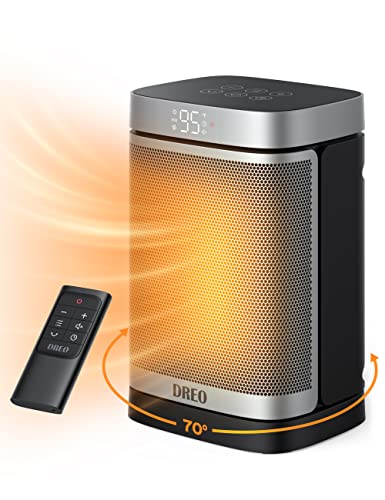
A digital thermostat with 1°F adjustments gives you finer control than a basic high-low switch. Set the temperature you need, then let the heater cycle; repeatedly switching a heater on and off by hand defeats much of that control. Oscillation matters when one person isn’t sitting directly in front of the heater. Models may sweep about 70° to 120°, sending warm air across more of the room rather than creating one very hot patch.

Useful for shared room coverage
PELONIS 23” Oscillating Ceramic Tower Space Heater with Remote & Ther…
The PELONIS 23” Oscillating Ceramic Tower Space Heater with Rem… suits a bedroom or living area where ECO mode, a thermostat and oscillation can trim runtime and spread heat beyond one chair.
Check price on Amazon
Myth
A low wattage heater can’t warm a room.
Fact
A low wattage heater can warm a small, closed space when its wattage matches the room and the heater isn’t fighting major drafts. Problems start when a 500W unit is expected to heat a large, poorly insulated room.

Pick An Oil-Filled Radiator For Quiet Heat

An oil-filled radiator still makes sense if silent operation matters more than fast warm-up. Its heated oil continues releasing warmth after the element cycles off, so the room temperature changes more gradually; there’s no fan motor pushing air around. That steady behavior suits a bedroom, home office or anyone irritated by fan noise.

A simple choice rule
Choose PTC ceramic for quick sessions and directed warmth. Choose an oil-filled radiator for quiet, steady heat over longer periods. Either type still needs clearance, tip-over protection and overheat protection, and every electric heater should carry a recognized UL, ETL or CSA listing.

For a broader comparison of low wattage portable heater options, see our low watt space heater guide. The useful question is whether you need a small personal heater, fast room recovery or silent background warmth; wattage and controls should follow that job.

Match The Heater To The Room

A low-energy heater can warm a small, closed room well, but a single plug-in heater usually struggles in a large or drafty space. Start with about 10 watts per square foot: 500W suits roughly 50 square feet, 1,000W about 100 square feet, and 1,500W about 150 square feet when insulation and ceiling height are ordinary.

That watt-per-square-foot rule is a starting point, not a promise. A well-insulated bedroom may feel comfortable with less, while a room with leaky windows, an open doorway, or high ceilings needs more heat or help from the home’s main system. Large rooms are rarely a good match for a low wattage heater alone; spreading heat across an open floor plan is where the small plug-in box meets its limits.

Heater drawReasonable starting areaBest use
Under 500WUp to about 50 sq ftPersonal zone, desk, bathroom, or very small room
1,000WUp to about 100 sq ftSmall enclosed bedroom or office
1,500WUp to about 150 sq ftLarger bedroom or small living area
Over 1,500WNot for a standard plug-in heaterNeeds a different heating system or circuit plan
Use the smaller area when the room is drafty, poorly insulated, or open to other rooms.
Worked Example
Say your office is 10 by 12 feet, or 120 square feet. At roughly 10 watts per square foot, the starting estimate is 1,200W, so a 1,500W heater with a thermostat gives you useful headroom. A 500W low wattage small space heater may warm your legs and the area near the desk, but it won’t reliably heat the whole office.
Room10 × 12 ft = 120 sq ft
Starting estimate120 sq ft × 10W = 1,200W
Practical choice1,500W heater for the room; 500W for a p

Heaters under 500W are best treated as personal-zone heaters, not whole-house equipment. The 500W Gaiatop Mini Space Heater is suited to a small enclosed area or the space beside you; a larger room needs a higher setting, a second approved heat source, or the central system. Searching for a low wattage space heater walmart can help you find models, but the wattage and safety listing matter more than the store.

1
Set it on a hard floor
Place the heater upright on a stable, level hard surface. Keep it close enough to the cold zone to do useful work, but never tuck it under a desk skirt or onto carpet, bedding, or a chair.
2
Give the intake and outlet room
Keep curtains, furniture, boxes, and clothing away from the airflow. Blocked air makes the heater work harder and can trip its overheat protection.
3
Aim across the room
Use oscillation when the model has it, or point the outlet toward the occupied part of the room rather than directly into a wall. Close the door if you’re heating one room.
Solar Claims Need A Reality Check
A solar-panel add-on doesn’t make a plug-in space heater meaningfully solar-powered during normal home use. A search for a low energy solar space heater with solar panel amazon may return small solar gadgets or panels, but a standard 1,500W heater still needs substantial electrical power; check the actual wattage, battery capacity, and inverter rating before assuming solar operation.
Before You Buy
Measure the room and multiply its square footage by about 10W.
Choose the smaller end of the range for a well-insulated small room and the larger end, or another heat source, for a drafty one.
Reserve under-500W heaters for personal zones and compact spaces.
Confirm there is a clear, hard-floor placement near the cold area without curtains or furniture blocking airflow.

What The Bill Looks Like

Space heaters can use a lot of energy if they run at full power for hours, but the most energy efficient space heater is the smallest one that actually heats your target area and cycles off at the thermostat. A 1,500W heater running continuously for 8 hours uses 12 kWh; at $0.17 per kWh, that costs about $2.04 for one night. The bill depends on run time, wattage and thermostat cycling—not the word “eco” on the box.

Use this formula: watts ÷ 1,000 × hours × your electricity rate. For example, 1,500 ÷ 1,000 × 8 hours × $0.17 equals $2.04. A thermostat can cut that figure because the heating element shuts off after the room reaches the set temperature, although the heater may still draw a small amount for its controls. Drafts, an open door and a poorly insulated room keep the element running longer.

HeaterWattsPer hourPer day (8 h)Per month (30 days)
1,500W heater1,500 W26¢$2.04$61.20
500W personal heater500 W8.5¢68¢$20.40
Calculated at 17¢ per kWh. Example assumes 8 hours of operation per day, 30 days and electricity at $0.17 per kWh. Actual cost falls when the thermostat cycles the heater off.

A 500W personal heater uses one-third as much electricity as a 1,500W model during the same run time: 4 kWh instead of 12 kWh over 8 hours. That saves money only if it warms the person or small enclosed area you meant to heat. Put a 500W unit in a cold living room and you may end up running it continuously while still turning on the main furnace—a cheap heater that fails its assignment.

Savings Have A Limit
Electric resistance heaters turn nearly all of their incoming electricity into heat, so two models with the same wattage won’t have a dramatic energy difference simply because one uses ceramic and the other uses oil. Real savings come from heating less space, using a thermostat or ECO mode, lowering run time and avoiding heat loss through open doors and drafts.

An oil-filled radiator and a ceramic heater use energy in different ways, but neither gets free heat from its design. Oil stores heat after the element shuts off, so an oil-filled radiator suits long, steady warmth and silent operation. A ceramic heater reaches useful heat faster—PTC ceramic elements can heat in about 2 to 3 seconds—and suits short heating bursts or a room you warm only when occupied.

ECO modes can reduce waste by cycling the heater down to roughly 300W or 450W instead of holding maximum output, depending on the model and setting. A digital thermostat with 1°F adjustments can also stop overshooting the temperature, but the savings depend on the room and your setpoint. A personal heater used for four hours may cost less than a large heater used for eight, even if both claim efficient operation.

ENERGY STAR is not a common space-heater label, so don’t assume a listing is efficient because it displays that name or a vague energy claim. Check the actual wattage, thermostat behavior, ECO settings and intended coverage instead. For a realistic seasonal comparison, multiply each heater’s calculated daily cost by the number of cold days you expect to use it, then compare that figure with the fuel or electricity used by your primary heating system.

In short
A low-wattage heater saves the most when it matches a small task and shuts off regularly. For a larger room, a 1,500W heater may cost more to run, but a 500W model that never makes the room comfortable can waste money by forcing you to run it longer alongside your main heat.

Safety, Noise, And Durability

Prioritize tip-over protection, overheat protection, and a UL, ETL, or CSA listing before comparing ECO modes or remote controls. Plug the heater straight into a wall outlet, never an extension cord or power strip, and keep at least 3 feet between the heater and bedding, curtains, furniture, or clothing. A 1,500W heater can draw about 12.5A from a 120V circuit, leaving little room for another heavy load on the same circuit.

Noise depends on both volume and pitch. A 35 dB unit is quieter than a 50 dB tower, but the number doesn’t tell you whether the fan has a soft hum or a sharper whine; a slightly louder, lower-pitched sound can be easier to live with beside a desk or bed. Oil-filled radiators are effectively silent while running because they have no fan, although they heat more slowly and continue giving off warmth after the element switches off.

Long-term durability usually comes from fewer parts doing fewer clever things. A brushless DC motor creates less brush wear than a brushed motor, while a washable or lifetime filter can help maintain airflow where the model includes one. Simple grilles are easier to clear of dust than complicated vent arrangements, and a ceramic PTC element can self-regulate its resistance instead of relying only on a basic on-off switch.

FeatureWhat it doesWhat to check
Tip-over protectionCuts power if the heater is knocked overThe feature is listed in the manual or specifications
Overheat protectionShuts the heater down when internal temperatures rise too farAir intakes and exhaust openings stay clear
Safety listingShows the heater was evaluated to a recognized electrical-safety standardUL, ETL, or CSA mark on the unit or packaging
Thermostat or ECO modeCycles the element down or off after the room reaches the set temperatureThe control holds a target temperature instead of only offering high and low
A safety feature only helps when you keep the heater’s airflow clear.
Use It As Supplemental Heat
A low-energy space heater is supplemental heat for most homes, not a primary heating system. A very small, closed room with a modest heat load is the exception, but heating an entire house with plug-in heaters can overload circuits and cost more than using the main system. Never sleep with a portable heater running or leave it operating while you’re away unless the manufacturer specifically says the model is designed for that use.

Maintenance is simple: unplug the heater, let it cool, then vacuum dust from the grille and intake with a soft brush attachment. Don’t block the vents, wash electrical parts, or keep using the unit after a hot-plastic smell, damaged cord, repeated shutdown, or unusual rattling appears. A clean intake helps the fan move air without fighting a blanket of dust, which supports steady heat output and reduces stress on the motor.

Good For
A small room where thermostat cycling can reduce run time
A desk or bedroom where low fan pitch matters
Supplemental heat beside a working central system
Not For
Replacing a furnace or whole-home heat source
Drafty large rooms that lose heat faster than one plug-in heater can supply
Rooms where the heater would need an extension cord
A practical noise check
Run the heater on its lowest fan setting for a few minutes before settling in. Listen from the chair or bed, not with your ear beside the grille; fan pitch and cycling behavior matter more there than the label’s single decibel number.

A Final Check Before You Buy

Prioritize tip-over protection, overheat protection, and a UL, ETL, or CSA listing; ECO mode can reduce power use, but only when the thermostat lets the heater cycle down instead of running at full output. Some ECO systems drop to 300W or 450W after the room reaches temperature, so the saving depends on how often the heater can coast.

Before You Order
Confirm the heater suits the room size in the spec sheet. A 500W model is for a small space; a 1,500W model draws about 12.5A from a 120V outlet and is close to the practical limit for a plug-in heater.
Check that the listing names the heating modes clearly, such as low, high, ECO, and thermostat control. Skip any heater whose mode labels or temperature controls are vague.
Look for tip-over protection, overheat protection, and a UL, ETL, or CSA safety listing. Those features matter more than a remote control or a wide oscillation angle.
Plan a clear location with 3 feet between the heater and bedding, curtains, furniture, paper, or clothing.
Make sure the outlet can handle the load and that no other high-draw appliance shares the same outlet or circuit.
About Walmart Listings
Searches such as “low wattage space heater Walmart,” “Walmart space heaters energy efficient,” and “energy efficient space heater Walmart” are useful for finding models, but the store label doesn’t prove efficiency. Compare the actual wattage, room-size claim, thermostat, ECO mode, safety listing, and cord instructions in the spec sheet. A low-wattage heater that can’t warm your room may run constantly and waste the saving you expected.
Plug It In Safely
Plug the heater directly into a wall outlet—never an extension cord or power strip. Don’t use it while sleeping or leave it running when you leave the house unless the manufacturer specifically says the model is designed for that use.

Before the first cold night, keep the air intakes clear, clean the filter if the model has one, and stop using the heater if the plug, cord, or grille gets damaged.

More Questions, Answered

How much energy can I realistically save compared with a traditional heater?
Savings come from using fewer watts or running for fewer hours; electric resistance heaters produce roughly the same heat per watt, so an ECO label doesn’t break the laws of physics. A 1,500W heater running for 4 hours uses 6 kWh, while a 500W heater running for the same time uses 2 kWh. The smaller heater saves energy only if it can keep your target space warm.
Are low-energy heaters effective for large rooms?
Usually, a low-wattage heater works best as personal or zone heat rather than as the sole heater in a large room. Drafts, high ceilings and poor insulation can overwhelm a small unit, so close the door, reduce air leaks and use the heater near the occupied area. A second heater may help, but only if separate circuits can handle the load without overloading either circuit.
Can I use a low-energy heater as my primary heat source?
A properly sized electric heater can serve as the primary heat source for a small, closed room, such as a bedroom or office. Whole-home heating is a different job: several plug-in heaters can load multiple circuits, and a 1,500W unit already draws about 12.5A from a 120V outlet. Use the home’s installed heating system for broad coverage unless a licensed professional confirms the electrical and heating plan.
What safety features should I prioritize?
Start with a UL, ETL or CSA listing, then look for tip-over protection, overheat protection and a thermostat that cycles the element instead of running continuously. Plug the heater straight into a wall outlet, keep 3 feet of clearance and inspect the cord for damage before use. A remote control is convenient; it won’t make an unsafe placement safe.
How do I maintain a low-energy heater for efficiency?
Unplug the heater and let it cool before clearing dust from the intake and outlet with a soft brush or vacuum. Keep vents open, check the cord and plug for heat damage, and clean or replace a filter only when the manual permits it. A heater that smells hot, cycles unusually or trips the breaker belongs out of service until the fault is checked.
Related guides
low-energy electric heaters that cut heating costsCompares electric heater features and ways to reduce heating costs.
500-watt space heatersExplains where 500W heaters work and when they feel underpowered.
ceramic heating elementCovers fast ceramic heat, surface temperatures and practical room heating.
eco modeExplains how ECO mode reduces output and controls power use.
Share
Written by Joye

I am a mechanical engineer and love doing research on different home and outdoor heating options. When I am not working, I love spending time with my family and friends. I also enjoy blogging about my findings and helping others to find the best heating options for their needs.

Keep reading

Related guides

Free newsletter

Heater deals and guides, worth opening

Price drops, new guides and safety recalls. One email, only when it matters.

No spam. Unsubscribe in one click. Privacy policy.