For most finished basements, choose the Heat Storm HS-1500-PHX-WIFI: its 1,500-watt wall-mounted design saves floor space, and Wi-Fi control lets you adjust the thermostat without crossing the room. It’s a better fit for a defined heating zone than an unvented fuel heater, but room insulation still sets the limit.
Key takeaways
Choose a wall-mounted model if floor space is tight; pick a portable heater if you need to move heat between rooms.
A 1,500-watt heater draws about 12.5 amps at 120 volts, so avoid sharing its circuit with other high-wattage appliances.
Treat advertised room coverage as a starting point; insulation, drafts and ceiling height change what a basement needs.
Plug electric heaters directly into a wall outlet, keep 3 feet of clearance and look for tip-over and overheat protection.
For a damp basement, address moisture and check the heater’s manual before using it there; a space heater is not a dehumidifier.
The common mistake is buying by advertised square-foot coverage before checking the basement’s insulation, ceiling height and cold exterior walls. A heater that struggles to offset heat loss can run for hours and still leave you paying to warm a chilly room.
The picks below are electric models with listed features suited to supplemental heat. They won’t replace a properly sized whole-house system in a large, unfinished or poorly insulated basement.
Best Basement Heaters for Winter
#1Best Overall
Heat Storm Wall-Mounted Wi-Fi Heater
Best for Finished basements where saving floor space matters
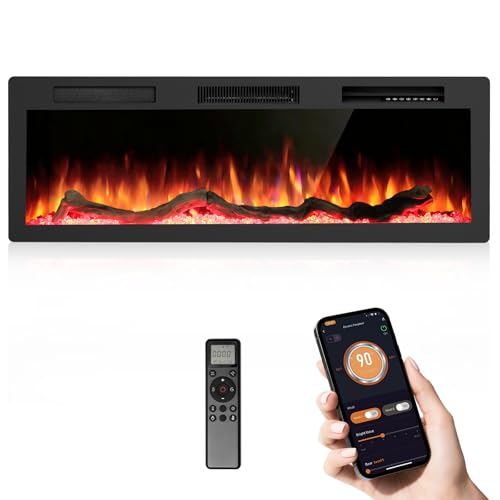
The 1,500-watt wall-mounted design keeps the heater off the floor, and Wi-Fi control lets you adjust the thermostat from your phone. Its touch-screen digital thermostat and included remote give you options if your phone isn’t handy.
Best for Basements up to 400 square feet that need supplemental heat
The 1,500-watt high setting and stated coverage of up to 400 square feet make this the clearest large-room option in the group. You can wall-mount it or recess it, then use the remote, touch panel, phone, or Alexa to change settings.
Heat output 750 W or 1,500 WRoom coverage Up to 400 square feetTemperature range 59–95°FDimensions 50 in L × 17.32 in H × 5.71 in W
Why it made the cut
Stated supplemental coverage up to 400 square feet
750 W and 1,500 W heating modes
Wall-mounted or recessed installation
Good to know
Requires wall mounting or a suitable recessed opening
Temperature setting starts at 59°F
Skip it if Skip it if you want a portable heater or your basement has no suitable wall space or opening.
Best for Large basement rooms where you want a portable heater with wheels
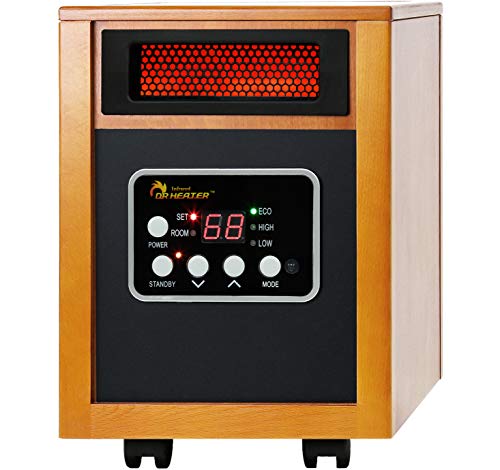
The 1,500-watt heater combines an infrared quartz tube with PTC heating and has caster wheels for moving it around. Its thermostat ranges from 50 to 85 degrees, with high and low settings for adjusting output.
Heat output 1,500 WAmperage 12.5 AThermostat range 50–85°FPower cord 6 ft
Why it made the cut
Caster wheels make it easier to move
High and low heat settings
Tip-over and overheat protection
Good to know
Room coverage isn’t specified
The 6-foot power cord can limit placement
Skip it if Skip it if you need a wall-mounted heater or a product with a stated coverage area.
Best for A small basement zone where low operating noise matters
At a listed 35 dB, this portable ceramic heater is the quietest option with a stated noise level. Its thermostat, remote, and 24-hour timer suit a small area where you want to adjust heat without walking back to the unit.
Heat output 1,500 WRoom coverage Up to 200 square feetNoise level 35 dBTimer 24 hours
Why it made the cut
Listed noise level of 35 dB
Thermostat and remote control
24-hour timer and child lock
Good to know
Portable design takes up floor space
Coverage is listed up to 200 square feet
Skip it if Skip it if you need to heat a large basement or want a wall-mounted unit.
Best for Portable spot heating with a lower 750-watt setting available
Choose this compact ceramic heater if you want a simple portable option with two heat levels: 750 W and 1,500 W. Its thermostat turns the heater off when it reaches the preset temperature, and the carry handle helps when you need to move it.
Heat output 750 W or 1,500 WRoom coverage Up to 200 square feetNoise level Under 45 dBPower cord 6 ft
Why it made the cut
Two heat settings: 750 W and 1,500 W
Carry handle for moving between spots
Tip-over and overheat protection
Good to know
Listed coverage is up to 200 square feet
Noise is listed as under 45 dB, not an exact level
Skip it if Skip it if you want Wi-Fi control, a wall-mounted design, or a stated noise level below 35 dB.
Best Heater for Basement in Winter: Choose by Room
The best heater for a basement in winter depends on what you’re heating: choose a wall-mounted electric infrared heater for a fixed zone and clear floor, a portable ceramic heater for spot heat, or an electric fireplace when flame appearance and supplemental warmth both matter. For most finished basements, the Heat Storm HS-1500-PHX-WIFI suits a defined zone; no heater can make advertised room coverage a guarantee.
Match The Heater To The Room
Fixed seating or work area, with floor space at a premium: consider the Heat Storm HS-1500-PHX-WIFI wall-mounted heater.
A spot that needs occasional heat: compare the portable options, including the GiveBest and Dr Infrared Heater DR-968.
Flame appearance plus supplemental heat: consider the R.W.FLAME Smart Electric Fireplace 50 Inch, Recessed & Wall…. Its listed supplemental coverage is up to 400 square feet, but that does not guarantee it will heat every basement that size
Want a different electric fireplace style? A Duraflame electric fireplace can provide supplemental basement heat; check the exact model’s output and coverage before buying. duraflame electric fireplaces
Myth
A heater listed for 400 square feet will keep any 400-square-foot basement comfortable.
Fact
Listed coverage is a guide, not a promise. Insulation, drafts, ceiling height, layout and the temperature you want all affect comfort; a basement with cold exterior walls may need more heat than the figure suggests.
For a different place than an apartment, the most efficient choice is still the one that heats only the area you use; electric resistance models turn electricity into heat in the room, so their marketing labels don’t change the basic energy use. The R.W.FLAME Small Space Heaters for Indoor Use and the GiveBest are among the listed portable choices, but the supplied facts don’t establish a performance winner.
A wall-mounted gas heater may suit a fixed zone only if it’s approved for indoor use and installed and vented as its listing and local code require. Check local restrictions before considering a vent-free model. Comfort Glow and Ashley Hearth are separate brands; the supplied facts don’t establish who makes Comfort Glow or verify specific models or review results. Check the exact model label before comparing Comfort Glow wall-heater or direct-vent reviews with Ashley Hearth.
No DeLonghi model is among these five picks, and the supplied facts don’t support a direct comparison with the DeLonghi Comfort Temp full-room radiant heater. For more basement options, see basement heater picks.
Set the Heater Temperature in Winter
There’s no single best heater temperature in winter for every basement: set the thermostat to a comfortable temperature while you’re using the room, lower it when the space is empty, and don’t let the basement get cold enough to put plumbing at risk. The right heater setting depends on how long you occupy the space and whether pipes run through cold areas.
A thermostat setting doesn’t make a 1,500-watt resistance heater more efficient. When its element is on, it uses up to 1.5 kWh per hour, whatever the product calls its energy-saving mode. At an assumed electricity rate of 17 cents per kWh, eight hours of continuous operation costs 1.5 kW × 8 hours × $0.17 = $2.04; a cycling thermostat cuts actual use when the element switches off.
Heater
Watts
Per hour
Per day (8 h)
Per month (30 days)
1,500-watt electric heater
1,500 W
26¢
$2.04
$61.20
Calculated at 17¢ per kWh. Assumes 8 hours of use each day for 30 days and an electricity rate of $0.17/kWh. The heater’s thermostat may cycle off, reducing actual use and cost.
Myth
An “energy-saving” mode lowers the electricity used by the heating element while it runs.
Fact
A 1,500-watt element still draws up to 1.5 kW when on. A lower setting or cycling thermostat can reduce total use by keeping the element off more often; the label alone doesn’t change its draw.
Targeted heating can cost less than raising the whole-house thermostat if you’re warming one occupied basement area, but only when your central system’s zones and the plumbing conditions allow it. If the central system also protects pipes or other rooms, account for those needs before turning its setting down.
The cheap-to-run choice is the heater that supplies the heat you need for the fewest hours; electric resistance heaters of the same wattage use similar electricity while running. Use the room thermostat for comfort, then use the timer or a lower idle setting to avoid heating an empty space.
Measure the Basement Before You Buy
A professional heater for a basement should be sized to the room’s heat loss, not its square footage alone. An electric wall heater can work in a damp basement only if the heater’s manual allows the conditions; it won’t dry the room. A wall-mounted gas heater may be worth installing for regular use, but only if it’s approved for indoor use, vented as required, allowed by local code and professionally installed.
1
Measure the room
Record the basement’s length, width and ceiling height. Length × width gives floor area; ceiling height helps you compare rooms with different volumes.
2
Check where heat escapes
Note exterior walls, uninsulated rim joists, drafts and doors that open to colder spaces. These can make a basement harder to heat than its area suggests.
3
Compare claims cautiously
Match the heater’s stated coverage to your measurements, then account for insulation and drafts. Coverage claims aren’t a heat-loss calculation.
A 20-by-20-foot basement
Say your basement measures 20 by 20 feet: 20 × 20 = 400 square feet. The R.W.FLAME electric fireplace’s listed coverage of up to 400 square feet is a supplemental-use claim, not proof it can meet that basement’s heat loss, especially if the space is drafty or poorly insulated.
Room dimensions20 × 20 ft
Floor area400 sq ft
Coverage claimUp to 400 sq ft
If your three-level home has an uncomfortably warm basement in winter, closing a supply register may reduce heat sent there. But it can affect airflow and comfort elsewhere; don’t close return grilles or change a zoned system without checking its design. In summer, reducing upstairs air conditioning depends on which rooms you use and how the system is designed.
Dampness Needs Its Own Fix
No heater makes a basement dry. Find and fix water entry, manage humidity, and run a heater only in conditions its manual permits. Never use an outdoor, patio or construction heater indoors.
Check Electrical and Fire Safety
A portable electric heater for winter needs a direct wall outlet, clear space and a circuit that can handle its load. An electronic heater is still an electric appliance, so the same rules apply.
1
Check the heater
Look for a UL, ETL or CSA listing, plus tip-over and overheat protection. Product 1, the R.W.FLAME Small Space Heater, lists ETL certification and safety features; product 3, the GiveBest portable heater, lists tip-over and overheat protection, but the supplied product facts don’t state a certification.
2
Use a wall outlet
Plug a portable heater straight into a wall outlet, never an extension cord or power strip. Keep at least 3 feet between the heater and anything that can burn.
3
Check the circuit
A 1,500-watt heater draws about 12.5 amps at 120 volts. Avoid running it on a circuit already carrying substantial loads; if the breaker trips or you need a dedicated circuit, ask an electrician to assess it.
4
Switch it off when you leave
Don’t leave a heater running while you’re asleep or away unless the manufacturer specifically says that model is designed for it.
Bathroom Fan-Heaters Are Different
An exhaust fan with a heater can provide localized bathroom comfort. It’s a permanently installed appliance, not a substitute for a portable basement heater; use a listed unit installed for that location, and follow its instructions and local code.
Frequently Asked Questions
Can a Duraflame electric fireplace heat a basement in winter?
A Duraflame electric fireplace can heat a finished basement zone, but it won’t replace a whole-basement heating system. Its electric element is typically limited by the 1,500-watt plug-in circuit, so insulation, ceiling height and open doorways determine how much warmth reaches you. Use a direct wall outlet and keep the required clearance around the fireplace.
Is it worth putting a wall-mounted gas heater in a basement?
A wall-mounted gas heater can make sense for a basement only when the exact model is listed for indoor use and installed with the required venting and clearances. Gas connections and vent work belong with a qualified professional, and the room needs a working carbon monoxide alarm. An outdoor or construction heater is never a basement substitute.
Is there a safe vent-free natural gas heater for a basement?
Some vent-free natural gas heaters have safety shutoffs, but no model is automatically legal or suitable for every basement. Local rules may restrict vent-free appliances, and a basement’s limited ventilation makes carbon monoxide and moisture concerns more serious. Check local code and the installation manual before buying, rather than treating an oxygen sensor as permission to ignore ventilation.
Will the oil in an oil-filled radiator freeze if it sits unused over winter?
The sealed oil in an oil-filled radiator won’t freeze during ordinary indoor winter conditions. Leaving the radiator unused doesn’t damage the oil or require draining it; store the unit upright with its cord intact. Inspect the plug, cord and tip-over switch before turning it on again.
How can I heat a home in winter without electricity or a heater?
Start by keeping people in one closed room, blocking drafts with removable door seals or towels, and wearing dry layers with a hat and socks. Open curtains to useful sun, then close them after dark. Never heat a room with an oven, gas range, charcoal grill or outdoor heater; those can create carbon monoxide or fire hazards.
What is the most efficient heater for winter in a house rather than an apartment?
For whole-house heating, a properly sized heat pump usually uses less electricity per unit of heat than electric resistance heaters. A portable 1,500-watt heater converts nearly all of its electricity to heat, but it can only heat a limited zone and draws about 12.5 amps at 120 volts. Compare the home’s insulation, existing ductwork and local fuel rates before replacing the main system.
How can I stay warm in winter without a heater?
Keep your warmest room small, seal obvious drafts, and layer clothing instead of relying on one bulky garment. Warm food and drinks can help you feel comfortable, while blankets and a hot-water bottle provide local warmth when used safely. If indoor temperatures are falling toward unsafe levels, move to a heated location rather than using a stove, grill or outdoor heater indoors.