Skip to content

Expert home heating guides, reviews & repairs

Heater GuidesHeaterGuides
Convection Heating

Best Heated Outdoor Cat House: 5 Winter-Tested Picks for 2026

Three winters ago, I found a feral tabby sheltering under my deck during a January ice storm. She was soaking wet, shivering, and clearly had no safe place to go. I grabbed a cardboard box and a towel — it was all I had. By morning, the box was a soggy mess and the cat was gone. That failure sent me down a rabbit hole of researching heated outdoor cat houses, and the landscape turned out to be surprisingly complicated. Materials matter. Heating pad certifications matter. The difference between water-resistant and truly waterproof can mean life or death for a cat in a nor’easter.

A solid heated outdoor cat house needs to solve several problems at once: retain warmth without burning energy around the clock, keep precipitation out, provide an escape route from predators, and survive exposure to wind, snow, and UV degradation over multiple seasons. The cheapest option on Amazon checks none of these boxes well. The best options share a few non-negotiable traits — a thermostatic heating pad with proper safety certification, genuine insulation (not just thin fabric walls), a raised base to prevent ground moisture wicking, and at least one exit that doubles as an escape door.

I narrowed the field to five products that represent different approaches to the same problem: a heavy-duty multi-cat shelter, a hard-shelled modular unit, two proven designs from a trusted brand, and a budget option that punches above its weight. Each one solves the winter shelter problem differently, and the right choice depends on your climate, how many cats you’re protecting, and where you plan to place the house. Here’s what I found.

Here’s a quick comparison of the key specs across all five picks to help you scan what matters most:

Features Petsdear Multi-Cat Dahivs Hard-Shell K&H Extra-Wide K&H Olive Shelter Myodal Indestructible
Material & Build Fiberglass + PVC mesh Double-layer PE shell Waterproof fabric + insulation Waterproof fabric + insulation Double-layer shell + air cavity
Heating Pad Cert Thermostatic auto-control UL-tested (ZKT-2303312234S) Safety Listed (full product) MET Safety Listed, 20W UL-approved (ZKT-2303312234S)
Escape Door No Yes (exit-only) Yes (two exits) Yes (two exits) Yes (exit-only)
Multi-Cat Capacity 2-3 cats Single cat 2 cats Multiple cats Single cat (under 13 lbs)
Assembly Tool-free, elastic bands Tool-free, stackable Tool-free, sets up in minutes Tool-free, sets up in minutes Tool-free, 5 minutes
best heated outdoor cat house

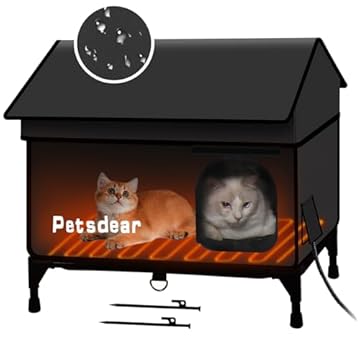
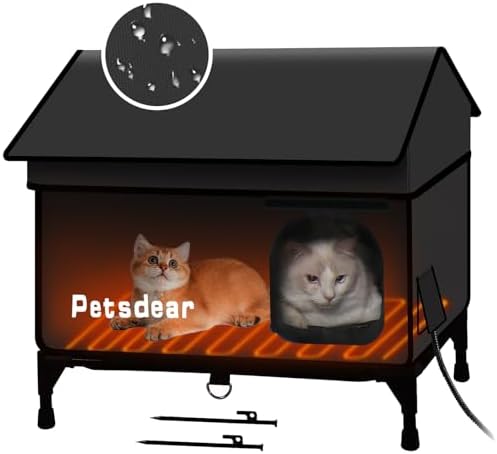
Petsdear Multi-Cat Heated House

This is the pick for anyone managing a colony of two or three outdoor cats. The Petsdear shelter measures generously and uses a fiberglass bracket system with a steel pipe base rated to support 300 pounds. That structural capacity isn’t just marketing — it means snow load, wind, and even a determined raccoon won’t collapse it. The inner lining uses aluminum foil to reflect body heat back toward the cat, a material choice borrowed from emergency space blankets. Two ground plugs anchor the unit against severe weather.

What sets this apart is the automatic constant temperature system. Plug it in and the heating pad adjusts between 95°F and 131°F based on the cat’s body temperature — no thermostat dial to fiddle with. The 4.8-inch elevated base lifts the entire house off wet ground, and a waterproof eave overhang blocks wind-driven rain and snow from the entrance. For multi-cat families who leave cats on a porch or in a barn through winter, the capacity alone makes this worth considering.

The trade-off: there’s no dedicated escape door. A single entrance means a cat could theoretically be cornered by a predator. If you’re placing this in a rural area with coyote or dog traffic, that’s a genuine concern. The PVC mesh outer layer, while waterproof, may also degrade faster than hard-shell materials under constant UV exposure — think about positioning it in a shaded spot. And the heating pad, while automatic, doesn’t carry a UL or MET certification number in the product listing, which matters to buyers who prioritize third-party electrical safety verification.

  • Dimensions: Large enough for 2-3 cats or a litter of kittens
  • Base elevation: 4.8-inch raised platform prevents ground moisture
  • Heating range: Automatic thermostatic control, 95°F-131°F
  • Frame: Fiberglass bracket with steel pipe base, 300 lb capacity
  • Anchoring: Two included ground plugs for storm stability

Best for: Multi-cat colonies on porches or in barns where predator pressure is low and capacity matters most.

Dahivs Hard-Shell Heated Shelter

The Dahivs house takes a different engineering approach: a rigid double-layer PE shell with an air cavity sandwiched between the walls. That air gap functions as thermal insulation, slowing heat transfer in both directions — warm air stays in during winter, and ambient heat from the sun doesn’t overheat the interior in shoulder seasons. The dimensions (17.7″ x 17″ x 17.5″) put it squarely in single-cat territory, but the build quality feels overbuilt for that purpose, which is a compliment.

The escape door is the standout feature here. It’s exit-only, meaning the cat can flee from inside but a predator can’t push through from outside. A clear window panel lets the cat watch birds and squirrels while staying warm — a small detail that reduces stress for territorial cats who want to monitor their surroundings. The heating pad carries a UL test certification (ZKT-2303312234S), and the waterproof awning plus transparent PVC door curtain handle rain and snow effectively. Stackable grooves in the roof and base let you build a two-story unit if you’re housing multiple cats in separate spaces.

Several things to note. The single-cat sizing means it won’t accommodate a bonded pair comfortably. The PE plastic shell, while durable against impacts, can become brittle in extreme cold over multiple seasons — plastic degradation is a real factor nobody talks about with these products. You’ll want to inspect it each fall for hairline cracks. The stackable design is clever but adds weight, and the clear door curtain, while useful for visibility, does let more cold air through than an opaque flap would.

  • Shell: Double-layer PE with air cavity insulation
  • Escape door: Exit-only design with clear window panel
  • Heating pad: UL-tested, waterproof (cert. ZKT-2303312234S)
  • Elevation: Raised base keeps interior dry from ground moisture
  • Stackable: Roof and base grooves allow multi-story configuration

Best for: Single-cat owners who want hard-shell durability, a predator escape route, and the option to stack units over time.

K&H Extra-Wide Heated House

K&H Pet Products has been making heated pet beds and shelters for over two decades. Their Extra-Wide Heated Cat House is designed to hold two cats and ships with a removable heated bed pad rated for sub-zero temperatures. The walls and roof are packed with insulation beneath waterproof fabric — not a rigid shell, but a soft-sided construction that prioritizes portability and quick setup over structural permanence.

The safety story here is the strongest of any product in this roundup. K&H doesn’t just use safety-listed components — they safety-certify the entire assembled product, which goes beyond standard UL requirements. Two exits with removable clear plastic door flaps give cats a way out if something approaches the front entrance. The flaps also block wind while maintaining visibility, so a skittish feral cat can see what’s happening outside without exposing itself to cold drafts. This house works equally well in a garage, on a covered porch, or inside a barn — it’s genuinely versatile.

The soft-sided design is both its strength and weakness. It packs flat for storage and moves easily, but it won’t withstand heavy snow loads or the kind of physical abuse a hard-shell unit absorbs. Wind can shift it unless you weigh it down or anchor it. The insulation, while effective, relies on fabric compression — if the walls get wet and stay wet, R-value drops significantly. In humid climates where condensation is an issue, this matters. The heating pad draws 20 watts, so running it 24/7 for a full winter adds roughly $25-30 to your electricity bill depending on your rate — affordable, but worth knowing.

  • Capacity: Extra-wide interior fits two cats
  • Heating pad: Safety Listed, removable, rated for sub-zero temps
  • Exits: Two escape routes with clear plastic door flaps
  • Construction: Waterproof fabric with insulated walls and roof
  • Versatility: Indoor/outdoor use — garages, porches, barns

Best for: Cat owners who need a portable, safety-certified shelter for two cats and plan to place it under cover (porch, garage, barn).

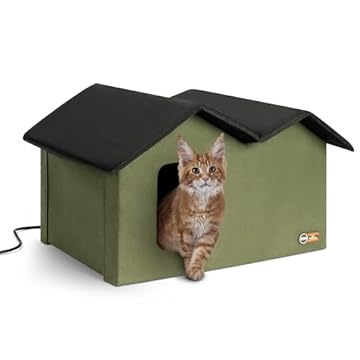
K&H Olive Heated Shelter

4th Pick

K&H Pet Products

K&H Heated Cat House, Outdoor Kitty Shelter,…

  • PROTECTION: Our heated cat house for outside, measuring 19" x 22" x 17", serves as the ideal refuge for safeguarding outdoor cats,…
  • WEATHER RESISTANT: Ensure the protection and comfort of cats of all sizes with this easily assembled, heated, weather-resistant, a…
  • STAY WARM: The included 20-watt MET Safety Listed waterproof heated cat bed inside the K&H Outdoor Heated Kitty House ensures warm…

The Olive is K&H’s sibling to the Extra-Wide, but with a slightly different profile: 19″ x 22″ x 17″ and finished in olive green fabric. It carries a MET Safety Listed 20-watt heated bed — MET certification is an alternative to UL that meets the same safety standards — and shares the same two-exit design with clear flap doors. If the Extra-Wide felt like the right concept but the wrong size or color for your setup, this is the variation worth examining.

The MET certification is worth dwelling on for a moment. MET (Manufacturing Evaluation and Testing) is an independent lab recognized by OSHA as a Nationally Recognized Testing Laboratory. Their certification carries the same weight as UL listing for insurance and safety purposes. The 20-watt draw is modest — low-voltage, low-energy, and safe to leave running continuously on a GFCI outlet. The insulated walls and waterproof roof handle snow, wind, and rain in moderate winter climates without complaint. Two 6″ x 8″ exits provide genuine predator escape capability, and the removable flaps let you adjust ventilation based on conditions.

Like the Extra-Wide, this is a fabric construction that won’t survive being buried under heavy snow or knocked around by large animals. The olive color blends better with outdoor landscaping than the Extra-Wide’s neutral tones, which matters if you’re placing it in a visible yard area. One limitation: the heating pad is non-removable in some versions of this product, so check the listing carefully if you want the option to use the pad separately indoors. Build longevity over multiple winters depends heavily on whether the house stays dry — fabric shelters degrade faster in constant dampness than hard-shell alternatives.

  • Dimensions: 19″ x 22″ x 17″ — slightly different proportions than Extra-Wide
  • Heating pad: 20-watt MET Safety Listed, waterproof
  • Exits: Two 6″ x 8″ openings with removable clear flaps
  • Insulation: Insulated walls and roof, weather-resistant exterior
  • Color: Olive green blends with outdoor environments

Best for: Buyers who trust the K&H safety record but want a slightly larger footprint or a color that looks natural in a yard or garden setting.

Myodal Indestructible Heated House

5th Pick

Myodal

Indestructible Heated Cat House for Outside -…

  • 【𝗔 𝗠𝘂𝘀𝘁-𝗛𝗮𝘃𝗲 𝗳𝗼𝗿 𝗢𝘂𝘁𝗱𝗼𝗼𝗿 𝗖𝗮𝘁𝘀 𝗶𝗻 𝗪𝗶𝗻𝘁𝗲𝗿 𝗮𝗻𝗱 𝗥𝗮𝗶𝗻𝘆 𝗗𝗮𝘆𝘀】- - Our heavy-duty heated cat house provides ample protection for cats. It…
  • 【𝗘𝘅𝘁𝗿𝗲𝗺𝗲𝗹𝘆 𝗜𝗻𝘀𝘂𝗹𝗮𝘁𝗲𝗱 𝗞𝗲𝗲𝗽𝘀 𝗖𝗮𝘁𝘀 𝗪𝗮𝗿𝗺】- - Adopt double shell + air cavity design structure, the air cavity slows down the transfer…
  • 【𝗘𝗮𝘀𝘆 𝘁𝗼 𝗔𝘀𝘀𝗲𝗺𝗯𝗹𝗲 𝗮𝗻𝗱 𝗗𝘂𝗿𝗮𝗯𝗹𝗲】- - No tools are required to assemble the insulated outdoor cat house, it's detachable and saves spa…

The Myodal shelter makes a bold claim in its name, and the construction partially backs it up. A double-layer shell with an air cavity mirrors the Dahivs approach, but the Myodal unit adds elevated feet that lift the base off wet ground — a design choice that matters more than most buyers realize. Standing water, snowmelt, and ground moisture wicking are the silent killers of outdoor cat shelters. A raised base eliminates that failure mode almost entirely.

The heating pad carries UL approval (same ZKT-2303312234S certification as the Dahivs, suggesting the same manufacturer supplies the pad), and the exit-only escape door follows the same predator-safety logic. Assembly takes roughly five minutes with no tools, and the unit disassembles flat for off-season storage — a practical advantage over rigid one-piece designs. The waterproof awning over the entrance blocks rain from blowing inside, and the double-layer construction handles wind and hail without deforming. Designed for cats under 13 pounds, so large breeds like Maine Coons won’t fit comfortably.

“Indestructible” is marketing hyperbole — no plastic shelter is truly indestructible. Over two or three winters, UV exposure will fade and weaken any PE-based shell, and extreme cold can make the material brittle. Inspect it each season. The 13-pound weight limit is also a hard cap that limits flexibility. The air cavity insulation works well in dry cold but performs less effectively in humid environments where moisture can condense inside the cavity itself. For dry, windy climates with moderate snow loads, though, this is a strong performer at a competitive price point.

  • Shell: Double-layer construction with air cavity insulation
  • Elevation: Raised feet keep base off wet ground
  • Heating pad: UL-approved, waterproof (cert. ZKT-2303312234S)
  • Weight limit: Cats under 13 pounds
  • Assembly: Tool-free, five minutes, disassembles flat for storage

Best for: Budget-conscious buyers in dry climates who want a hard-shell shelter with raised feet and a certified heating pad.

How We Chose These Products

Selection started with heating pad safety — any product without a verifiable UL or MET certification number got eliminated immediately. Electrical safety isn’t negotiable when you’re running a heating element 24 hours a day inside a structure made partly of fabric. After that filter, I evaluated insulation type and material durability, looking for either multi-layer construction with air cavities or proven insulated fabric walls. Escape door design mattered heavily for feral cat applications where predator pressure is real.

Practical considerations rounded out the assessment: tool-free assembly, capacity (single vs. multi-cat), raised base design, and waterproofing quality. I also looked at how these products hold up over multiple winters based on user reports and material science principles — fabric shelters degrade differently than hard-shell plastic units, and neither lasts forever. The goal was to represent different approaches (soft-sided vs. hard-shell, multi-cat vs. single, premium vs. budget) so readers could match a product to their specific situation rather than defaulting to the most popular listing.

Buying Guide: What Really Matters

Start with insulation. A heated cat house without proper insulation wastes electricity heating the surrounding air instead of the interior. Six-sided insulation — walls, roof, and floor — is the gold standard, though most products achieve five-sided coverage with a raised base handling the floor. Air cavity designs (double walls with trapped air) outperform single-wall fabric in sustained cold, especially below 20°F. For humid climates, look for insulation materials that resist moisture absorption — pearl cotton and closed-cell foam hold up better than loose-fill alternatives that clump when damp.

Placement strategy makes a bigger difference than most people expect. Position the entrance away from prevailing winter winds — check which direction storms come from in your area and face the door the opposite way. South-facing placement captures passive solar warmth during the day. Under a tree canopy or building overhang reduces snow accumulation on the roof and keeps the exterior drier. Avoid placing the house directly against exterior walls of your home where temperature differentials create condensation. A GFCI outlet within reach of a weatherproof extension cord gives you safe power access without running cables through windows.

Energy cost is rarely discussed but worth calculating. A 20-watt heating pad running 24/7 for a 90-day winter at $0.15/kWh costs roughly $26. A 40-watt pad doubles that to $52. Neither number is prohibitive, but it adds up if you’re running multiple houses. In power outage-prone areas, consider a backup battery pack rated for low-voltage heating pads — some users keep a car battery inverter as emergency backup during ice storms when cats need warmth most. Integration with a nearby feeding station works well: place the food 4-5 feet from the entrance so cats don’t associate the shelter with competition at mealtime, and use a covered feeder to keep food dry.

Our Top Recommendation

For most buyers, the K&H Extra-Wide Heated House offers the best balance of safety certification, proven multi-year reliability, predator escape capability, and versatile placement options. The full-product safety listing goes beyond component-level certification, and two exits solve the predator trap problem that single-door shelters can’t address. Pair it with a covered feeding station and position it under an overhang facing away from prevailing winds, and you’ve got a winter setup that holds up.

Buyers managing multi-cat colonies on a budget should look at the Petsdear shelter for its generous capacity and automatic temperature control. If hard-shell durability matters more than portability — say, in a barn or rural property where animals and weather are both aggressive — the Dahivs unit’s rigid PE shell and stackable design offer a different kind of long-term value. For anyone in a dry climate watching their spending, the Myodal delivers certified heating and a raised base at the lowest price point in this group.

Frequently Asked Questions

How much does it cost to run a heated cat house all winter?

A 20-watt pad running continuously for 90 days at the U.S. average electricity rate ($0.15/kWh) costs approximately $26. Higher-wattage pads or areas with expensive electricity will increase that number proportionally. Running two houses simultaneously doubles the cost. Most thermostatic pads cycle on and off based on temperature, which can reduce actual consumption by 30-50% compared to constant-run assumptions.

Can heated cat houses be left out year-round?

Most manufacturers recommend bringing fabric shelters indoors during off-seasons to prevent UV degradation and mold growth. Hard-shell units like the Dahivs or Myodal handle year-round outdoor exposure better, but even those benefit from shade and periodic cleaning. The heating pad itself should be unplugged and stored dry during warm months — leaving a heating element powered in summer wastes electricity and shortens its lifespan.

What’s the difference between UL-tested and MET-listed heating pads?

UL-tested means the component passed testing by Underwriters Laboratories. MET-listed means the component was tested by MET Laboratories, an equally recognized independent testing lab. Both certifications indicate the product meets established electrical safety standards. K&H goes further by safety-certifying their entire assembled product, not just the heating pad component — a distinction that provides an additional layer of assurance.

Do feral cats actually use heated houses?

Most feral cats accept heated shelters within a few days to a few weeks, especially during cold snaps when the warmth becomes a strong incentive. Placing the house along a cat’s existing travel path between food and shelter sites accelerates acceptance. Some caregivers report that cats who initially avoided the house moved in once temperatures dropped below freezing. Patience matters — don’t force interaction, and keep the entrance clear and unobstructed. Resources like Alley Cat Allies’ shelter options gallery provide additional community cat shelter strategies.

Share
Written by Joye

I am a mechanical engineer and love doing research on different home and outdoor heating options. When I am not working, I love spending time with my family and friends. I also enjoy blogging about my findings and helping others to find the best heating options for their needs.

Keep reading

Related guides

Free newsletter

Heater deals and guides, worth opening

Price drops, new guides and safety recalls. One email, only when it matters.

No spam. Unsubscribe in one click. Privacy policy.