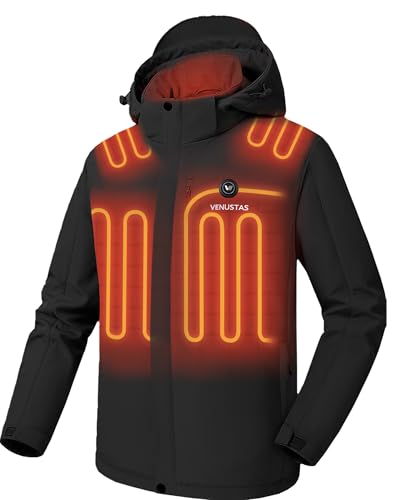
For most people who want to stay warm and stylish outdoors, the best pick is the Venustas Men’s Waterproof Heated Jacket: it has 5 large heating zones, a windproof 20K waterproof shell, FELLEX insulation and a 36Wh battery that runs up to about 10 hours on low, so you stay warm without looking like you’re in work gear.
The essentials
Pick your heated jacket by run time and shell first, style second; a 36–54Wh battery usually means 3–10 hours of heat.
If you already use 12V tool or vehicle power, a 12V heated jacket can plug into that system for essentially unlimited run time.
Hand warmers are the cheapest way to feel warmer fast; warming fingers often makes your whole body feel better.
Charging a heated jacket battery costs only a few cents a day; the real limit is capacity, not electricity cost.
If you mainly get cold feet, insulated or heated insoles plus good socks beat cranking up the house heat.
A lot of people think warmth means piling on bulky layers, then wondering why they’re still cold and can’t move their arms. Good heated gear flips that: thin heating elements do the heavy lifting, so you can wear fewer layers and still feel comfortable.
The picks here focus on jackets and hand warmers that actually heat well, look like normal clothing and use batteries you can live with day after day. You’ll see where each one fits: all‑day work outside, commuting in the rain, or just keeping fingers warm at the bus stop.
Best Warm And Stylish Heated Jackets And Hand Warmers
#1Best overall pick
Venustas Heated Jacket 20K Shell
Best for Most people who want a sleek everyday heated jacket.
The Venustas men’s heated jacket gives you 5 enlarged carbon fiber heating zones across shoulders, chest, and back, so your core actually feels warm instead of just your stomach. A 36Wh battery delivers up to 10 hours on low, around 6 on medium, and about 3 on high, which covers a full day out if you manage the settings. FELLEX insulation plus a silver mylar lining that reflects 97% of body heat help the 20K waterproof shell feel warmer than its weight suggests. A detachable hood, multiple zipper pockets, and machine‑washable construction keep it practical without looking like job-site gear.
Heating zones 5 enlarged ultra-thin carbon fiber elementsBattery capacity 36Wh certified battery packRun time Up to 10 hours (low), 6 hours (medium), 3 hours (high)Insulation FELLEX with silver mylar liningShell Waterproof fabric with detachable & adjustable hood
Why it made the cut
5 enlarged heating zones over shoulders, chest, and back
36Wh battery delivers up to 10 hours of heat on low
FELLEX insulation and silver mylar lining for better heat retention
20K waterproof fabric with detachable, adjustable hood
Machine washable design with multiple secure zipper pockets
Good to know
Runs only about 3 hours on high, so extreme cold drains it faster
Battery charger is not included in the package
Skip it if Skip it if you need a heavier-duty 12V work jacket that ties into a vehicle power system.
Best for Men who split time between job sites, hunting, and motorcycle rides.
The DEWBU men’s heated jacket uses a 12V system with 5 carbon fiber heating zones, including two near the front pockets so your hands get some of the warmth. Its 54Wh 12V battery heats the elements up to 140°F in seconds and runs about 3.5–4 hours on high or 9–10 hours on low, which suits cold mornings followed by lower settings later. The water-resistant soft shell is breathable but built with good tensile strength, scratch resistance, and wind resistance, and you get a foldable hood plus a lot of pocket storage. For longer stints on a bike, ATV, or snowmobile, you can power it from a 12V source using DEWBU’s connector wire (sold separately).
Heating zones 5 carbon fiber zones (front, back, and both arms)Battery capacity 54Wh 12V CE/FCC certified batteryMax temperature Up to 140°FRun time About 3.5–4 hours (high), 9–10 hours (low)Shell Water resistant soft shell with foldable hood and multiple p
Why it made the cut
5 heating zones including two near the front pockets for hand warmth
54Wh 12V battery heats elements up to 140°F within seconds
Around 9–10 hours of runtime on low for long days outside
Water-resistant soft shell with good tensile strength and wind resistance
Foldable hood and multiple chest, back, and sleeve pockets for storage
Good to know
3.5–4 hours on high may not cover a full workday at max heat
12V connector wire for vehicle power is sold separately
Skip it if Skip it if you prefer a lighter, more casual-looking heated jacket over a technical soft shell.
Best for Cold, windy workdays where durability and full arm heat matter more than looks.
This DEWBU men’s heated work coat takes the same 5‑zone 12V heating layout and 54Wh battery and wraps it in a soft shell with a waterproof zipper for harsher conditions. Two zones sit in front, one on the back, and one on each arm, so your sleeves stay warm instead of feeling like ice. The 12V battery pushes heat up to 140°F within seconds and runs about 3.5–4 hours on high or roughly 9–10 hours on low. A removable hood, two large zipper hand pockets, and sleeve pockets keep it functional on a job or winter trip, and you can tie into a 12V power source with DEWBU’s separate connector wire.
Heating zones 5 carbon fiber zones (front, back, and both arms)Battery capacity 54Wh 12V CE/FCC certified batteryMax temperature Up to 140°FRun time About 3.5–4 hours (high), 9–10 hours (low)Design details Soft shell with waterproof zipper, removable hood, hand and
Why it made the cut
5 heating zones including both arms for better overall warmth
54Wh 12V battery heats quickly up to 140°F
Approx. 9–10 hours of runtime on low for long shifts
Durable soft shell with waterproof zipper for wet, windy days
Removable hood plus hand and sleeve pockets for tools or gear
Good to know
Work-coat styling leans more utilitarian than casual
Requires a separate 12V connector wire to run from vehicles or power stations
Skip it if Skip it if you want a slimmer, more urban-style heated jacket instead of a work coat.
Best for Stylish commuters who want a hand warmer that looks like an accessory.
The OCOOPA UT4 Rare set gives you two palm-sized rechargeable hand warmers with a diamond-inspired design that looks more like jewelry than gear. Each unit heats up in about 3–5 seconds and can reach a maximum temperature of 125°F, so cold fingers warm quickly when you’re waiting on a train or walking the dog. They’re IP34 dust and water resistant, light enough to slip into a makeup bag or clutch, and come with a lanyard for attaching to a tote. Built-in magnets let you snap them together into a dual-sided warmer or split them to share, and they carry UL certification.
Pack type 2-pack rechargeable hand warmersHeating performance Heats in about 3–5 secondsMax temperature Up to 125°FProtection IP34 dust and water resistantDesign Diamond-inspired styling with magnetic dual-sided option and
Why it made the cut
Distinctive diamond-inspired design that passes as an accessory
Two units that can be used separately or magnetically combined
Heats up in 3–5 seconds with a maximum temperature of 125°F
Compact and light enough for small handbags or pockets
IP34 dust and water-resistant construction with UL certification
Good to know
Manufacturer does not state a specific runtime in hours
Small size suits hands but won’t warm much beyond them
Skip it if Skip it if you need clearly specified all-day runtime for long outdoor shifts.
Best for Short trips or office use where a tiny, pocketable warmer is enough.
The Orastone hand warmer focuses on being small, simple, and good-looking, with an elegant knit-style finish. It heats up to about 42°C in under 2 minutes and warms on both sides, so you don’t have to keep flipping it in your hand. A full charge gives roughly 3–4 hours of heat, which is plenty for commutes, walks, or breaks at a cold desk. At 60×60×22 mm and light weight, it disappears into a coat pocket or small bag until you need it.
Heating time Less than 2 minutes to reach about 42°CWarming sides Double sided warmingRun time About 3–4 hours on a full chargeSize Approximately 60×60×22 mmDesign Elegant knit-style portable hand warmer
Why it made the cut
Double-sided warming so both palms feel heat at once
Reaches about 42°C in less than 2 minutes
Runs about 3–4 hours on a full charge
Very compact 60×60×22 mm size for easy pocket carry
Elegant, stylish design that doesn’t look like basic gear
Good to know
3–4 hour runtime may be short for full-day outdoor activities
Single warmer design can’t be shared between two people at once
Skip it if Skip it if you need an all-day hand-warming setup instead of a few hours at a time.
Heated jackets and rechargeable hand warmers keep you Warm and Stylish by warming your body directly instead of trying to build a warm room or warm house around you with bulky layers. If you are hunting for the best women’s heated jacket or the best heated jacket on a budget, the idea is the same: built-in heat, a shell that blocks wind and wet, and a cut that matches how you actually dress outside.
Insulation is only half the story
More insulation absolutely helps because thicker fabric and loft trap the heat your body already makes. What’s missing is active heat and weather protection: electric pads inside the jacket add warmth even when you’re standing still in the cold, and a windproof, water-resistant outer shell stops air and drizzle from stripping that heat away. That combination is why a good heated jacket on low can feel warmer than a fatter puffy coat in a stiff breeze.
Heated jackets are personal heaters: they warm you, not the space around you. If what you really need is a warm room or a genuinely warm house for everyone, you are better off looking at best space heaters and other room heaters, then using a lighter heated jacket or hand warmers when you step outside.
For men who want something that looks like an everyday winter coat, the Venustas Men’s Waterproof Heated Jacket hides its heating zones inside a clean, street-friendly shell that blends in on a walk or commute. The DEWBU Heated Jacket for Men with 12V Battery Pack and the DEWBU Men’s Heated Jacket with 12V Battery Work Coat lean more into work, motorcycle, or hunting duty with tougher fabric and their 12 V systems ready for serious cold.
Women who care as much about cut and colour as heat will be happier starting with a dedicated guide to jackets that are truly cozy and stylish, then adding accessories. Compact units like the OCOOPA Women Rechargeable Hand Warmers 2 Pack and the Orastone Rechargeable Hand Warmer slip into a pocket or clutch without spoiling your look, and paired with good socks or heated insoles they can let you nudge the indoor thermostat down a degree or two while still feeling comfortable. Best heated jacket on a budget usually means accepting a slightly plainer shell or shorter runtime, not gambling on a questionable battery or poor wiring.
Decide before you buy
Where you’ll wear it most: commute, jobsite, hunting, kids’ games, or travel.
Men’s, women’s, or unisex cut so the shoulders, chest, and hips actually fit you.
Style you want: street jacket that blends in, or a tougher work coat that can take abuse.
How important long runtime is compared with keeping the battery light and compact.
Whether you also want hand warmers or heated insoles so you can turn the house heat down slightly.
Your real budget ceiling, so you save on shell style or runtime, not on basic electrical safety.
How To Choose A Heated Jacket That Suits You
Choosing a heated jacket that really suits you comes down to a few specs: voltage, battery size, heating zones, and shell style, especially if you want the best heated jacket on a budget or already own Milwaukee tools and are thinking about their heated jacket battery options. Most Milwaukee heated jackets share the same 12 V or 18 V rechargeable packs as the drills, so what batteries do Milwaukee heated jackets use is mostly answered by whichever tool platform you already have in the garage. On cheaper jackets you might see a 12V 18400mAh heated jacket battery pack advertised with huge runtime claims; treat that printed number as a rough guide, not a promise.
People ask how do heaters get warm without a flame, especially if they are used to a Warm Morning propane heater or another gas unit that actually burns fuel. In a heated jacket, low-voltage current flows through woven carbon-fibre strips that resist the flow, and that electrical resistance turns into gentle heat, the same basic physics as an electric space heater element but at much lower voltage and power.
Voltage
Typical power source
Heat feel
Best for
5 V USB
Phone-style power bank
Mild, slower to warm
Short commutes, office use, cool evenings
7.4 V
Dedicated jacket battery pack
Balanced warmth and weight
Daily wear, walking the dog, light outdoor work
12 V
Tool-style or DEWBU 54 Wh pack
Fast, strongest heat
Motorcycling, hunting, long cold jobsite days
How common jacket voltages line up with everyday use.
Jackets built around 5 V USB power banks tend to warm more slowly and feel like a mild seat heater, fine for cool evenings or quick errands. Mid-range 7.4 V systems strike a balance between warmth and battery weight for everyday wear. A 12 V system like the DEWBU jackets pairs a 54 Wh battery with higher voltage so the pads reach about 140°F quickly, and many can also plug into a vehicle outlet or portable power station for long days outside.
140°F
Typical high setting on a 12 V jacket
That is hotter than typical 100–110°F hand-wash water at the tap, but with fabric and air between the elements and your skin it feels like strong, focused warmth rather than a scalding surface.
Battery labels can be confusing, so focus on watt-hours (Wh), which is volts × amp-hours. A 36 Wh pack like the one in the Venustas Men’s Waterproof Heated Jacket stores about two thirds as much energy as a 54 Wh DEWBU pack, while a 12 V 18.4 Ah pack works out to roughly 221 Wh on paper. Real usable capacity is lower because of electronics that protect the cells from overcharging or deep discharge, and that protection matters as much as the printed number.
For Milwaukee heated jackets, more runtime usually means stepping up to a higher amp-hour battery of the same voltage instead of chasing a no-name Milwaukee heated jacket battery alternative. Staying on the official 12 V or 18 V platform keeps the electronics matched and avoids risk from poorly built packs that might overheat in your pocket.
Next, check how many heating zones you get and where they sit. At a minimum you want three zones across chest and back; higher-end designs add a collar or hood pad so your neck is not the cold weak point. Soft-shell jackets feel lighter and closer to a regular parka, while heavy work coats add abrasion resistance and pockets at the cost of extra bulk. Decide whether you want a detachable hood, because it traps a lot of heat but can get in the way under a helmet or hard hat.
For the best heated jacket on a budget, look for at least three zones, a clearly specified and certified battery pack, and fabric described as water resistant rather than bare cotton. The tradeoff is usually shorter runtime, a plainer shell, and a slightly heavier battery pack, not basic warmth or safety.
Spec checklist on the product page
Voltage rating: 5 V USB, 7.4 V, or 12 V, and what kind of battery or power bank it expects.
Battery capacity listed in watt-hours (Wh), not only in mAh marketing numbers.
Number and placement of heating zones, especially across chest, back, and optionally collar or pockets.
Shell type: softer stretch shell for everyday wear, or heavier work coat fabric if you are hard on gear.
Water resistance description so light rain or snow does not soak straight through.
Hood details: detachable or fixed, drawcords, and how it fits with a helmet or hard hat.
For tool-brand jackets like Milwaukee, that the jacket matches the 12 V or 18 V battery platform you already own.
Sizing, Run Time And Running Cost
Heated jackets and hand warmers keep you warm while the room and house stay cool, so they don’t solve a chilly bedroom, cool bathroom or only-warm shower the way a room heater or water heater does.
For a warm room or warm house—if you’re wondering how to warm up a room or how to keep a room warm—you’re really choosing insulation, central heat or a space heater, not clothing; use a heated jacket as your personal bubble when the air stays cold. If your bathroom water heater only gives you a warm shower or it runs cold quickly, that points to water-heater sizing or thermostat settings. So-called instant warm or tankless heaters can be good for showers only if they’re correctly sized and installed; the jacket just keeps you comfortable walking to and from the bathroom or while you towel off.
Sizing a heated jacket works like sizing a normal shell, with one twist: the heating zones need to touch your body or a thin mid-layer. Measure your chest at the fullest point, match the size chart, then allow room for a T‑shirt and one light sweater or fleece under the jacket. Going a size or two up “for layering” can backfire, because the Venustas and DEWBU panels end up floating away from your back and chest, so you feel warm patches instead of even heat.
Run time comes from the battery’s watt-hours and how hard you drive the elements. The Venustas jacket’s 36 Wh pack is rated for about 10 hours on low, 6 on medium, 3 on high, which works out to roughly 3.6 W on low (36 ÷ 10) and 12 W on high (36 ÷ 3). The DEWBU 54 Wh pack manages about 9–10 hours on low and 3.5–4 on high, so you’re averaging around 5–6 W on low and 13–15 W on high—more capacity, slightly higher draw, similar real-world hours.
Worked example
Say you use your heated jacket for a 40‑minute commute and a 20‑minute dog walk twice a day, about 2 hours total. With the Venustas pack at roughly 6 hours on medium, you’d get around three days between full charges (6 ÷ 2). Switch to low at 10 hours rated and you’re closer to five days (10 ÷ 2), so plugging in every few evenings is plenty.
Daily heated time2 hours
Venustas pack36 Wh
Charge intervalAbout every 3–5 days
Charging the battery costs almost nothing because you’re only refilling a few dozen watt-hours, not trying to warm all the air in a room. A full charge of a 50 Wh pack is 0.05 kWh; even if you charged daily, that’s only a few kWh a month. By contrast, a 1,500 W space heater running for room heat draws 1.5 kW the entire time it’s on.
Heater
Watts
Per hour
Per day (1 h)
Per month (30 days)
50 Wh heated jacket battery (charging)
50 W
0.9¢
0.9¢
26¢
1,500 W space heater (room heating)
1,500 W
26¢
26¢
$7.65
Calculated at 17¢ per kWh. Monthly cost if you fully charge a 50 Wh jacket battery once a day vs running a 1,500 W heater for one hour a day at 17¢/kWh. Longer heater use scales its linearly, while jacket charging stays tiny.
For whole-house warmth and real room comfort, the big gains come from insulation, sealing drafts, and tuning or upgrading your HVAC; the jacket is just your portable comfort zone you take along for walks, commutes and quick trips into cold spaces.
Safety, Batteries And Washing
Safe heated gear use starts with watching how warm plugs, outlets and battery connectors get, and then dealing carefully with water, washing and power outages.
A slightly warm electric heater plug, electric fire plug, jacket charger or USB hand-warmer connector is normal under load, because current flowing through metal makes a bit of heat. Trouble starts when the plug, wall outlet or USB block is too hot to hold, shows browned or melted plastic, or gives a burning smell—unplug it, stop using that cord or outlet, and have an electrician check any suspect receptacle.
During an outage, keeping warm without power or electricity comes down to insulation and safe backup heat, not pushing your electric gear harder. Layer clothing, add a hat and thick socks, and pile on blankets. For safe ways to warm a house with no power, only use indoor-rated fuel heaters that specify indoor use, follow their ventilation rules, and keep a carbon monoxide alarm running; the same basics apply to how to keep warm without electricity in a cabin or garage.
Hot plugs and unsafe heaters
Stop using any heater, heated jacket charger or hand warmer if the plug, cord or outlet becomes too hot to touch, scorches the plastic or smells like burning. Never try to warm a house with a gas oven, charcoal grill, camping stove or outdoor propane heater indoors—those can fill a room with carbon monoxide and are a common cause of poisonings during outages.
The heated jackets and hand warmers listed here use certified lithium packs (CE/FCC, and UL where stated in the specs); stick with the supplied battery or the brand’s own replacements. Swapping in cheap, uncertified third-party packs just for extra run time, especially on Milwaukee or other tool-platform jackets, increases the risk of overheating, swelling or failure at the connectors.
Rain and snow are fine for gear that’s rated for it, as long as you respect the limits. Look for water‑resistant or waterproof shells and IP ratings, keep rubber port covers snapped closed, and don’t run or charge the gear if the battery compartment has taken on water. No matter the rating, never submerge the battery pack itself.
Safe washing and charging
Remove the battery pack and cover or secure the power connector before washing.
Close all zippers and fasteners so cables don’t snag.
If the manual allows machine washing, use a gentle cycle, cold water and a laundry bag to reduce stress on wiring.
Never wring, twist or aggressively squeeze the jacket along the cable paths; press water out with a towel instead.
Air dry flat or on a hanger away from direct high heat, then inspect the wires and connectors before the next use.
For charging, plug the supplied charger directly into a wall outlet, not a power strip overloaded with other heaters.
If you have grid power but want to stay warmer overall, focus first on blankets, rugs, draft stoppers and tuning your main heating, then use wearable heat and safe space heaters as extras; for broader home-comfort ideas, a cozy and warm upgrade plan for your main system can help more than one more gadget.
Most airlines allow spare lithium batteries under 100 Wh only in carry‑on bags, not checked luggage, and a typical heated jacket pack falls under that limit; check your carrier’s current rules before you fly and tape over or switch off exposed terminals so nothing can short in your bag.
Keeping Hands And Feet Warm Without Bulk
Warm hands, warm feet and a few smart layers keep you comfortable without a heater, blankets or even electricity. To stay warm at home with no heater, no power and no blanket, pull on a hat, thick socks and a base layer, then walk around a little every 20–30 minutes so your muscles do the heating. The more you trap that heat with clothing and room insulation, the less you depend on outlets or the thermostat.
Myth
You have to heat the whole room before you will feel warm.
Fact
Targeted heat and insulation on your body often give more comfort per dollar than warming all the air in a room. Warm hands, feet and core plus draft stoppers, lofted bedding and insulated curtains can feel better than turning up a space heater several degrees.
Extremities lose heat fastest because your body cuts blood flow to fingers and toes first to protect your core, so warming hands and feet often makes your whole body feel more comfortable even if the room air is still cool. That is why a hat, good socks, gloves and warm insoles can fix the “chilled to the bone” feeling.
For shoe inserts for warm feet, you have three main options. Insulated foam or wool insoles add cushion and slow heat loss into cold floors or boot soles. Reflective insoles have a thin metallic layer that bounces your foot’s heat back up toward you. Dedicated heated insoles use tiny batteries and wires to add active heat; follow the manual closely, keep laces loose enough that blood flow is not squeezed, and avoid running them while you sleep.
Match insoles and socks
Use moisture-wicking thin socks under thicker wool or thermal socks so sweat does not chill your feet, and choose insoles that leave a little toe room. If boots feel tight after adding insoles and thick socks, go up a half size so warmth comes from insulation, not compression.
Rechargeable hand warmers are safer and more controllable indoors than disposable chemical packs because you pick the heat level and can switch them off the moment you feel too warm. The OCOOPA Women Rechargeable Hand Warmers 2 Pack gives you two stylish magnetic warmers that snap together, are UL-certified, offer multiple heat levels up to about 125°F, and carry IP34 splash resistance for damp walks and commutes. The Orastone Rechargeable Hand Warmer is a compact, double-sided unit that runs at roughly 42°C (about 108°F) for around 3–4 hours, which suits smaller hands or anyone who prefers gentler heat. Both tuck into coat pockets or mittens so blood warms in your hands before it flows back to the rest of you.
Quick no-power warm-up moves
Put on a knit hat and thick socks.
Add a base layer top and bottom under normal clothes.
Block door and window drafts with towels or draft stoppers.
Close insulated curtains and pile lofted bedding like duvets or comforters over you when sitting or sleeping.
Walk, climb stairs or do light chores for 5–10 minutes each hour to boost your own heat.
Exactly What To Do Next
Warmth in a cold house starts with choosing whether you need to heat your body, the room air or both, then picking gear that matches that job. If your house is not warm and you want heat now, you can close doors, hang heavy curtains and use draft stoppers to help keep a room warm without a heater, but for real warm air you will usually add a proper room heater instead of relying only on clothing.
1
Decide on body heat, room heat or both
If you are mostly cold outdoors or on the move, focus on a heated jacket and maybe a hand warmer. If you are mostly cold sitting in one room, plan on a room heater plus some layers or a jacket.
2
Pick a jacket for hard outdoor use
Outdoor workers, hunters and riders should lean toward the 12V DEWBU heated jackets, which push more heat and can be powered from their own battery, a vehicle outlet or a portable power station for very long days outside.
3
Pick a jacket for commuting and travel
If you care about style and weather protection on trains, buses or in town, start with the Venustas Men’s Waterproof Heated Jacket, which looks close to a normal ski or rain shell while hiding multiple heating zones and insulation.
4
Choose hand warmers if your core is fine
If your torso feels okay but your hands ache from the cold, use the OCOOPA magnetic 2-pack for flexible pocket warmth or the compact Orastone for a smooth, pebble-style heater you can wrap both hands around.
5
Sort out room heat at home
For a living room or bedroom that never feels warm enough, layer up and then add a room heater rather than relying only on clothing; cozy and warm room heaters cover comfort-focused picks, and Stylish Space Heaters That Don’t Sacrifice Performance helps when the heater will live in your main space.
6
Fine-tune fit, insulation and habits
Once you have picked the category, check size charts for jackets, choose socks and insoles that do not cut circulation, and use curtains, draft stoppers and closed doors to help keep a room warm without a heater working as hard.
In short
Decide first if you need warm air, warm clothing or both, then match your situation to a specific jacket, hand warmer and, if needed, a room heater. Staying warm cheaply comes from combining targeted heated clothing with basic insulation and smart use of room heaters, not chasing a single gadget to fix everything.
More Questions, Answered
What is the best heated jacket for women if I want something warm and stylish?
For women, the “best” heated jacket is the one that fits your shape and your life, not just the spec sheet. Look for a women’s-specific cut with room at the hips and chest, a battery pocket that doesn’t bulge at the waist, and colors you’ll actually wear to work or out in town. Thumbhole cuffs, a removable hood and soft, non-shiny fabric all help it look like a normal coat instead of work gear. Once those style boxes are checked, then compare heating zones and battery size.
What batteries do Milwaukee heated jackets use, and can I upgrade to a bigger pack?
Milwaukee heated jackets are usually built around the same compact 12 V tool batteries that power their smaller tools, plugged into a special adapter in a side or back pocket. You can typically swap in a higher-capacity pack from the same voltage family to get longer runtime, as long as it physically fits the pocket and connector. Stay with the exact battery type and voltage the manual lists; don’t mix in third-party or different-voltage packs just because the plug looks similar. A too-large pack can also feel bulky on your hip or back, so check comfort as well as runtime.
How long do heated jacket batteries usually last on one charge?
Battery life swings a lot with heat setting, battery size and outside temperature. As a reference point, the 36 Wh pack in the men’s jacket discussed above is rated for up to about 10 hours on low in mild conditions. Many modern jackets fall into a similar range on low; turning the heat up or wearing it in wind and deep cold cuts that time down to a few hours. If you need all‑day warmth, plan on carrying a spare battery instead of counting on one pack.
Can I wash a heated jacket in a washing machine without ruining the heating elements?
Most heated jackets can go in a washing machine on a gentle, cold cycle, but only after you unplug and remove the battery and close all zippers and flaps. Always follow the care tag and manual first; some brands want you to place the jacket in a laundry bag, and many say no fabric softener or bleach. Heated jackets should be air‑dried laid flat or on a hanger, never wrung out, ironed or dry‑cleaned, because high heat and aggressive solvents can damage the wiring insulation. If the jacket ever floods with water or comes out of the wash acting odd, stop using the heat until it’s fully dry and inspected.
Are rechargeable hand warmers and heated jackets safe to use in rain or snow?
Heated jackets and good rechargeable hand warmers are designed to handle light rain and snow, but they’re water‑resistant, not meant to be submerged. Keep USB ports and battery doors closed, and brush off wet snow before it melts in and soaks the battery pocket. If a hand warmer or battery pack is ever dropped in a puddle or ends up truly soaked, disconnect it, dry it completely and replace it if you see corrosion, swelling or damage. For heavy, all‑day rain, a waterproof shell over the heated layer protects both you and the electronics.
Can heated jackets or hand warmers help me stay warm at home without turning up the heat?
Heated clothing and hand warmers are a good way to keep your body comfortable while you let the house stay a bit cooler. You’re warming a few square feet of you instead of hundreds of square feet of air, so the energy use is tiny compared with running a space heater for hours. That makes sense if you’re working at a desk, watching TV or gaming and don’t mind wearing a jacket indoors. Just remember they won’t protect pipes from freezing or warm other rooms, so the main heating system still has to cover those jobs.
What should I look for in camo heated jackets for hunting besides the pattern itself?
For hunting, quiet fabric and low shine matter as much as the camo print; you don’t want crinkly nylon or glossy panels that catch light. Check that any power button LEDs can be dimmed or turned off so you’re not glowing in the dark woods. A slim, well‑padded battery pocket that doesn’t dig into your back under a pack or harness is important for long sits. Also look for longer runtimes and heating panels in the kidneys and chest, since your core can chill quickly when you’re glassing or sitting in a stand for hours.