
You’re staring at a cracked phone screen or a swollen battery. The repair seems straightforward, but the wrong tool can turn a simple fix into a permanent disaster. That’s where the right heat application becomes your most critical ally. It’s not about brute force; it’s about controlled, precise warmth to soften adhesives and components without frying the delicate electronics inside.
Choosing the correct tool separates a clean, professional repair from a costly mistake. The market is flooded with options, from basic hardware store heat guns to specialized hot air rework stations. For many common tasks, a versatile tool like the QWORK Heat Gun offers a great balance of temperature control and affordability for beginners and pros alike. Let’s break down what you really need.
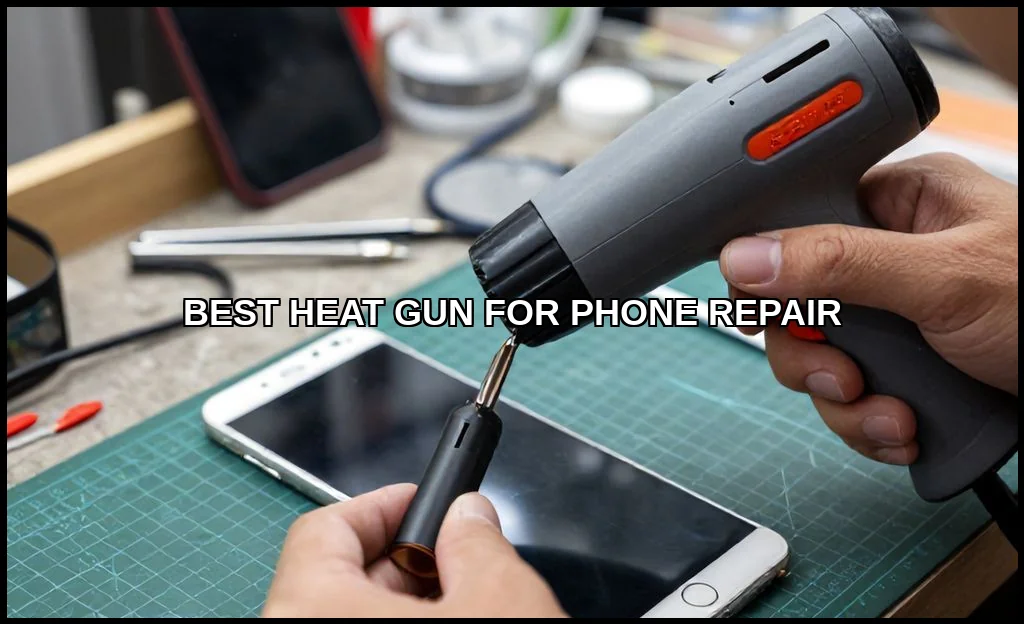
What Makes a Heat Gun Good for Phone Repair?
Not all heat guns are created equal. The one you use for stripping paint will likely destroy a smartphone. Phone repair demands precision. The core function is to deliver focused heat to a specific, tiny area. This requires a tool designed for electronics work, not construction.
You need a tool that can melt adhesive under a screen or battery without melting the plastic frame or damaging nearby chips. This precision hinges on three non-negotiable features: precise temperature control, adjustable airflow, and ESD protection. Without these, you’re gambling with every repair.
The Non-Negotiable Features
First, temperature control is paramount. Phone components have very low thermal tolerances. A digital temperature display lets you dial in the exact heat needed, often between 70C and 120C for adhesives. Second, airflow adjustment prevents you from blowing tiny resistors right off the board. You want a gentle, focused stream. Finally, an ESD safe design is critical. Electrostatic discharge can silently kill a phone’s logic board; an ESD-safe tool grounds potential static away from your device.
This leads to a common beginner question: is a heat gun or hot air station better for phone repair? A dedicated hot air rework station typically offers superior precision, but a high-quality heat gun with fine nozzles can handle 90% of common repairs. It often comes down to your budget and repair volume.
Top 5 Heat Guns & Hot Air Stations Reviewed
We’ve evaluated tools based on precision, reliability, and value. Whether you’re doing your first screen replacement or diving into microsoldering, there’s an option here for you.
1. The All-Rounder: QWORK Digital Heat Gun
This tool bridges the gap between consumer and professional gear. It features a clear digital temperature display and adjustable airflow, making it ideal for tasks like removing phone screen adhesive or a stubborn battery. It’s a solid answer for those wondering about a cheap heat gun vs professional station for beginners. You get professional features without the steep learning curve or price tag of a full soldering station for microsoldering.
2. The Hobbyist’s Choice: X-Tronic 7040 Hot Air Rework Station
This is a true hot air rework station. It excels at desoldering phone components and IC replacement thanks to its precise calibration and range of nozzle attachments. The digital controls are intuitive, and its ESD-safe design provides peace of mind. It’s a significant step up for anyone serious about board-level repair.
3. The Portable Pro: Steinel HL 1810 S
If you need pro-grade performance in a handheld format, Steinel delivers. Its temperature consistency is exceptional, and the ergonomics reduce hand fatigue during long repair sessions. It’s an investment, but for frequent use on iPhone screen adhesive and other precise jobs, it’s unmatched in its class.
4. The Budget Starter: Wagner Spraytech HT1000
This is a basic, no-frills option. It lacks digital controls but offers two heat settings. With extreme caution and a infrared thermometer, it can be used for simple tasks. However, the lack of airflow control and precise temperature makes it risky for valuable devices. It’s a tool for learning on very cheap phones, not daily use.
5. The Microsoldering Specialist: Quick 861DW Hot Air Station
This is the industry benchmark for serious repair technicians. Its advanced airflow sensors, rapid heat-up, and unparalleled stability make it the best tool for complex board work. For removing GPU chips or working on densely packed modern logic boards, nothing else comes close. It’s overkill for simple screen swaps but essential for a full-service shop.
Key Features Comparison Table
| Model | Type | Temp Control | Airflow Control | Best For |
|---|---|---|---|---|
| QWORK Digital | Heat Gun | Digital Display | Yes | General Repairs, Beginners |
| X-Tronic 7040 | Hot Air Station | Digital, Precise | Yes | Hobbyists, Board-Level Work |
| Steinel HL 1810 S | Professional Heat Gun | Electronic, Consistent | Yes | Mobile Technicians, Frequent Use |
| Wagner HT1000 | Basic Heat Gun | 2 Settings Only | No | Extremely Basic Tasks on Low-Risk Devices |
| Quick 861DW | Professional Hot Air Station | Advanced Digital | Advanced | Microsoldering, Complex IC Removal |
How to Use a Heat Gun for Common Phone Repairs
Technique matters as much as the tool. Heres a step-by-step guide for two of the most common procedures.
Removing a Phone Battery Safely
This is the most frequent use for a heat gun in phone repair. The goal is to soften the strong adhesive strip without overheating the battery itself (a serious fire hazard).
- Power down the phone and remove any external screws.
- Apply heat to the back cover (or screen if battery is underneath) in a slow, circular motion. Keep the nozzle moving constantly.
- Use a plastic pry tool to gently lift the edge. Apply more heat only if resistance is high.
- Slowly work the tool under the battery, reheating areas as needed, until it lifts free.
So, what temperature should I use to remove a phone battery? Start low, around 80-90C (176-194F). Increase in small increments only if necessary, but never exceed 110C (230F) near a lithium battery. Patience is safer than power.
Replacing a Cracked Screen
Finding the best heat gun for iPhone screen adhesive is common, but the technique applies to most phones. You’re targeting the adhesive tape around the perimeter.
- Warm the entire edge of the screen evenly for 60-90 seconds. Don’t focus on one spot.
- Insert a thin guitar pick or plastic opening tool into a corner.
- Slowly slide the tool around the display, reapplying heat to the area just ahead of your tool’s path.
- Once the screen is off, carefully remove any leftover adhesive from the frame.
Always consult an authority guide for your specific phone model before starting. They provide crucial disassembly sequences and warnings.
Safety Tips & Common Mistakes to Avoid
Heat and electronics are a dangerous mix. Avoid these pitfalls to save both your device and your workspace.
Critical Safety Practices
Always work in a well-ventilated area. The fumes from melting adhesive aren’t healthy. Use a pair of high-temperature gloves or finger cotscomponents and metal frames get extremely hot. Most importantly, keep a metal container or ceramic dish nearby for disposing of removed batteries. Never puncture or bend a swollen battery.
The Top 3 Beginner Mistakes
First, using too much heat. This is the fastest way to destroy flex cables, melt plastic, and delaminate screens. Second, holding the gun too close or too still. You’ll create a hotspot. Keep it moving and maintain a 1-2 inch distance. Third, ignoring ESD. Use an anti-static mat and wrist strap, especially in dry climates. That tiny zap you never feel can be fatal to a logic board.
Remember, the right tool is just the start. Proper technique turns a risky procedure into a routine job. Whether you’re investing in a full hot air rework station or a capable heat gun, prioritize control over raw power. Your success rateand your customer’s satisfactiondepends on it. For other tools that require careful selection, check out our guides on the best space heaters for your workshop or the best portable heating solutions.
Start with simple repairs. Master the fundamentals of heat application and adhesive removal. Build your confidence and skill before attempting complex microsoldering. The journey from a basic screen swap to board-level repair is incredibly rewarding, and it all begins with understanding and respecting the heat in your hands.
