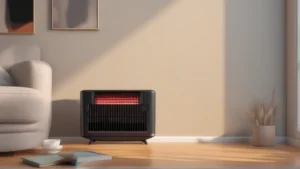
The Brightown 1500W Smart Wall Heater is the best energy efficient heating solution for most garages, delivering fast, precise heat with smart controls and ECO mode to cut energy use without sacrificing comfort.
What to remember
Smart thermostats and ECO modes reduce wasted energy by maintaining steady temperatures without overheating.
Wall-mounted units save floor space and target heat where you need it most in a garage.
Oil-filled radiators provide quiet, steady heat but take longer to warm up than ceramic or convection heaters.
Check heater wattage against your garage size: 1,000 to 1,500 watts suits 100 to 200 sq ft spaces with moderate insulation.
Safety features like overheat protection and tip-over switches are essential for garages with vehicles and tools.
Choosing the right heater for your garage matters because a poorly matched or inefficient unit wastes money and leaves you shivering. The right model balances power, control, and safety to keep the space comfortable without driving up your electric bill.
Garages vary widely in size and insulation, so picking a heater that fits your space and use is key. This guide focuses on models with smart features and energy-saving modes proven to work well in garage environments.
Top Energy Efficient Garage Heaters with Smart Features
#1Best Overall
Brightown Smart Wall Heater
Best for Garages needing fast heat, ECO control, and remote operation
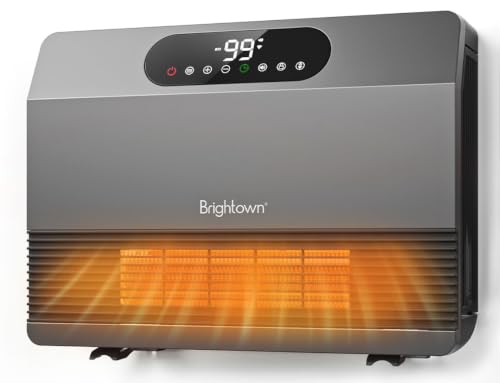
The Brightown combines 1,500W heating with ECO mode, which adjusts output after the room reaches your set temperature. You can set the temperature from 40 to 99°F within 1°F and control the heater by touch, remote, app, or Alexa. Its wall-mounted design keeps floor space open, making it a strong fit for an indoor garage.
Maximum power 1,500WTemperature range 40 to 99°FControls Touch, app, included remote control, and AlexaSafety V-0 flame-retardant materials; ETL-listed system; overheat p
Why it made the cut
1,500W output with 1,000W and ECO options
App, remote, touch, and Alexa control
Wall-mounted design saves floor space
Good to know
Listed for indoor use, so garage conditions must fit the manual
No recommended room size is provided
Skip it if Skip it if your garage is uninsulated or you need a heater specifically rated for dusty or damp work areas.
Best for Well-insulated garages up to 200 square feet
GiveBest delivers 1,500W and is specified for well-insulated spaces up to 200 square feet. Its WiFi app, remote, touch controls, precision thermostat, and ECO mode make scheduled heating easier to manage. Tip-over and overheat protection add useful safeguards for a wall-mounted heater.
Heat output 1,500WHeating capacity Up to 200 sq. ft. in well-insulated spacesControls WiFi app, remote, and touchSafety ETL-listed system; tip-over protection; overheat protection;
Why it made the cut
Rated for well-insulated spaces up to 200 sq. ft.
WiFi, remote, and touch controls
ECO mode plus tip-over and overheat protection
Good to know
The 200-square-foot recommendation applies to well-insulated spaces
No fuel-burning option for garages without suitable electrical service
Skip it if Skip it if your garage is larger than 200 square feet or poorly insulated.
Best for Garages where quiet, steady heat matters more than fast startup
The PELONIS uses 600W, 900W, or 1,500W settings and an ECO mode to tailor power use. Its oil-filled design has no fan structure, so it operates at almost 0dB while the thermostat adjusts from 41 to 95°F in 1°F increments. A remote, 24-hour timer, and wheels make it practical when you move heat around the garage.
Heat settings 600W, 900W, and 1,500WTemperature range 41 to 95°F in 1°F incrementsControls Remote, touchscreen, and 24H timerSafety Overheat protection and tip-over protection
Why it made the cut
Three heat settings: 600W, 900W, and 1,500W
Almost 0dB operation with no fan structure
Remote, 24-hour timer, wheels, and handles
Good to know
Radiator format takes up floor space
No recommended room size is provided
Skip it if Skip it if you need rapid heat at a workbench or can’t keep a portable heater clear of garage traffic.
Best for Small indoor garages where app scheduling and freeze protection help
The ENVI uses dual-stack convection and Smart Zone heating to direct warmth with low electrical heating energy. Its app supports remote control, timers, and scheduling, while Alexa and Google Home add voice control. Freeze protection, child lock, and Wall-Sens technology suit a garage that needs basic temperature management between visits.
Heating method Dual-stack convectionControls Proprietary smartphone app, Alexa, and Google HomeInstallation Plug-in wall-mounted designSafety Thermal shut off switch; freeze protection; child lock; WallWarranty 3-year warranty
Why it made the cut
App control with timers and scheduling
Alexa and Google Home compatible
Freeze protection, child lock, and Wall-Sens
Good to know
The product data doesn’t state the heat output or room size
Plug-in installation may limit placement in a garage
Skip it if Skip it if you need a known wattage or a specified garage coverage area before buying.
Best for Small garage rooms up to 120 square feet needing quiet, low-watt heat
The EconoHome panel uses 400W at 120V and is specified for rooms up to 120 square feet. Its thermostat covers 41 to 86°F, while the no-fan design avoids circulating dust and operates quietly. The panel can be wall-mounted and may be hard wired, so installation planning matters.
Heat output 400WElectrical requirement 120V; 3.33 ampsRecommended room size Up to 120 sq. ft.Temperature range 41 to 86°FInstallation Wall mounting; may be hard wired
Why it made the cut
400W output for rooms up to 120 sq. ft.
No fan and quiet operation
cETL approved and triple insulated
Good to know
Lower output suits smaller spaces only
May require hard-wired installation
The exterior casing feels warm and is intended for adults only
Skip it if Skip it if your garage needs fast high-output heat or has more than 120 square feet to warm.
The best energy efficient heating solutions for garages are sized to the space: plan on about 1,000–1,500 watts per 100 square feet, with the lower end for an insulated garage and the higher end for a drafty one. The Brightown 1500W Smart Wall Heater suits many single-car garages, but wattage alone won’t fix leaky doors or uninsulated walls.
Garage condition
Planning figure
What to expect
Well insulated
About 1,000 W per 100 sq ft
Holds heat more easily
Average insulation
About 1,200 W per 100 sq ft
Works for routine winter use
Drafty or poorly insulated
Up to 1,500 W per 100 sq ft
May still struggle during cold snaps
These are starting points, not a substitute for the heater’s coverage rating or local conditions.
Insulation changes the load because heat escapes through the garage door, walls, ceiling and air leaks. Weatherstripping around the overhead door and sealing obvious gaps can let a smaller heater maintain the same temperature; an uninsulated metal garage may need more power and still feel unevenly heated.
Worked Example
Say your garage is 10 by 20 feet, or 200 square feet. At 1,000 watts per 100 square feet, the starting estimate is 2,000 watts for a well-insulated space. At 1,500 watts per 100 square feet, the estimate rises to 3,000 watts for a drafty space. A single 1,500-watt plug-in heater may warm a work area, but it won’t deliver the same result as whole-garage heat at those higher estimates.
Garage10 × 20 ft = 200 sq ft
Insulated estimateAbout 2,000 W
Drafty estimateUp to about 3,000 W
Energy efficient heating systems cost less to run when they maintain the target temperature without running continuously, but the purchase price and wiring needs vary by system. A 1,500 W heater running for 8 hours uses 12 kWh; with electricity at 17 cents per kWh, the cost block below shows the monthly assumption. A larger heater can cost more if it runs just as long, while an undersized heater can run constantly and still leave you cold.
In short
Size from the garage’s square footage, then adjust for insulation and air leakage. Undersizing wastes comfort; oversizing adds capacity you may rarely need, so improve the envelope before buying the biggest heater.
From HeaterGuides · our own guidePage 4 shows what each heater costs per hour; the 30-day plan on page 11 cuts the bill.Winter Heating Bill CutterSee what every heater in your home really costs, heat the rooms you use, and cut the waste in 30 days.Cost-per-hour tables for every heaterThermostat schedule and draft-proofing planRunning-cost and bill calculator (Excel)$14.99$9.99Get it for $9.99See what's inside and watch the 2-minute video →14-page printable PDF + Excel calculator · instant download · 30-day refund
Use Smart Controls and ECO Modes to Cut Running Costs
Energy efficient electric heaters save the most in a garage when a thermostat, schedule or ECO mode prevents unnecessary heating. Energy efficient oil filled radiators use the same basic electric math as wall or ceramic heaters: a 1,500 W unit consumes 1.5 kWh for every hour its element is energized, so control strategy matters more than the casing.
A precise thermostat switches the element off near the set temperature instead of letting the garage drift several degrees warmer than needed. ECO mode typically reduces or cycles power as the room approaches that setting; it doesn’t create extra heat from the electricity, but it can reduce run time and temperature overshoot.
The Brightown 1500W Smart Wall Heater combines smart controls with ECO mode for a garage where you want steady background heat. The Smart Envi Wi-fi Plug-in Electric Wall Heater is useful when you want app-based scheduling, while the GiveBest Smart Wall Heater is another model to compare for remote control features. Check each listing for the exact app, voice-assistant compatibility and thermostat behavior before buying; “smart” is a feature label, not a universal standard.
Preheat Only When You Need It
Schedule the heater to start before your normal garage session instead of holding workshop temperature all day. A lower idle setting plus a short preheat usually uses less electricity than leaving the unit at a high setpoint for an empty garage.
Is a ceramic heater energy efficient? It can be, when its thermostat cycles it off at the set temperature, but the ceramic element doesn’t make the same wattage produce more heat than another electric resistance element. Oil-filled radiators have a slower response and keep releasing heat after the element shuts off, which can smooth temperature swings; they don’t automatically use less electricity for the same heat delivered.
Check Before You Rely on Smart Heat
Confirm the heater can reach the garage’s Wi-Fi signal if app control matters.
Set a schedule that matches your working hours and cancel it when the garage is empty.
Use ECO or thermostat mode rather than running maximum power continuously.
Compare the heater’s actual controls, app functions and voice support in the product listing.
For a wider comparison of connected plug-in models, see most energy-efficient electric heaters. Remote control is convenient, but it won’t replace the heater’s built-in thermostat or the manufacturer’s operating limits.
Prioritize Safety Features for Garage Environments
Safety features matter more in a garage because gasoline, solvents, sawdust and stored materials can sit close to the heater. Overheat protection, a tip-over switch and flame-retardant materials won’t make careless placement safe, but they reduce the consequences of a blocked grille, knocked-over unit or rising internal temperature.
Energy efficient heating systems cost less to run only when they use fewer watt-hours or fuel; safety hardware doesn’t change that basic math. A 1,500 W electric heater running for 8 hours uses 12 kWh, which costs about $2.04 at 17 cents per kWh. Energy efficient gas home heating can cost less in some regions, but a gas heater in a garage still needs the correct indoor rating, ventilation and carbon monoxide protection.
Check Before You Buy
Look for overheat protection that shuts the heater off if airflow is blocked or the internal temperature rises too far.
Choose a tip-over switch that cuts power when a portable heater is knocked over.
Look for UL, ETL or cETL certification on the heater or its listing, not just vague claims about being tested.
Confirm that the materials and casing are identified as flame retardant where the product documentation makes that claim.
Keep at least 3 feet of clearance from gasoline, paint, rags, cardboard, wood dust and other combustibles.
Fuel-Burning Warning
Never use an outdoor-only patio, torpedo or construction heater inside a garage. Unvented fuel-burning heaters can produce carbon monoxide and consume oxygen; indoor-rated propane models need the ventilation stated in the manual, an oxygen depletion sensor and a working CO alarm. Kerosene models use 1-K kerosene only, never gasoline. Local rules can also restrict vent-free gas heaters.
For most attached or enclosed garages, an indoor-rated electric wall heater such as the Brightown 1500W Smart Wall Heater for Indoor Use avoids combustion exhaust, but it still needs a direct wall outlet, no extension cord or power strip, and clear space around the intake and outlet. Turn it off before storing items nearby or leaving the building unless the manufacturer specifically allows unattended operation.
Understand the Pros and Cons of Different Heater Types for Garages
Oil-filled radiators are the quietest, steadiest choice for a small insulated garage, while convection and ceramic heaters warm the air faster when you need heat soon. None creates free heat: electric models use resistance heating, so the efficiency difference usually comes from thermostat cycling, heat distribution and how long each type runs.
How energy efficient are oil-filled radiator heaters? They turn essentially all of their incoming electricity into heat at the point of use, just like other electric resistance heaters. The oil stores heat, so the PELONIS Oil Filled Radiator Heater for Indoor Use Large Roo… can continue giving off gentle heat after its element cycles off, but it heats a cold garage slowly and doesn’t reduce the heater’s basic watt-hour use.
Heater type
What it does well
Garage drawback
Best fit
Oil-filled radiator
Quiet, steady heat with no fan blowing dust
Slow warm-up and takes floor space
Small, insulated garages used for several hours
Convection heater
Heats air quickly and circulates it naturally
Moving warm air can disturb dust and cold spots remain in a drafty space
Small to medium garages that need general air heating
Ceramic heater
Quick heat from a compact unit, often with a fan
Fan noise and dust movement; airflow can feel uneven
Occupied work areas needing fast spot heat
Choose for the garage’s use pattern, insulation and tolerance for fan noise—not the label alone.
Good for
A wall-mounted convection heater keeps floor space clear around vehicles and tools.
A ceramic heater gives quick heat near a workbench.
An oil-filled radiator runs quietly where fan noise is distracting.
Skip it if
All electric resistance heaters can draw substantial power while heating.
Fans can move dust toward tools, finishes or the heater grille.
Radiators take longer to raise the temperature in a cold, leaky garage.
Are radiant heaters energy efficient? Radiant heat can be a sensible way to warm you or a workbench without heating every cubic foot of air, especially in a drafty garage, but it isn’t automatically cheaper per hour. Match the heater to the job: use steady convection or oil heat for an insulated garage you occupy for hours, and consider directed radiant heat for short, stationary work sessions.
Energy efficient home heating solutions for a garage depend on the envelope and the schedule. A drafty two-car space wastes heat through doors and leaks, so a fast ceramic unit may feel better at the bench while a thermostat-controlled wall heater suits longer occupancy; a portable oil radiator is easier to place but must stay clear of the car, shelving and combustibles.
Check Installation and Maintenance Before Buying
Installation affects both safety and cost, so measure the garage, check the circuit and decide where the heater can sit before you buy. Energy efficient heating systems cost the least to run when they heat only an occupied, reasonably sealed space; a 1,500 W resistance heater still uses 1.5 kWh for every hour it runs. For broader energy efficient home heating options, heat pumps can use less electricity than resistance heaters for the same heat, though a garage installation may need different equipment and professional work. heat pump solutions
Heater
Watts
Per hour
Per day (8 h)
Per month (30 days)
1,500 W garage heater
1,500 W
26¢
$2.04
$61.20
Calculated at 17¢ per kWh. Assumes 8 hours of operation per day and $0.17 per kWh. A thermostat can reduce actual runtime; the block shows the cost if the heater runs continuously.
1
Measure and check the circuit
Record the garage dimensions and confirm the outlet voltage and breaker rating. A standard 15 A, 120 V circuit supplies about 1,800 W, while a 1,500 W heater draws about 12.5 A, so check what else shares that circuit. Plug the heater directly into a wall outlet, never an extension cord or power strip.
2
Choose a clear mounting position
Wall mounting saves floor space and keeps the heater away from tires, fuel containers, sawdust and workbenches. Use only the mounting hardware and clearances in the manual, and don’t mount a model unless it’s designed for wall installation.
3
Arrange hardwired work safely
A hardwired heater may need a dedicated circuit, a junction box or different wiring. Have a licensed electrician handle that work instead of adapting a plug-in model yourself.
4
Clean and inspect it
Unplug the heater before cleaning. Remove dust from the intake and grille as the manual allows, then check the cord, plug, housing, mounting screws and tip-over switch for damage before winter use.
Before the first cold snap
Garage measured and heater location marked
Breaker and other loads on the circuit checked
Wall clearances confirmed in the manual
Cord, plug, grille and housing free of damage
Dust cleaned with the heater unplugged
Stop if you find damage
A scorched plug, cracked housing, loose mount or repeatedly tripping breaker is a repair problem, not a cleaning task. Disconnect the heater and have the electrical issue checked before using it.
Questions People Ask
Are oil-filled radiator heaters energy efficient for garages?
Oil-filled radiators use electricity at the same point-of-use efficiency as other electric resistance heaters, so they don’t create extra heat from each watt. Their advantage is steady heat and a warm radiator that continues releasing heat after the thermostat cycles off. They suit an insulated garage where quiet, gradual heating matters more than fast warm-up.
Can I use a ceramic heater safely in a garage?
A ceramic heater can be used only if its manual allows the location and the heater has tip-over and overheat protection with a UL, ETL or CSA listing. Keep it at least 3 feet from cardboard, sawdust, gasoline containers and other combustibles, plugged directly into a wall outlet. Skip it if the garage may contain flammable vapors or if the heater’s instructions exclude garages.
What size heater do I need for a 200 sq ft garage?
A 200-square-foot garage generally calls for about 2,000 to 3,000 watts under the sizing rule used here, with an insulated space closer to the lower end. A standard 120-volt outlet can handle only one 1,500-watt plug-in heater on its own circuit, so a larger requirement may call for a hardwired or 240-volt heater installed by a qualified electrician. Insulation, ceiling height, door leaks and your target temperature can change the result.
Do smart thermostats really save energy on heaters?
Smart controls save energy when they stop the heater from running during work hours, overnight or after the garage reaches its set temperature. A 1,500-watt heater running two fewer hours per day avoids 3 kWh daily; at 17 cents per kWh, that’s about 51 cents per day. Check compatibility before using an external thermostat or smart plug, because many heaters must be controlled through their own switch.
Is a wall-mounted heater better than a portable one for garages?
Wall mounting keeps the heater off the floor and away from tools, vehicles and stored boxes, while a portable model is easier to move or store. A wall heater needs a suitable mounting surface, clearances and sometimes permanent electrical work; a portable heater must stay directly in a wall outlet with its 3-foot clearance intact. Choose wall mounting for a frequently used workspace and portable heat for occasional spot heating.
What safety certifications should I look for in garage heaters?
Look for a UL, ETL or CSA listing, plus tip-over and overheat protection on a portable electric heater. The listing shows that the product was evaluated to applicable safety requirements, but it doesn’t make a heater safe beside gasoline, solvents or dusty combustibles. Follow the manual’s clearance and location rules, and never use an extension cord or power strip.
Before you go · a welcome giftGet the Winter Heating Bill Cutter for $4.99See what every heater in your home really costs, heat the rooms you use, and cut the waste in 30 days. Normally $14.99; your welcome price saves $10.00. We'll email your link right now.or buy it now for $9.99 without the gift →One email with your link now. We never share your address.


 Winter Heating Bill CutterSee what every heater in your home really costs, heat the rooms you use, and cut the waste in 30 days.Cost-per-hour tables for every heaterThermostat schedule and draft-proofing planRunning-cost and bill calculator (Excel)