Home Electric Heating Systems: Best Options Explained
On this page 8 sections
- Electric Heating Kit Comparison
- Top Electric Heating Systems for Home Use
- How Home Electric Heating Systems Deliver Warmth
- Sizing and Running Costs for Electric Heating
- Smart Thermostats and Controls for Electric Heating
- Safety Certifications and Best Practices for Electric Heaters
- Heating Without Electricity and Supplemental Electric Options
- Frequently Asked Questions
Electric Heating Kit Comparison
| Rank | Model | Best for | Coverage Area | Smart Thermostat | Wattage per Sq Ft | Price |
|---|---|---|---|---|---|---|
| 1 | VEVOR 200 sqft Underfloor Heating Cable KitBest for Most Homes | Rooms up to 200 square feet needing precise, energy-efficient heat | 200 sqft | 15A programmable with GFCI, dual sensors, 7-day scheduling | 12 W | Check price |
| 2 | VEVOR 50 sqft Underfloor Heating Cable KitBest for Small Rooms | Small areas up to 50 square feet with energy-saving radiant heat | 50 sqft | 15A programmable with GFCI, dual sensors, 7-day scheduling | 12 W | Check price |
| 3 | Warming Systems 25 Sqft Electric Radiant Floor Heating Cable KitBest for Programmable Control | Small rooms needing WiFi thermostat and long warranty | 25 sqft | Programmable touch with WiFi and Bluetooth | 12 W | Check price |
| 4 | LuxHeat 25 sqft Floor Heating System, WiFi ThermostatBest for Easy Installation | Users wanting a self-adhesive mat with WiFi control for 25 sqft | 25 sqft | WiFi programmable touchscreen with GFCI | 12 W | Check price |
| 5 | Warming Systems 30 Sq Ft 120V Electric Floor Heating System Mat KitBest for Made in USA Quality | Small rooms needing a reliable, American-made heating mat with touchscreen control | 30 sqft | UDG4-4999 touchscreen with built-in GFCI | 12 W per sq ft × 25 sq ft = 300 W | Check price |
Say your living room measures about 15 by 13 feet with tile floors and you want cozy warmth that doesn’t spike your electric bill. Choosing the right electric heating system means balancing coverage, control, and cost.
This guide highlights the best electric home heating systems by size, safety features, and smart controls, so you can pick quickly and confidently.
Top Electric Heating Systems for Home Use
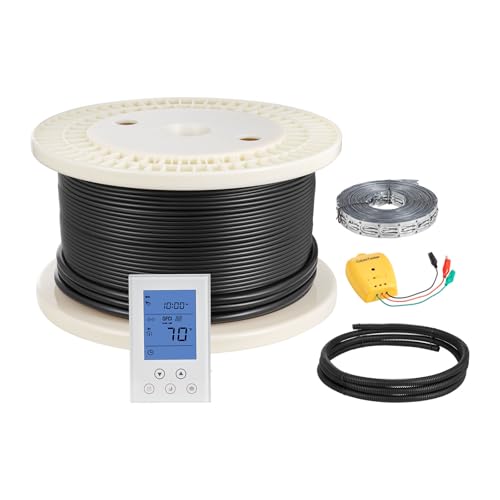
VEVOR 200 sqft Underfloor Heating Cable Kit

VEVOR 50 sqft Underfloor Heating Cable Kit

Warming Systems 25 Sqft Electric Radiant Floor Heating Cable Kit

LuxHeat 25 sqft Floor Heating System, WiFi Thermostat

Warming Systems 30 Sq Ft 120V Electric Floor Heating System Mat Kit
How Home Electric Heating Systems Deliver Warmth
Home electric heating systems provide warmth by converting electrical energy directly into heat, making them a clean and precise option for heating your home.

There are two common types: radiant floor heating and baseboard heating. Radiant floor heating uses electric cables or mats installed beneath the floor surface. These emit infrared heat that warms objects and people directly, creating comfortable, even warmth from the ground up. Baseboard heaters, by contrast, warm the air at floor level with electric resistance elements enclosed in a metal housing, relying on natural convection to circulate warm air.
Electric radiant floor heating installations typically specify wattage per square foot to ensure consistent heat. A common guideline is around 12 watts per square foot, which balances quick heat-up times and efficient energy use. For baseboard heaters, wattage ratings usually reflect the length of the unit, so sizing them to your room’s heat loss is essential.
Thermostat control plays a key role in managing electric heating. Programmable thermostats let you schedule temperature changes throughout the day, avoiding wasted energy when rooms are unoccupied. Some systems support smart thermostats for remote control and learning your habits to optimize comfort and savings.
Electric heating offers several benefits: it delivers precise temperature control without the fluctuations common in forced-air systems; it involves no combustion, so there’s no risk of carbon monoxide; and it operates silently, with no blower noise.
 Heating System Upgrade PlannerChoose between a heat pump, a furnace, a boiler or a hybrid with your own numbers, and hire the right installer.Every system compared side by side25 questions for contractors, red flagsRunning-cost, payback and quote calculator (Excel)
Sizing and Running Costs for Electric Heating
Sizing your electric heating system starts with measuring the area you want to heat in square feet. For example, a 120 m² home equals roughly 1,292 square feet. Multiply that by the wattage density typical for radiant floor kits—about 12 watts per square foot—to estimate total wattage needed.
Estimating running costs means multiplying your heater’s wattage by the number of hours you run it, then converting to kilowatt-hours (kWh). Multiply kWh by your electric rate. For example, 15,600 W running 8 hours daily uses 124.8 kWh. At 17 cents per kWh, that’s about $21.22 per day.
Electric heating heats differently from gas water heaters. Electric systems provide near-instant heat when switched on, especially radiant floors that warm objects directly rather than air. Gas water heaters take longer to heat water and rely on circulating warm air afterwards, which can delay the sensation of warmth.
For poorly insulated homes, running costs rise because heat escapes faster. That 120 m² house with minimal insulation may require higher wattage or longer runtime, increasing electricity use. Upgrading insulation pays off by reducing these costs.
Smart Thermostats and Controls for Electric Heating
Thermostats designed for electric baseboard heating offer precise control that directly affects comfort and energy use. Look for models that support programmable schedules and have dual sensors—one on the wall and one in the air—to keep your room evenly heated without overshooting your target temperature.
Smart thermostats with WiFi and app control add convenience and can cut your energy bills by adapting to your routine even when you’re away. For example, you might program your heater to lower the temperature at night or when you’re at work, then warm up the room just before you return.
Safety features are crucial. Many electric baseboard thermostats come with built-in ground-fault circuit interrupter (GFCI) protection to prevent shocks. A screen lock can stop accidental changes, especially useful in homes with kids or pets.
Choosing the right thermostat means balancing comfort with cost. A simple manual dial wastes energy by running too long or too hot. Programmable and smart thermostats adjust heating cycles efficiently, saving you money over a heating season. If you have electric baseboard heating, a thermostat like the ones paired with the VEVOR 200 sqft Underfloor Heating Cable Kit brings similar benefits, ensuring your electric heating system is both comfortable and economical.
Safety Certifications and Best Practices for Electric Heaters
The safest electric space heater for home use always carries a UL listing or equivalent certification. This confirms it meets strict electrical and fire safety standards. Alongside this, GFCI protection is essential for heaters installed in bathrooms or damp areas to prevent electrical shock.
Space heaters should include tip-over and overheat protection switches that shut the unit off if it falls or overheats. These features reduce fire risk and are standard on quality models designed for indoor use.
Routine maintenance is simple but necessary: inspect heating coils and cables for damage or dust buildup. Dirty or frayed coils reduce efficiency and can become a fire hazard. A gentle vacuum or compressed air can clean dust, but cracked or damaged elements need professional replacement.
Avoid common mistakes like plugging heaters into extension cords or power strips, which can overheat and cause fires. Keep at least 3 feet of clearance around electric heaters—no curtains, furniture, or papers close by. Following these practices maintains safety and prolongs your heater’s life.
For electric heating coil maintenance and safety, always disconnect power before inspection and use only manufacturer-recommended parts and procedures. Neglecting this can void warranties and increase risk.
When shopping, consider heaters with all these safety features. If you want reliable, safe electric heating, the VEVOR kits and Warming Systems units combine smart control with certified safety features, making them good choices for your home.
Heating Without Electricity and Supplemental Electric Options
Heating a home without electricity means relying on fuel-based or passive systems that work independently of the grid. Wood stoves, propane heaters with external tanks, and kerosene heaters are common choices for emergency or off-grid heating. These options don’t need electric power, but you must ensure proper ventilation and fire safety measures, especially indoors.
Electric heaters often serve as supplements to oil or gas heating systems, filling in when those systems can’t maintain comfort or when you want to save fuel by heating only occupied rooms. Adding an electric baseboard or a plug-in oil-filled radiator in a cold bedroom can cut down the central system’s runtime and fuel bills.
Switching from oil to electric heating involves careful evaluation. Electric systems have near 100% energy conversion efficiency at the point of use, but electricity costs more per BTU than oil. If your home has poor insulation or large heating loads, electric heating can get expensive. However, electric radiant floor heating or zoned baseboards lets you heat specific areas precisely, which may offset higher rates with lower overall use.
Radiant electric heat warms objects and people directly, not just the air, which can feel more comfortable at lower air temperatures. Fuel-based systems heat the air and often provide higher peak heat output for cold climates. Electric radiant systems shine in well-insulated spaces or in supplemental roles but may not replace a high-capacity oil furnace in very cold conditions without significant insulation upgrades.
When supplementing oil heating with electric heat, monitor your electric panel capacity, as adding baseboards or radiant floors increases your home’s electrical load. Also, consider a smart thermostat that controls both systems efficiently, switching between electric and oil heat to optimize comfort and cost.
If your electric service is unreliable or you live off-grid, combining a fuel-based backup heat source with a primary electric heating system ensures you won’t be left in the cold. In these setups, the electric system handles daily heating, while the fuel heater kicks in during outages or extreme cold spells.
Electric heating provides cleaner indoor air and quieter operation than fuel-based systems, with less upkeep and no combustion emissions. However, fuel heating remains essential where power is unavailable, unreliable, or costly, making a combined fuel-electric setup practical for many homes.