Apartment-Safe Electric Heaters for Warmth Without Noise
On this page 9 sections
- Comparison of Quiet Electric Heaters for Apartments
- Best Quiet Electric Heaters for Apartments
- How Noise Levels Affect Apartment Heating Comfort
- Choosing Heater Types That Suit Chemical Sensitivities
- Key Features That Make Heaters Apartment-Safe and Quiet
- Sizing and Running Costs for Apartment Heaters
- How Noise Levels Affect Heat Distribution in Apartments
- What To Do Next: Choosing and Using Your Apartment Heater
- Frequently Asked Questions
Comparison of Quiet Electric Heaters for Apartments
| Rank | Model | Best for | Heat Output (W) | Noise Level (dB) | Safety Features | Price |
|---|---|---|---|---|---|---|
| 1 | DREO 1500W Oscillating Ceramic HeaterQuietest Choice | Apartments needing wide, quiet heat coverage | 1500 | 34 | ETL certified, tip-over and overheat protection, flame-retardant materials | Check price |
| 2 | DREO Atom One Portable Electric HeaterEnergy Saver | Users valuing efficient heating with digital thermostat | 1500 | 37.5 | ETL-listed tip-over and overheat protection, flame-retardant materials | Check price |
| 3 | DREO 25″ Electric Space Heater for Large RoomsQuiet Large Room | Large apartments needing very quiet heat | — | 25 | ETL certified, tip-over and overheat protection, child lock | Check price |
| 4 | DREO Portable Electric Heater with ThermostatUser Friendly | Users wanting quiet heat with remote and precise control | 1500 | 34 | Tip-over sensor, overheat protection, flame-retardant materials | Check price |
| 5 | Apartments wanting ambiance plus heat up to 400 sq ft | — | — | — | Check price |
Apartment living demands heaters that balance effective warmth with quiet operation and safety. The DREO 1500W oscillating ceramic heater meets these needs with whisper-quiet fan technology and broad heat distribution, making it ideal for bedrooms, offices, and living spaces.

This guide compares top electric heaters designed for apartments, focusing on noise levels, safety certifications, and comfort features that matter most when space and peace are priorities.
Best Quiet Electric Heaters for Apartments

DREO 1500W Oscillating Ceramic Heater
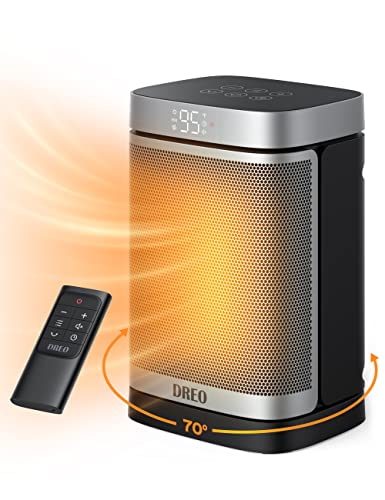
DREO Atom One Portable Electric Heater

DREO 25″ Electric Space Heater for Large Rooms

DREO Portable Electric Heater with Thermostat

Country Living 27″ Electric Fireplace Logs Heater
How Noise Levels Affect Apartment Heating Comfort
Electric heater noise matters more in apartments than in houses because walls and doors are thinner and closer neighbors can hear everything. Noise is measured in decibels, dBA, a scale where 0 is silence and a normal whisper is about 30 dBA. Typical background noise inside an apartment ranges from 25 to 40 dBA, so a heater louder than that stands out.
Fanless heaters, like oil-filled radiators or baseboard units, generally run quieter, often below 30 dBA, because they rely on natural convection without blowing air. However, they trade off faster, even heat distribution since no fan pushes warm air around the room.
Heaters with fans usually produce noise in the 40 to 50 dBA range—comparable to a quiet office. Oscillating fans add a gentle movement sound but spread heat more widely. How loud you perceive the fan depends on its design; brushless motors and aerodynamic blades run quieter. A cheap or worn fan can buzz or rattle, raising noise complaints fast.
Noise also varies with heating modes. At full power, fans run faster and louder. Lower settings slow the fan or switch it off, dropping noise but also heat output. Thermostats cycling heaters on and off can cause clicks or short bursts of fan noise. Some models use soft-start fans or gradual cycling to reduce this disruption.
The quietest electric heaters suitable for apartments are fanless oil-filled radiators and baseboard models that operate below 30 dBA. Ceramic heaters with high-quality oscillating fans, like the DREO 1500W model, keep noise around 34 dBA, barely above ambient, while delivering effective heat.
Heater noise is significant in apartments because loud units interfere with sleep, concentration, and privacy. A 10 dBA increase sounds roughly twice as loud to the human ear, so choosing a heater that stays under 40 dBA makes a big difference in comfort.
Choosing Heater Types That Suit Chemical Sensitivities
If you’re chemically sensitive, heater off-gassing is a real concern. Off-gassing means releasing volatile organic compounds (VOCs) or odors when materials heat up. Some electric heaters, especially oil-filled radiators and ceramic types, emit small amounts initially but become virtually odorless after a break-in period.
Oil-filled radiator heaters contain sealed oil that transfers heat without burning fuel. While the oil is well sealed, small amounts of VOCs can escape through vents during the first 24 to 72 hours of use. Most long-term tests show these emissions drop to undetectable levels after that, making them generally safe for apartments with ventilation.
Ceramic heaters use a solid element and ceramic plates that heat quickly without burning dust or paint fumes. They off-gas minimally, especially quality models with sealed heating elements. Their plastic housings may emit a faint odor at first but typically fade within a few uses.
Infrared heaters have very low off-gassing because they radiate heat directly from quartz or ceramic bulbs. However, their surfaces get hot, so keep them away from fabrics or plastics that could melt or smell.
To minimize exposure, ventilate your apartment during a heater’s initial use period by opening a window or running an exhaust fan. The first few hours of operation produce the most off-gassing as manufacturing residues burn off. After that, most modern electric heaters are safe for chemically sensitive users.
Oil-filled radiators are generally safe for chemical sensitivities if you allow initial off-gassing and provide ventilation. The sealed oil and metal body help contain odors long term. Ceramic heaters produce even less off-gassing but may not heat as evenly in larger rooms.
Expect minimal off-gassing from electric heaters overall, but quality matters. Avoid cheap units with low-grade plastics and paints. Choose models designed for indoor use, with sealed elements and safety certifications to reduce risks. This approach ensures warmth without compromising indoor air quality.
If chemical sensitivity is severe, consider heaters with metal or ceramic surfaces and no plastic grilles or housings. You can explore options in The Hidden Gems in Electric Heaters for Cozy Apartments for low-emission models tailored to tight indoor spaces.
Key Features That Make Heaters Apartment-Safe and Quiet
Apartment-safe heaters must have specific safety features to protect both you and your neighbors. Essential are a tip-over switch that cuts power if the heater falls, overheat protection to prevent internal components from reaching unsafe temperatures, and flame-retardant materials around the heating element. These reduce fire risks, the top hazard in close quarters.
Look for ETL certification on the label. ETL is a third-party safety test mark that confirms the heater meets North American electrical and fire safety standards. It’s your assurance that the manufacturer followed stringent testing protocols. Many apartment managers require this certification before allowing a space heater on premises.
Thermostatic controls matter more than you might think for quiet operation. A thermostat lets the heater cycle on and off to maintain a set temperature. Without one, fan motors or heating elements run continuously, producing constant noise. With a thermostat, the heater only runs when needed, reducing fan cycling noise and energy waste.
Remote controls and timers add convenience and help keep noise down. You can set your heater to turn off automatically or adjust settings without walking across the room, minimizing disturbance. Oscillation spreads warmth evenly without the heater running at full blast constantly, which also lowers noise and hot spots.
In apartments, these features combine to keep your heater safe, quiet, and easy to use. Without them, you risk noisy, inefficient operation that can disturb neighbors and possibly trip breakers or cause hazards. Models like the DREO 1500W oscillating ceramic heater include all these specs, making them ideal for tight spaces.
Sizing and Running Costs for Apartment Heaters
Sizing your electric heater starts with knowing your room’s square footage. Multiply the length by the width. For example, a 12-by-14-foot room is 168 square feet. Plan on about 10 watts per square foot for adequate warmth, so this room needs roughly 1,680 watts.
Most apartment heaters fall between 1,000 and 1,500 watts. A 1,500-watt heater is the common max for a single 120 V, 15 A circuit, drawing about 12.5 amps. That fits most bedrooms and living rooms up to around 150 square feet comfortably. Larger rooms or open layouts may need multiple heaters or supplemental heat sources.
Running costs depend on consumption and electricity rates. At 17 cents per kWh, running a 1,500-watt heater continuously for 8 hours uses 12 kWh (1,500 W ÷ 1,000 × 8), costing about $2.04 per night. Running 4 hours per day over 30 days would be $1.02 × 15 = $15.30 monthly. Adjust for your usage and local rates.
Watch your breaker panel limits carefully. A 15-amp breaker at 120 V handles about 1,800 watts max, but you must leave room for other devices. Plug your heater directly into a wall outlet—never an extension cord or power strip—to avoid overheating and fire risk.
Choosing the right wattage heater prevents both underheating and tripped breakers. A 1,500-watt heater suits most apartment rooms, balancing warmth and electrical safety. If your space is smaller, 1,000 watts may suffice and cost less to run. For bigger rooms, consider multiple smaller heaters with thermostats to spread heat evenly and keep noise down.
How Noise Levels Affect Heat Distribution in Apartments
The fanless-versus-fan debate ignores what actually happens in a one-bedroom apartment: a fanless oil-filled radiator heats the air nearest to it, that air rises to the ceiling, and the warmth takes twenty minutes to creep across a 12 by 14 ft room. You end up warm on one side and cool on the other.
Fanless heaters rely on natural convection, which moves heat about as fast as someone walking. In a square room with furniture blocking airflow, hot air pools near the unit and along the ceiling while ankle-height air stays cold. That uneven spread is why people nudge the heater closer to the couch every half hour.
A ceramic tower with a quiet oscillating fan solves it. The fan pushes warm air eight to ten feet in a steady arc, mixing room air instead of waiting for it to rise. The trade is a low hum—34 to 40 dBA, about the level of a refrigerator running in the next room—that most people stop noticing after the first evening.
Oscillation matters more than wattage for heat spread. A 1,500 W fan heater sweeping 70 degrees will warm a 150 sq ft bedroom more evenly than a 1,500 W baseboard sitting still in the corner, because moving air reaches under desks and around doorways. Convection heaters without fans work fine in open studio layouts where air can circulate freely; they struggle in apartments with narrow hallways and closed bedroom doors.
The real choice is between silent and uneven, or quiet and consistent. If you’re working from home and need the whole room at the same temperature, a fan model with a decibel rating under 40 dBA delivers that without the industrial roar of a forced-air furnace. If you’re sitting still and the heater is within six feet, fanless works.
What To Do Next: Choosing and Using Your Apartment Heater
- Measure your room’s square footage and calculate needed wattage—roughly 10 watts per square foot for a well-insulated space.
- Check for safety certifications like UL or ETL and look for models with tip-over and overheat protection; verify noise levels under 40 dBA if quiet is crucial.
- Choose a heater type that suits your chemical sensitivity and noise tolerance—fanless convection for silence but smaller rooms, or quiet fan models for even heat.
- Use thermostatic controls and timers to maintain steady temperatures and cut noise and energy use when you’re out or asleep.
- Keep at least 3 feet clearance around the heater, plug it directly into a wall outlet, and never use extension cords to avoid fire risks.
Picking the best quiet heater starts with matching your room size and noise needs. If chemical sensitivity is a concern, lean toward ceramic fan heaters with tested low off-gassing or sealed oil-filled radiators after airing out. For maximum silence, fanless baseboard or convection heaters fit tiny spaces but plan for slower heat spread.
Safety matters every step. Ensure your heater has a tip-over switch and overheat protection. Place it away from curtains and clutter. Never leave it running unattended or while sleeping unless the model’s manual specifically says it’s designed for that. Use a working smoke and carbon monoxide alarm, especially if you mix heater types.