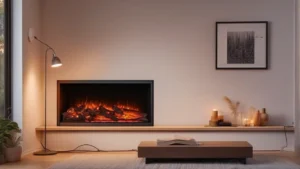
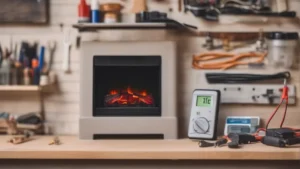
The Innoflame 23″ Electric Fireplace Insert offers the best heat output for large hearths, delivering 5,000 BTU and efficient zone heating for rooms up to 400 sq ft with reliable safety features and easy controls.
The essentials
Electric fireplace inserts typically produce up to 5,000 BTU, suitable for supplemental heating in rooms up to about 400 sq ft, not as primary heat in very large spaces.
Infrared heating delivers direct warmth without drying air, preferred for allergy sufferers, while convection spreads heat for general room comfort.
Choosing inserts with adjustable thermostats and timers controls running costs and maintains consistent warmth.
Safety features like cool-touch glass, overheat protection, and automatic shut-off are essential, especially with high-output units.
Multi-sided or see-through inserts offer ambiance but may reduce direct heat output compared to single-sided models.
Large hearths and open living areas challenge electric fireplace inserts to deliver enough heat where it matters. The Innoflame 23″ insert leads with 5,000 BTU output, adjustable thermostats, and realistic flame effects, making it the top pick for most large hearth setups.
Many buyers assume electric inserts can replace central heating in large rooms, but they are best as supplemental heat sources. Choosing the right size, heat technology, and safety features prevents wasted energy and cold spots.
Electric Fireplace Insert Heat and Safety Comparison
Top Electric Fireplace Inserts for Large Hearth Heat Output
#1Best Heat Output
Innoflame 23″ Electric Fireplace Insert 1400W
Best for Rooms up to 400 sq ft needing strong zone heating
The Innoflame 23″ insert provides 5,000 BTU and 1400 watts for efficient heating in large rooms. It features adjustable flame brightness and a thermostat for easy temperature control. Safety is solid with CSA/UL listing and overheat protection, making it a reliable choice for families and pet owners.
Heat Output 5000 BTURoom Size up to 400 sq ftHeat Settings 1400 WDimensions 23″ W x 19 3/4″ HSafety Certifications CSA/UL listed
Why it made the cut
High heat output for large rooms
Adjustable flame brightness and thermostat
Overheat protection with cool-to-touch glass
Remote control and timer for convenience
Good to know
Rear mounting requires precise opening size
Less flame speed options compared to others
Skip it if Choose another if your hearth opening is smaller than 24″ wide or 20″ high.
Best for Users wanting max heat output and flame customization
This Innoflame model delivers 5,000 BTU at 1500 watts with five flame brightness levels and three flame speeds. It supports precise climate control with a thermostat and a 9-hour timer. Safety features include CSA/UL listing and overheat protection, suited for households prioritizing both heat and ambiance.
Heat Output 5000 BTURoom Size up to 400 sq ftHeat Settings 1500 WDimensions 23″ W x 19 3/4″ HSafety Certifications CSA/UL listed
Why it made the cut
Strong 1500W heat for quick warming
Multiple flame brightness and speed options
CSA/UL safety listing with overheat cutoff
Remote and control panel operation
Good to know
Requires a hearth opening at least 24″ by 20 3/8″
Higher power draw than some alternatives
Skip it if Skip if your hearth opening is smaller or you need a lower wattage unit.
Best for Medium-large rooms needing flexible flame colors
Tangkula’s 26″ insert fits hearths around 24.6″ wide and offers 5,000 BTU with two heat settings. It stands out with three flame colors and six brightness levels, controlled remotely up to 20 ft. ETL certification and overheat protection ensure safe use in busy homes or apartments.
Heat Output 5000 BTURoom Size up to 400 sq ftHeat Settings 750/1500 WDimensions 27.4″ W x 8.4″ D x 20.9″ HSafety Certifications ETL certified
Why it made the cut
Multiple flame colors and brightness levels
Remote control with 20 ft range
ETL certified with overheat protection
Heats rooms up to 400 sq ft efficiently
Good to know
Lower maximum wattage than Innoflame models
Curved glass may not suit all hearth styles
Skip it if Avoid if your hearth opening is smaller than 24.6″ wide or if you need higher wattage.
Best for Large hearths needing recessed or freestanding use
The GLACER insert heats up to 400 sq ft with 750 or 1500 watts and simulates realistic flames with three colors and five brightness levels. It can be recessed or freestanding, offering versatile installation options. ETL certification and overheating protection keep it safe for family spaces.
Heat Output Heat Output: 750W / 1500WRoom Size up to 400 sq ftHeat Settings 750/1500 WDimensions 28.5″ x 21″ x 6″Safety Certifications ETL certified
Why it made the cut
Recessed or freestanding installation
Realistic flame with multiple colors
Efficient heating with two power settings
ETL certified and overheat protection
Good to know
Flame effects less adjustable than some
Heavier and deeper than competitors
Skip it if Choose another if you need a slimmer insert or simpler flame controls.
Best for Smaller hearths needing reliable heat and flame control
Electactic offers a compact 21″ insert with two heat settings, providing flexible warmth up to 1500 watts. It features adjustable flame brightness and flicker speed, with ETL certification and overheat protection for safety. Its smaller size fits tighter spaces, ideal for modest large hearths.
Heat Output Heat Output: 750W / 1500WRoom Size Suitable for medium roomsHeat Settings 750/1500 WDimensions 21″ wideSafety Certifications ETL certified
Why it made the cut
Compact size fits smaller openings
Adjustable flame brightness and flicker speed
ETL certified with auto shutoff
Remote and side panel controls
Good to know
Lower heat settings than some larger inserts
Fewer flame color options
Skip it if Skip if your hearth opening is larger or you want more flame customization.
Electric fireplace inserts usually deliver up to about 5,000 BTUs of heat, enough for rooms around 1,000 square feet. They plug into standard outlets and don’t need venting or chimneys.
A large hearth often opens into a bigger room or multiple spaces, which dilutes the heat concentration from any insert. Even a 5,000 BTU output will feel less effective when that heat must spread across an open floor plan or high ceilings.
Some inserts are multi-sided or see-through to showcase flames on two or three faces. These designs prioritize visual appeal over maximum heat output, so their BTU rating tends to be lower than single-sided models of similar wattage.
Heat output depends primarily on wattage—typically 750 to 1,500 watts—and the heating technology used. Infrared inserts deliver direct radiant warmth, while convection models heat air circulated by fans. Each type affects how far and quickly the heat travels in large spaces.
For a large hearth, the best electric fireplace insert for heat output is one that balances the maximum 5,000 BTU rating with your room layout and heating needs. The Innoflame 23″ Electric Fireplace Insert stands out here, delivering a reliable 5,000 BTU for rooms up to 400 sq ft with efficient zone heating and safety features.
Sizing for Large Rooms and Open Spaces
Electric fireplace inserts are generally designed as supplemental heat sources, not to replace central heating in large rooms. Their heat output and distribution suit zone heating rather than whole-house warmth.
Calculate the heat output you need by focusing on zone heating rather than whole-house coverage. A 5,000 BTU insert heats about 400 sq ft comfortably, so sizing the insert to the room or zone where you want warmth avoids overspending on unnecessary capacity.
Airflow and placement greatly impact heat distribution. Position the insert where warm air can circulate freely into the room, avoiding blocked vents or corners that trap the heat.
Most electric fireplace inserts offer wattage settings from 750 W to 1,500 W, which directly affect heat output and energy use. Running at 1,500 W typically produces about 5,000 BTU, while 750 W halves that output and energy consumption.
1
Measure Hearth Opening
Use a tape measure to record height, width, and depth of the existing hearth where you plan to install the insert.
2
Calculate Room Size
Multiply length by width of the room or open space to get square footage.
3
Match BTU to Zone
Choose an insert rated for about 5,000 BTU for up to 400 sq ft, or less if heating only part of the room.
4
Check Airflow
Ensure the insert’s vents will not be blocked by furniture or walls to maximize heat spread.
5
Select Wattage Setting
Pick a model with adjustable wattage so you can balance heat output and energy use.
Infrared vs Convection Heating for Large Spaces
Infrared heaters warm objects and people directly without drying the air, making them a good choice for large spaces where comfort and air quality matter. Convection heaters circulate warm air, which can be less effective in open areas.
Overheat protection automatically shuts the fireplace off if internal temperatures climb too high, preventing fire risk and damage. This feature is standard on quality inserts and should never be bypassed.
Clearance around the insert matters. Most models require at least 3 inches from combustibles, but always check the manual. Some inserts have zero-clearance ratings for installation inside specially rated cabinets or walls.
Clearance and Material Warning
Never install an electric fireplace insert in a standard cabinet made of untreated wood or plastic that can’t handle heat. Use only materials rated for heat exposure or follow the manufacturer’s clearance guidelines strictly.
UL, ETL, and CSA certifications show the insert has passed rigorous safety and performance tests. Choose inserts with one of these marks to ensure reliable protection.
If your electric fireplace insert isn’t blowing heat, first check the thermostat and fan settings. Some models allow flame effect without heat, so confirm the heater function is on. Also, inspect the power connection and reset the unit if needed.
Safety Checklist Before Installation
Confirm at least 3 inches clearance from combustibles
Use only heat-rated installation materials
Check for UL, ETL, or CSA safety certification
Verify cool-touch glass presence
Ensure overheat protection is included
Proper installation affects both safety and heat efficiency. For instance, an insert with zero-clearance rating fits into tight spaces safely, while others need more airspace. Installing into unsuitable materials risks fire hazards and voids warranties.
Certification Importance
Certification means the fireplace insert meets nationally recognized safety standards. Avoid uncertified units to reduce fire and electrical hazards.
Safety Features and Certification to Check
Look for inserts with cool-touch glass and automatic shut-off to prevent burns and accidents. UL or ETL certification confirms the model meets safety standards for home use.
Overheat protection is another critical feature. It automatically shuts the unit off if internal temperatures get too high, stopping damage or fire risk before it starts.
Clearance Requirements
Most electric fireplace inserts need at least 3 inches of clearance on all sides from combustible materials to avoid heat damage. Some models require more; always check the user manual.
You can’t place electric fireplace inserts into just any material. Cabinets or surrounds must be made from heat-resistant materials or rated for zero-clearance installation. Wood and plastic cabinetry often need added protection or insulation.
Look for UL, ETL, or CSA certification marks on the insert. These confirm the product has passed independent safety testing to national electrical and fire safety standards.
If your electric fireplace insert isn’t blowing heat, check first that the overheat protection hasn’t tripped or the thermostat is set correctly. Some units also have a safety switch if the unit is tilted or improperly installed.
Safety Features to Confirm
Cool-touch glass front panel
Automatic overheat shut-off
Proper clearance of at least 3 inches
Installation into heat-resistant or zero-clearance rated cabinet
UL, ETL, or CSA certification
Installation Impact on Heat Efficiency
How you install the insert affects heat efficiency. Built-in units with zero-clearance ratings fit tightly and lose less heat, while plug-in models may warm the room less evenly. Clearances and surrounding materials also influence performance.
Built-in inserts must fit the hearth opening precisely. Gaps reduce heat efficiency and can be a safety hazard. Ventilation is also important; even though inserts don’t need chimneys, they need space for air circulation behind and around the unit.
Hardwire-ready models require professional electrical installation to meet code and ensure safe operation. Don’t attempt to wire these yourself unless you’re licensed.
Remote controls and programmable thermostats help maintain steady room temperatures and avoid wasting electricity, improving comfort and efficiency.
1
Check Hearth Opening Size
Measure your hearth opening to match the insert’s dimensions exactly, allowing manufacturer-recommended clearances.
2
Prepare Ventilation Space
Ensure there’s at least 3 inches of airspace behind the insert for heat circulation and to prevent overheating.
3
Decide on Power Connection
Choose plug-in models for easy setup or hardwire-ready for permanent installation by an electrician.
4
Set Up Controls
Use the built-in thermostat and remote control for precise heat output and timer settings.
If installing an electric fireplace insert into an older hearth, confirm the structure is sound and clear of combustible debris. Older masonry or wooden surrounds may need reinforcement or heat shields.
Some inserts lack a factory reset or power button; instead, they rely on remote control or wall switches. Consult the manual for your model’s specific operation instructions.
For heater insert settings, start with a moderate temperature setting and adjust based on room size and comfort. Avoid max heat for long periods to preserve unit lifespan and save energy.
Proper installation supports both maximum heat output and safe operation, making a big difference in how well your electric fireplace heats large hearths and rooms.
Can electric fireplace inserts be the primary heat source for large rooms?
Electric fireplace inserts generally serve best as supplemental heat sources rather than primary ones, especially in large rooms. Their heat output, typically up to 5,000 BTU, suits zone heating for spaces around 400 square feet. For whole-house heating in larger areas, a central system or more powerful heater is necessary.
How much clearance is needed around an electric fireplace insert?
Most electric fireplace inserts require at least 3 inches of clearance from combustible materials to ensure safe operation and proper airflow. Always check the manufacturer’s installation instructions, as some models with zero-clearance ratings allow installation directly against walls or hearths without extra space.
Can electric fireplace inserts be installed in any type of material?
Installation depends on the insert’s certification and your hearth materials. Inserts with a zero-clearance rating can be installed in combustible materials like wood or drywall, while others require noncombustible surrounds such as brick or stone. Follow local codes and the manufacturer’s guidelines closely to avoid fire hazards.
How do I calculate the heat output needed for my electric fireplace insert?
Calculate your room’s square footage by multiplying length by width, then divide by 50 to estimate the BTU needed. For example, a 400 sq ft room needs about 8,000 BTU, which exceeds typical electric insert output. In that case, use the insert for zone heating and supplement with other heat sources.
Are multi-sided electric fireplace inserts as effective at heating as single-sided ones?
Multi-sided inserts prioritize visual appeal and ambiance over maximum heat output, so they often deliver less focused warmth than single-sided units. They work well for open spaces where you want flames visible from multiple angles but may not heat large rooms as efficiently.
What safety certifications should I look for in an electric fireplace insert?
Look for UL, ETL, or CSA certifications confirming the unit passed independent safety testing. Essential features include cool-touch glass, automatic shut-off, tip-over protection for freestanding models, and compliance with electrical codes. These reduce burn and fire risks during operation.