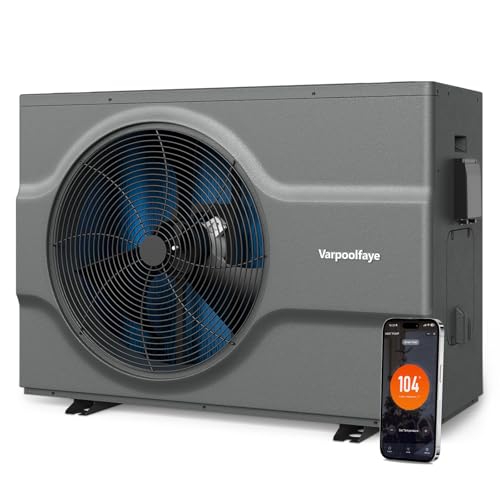
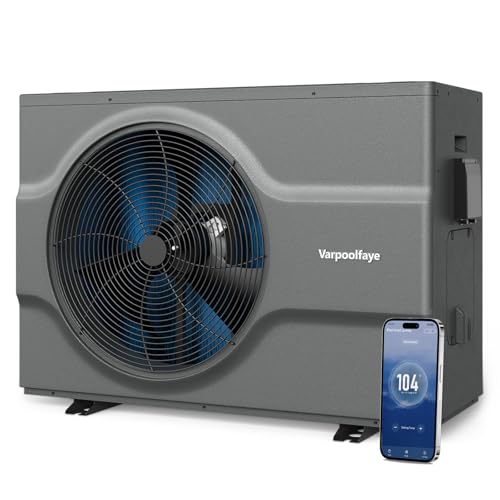
For most above-ground pools up to 8,000 gallons, pick product 1: its 30,000-BTU heat-pump output, 120V GFCI plug, and titanium heat exchanger suit smaller pools and simpler hookups. For a larger pool, match the heater’s stated capacity to your water volume before buying.
The essentials
Choose a heater whose stated pool capacity meets or exceeds your pool’s water volume.
Product 1 is the 120V choice for pools up to 8,000 gallons; products 3 and 4 require 220V.
A pool cover reduces heat loss and can cut the time the heater needs to run.
Check your circuit, plumbing connections, and required water flow against the exact manual before ordering.
A heat pump can be an efficient way to extend swim season, but “electric” doesn’t automatically mean a simple plug-in installation. Voltage, pool volume, outdoor temperature, and a cover all change what the heater can deliver.
One common belief is only half true: a higher BTU rating can heat more water faster, but it doesn’t tell you the full running cost. A heat pump moves warmth from outdoor air into the pool, so its output and efficiency depend on conditions.
Five Electric Pool Heaters by Best Use
#1Best for small pools
VARMINPOOL 30,000-BTU Heat Pump
Best for Above-ground pools up to 8,000 gallons with household 120V power
The 30,000-BTU heat pump is rated for pools up to 8,000 gallons. It uses a 120V GFCI plug, and its titanium heat exchanger is specified for freshwater and saltwater pools. The product data lists a maximum current of 15A; check the manual and circuit requirements before installation.
Heat output 30,000 BTUPool capacity Up to 8,000 gallonsVoltage 110–120V/60HzMaximum current 15AControls WiFi via Smart Life app
Why it made the cut
Rated for pools up to 8,000 gallons
120V GFCI plug
Titanium heat exchanger for freshwater and saltwater
Good to know
Maximum current is 15A, so the circuit must be suitable
Advertised noise figures differ: 48 dB in the title and 52 dB in the feature details
Skip it if Skip it if your pool exceeds 8,000 gallons or you need a heater specified for a larger volume.
Best for Above-ground pools up to 10,000 gallons where 110V is preferred
This model pairs a stated capacity of 10,000 gallons with 35,000 BTU of heat output and 110V power. App control and a touch panel give you two ways to adjust it. Its listing also describes a titanium heat exchanger, though you should confirm the electrical requirements and performance claims in the full documentation.
Heat output 35,000 BTUPool capacity Up to 10,000 gallonsVoltage 110VHeat exchanger TitaniumControls Mobile app and touch panel
Why it made the cut
Rated for pools up to 10,000 gallons
110V power
App control and touch panel
Good to know
The listing does not state maximum current
Advertised COP and energy-savings figures need verification in the full documentation
Skip it if Skip it if your pool is larger than 10,000 gallons or you need a stated maximum-current specification before choosing a circuit.
Best for Pools up to 12,000 gallons when heating and cooling modes are useful
The stated 40,000-BTU output and 12,000-gallon capacity put this above the smaller plug-in options in pool size. It offers WiFi control and both heating and cooling modes. The product data does not give a voltage, so confirm the electrical requirements before buying rather than assuming it fits a household outlet.
Heat output 40,000 BTUPool capacity 12,000 gallonsVoltage —Water temperature range 47–109°F heating; 47–83°F coolingControls WiFi app and touch panel
Why it made the cut
Rated for pools up to 12,000 gallons
Heating and cooling modes
WiFi control
Good to know
Voltage is not stated in the product data
Advertised efficiency and savings figures should be checked against full documentation
Skip it if Skip it if you need a confirmed voltage before selecting a heater or planning its electrical supply.
Best for Pools up to 21,000 gallons with 220V power available
For a substantially larger pool, this model lists 65,000 BTU and capacity up to 21,000 gallons. It runs on 220V and includes WiFi app control, so it suits a setup where that electrical supply is already available or can be installed. Its 1.5-inch connectors are also specified in the product data.
Heat output 65,000 BTUPool capacity Up to 21,000 gallonsVoltage 220VConnectors 1.5-inchControls WiFi app
Why it made the cut
Rated for pools up to 21,000 gallons
65,000-BTU output
WiFi app control and 1.5-inch connectors
Good to know
Requires 220V power
Larger capacity may be unnecessary for a small above-ground pool
Skip it if Skip it if your pool is smaller and you want a 110–120V plug-in model.
Best for Above-ground or inground pools up to 25,000 gallons with 220V power
This is the largest-capacity option here, with 90,000 BTU listed for pools up to 25,000 gallons. It uses 220V and offers inverter mode and WiFi app control. Choose it only when the pool volume calls for that capacity and the electrical supply matches; smaller pools may not need this size.
Heat output 90,000 BTUPool capacity Up to 25,000 gallonsVoltage 220VConnectors 1.5-inchControls WiFi app
Why it made the cut
Rated for pools up to 25,000 gallons
90,000-BTU output
Inverter mode and WiFi app control
Good to know
Requires 220V power
Likely oversized for many smaller above-ground pools
Skip it if Skip it if your pool is below its stated capacity and a smaller heater better matches your setup.
Electric Pool Heaters That Work Great for Above-Ground Pools
Electric pool heaters that work great for above-ground pools are heat pumps: all five picks move heat from outdoor air into pool water instead of making heat with an electric resistance element. For most pools up to 8,000 gallons, the VARMINPOOL 30,000-BTU model is the strongest fit; larger pools need a heater rated for their water volume.
Rank and pick
Key specs
Trade-off
Best overall: VARMINPOOL Swimming Pool Heater
30,000 BTU; up to 8,000 gallons; 120V; GFCI plug; WiFi; titanium heat exchanger
Capacity tops out at 8,000 gallons.
Best for 110V pools: WARMBLU
35,000 BTU; up to 10,000 gallons; 110V
Capacity is lower than the larger 220V picks.
Best for heating and cooling: POOLTOHOT
40,000 BTU; up to 12,000 gallons; heating and cooling modes
Voltage isn’t specified in the supplied data; verify it before buying.
Best for larger pools: Varpoolfaye 65,000 BTU
Up to 21,000 gallons; 220V
Needs a 220V supply.
Best for very large pools: Varpoolfaye 90,000 BTU
Up to 25,000 gallons; 220V
Needs a 220V supply.
Compare each model’s stated capacity with your pool’s actual gallons.
For above ground pool heaters electric shoppers, the main dividing line is pool capacity and available power—not the BTU figure alone. BTU measures heat output; by itself, it doesn’t tell you how efficiently a heat pump uses electricity. If you’re comparing other above-ground options, see our above ground pool heaters guide.
Myth
A higher BTU rating automatically means a more efficient heater.
Fact
BTU describes heat output, not electricity use per unit of heat. The product details here don’t provide verified efficiency figures, so compare capacity and electrical requirements instead.
A pool without electric heating can still be heated with solar, gas, or another pool-heating system sized for its water volume. Solar is one option to compare if you can use a solar setup: solar pool heaters for above ground pools.
Match the Heater to Your Pool and Power
Start with your pool’s actual water volume, then compare it with the heater’s stated maximum capacity; a larger pool or colder climate may call for more capacity than the label suggests. Yes, 120 volt electric pool heaters exist: the VARMINPOOL is listed for 110–120V and up to 15A.
Check
Product details to compare
What to verify
Pool volume and output
VARMINPOOL: 30,000 BTU, up to 8,000 gallons; WARMBLU: 35,000 BTU, up to 10,000 gallons; POOLTOHOT: 40,000 BTU, up to 12,000 gallons
Your pool’s actual gallons and local climate.
Voltage
Products 1 and 5: 110–120V and 110V, respectively; products 3 and 4: 220V
Product 2’s voltage isn’t specified. A voltage label alone doesn’t confirm your outlet or circuit is suitable.
Hose and plumbing fit
Product 1 lists 1.25- and 1.5-inch hose connections, plus a 1.5-inch PVC option
Match the connection to your pool plumbing and follow the manual.
Check the model documentation before ordering.
A 110–120V unit can suit a compatible supply; a 220V model needs a matching electrical supply and may need different wiring. Follow the manual, and have an electrician check circuit capacity when you’re unsure. Don’t assume product 2’s voltage from its listing.
For the best electric pool heaters for inground pools, first check capacity, power and plumbing; products 2, 3 and 4 are described for inground and above-ground pools, but that doesn’t make every model suitable for every inground pool. Florida inground-pool shoppers need the same checks. Warmer weather can help a heat pump, but no guaranteed performance figure is provided.
Before you order
Confirm pool gallons, voltage, circuit capacity and plumbing connections against the product manual. An above-ground heat pump can serve an inground pool only when its capacity and installation requirements fit that pool.
Estimate the Heat-Up Time and Power Cost
A pool heat pump warms water gradually, and there’s no reliable heat-up time without your pool volume, starting temperature, weather, and heater data. It transfers heat from outdoor air into the water, so it generally heats more slowly than a gas heater and can produce less heat in colder air.
A pool heater-chiller combo electric model can heat or cool the water; an electric pool chiller is the cooling function, not a separate kind of heater. Product 2 is listed with a cooling water range of 47–83°F. Check its documentation for the conditions behind that range and the installation requirements.
Estimate electricity cost with this formula: electrical input in kW × hours run × your electricity price per kWh. The supplied product data doesn’t give reliable running watts, so use the heater’s nameplate or manual; don’t estimate input power from its BTU output.
Example Cost Formula
Example assumptions only: if a heater draws 2 kW, runs 8 hours, and electricity costs $0.17 per kWh, the arithmetic is 2 × 8 × $0.17 = $2.72. Replace all three assumptions with your unit’s actual input, run time, and utility rate.
Input power2 kW (assumed)
Run time8 hours (assumed)
Electricity rate$0.17/kWh (assumed)
COP compares heat delivered with electricity consumed, but the result changes with test conditions, especially outdoor and water temperatures. Advertised COP claims of 5.8, 6.6, 12.5, 15.8, or 16 aren’t guaranteed real-world performance.
Cover the Pool Between Uses
Evaporation carries heat away from pool water. Covering the pool when it’s not in use helps slow that heat loss and reduces the work the heater must do.
If you expect to swim in midwinter, check the model’s operating range before buying. Heat-pump performance can fall in cold air, and you may need another heat source if the unit can’t operate effectively in your conditions.
Plan the Electrical and Poolside Setup
Install the heat pump outdoors, on a stable base, near compatible pool plumbing, and with the airflow and clearances its manual specifies. There’s no universal clearance or mounting height to assume; the model’s instructions and local requirements govern placement.
The query “height of electric fire from ground” concerns a different appliance. Pool heat-pump placement follows the heater manual and local requirements, not a fireplace mounting rule.
15 A
Maximum current listed for product 1
Its 120V connection still needs a suitable circuit and GFCI protection. Have an electrician confirm the setup before connecting it.
Check Before Connecting
Ask an electrician to confirm the circuit capacity and GFCI protection for the specific model.
For 220V equipment, have a licensed electrician assess and install the required circuit; don’t assume an included cord makes it plug-and-play.
Confirm the pool pump’s flow, hose or PVC connection sizes, and the heater’s required water flow in its manual.
Keep electrical connections protected from water and follow local code.
Check the product’s listing and certification documents before buying. The supplied product data doesn’t establish a UL, ETL, or CSA listing for these models.
Skip Extension Cords
Connect the pool heat pump only as its manual specifies; never use an extension cord or power strip. Keep electrical connections away from water, and have a qualified professional handle any wiring or circuit work the installation requires.
Check the Other Electric Heater Searches
An electric tankless water heater heats water as it flows through an electric element; it’s a household hot-water appliance, not a pool heater, and must not be connected to your pool circulation system. Tankless electric hot water heaters work the same way: water passes through the unit, gets heated on demand, then flows to a tap or fixture.
“Top 5 electric water heaters” is a separate buying question from choosing an above-ground pool heater. Compare household units by hot-water flow and electrical requirements, not pool gallons or pool-heater BTU output.
A ground-source heat pump exchanges heat with the ground instead of the air. The air-source pool heat pumps covered here draw heat from outdoor air, so their performance depends on the conditions around the unit.
For a pool heater, return to the pool-specific checks: stated capacity must cover your water volume, and the voltage must suit your electrical setup.
Choose Your Next Step
Choose a heat pump only after you know your pool’s gallon capacity and what its electrical setup can support. Work through these checks before ordering.
1
Confirm pool volume
Use the pool’s dimensions and shape, or its manufacturer’s capacity figure, to confirm gallons. Don’t estimate from the pool’s diameter alone.
2
Filter by capacity
Keep only models with a stated capacity that covers your pool volume. Then compare BTU output and voltage; a higher BTU number doesn’t replace a capacity limit.
3
Check the installation requirements
Read the manual for the required circuit and GFCI protection, minimum water flow, plumbing connections, and outdoor clearances. Confirm your setup matches before buying; have electrical work handled by a qualified professional.
4
Match the shortlist to your pool
For a pool up to 8,000 gallons with suitable 120V power, start with the VARMINPOOL 30,000-BTU model. For larger pools, compare products 2–5 against their stated capacities. Verify voltage carefully, especially when a listing doesn’t specify it.
5
Check cold-weather limits
If you plan to swim in cold weather, check each model’s operating temperature range and use a pool cover to reduce heat loss. If the manual’s range doesn’t cover your conditions, choose another heating plan.
Your next action: write down your pool’s gallon capacity and available power, then compare only models that meet both.
More Questions, Answered
Are there 120-volt electric pool heaters?
Yes. Some pool heat pumps use a 120-volt connection; check the model’s electrical requirements and pool-capacity rating before buying, since voltage alone doesn’t tell you whether it can heat your pool.
Can I heat an above-ground pool without electricity?
Solar pool heating can warm pool water without an electric heater, though a circulation pump may still need electricity. A solar cover can also reduce heat loss, but it doesn’t actively heat the water.
How does an electric tankless water heater work?
Water passes through an electric heating element, which warms it as it flows. The unit needs an appropriately sized electrical circuit, and its flow capacity can limit how much hot water it delivers; it isn’t designed to heat pool water.
What is the difference between an electric pool heater and a pool chiller?
A pool heat pump reverses the heat-transfer process depending on its design: a heater moves heat into the pool, while a chiller removes heat from it. Some heat pumps can do both, but confirm that cooling is an explicitly supported mode.
Can an above-ground pool heat pump work for an inground pool?
Possibly, if the heat pump’s capacity, plumbing connections, and installation requirements suit the inground pool. Compare the pool’s water volume with the unit’s stated capacity rather than relying on the above-ground label.
What is the height of an electric fire from the ground?
There’s no standard height for an electric fireplace above the floor; the model’s installation instructions set the required mounting position and clearances. If you mean an electric pool heater, follow its manual for placement and clearance instead.
A ground-source heat pump exchanges heat with what instead of air?
It exchanges heat with the ground, usually through buried pipes carrying fluid. Ground temperature varies less than outdoor air temperature, but a ground-source system is a different installation from a pool heat pump that draws heat from the air.