


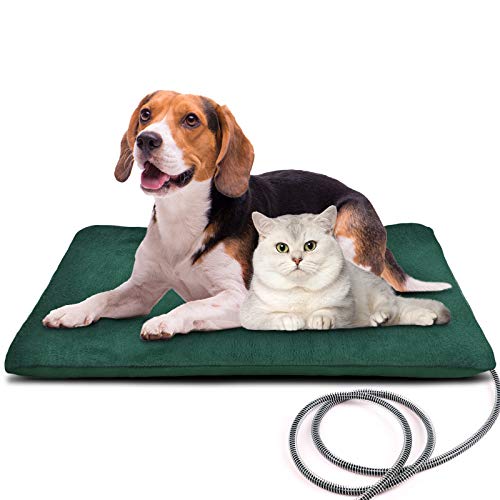


Outdoor heated pads keep dogs warm in chilly weather without risking burns or overheating. Choosing one with a thermostat, waterproof materials, and chew-resistant cords is critical for safety and durability.
Expect to pay attention to size, wattage, and installation tips to ensure the pad fits your doghouse and runs efficiently all winter.
Heated Pad Comparison
| Model | Best for | Wattage | Temperature Control | Safety Features | Size | Price |
|---|---|---|---|---|---|---|
| GOLOPET Large Dog Heating Pad 36×24 in | Best Overall | — | Adjustable 80–130°F | UL/MET certified, 8-layer protection, chew-resistant cord | 36 × 24 in | See it on Amazon |
| PETNF Outdoor Pet Heating Pad 15.7×27.6 in | Energy Efficient | 50W | Auto thermostatic 100.4–107.6°F | Steel-encased chew guard, fireproof material | 15.7 × 27.6 in | See it on Amazon |
| Petace Outdoor Dog Heating Pad 35.4×23.6 in | Adjustable Comfort | 80W | Automatic preset temperature | Steel-wrapped cord, water-resistant base | 35.4 × 23.6 in | See it on Amazon |
| DEOMAN Pet Heating Pad Adjustable Temp 30-56°C | Fast Heating | 30–60W | Adjustable 86–136°F | Chew-resistant cord, waterproof fireproof PVC | — | See it on Amazon |
| PETNF Outdoor Pet Heating Pad Gray, Multi-size | Self-Regulating | 40–80W | Self-regulating 100.4–107.6°F | UL tested, flame retardant, chew-resistant cord guard | Multiple sizes | See it on Amazon |
Top Heated Pads for Outdoor Dog Houses
GOLOPET Large Dog Heating Pad 36×24 in
PETNF Outdoor Pet Heating Pad 15.7×27.6 in
Petace Outdoor Dog Heating Pad 35.4×23.6 in
DEOMAN Pet Heating Pad Adjustable Temp 30-56°C
PETNF Outdoor Pet Heating Pad Gray, Multi-size
How to Choose Heated Pads for Outdoor Dog Houses
Start with a pad designed specifically for pets, not humans. Unlike human heating pads that can reach unsafe temperatures, pet heating pads keep their surface near 102°F, matching your dog’s normal body temperature. This thermostatic temperature control prevents burns and discomfort.
Human heating pads run hotter than a pet’s body temperature and aren’t made for animals. Pet-specific heated pads keep surface warmth near 102°F, safe for dogs to lie on without burns or discomfort.
Look for chew-resistant cords and waterproof materials. Many pads use reinforced steel-wrapped cords and ABS waterproof plastic or IP67-rated water-resistant covers to withstand outdoor conditions and curious pets. No pad is chew-proof, but these features reduce risk and extend the pad’s life.
Chew-resistant cords are designed to lower damage risk but won’t stop a determined pet. Always place cords out of reach and check them regularly for wear or bite marks.
Among the best rated, the GOLOPET Large Dog Heating Pad stands out. It offers adjustable temperatures from 80 to 130°F, dual UL/MET safety certifications, and a chew-resistant cord. These features make it ideal for most outdoor dog houses needing reliable, safe warmth.
Electricity Use of Heated Pads Over Winter
A typical heated pad draws about 20 to 40 watts. Running one for 8 hours daily over 30 days at 17 cents per kWh costs about $0.82 to $1.64, making them energy-efficient for winter use.
Multiply daily kilowatt-hours by your electricity rate to get monthly costs. At 17 cents per kWh, that 50-watt pad costs about 4.8 kWh monthly (0.4 kWh × 30 days), which equals roughly $0.82 a month.
Lower wattage pads in the 30 to 50-watt range typically cost under $2 monthly if used 8 hours daily, making them an affordable way to keep your pet warm. Higher wattage pads around 80 watts run about 0.64 kWh daily, or $3.30 monthly at the same rate.
If you want to keep your doghouse heated without using bulky space heaters, these pads provide a safe, energy-efficient solution that fits right inside the shelter. They maintain warmth where it matters without heating the entire garage or porch.
Consider also the thermostat control on many pads, which cycles the heat on and off to maintain temperature. This reduces average energy use and keeps running costs low during the coldest months.
How to Install Heated Pads Inside Outdoor Dog Houses Safely
Not every dog house is suitable for heated pads—check that it stays dry and well-ventilated to prevent moisture buildup and overheating.
Place the heated pad flat on the floor with some space left uncovered so your pet can choose a warm or cool spot.
Avoid folding or bunching the pad; this can trap heat and cause damage or a fire hazard.
Route the power cord through a protected area away from pet reach and moisture to reduce chewing risk and electrical hazards.
Use pads with waterproof bottoms and flame-retardant covers to protect against dampness and prevent ignition from overheating or sparks.
Safety of Leaving Heated Pads Plugged In Continuously
Heated pads with UL or MET certification include built-in temperature sensors and overheat protection designed for safe, continuous use.
Chew-resistant cords help prevent damage but don’t eliminate the risk—regular inspection and supervision are essential.
Waterproof and flame-retardant materials minimize fire risk in damp doghouses but never cover or fold the pad, which can cause dangerous overheating.
Proper pad placement, certification, and routine checks make continuous operation safe, but vigilance ensures your pet’s safety remains the priority.
If you want a thorough understanding of thermostat controls and safety features, see Dog House Heaters with Built-In Thermostats for Safety.
What Competitors Don’t Cover: Cleaning, Durability, and Longevity
Removable fleece covers on heated pads should be washed every one to two weeks, depending on how much your dog sheds and the amount of outdoor dirt that accumulates. Frequent washing keeps the cover clean and prevents odors, but avoid harsh detergents or bleach—they can damage the waterproof layers and heating elements beneath.
Heating pads designed for outdoor use typically last three to five years with proper care. Once a year, inspect the pad thoroughly for any signs of wear, cracks in the waterproof casing, or damage to the cord, especially near the plug or chew-resistant areas. Damaged cords are a fire hazard and can cause electric shock.
When cleaning the pad itself, never submerge it in water or use abrasive cleaners. Spot clean with a damp cloth and mild soap as needed. Protecting the pad’s waterproof and insulation layers extends its usable life and maintains safety.
Energy-efficient heated pads reduce both your electric bills and environmental impact by using minimal watts while maintaining safe warmth. For example, a 20-watt pad running 8 hours a day through a 3-month winter at 17 cents per kWh costs about $8.16—far less than many alternatives. Choosing a pad with a good energy rating means your pet stays warm without wasting electricity.
Questions People Ask
Can heated pads be used for outdoor cats as well as dogs?
What happens if the heated pad is fully covered or enclosed?
Are there temperature adjustment options on these pads?
Can multiple pets share one heated pad effectively?
How do heated pads perform in extreme cold or wet conditions?
Are there risks of electric shock or fire with these pads?
How often should I replace the heating pad or its cover?

I am a mechanical engineer and love doing research on different home and outdoor heating options. When I am not working, I love spending time with my family and friends. I also enjoy blogging about my findings and helping others to find the best heating options for their needs.
Related guides

Top Ceramic Heaters Reviewed for Performance & Safety
As winter's chill creeps into our homes, the quest for efficient, reliable warmth becomes paramount. Ceramic heaters have…
Warwick’s Top Heating & Cooling Repair Secrets Revealed
For reliable heating and cooling repair in Warwick, choose experienced technicians who offer prompt service and guarantee customer…
Unveiling the Best Heat Players Right Now: Must-See Talent!
Catch the excitement! Check out the best Heat players right now and see who’s making waves in the…
