The best blinds for reducing heat are the ones with real light blocking and a reflective or blackout layer, and for most readers the best pick is a temporary blackout cover or reflective window film, depending on whether you want maximum darkness or daytime heat rejection. Blackout covers win for quick installation and strong sun control. Reflective film wins if you want to keep the view and cut solar gain through glass.
Sun through glass can make a room hotter than the rest of the house by midafternoon. The right window covering cuts that heat at the window, where it starts, and the details that matter are opacity, reflective backing, fit, and whether the material leaves gaps at the edges.
If you only need one room fixed before the next hot spell, a no-drill blackout cover is the fastest route. If you want a cleaner, more permanent look, reflective window film or a true thermal shade makes more sense.
Best Blinds and Covers for Heat Control
#1Best for Daylight
rabbitgoo Window Tint, Black Silver
Best for Keeping the view while cutting solar heat and UV during the day
The reflective PET film blocks 92% of infrared rays and 99% of harmful UV rays while preserving an outdoor view. Its daytime one-way privacy and included spray bottle, squeegee, and utility knife suit permanent home or office windows.
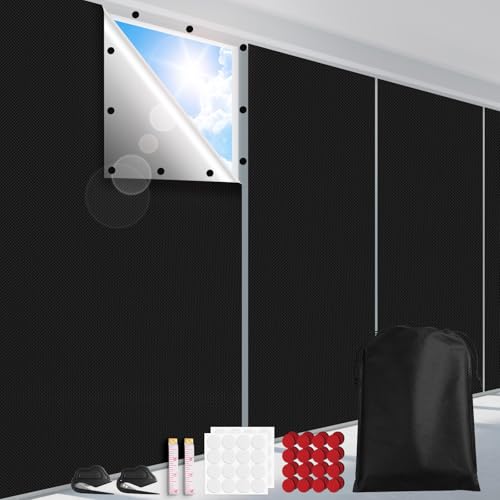
Best for Rentals, bedrooms, nurseries, RVs, and rooms that need strong blackout
The reflective thermal layers help reduce direct-sun heat while the blackout sheet blocks sunlight and UV exposure. You measure, cut, and apply it without a rod, drill, or permanent installation, then peel it off and store it when needed.
Size 57″W x 118″HLight blocking 100% blackoutInstallation Measure, cut, and applyUse Bedrooms, nurseries, offices, RVs, and photo studiosIncluded Compact storage pouch
Why it made the cut
100% blackout
Cuttable to fit different windows
Portable with a storage pouch
Good to know
Blocks the view while installed
A temporary cover needs to be cut and applied for each window
Skip it if Skip it if you want daylight and an unobstructed outdoor view.
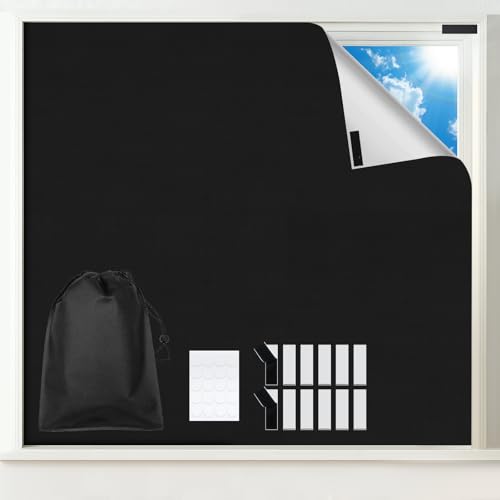
Best for Skylights, curved windows, casement windows, and travel use
The cuttable 420D Oxford fabric can follow unusual window shapes, and its silver-coated back blocks sunlight and UV rays. Nano adhesive stickers provide no-drill installation, while the portable bag makes it practical for dorms, travel, and temporary rooms.
Size 118″ x 57″Fabric 420D Oxford fabricLight blocking 100% blackoutInstallation No drill with nano adhesive stickersRecommended airing time 1–3 days if odor is present
Why it made the cut
Cuts to custom shapes
Silver-coated back blocks sunlight and UV rays
Includes nano adhesive stickers and a portable bag
Good to know
The fabric is thinner than traditional curtains
The manufacturer says to ventilate it for 1–3 days if it has an odor
Skip it if Skip it if you want a thinner window film or a clear view through the glass.
Best for Adding room heat and flame effects, not blocking sun
This product heats a room at 500W or 1500W and has an independent flame effect, but it isn’t a blind or window cover. The overheating protection and top air outlet address heater operation rather than solar heat through glass.
Best for Heating and decorating a room where window coverage isn’t needed
The 500W and 1500W infrared heating modes can warm a room, and the flame and log effects operate separately from the heater. Those features don’t reduce sunlight, glare, or heat entering through a window.
Width 25″Heating modes 500W and 1500WViewing angle 180 degreesFlame options 4 flame colors and adjustable flame speedSafety feature Overheating protection
Why it made the cut
500W and 1500W heating modes
180-degree viewing through three sides
Adjustable flame brightness and speed
Good to know
Doesn’t block sunlight or UV
Doesn’t function as a blind or window cover
Skip it if Skip it unless your actual need is room heating and a decorative flame effect.
The best blinds for reducing heat block direct sun before it warms the glass and room, and reflective surfaces reject more solar energy than plain fabric. Blackout covers block nearly all visible light, reflective film cuts sunlight while preserving the view, and lined shades slow heat transfer when they fit closely.
Fit matters as much as the material. A cover that sits inside the frame can leave less exposed glass, while decorative blinds often leave side gaps where bright afternoon sun still enters. Even a perfect blackout panel loses some of its advantage if the glass, frame, or edges remain in direct sun.
Temporary covers can cool a rental bedroom faster than decorative blinds because they install close to the glass and add a strong light-blocking layer without drilling. The FADOTY 100% Blackout Curtains 2 Pack is a fabric option; a removable film such as rabbitgoo Window Tint takes a different approach by covering the glass itself.
Buying Specs To Check
Opacity: blackout for maximum darkness, or light-filtering when you need daylight
Reflectivity: a bright or reflective face generally rejects more sun than plain dark fabric
Fit method: inside-frame, outside-frame, adhesive, tension, or rod-mounted
Removable or permanent: important for rentals, dorms, and seasonal use
Privacy at night versus daytime: reflective film can behave differently after indoor lights come on
Myth
Dark fabric keeps a sunny room coolest because it absorbs glare.
Fact
Dark fabric can reduce glare, but absorption can leave the fabric warm. A reflective layer or thermal lining usually handles solar heat better than a plain dark blind.
For Winter
Window coverings can reduce drafts and slow heat loss, so a close-fitting lined shade or temporary panel may help keep heat in after sunset. Gaps around the frame still matter; a covering that blocks summer sun isn’t automatically an effective draft seal.
Best Blind Type for Your Room
Choose blackout covers for bedrooms and media rooms, reflective film for rooms that need daylight and a view, and lined shades when you want a conventional window treatment that works in both seasons. The right choice depends on the room’s sun exposure, privacy needs, and how permanent the installation should be.
Type
Privacy and view
Installation effort
Blackout cover
Strong daytime and nighttime privacy; little or no view
Low to moderate; removable no-drill versions suit rentals
Reflective window film
Daytime privacy with a view; privacy changes after indoor lights come on
Moderate; adhesive and careful glass preparation matter
Thermal or lined shade
Good privacy; view depends on whether the shade is raised
Moderate; rods, brackets, or inside-frame hardware may be needed
A close fit and a reflective or lined layer usually matter more than decorative fabric.
For a nursery or dorm, a temporary blackout cover is usually the practical pick: it gives strong darkness, cuts afternoon sun, and can come down later. An office or south-facing living room is a better match for reflective film if you want to work beside the window without losing the view. In an RV, measure carefully and favor a removable cover that won’t rattle or leave adhesive behind.
Off-white insulated curtains can keep some heat out because a lighter outer surface reflects more sunlight than a dark one, while the lining adds resistance between the glass and room. They can also help keep winter heat in, but they need to overlap the window and close near the frame to limit warm-air loss.
Good For
Blackout covers: strongest light control for bedrooms and media rooms
Reflective film: daylight, a retained view, and daytime solar control
Lined shades: a familiar look with useful summer and winter performance
Choose Something Else If
Blackout covers can make a room dark and may cover the view
Reflective film offers less nighttime privacy once interior lights are brighter than outdoors
Lined shades often leave more edge area exposed unless sized and mounted carefully
Clear insulating curtains or window panels can reduce drafts and help keep cold out, but they generally won’t control harsh sunlight as well as blackout material or reflective film. For a short-term fix, choose blinds that keep heat in this winter; for a bright room where the view matters, keep the film option in contention.
How to Size and Install Without Gaps
The best blinds for windows to keep heat out are wide enough to cover the glass and its edges, because a narrow cover lets sunlight and warmed air leak around both sides. Blinds to keep out the heat work better with overlap than with a perfectly trimmed, flush edge. For keeping heat out of the house, a full-panel cover can also serve as an alternative to doors to keep heat in around a drafty glass door.
Measure the glass first, then measure the frame or opening if you plan an outside mount. Say the glass is 36 inches wide by 48 inches high: an inside-mounted cover should fit that opening closely, while an outside-mounted cover might be 40 inches wide by 52 inches high so it overlaps the frame by about 2 inches on each side. That extra material gives the sun fewer paths around the edge.
Inside-mount blinds sit within the frame and look tidier, but they leave the frame and small gaps exposed. Outside-mount covers sit over the frame, and full-panel adhesive products such as the rabbitgoo Window Tint can cover more glass and surrounding area when the surface allows it. A blackout curtain, such as the FADOTY 100% Blackout Curtains, can add another layer outside the window.
1
Measure
Record the glass and frame width and height in several places. Use the larger measurement for an outside mount, then add overlap rather than cutting flush.
2
Clean the surface
Remove dust and grease from the glass or frame, then let it dry completely.
3
Test fit
Hold the cover in place before removing adhesive backing. Check that handles, locks and the window opening still work.
4
Press from the center out
Apply the middle first, then smooth toward each edge to push out air and keep the panel flat.
5
Check the corners
After an hour, press down any lifting corners and inspect the side gaps in direct sunlight.
Adhesive Needs a Clean Surface
Dusty paint, textured walls and some vinyl frames can keep adhesive products from gripping. Don’t force a loose panel to stay up with tape near a hot window; follow the product instructions and use a mounting method suited to that surface.
Seal the Edges Twice
Pair a heat-blocking cover with closed curtains or a shade. The second layer covers small side gaps and reduces the amount of warm air and glare reaching the room.
Reflective Film Vs Blackout Covers
Choose window tint to keep heat out when daytime solar gain is the main problem and you still want daylight and a view. Choose blackout covers when glare, sleep or screen use matters more than natural light. The rabbitgoo Window Tint suits the first job; blackout curtains suit the second.
Reflective film sends more of the sun’s energy back through the glass instead of letting the window absorb it, so the room can feel more comfortable without going dark. Blackout fabric blocks the incoming light almost completely, but the result depends on its backing and how well it covers the frame.
Sunny South-Facing Window
Say a south-facing bedroom gets strong afternoon sun. Reflective film can reduce glare while leaving the room bright enough for normal daytime use. A properly fitted blackout cover cuts the light much more effectively for sleeping or watching a screen, but you’ll give up the view and most daylight while it’s closed.
Main heat problemDirect afternoon sun
Film tradeoffMore daylight and view, less glare
Blackout tradeoffDarker room, stronger light control
White or mirrored outer surfaces usually absorb less solar energy than dark outer surfaces, which is why light-colored or reflective coverings tend to stay cooler in direct sun. Color alone doesn’t decide the result: the material, reflective or blackout backing, and fit at the edges matter more than whether the fabric looks beige or black. For the material that keeps heat out best, pick reflective film for daytime sun or a well-fitted blackout layer for maximum light control.
Safety, Adhesive, and What to Avoid
During extreme heat, close reflective or blackout coverings before direct sun reaches the glass, keep windows shut while outdoors is hotter, and ventilate when outside air cools. To keep a house warm without heat, close coverings after sunset and reduce drafts, but don’t use an oven or stove as a heater. Common insulators include fiberglass, cellulose, mineral wool, and foam; for a window covering, the best material is the one that blocks radiant heat and seals its edges well.
Keep Escape Windows Clear
Don’t install fixed hardware over an operable bedroom or basement escape window if it can’t be opened quickly from inside. Fire-egress rules matter, and landlords may restrict adhesive film, brackets, or blackout panels in rentals. Check the lease and local requirements before covering a bedroom window.
Adhesive film and stick-on blackout covers also need a clear path around vents, sensors, locks, and anything you must reach often. Never tape over a lock. A thick-looking cloth can perform worse than a thinner cover with a close seal, because gaps let sunlight and warmed air around the window do the work.
Safe Installation Check
Clean and dry the glass before applying film or an adhesive cover.
Check peeling edges, especially where children or pets can reach them.
Keep locks, vents, sensors, and escape hardware uncovered.
Don’t add a cord to a cordless product, and keep any existing cord out of reach.
Confirm the covering can be removed or opened quickly where fire egress applies.
What Window Coverings Can’t Do
Blinds and films control solar gain and drafts at the glass; they don’t replace insulation in the walls, attic, or floor. If a room stays cold after the sun is down, inspect those areas and the window seals instead of simply buying thicker curtains.
More Questions, Answered
What are the best blinds for heat reduction?
For most rooms, choose a blackout cover with a reflective backing or a reflective window film. An exterior shade can reduce heat even more because it stops sunlight before it reaches the glass, but it costs more and requires a suitable mounting point.
Do reflective blinds help with heat?
Yes, reflective blinds reduce solar heat when their bright or metallic side faces the window and the covering stays closed during direct sun. They work best with a close fit; uncovered glass around the edges can still admit a surprising amount of heat.
Are thermal blinds effective?
Thermal blinds can slow heat entering through the window, especially lined or cellular styles that create still-air spaces. Their benefit drops sharply when the blind stops short of the frame or leaves a large gap at the sides.
How do I choose the right blinds for sun protection?
Match the covering to the window’s exposure, your need for darkness, and whether you want to keep the view. West- and south-facing windows usually need stronger solar control, while a bedroom may justify full blackout even if a reflective film would preserve more daylight.
Do temporary blinds keep heat out?
Temporary blackout covers can reduce heat quickly if they cover the entire glass and use a reflective or light-colored window-facing layer. Check the adhesive first on painted walls, trim, and rental surfaces, and remove the cover if the window maker warns against heat-absorbing coverings.
Is white or black better to keep heat out?
A white or reflective surface facing the glass is generally better because it reflects more sunlight than black fabric. Black blinds can still darken a room well, but they tend to absorb sunlight and may warm the blind itself.
What material keeps heat out the best?
Reflective film or a foil-backed blackout material usually gives the strongest daytime solar control among simple indoor coverings. Verify that the film is suitable for your window, especially with double-pane glass, because some films can affect the glass manufacturer’s warranty or create unwanted heat stress.