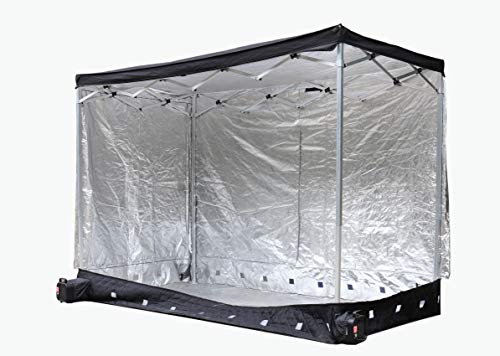
Dr. Infrared Heater Upgraded Version 2-Tier 18 Cubic feet Portable Bedbug Heater is the best pick for most readers because it gives you a compact treatment tent, a thermometer and timer, and enough room for luggage and other heat-safe travel items. For most people, that beats buying a larger system you won’t use.
What to remember
Pick the chamber size first, then check whether your luggage fits with room for air to move around it.
A thermometer and timer matter because you need the load to stay hot long enough, not just spike once.
A larger hotel-style package makes sense only if you need room treatment or frequent large loads.
Do not buy anything that claims 100% kill without clear setup instructions; heat still depends on placement and run time.
Skip any setup that cannot handle the items you plan to heat, especially electronics and delicate materials.
The most common mistake is buying a heater that looks bigger on paper but can’t fit your bag, or can’t reach the temperature your items need. That usually wastes money and still leaves you checking seams for a hitchhiker you did not invite.
A better buy matches the chamber size to the item, the wattage to the setup, and the timer or thermometer to the kind of trip you actually take. Bed bugs are patient; your gear shouldn’t be fussy.
Best for Treating luggage and clothing between trips without a full-room setup
The collapsible 38×38×26-inch tent fits luggage, backpacks and a closet’s worth of clothing on a two-tier steel rack, and the included thermometer and timer let you walk away once it hits 120–155°F. It heats quickly, stores flat after use, and gives you everything needed to treat travel gear at home. Beats renting a larger system or heating an entire room when all you need is the suitcase treated.
Treatment area 38 × 38 × 26 inches (18 cubic feet)Temperature range 120–155°FRack system 2-tier steelIncluded accessories Thermometer, timer with alarmStorage Collapsible tent
Why it made the cut
Includes tent, rack, thermometer and timer in one package
Heats to effective temperatures in minutes
Collapsible design stores easily between trips
Good to know
38-inch tent won’t fit furniture or large household items
No detail on power draw or plug requirements
Skip it if Skip it if you need to treat sofas, mattresses or other bulky household items that won’t fit in a 38-inch cube.
Dr. Infrared Heater DR-122X4 Large Treatment System
Best for Treating sofas, mattresses, desks and other infested furniture at home
The 112×58×79-inch service space swallows a queen mattress, a sofa or a stack of boxed belongings—anything that won’t fit in a suitcase-sized tent. Setup is straightforward, and the non-toxic heat treatment wipes out bed bugs at all life stages without sprays. This is the system for homeowners dealing with an infestation, not travelers prepping a duffel bag.
Service space 112 × 58 × 79 inchesIntended use Sofas, beds, desks, large household itemsTreatment method Non-toxic heat
Why it made the cut
112 × 58 × 79 inches fits sofas, beds and desks
Non-toxic heat treatment, no chemicals
Easy to load large infested items
Good to know
Far too large for luggage-only use
No power or control details provided
Takes up significant space even when not in use
Skip it if Skip it if you only need to treat luggage or clothing; the footprint and setup make no sense for travel gear alone.
Best for Landlords and pest pros treating entire rooms up to 600 square feet
The ePro 600 electric heater puts out 26,212 BTU and pairs with a 4,000 CFM air mover to heat an entire room—furniture, baseboards, carpet and all—to lethal temperatures in about eight hours. The handheld laser thermometer ensures every corner hits the target. This is professional-grade equipment with a two-year warranty, but it requires 66 amps, which means hardwiring or a generator. Overkill for a suitcase.
Heat output 26,212 BTUCoverage Up to 600 square feetPower requirement 66 ampsAir mover output 4,000 CFMWarranty 2 years
Why it made the cut
Treats entire rooms up to 600 square feet
Includes heater, air mover, laser temp sensor and power cords
Two-year repair or replacement warranty
Good to know
Requires 66 amps—far beyond a standard outlet
Eight-hour treatment time
Weighs 72 pounds total (heater and air mover combined)
Skip it if Skip it if you’re treating luggage or travel gear; the power demand, room-scale output and eight-hour cycle are built for empty apartments and hotel rooms, not a duffel bag in the garage.
Best for Hotel operators treating guest rooms with PTAC climate units
This bundle adds a PTAC power converter and fire sprinkler covers to the ePro 600 system, letting hotel maintenance staff plug into the through-wall HVAC unit and protect sprinklers during treatment. It treats a 600-square-foot room in eight hours with the same 26,212 BTU heater and air mover. The two-year warranty and training materials are aimed at repeat commercial use, not a traveler heating a suitcase once a year.
Heat output 26,212 BTUCoverage Up to 600 square feetPower requirement 66 ampsIncluded accessories PTAC power converter, 3 fire sprinkler coversWarranty 2 years
Why it made the cut
PTAC power converter works with hotel climate units
Includes fire sprinkler covers for safe operation
Two-year warranty and 100% kill guarantee
Good to know
Requires 66 amps and specialized hotel infrastructure
Eight-hour treatment cycle per room
Commercial equipment priced and sized for repeat professional use
Skip it if Skip it unless you operate a hotel or manage rental properties; the PTAC converter and sprinkler covers solve problems travelers never have.
The best bed bug luggage heater for most readers is the Dr. Infrared Heater Upgraded Version 2-Tier 18 Cubic feet Portable Bedbug Heater because it’s sized for luggage and includes a thermometer and timer in a 38 by 38 by 26 inch tent. That’s enough room for a suitcase, shoes and a few clothing items on two tiers, without the electrical load or footprint of a room-scale system. If you’re preparing travel gear or treating a single bag after a trip, this is the practical choice.
The Portable Electric Bed Bug Eradication Heater System and the Hotel Portable Electric Bed Bug Sanitation Heater are room-scale systems that put out 26,212 BTU and draw 66 amps when all four heating elements run. Both are designed to heat an entire bedroom or hotel room to lethal temperatures for bed bugs, not to treat a suitcase. You’ll need a 240 V circuit or multiple dedicated 120 V circuits, and you’re paying for capacity you won’t use if the job is a carry-on and a pair of boots.
The Dr. Infrared Heater DR-122X4 Large Size Bedbug Treatment System covers the most service space by listed specifications and works well when you’re dealing with multiple infested items—a mattress, box spring, furniture or several bags at once. It’s not the tool for quick travel prep. The tent and heater arrangement are built for a larger treatment footprint, and setup takes more space and time than the compact two-tier unit.
Myth
A bigger heater treats luggage faster or better
Fact
Luggage treatment depends on reaching 120°F to 140°F throughout the bag’s contents and holding that temperature for at least an hour. A room-scale heater puts out more BTU, but in a luggage-sized tent it can overshoot and damage heat-sensitive items. The Dr. Infrared two-tier model includes a thermometer and timer so you control the process, and the 38 by 38 by 26 inch tent fits bags without wasting energy heating empty space.
Model
Service Space
Tent Included
Thermometer & Timer
Best For
Dr. Infrared 18 cu ft
18 cubic feet
Yes, 38×38×26 in
Yes
Luggage and travel gear
Portable Electric Eradication
Room scale
No
No
Full bedroom treatment
Hotel Portable Sanitation
Room scale
No
No
Hotel room or large area
Dr. Infrared DR-122X4
Large treatment area
Yes, larger footprint
Yes
Multiple infested items
The compact two-tier system gives you the control and fit that matter for luggage, while room-scale systems are built for jobs ten times the size.
When using heat to treat bed bugs, the key issues are whether the tent can hold your gear, if you can keep an eye on the temperature, and how much electrical current the setup requires. Most travelers only need a tent that fits their luggage and runs on a standard 12-amp outlet, not one that demands multiple circuits.
Choose The Right Size
Treatment chamber dimensions matter more than headline wattage for luggage use. You’re heating a suitcase and a few travel items, not a room, so the question is whether your gear fits inside the tent with enough clearance for hot air to reach every fold and seam.
Product 1’s 38 by 38 by 26 inch chamber handles a carry-on or checked bag plus extra items—shoes, a backpack, a jacket—without cramming everything against the walls. That’s the practical reference for most travelers who want to treat luggage after a hotel stay. A bag, two pairs of shoes and a week’s clothing need enough space for air to circulate, or the outside heats faster than the center and bed bugs in the folds survive.
Worked example
Say you’re treating a 22-inch carry-on, a pair of boots and three days of clothing. Stack the bag upright, set the boots beside it and drape the clothes loosely over a rack or hanger inside the tent. You’ll use about 24 inches of floor space and 20 inches of height, leaving 14 inches of clearance on each side and 6 inches above for airflow. Packing the tent tight traps cool pockets.
Gear22-inch bag, boots, clothing
Space used24 × 20 inches
Clearance14 inches each side, 6 inches top
Product 4’s 112 by 58 by 79 inch service space is built for sofas, beds and multiple items at once—a commercial or whole-room job, not a travel bag. You’ll need the floor space of a spare bedroom and the patience to heat a much larger volume. Product 2 and Product 3 are built around a 600 square foot room and need far more power and setup than a portable luggage job; they’re for pest control professionals treating an apartment, not a suitcase in the garage.
Product
Chamber size
Best for
Product 1
38 × 38 × 26 inches
Luggage, shoes, small travel loads
Product 4
112 × 58 × 79 inches
Furniture, multiple bags, whole-room prep
Product 2 & 3
600 sq ft room
Professional apartment or home treatment
Chamber dimensions define the job each system handles.
In short
Match the chamber to your load. A 38-inch tent treats luggage and travel gear; a 112-inch system treats furniture and whole-room jobs.
Power And Running Cost
Product 2 and Product 3 require 66 amps for full operation, which is far beyond a normal plug-in appliance and into the territory of hardwired equipment. A normal 15 amp, 120 volt household circuit can’t supply that load; you’d need dedicated 240-volt wiring or multiple circuits, installed by an electrician, before the heater runs.
66 amps
What Products 2 and 3 draw at full power
That’s more than four standard household circuits combined. Plug one into a wall outlet and you’ll trip the breaker immediately—or worse, overheat the wiring.
Product 1 doesn’t list wattage in the brief, so readers should check the manual or rating plate before planning outlet use. If it’s rated at 1,500 watts or below, it’ll plug into a standard 120-volt outlet without issue. Above that, you’ll need to confirm the circuit can handle the draw and that no other high-load appliance shares the same breaker.
Running cost example
Say a portable bed bug heater draws 1,500 watts and you run it for eight hours to treat a load of luggage. That’s 1,500 ÷ 1,000 × 8 = 12 kilowatt-hours. At 17 cents per kWh, the cost comes to about $2.04 for one treatment cycle. If you treat luggage twice a year after travel, you’re looking at around $4 in electricity annually—negligible compared to the cost of an exterminator or replacing infested gear.
Power1,500 W
Runtime8 hours
Energy12 kWh
Cost at $0.17/kWhper cycle
For units that draw less—say 800 or 1,000 watts—the cost drops proportionally, though treatment time may stretch longer to reach lethal temperatures. Larger systems like Product 4 will cost more per cycle because they heat a much bigger volume, but exact figures depend on wattage and how long the thermostat keeps the element running.
Circuit overload
Never plug a high-amperage bed bug heater into an extension cord, power strip or shared outlet. If the manual states a 66-amp requirement or lists 240-volt operation, the unit needs professional installation. Forcing it onto a household circuit risks fire.
Safety And Setup
Heat-safe items only. Luggage shells, most cotton and synthetic clothing, shoes, and books can survive 120°F to 140°F for several hours, but delicate fabrics like silk or acetate, vinyl items, aerosol cans, batteries, and anything electronic can warp, melt or fail. Leave phones, laptops, and cosmetics out of the treatment chamber.
Cold spots let bugs survive
Arrange items loosely so hot air circulates around every surface. Tightly packed loads create cool pockets where bed bugs can ride out the heat. Follow the manufacturer’s minimum treatment time—usually two to four hours—and use the included thermometer to confirm the whole chamber reaches lethal temperature.
Models that run on standard household power should plug straight into a wall outlet, never an extension cord or power strip. Products 2 and 3 draw 66 amps and require hardwired installation by an electrician. Products 1 and 4 use multiple plug-in heaters; confirm you have enough dedicated circuits before you start a treatment cycle.
Check for a safety listing
Look for UL, ETL or CSA marks on the heater unit itself or in the manual. None of the product sheets in this guide explicitly list a certification, so confirm it before you buy.
These heaters kill pests by raising core body temperature past the point insects can survive. They don’t sterilize, disinfect, or treat medical conditions. Frame your use and any claims you make to others around pest control, not sanitization.
Before you start a treatment
Remove electronics, aerosols, batteries, and heat-sensitive fabrics
Arrange items loosely inside the chamber
Plug heaters directly into wall outlets on separate circuits
Set the timer for the full recommended treatment window
Place the thermometer where you can read it without opening the chamber
What Competitors Leave Out
Treating your luggage once solves half the problem. Bugs can reinfest from untreated items, so isolate what you’ve heated from anything you haven’t. After the chamber cools, inspect seams, zippers, and pocket linings for dead insects or eggs, then bag treated items in sealed plastic until your next trip.
Unpack in a space that’s easy to clean—a garage, basement, or tiled bathroom—rather than on carpet or upholstered furniture. Treat what can handle the heat, vacuum the suitcase shell with a crevice tool, and wipe it down before storing it sealed in a large plastic bag or bin. That keeps any stragglers contained and prevents spread to closets or bedrooms.
1
Unpack in an easy-to-clean area
Hard floors or a garage work better than carpet. Keep the suitcase off fabric surfaces while you sort.
2
Heat-treat clothing and soft items
Run the heater for the full recommended time, then let the chamber cool completely before opening.
3
Vacuum and wipe the luggage shell
Pay attention to seams, zippers, and wheel wells. Dispose of the vacuum bag or canister contents in a sealed outdoor bin.
4
Seal and store
Bag treated items separately, then store the empty suitcase in a sealed container until the next use.
While you’re traveling, use a luggage rack in hotel rooms and short-term rentals. Keep bags off the bed and away from upholstered furniture. Check mattress seams and headboard edges before you settle in; spotting an infestation early beats hauling a heater out when you’re home.
After treatment
Inspect treated items, bag them separately, and vacuum the luggage shell before storing it sealed. Prevention during travel—racks, not beds—cuts the chance you’ll need the heater again.
Questions People Ask
What is the best bed bug luggage heater for travel?
The Dr. Infrared Heater Upgraded Version 2-Tier 18 Cubic feet Portable Bedbug Heater is the best choice for most travelers because it includes a dedicated treatment tent, built-in thermometer and timer, and handles a full-sized suitcase plus several smaller items in one session. The package arrives ready to use, and the 18-cubic-foot chamber fits inside a closet or spare room when you need it.
How big should a bed bug luggage heater be for one suitcase?
A chamber around 12 to 18 cubic feet treats a single full-sized checked bag plus shoes, a daypack and toiletry kit in the same run. Measure your largest suitcase standing upright—most 28-inch checked bags need at least 30 inches of internal height and 18 inches of width, so a tent or enclosure with interior dimensions near 36 by 24 by 30 inches leaves room to circulate air around fabric.
Do I need a thermometer with a bed bug heater?
You do, and it should read the coolest spot inside the chamber. Bed bugs die at 118°F sustained for 90 minutes or 122°F for an hour, so guessing temperature wastes the session or leaves survivors. A wired probe thermometer placed near the floor or tucked into a shoe confirms the whole load reached lethal heat before you unzip the tent.
Can I put shoes and clothing in a luggage heater?
Leather, cotton, wool and most synthetics tolerate 140°F without damage, so shoes, jeans, jackets and linens are safe. Keep out anything with glue that softens in heat—running shoes with foam midsoles, laminated fabrics, electronics, lithium batteries, aerosol cans, makeup and medications. When in doubt, check the care label or leave it out.
Is a room-sized bed bug heater too much for travel use?
For occasional luggage treatment, yes—a full-room system costs thousands, draws 50 to 70 amps across multiple circuits, and requires fans, ducting and someone who knows how to stage a whole-house treatment. A portable luggage heater plugs into one outlet, sets up in ten minutes and stores flat between trips, which is what a traveler actually needs.
How much power does a bed bug heater need?
Most portable luggage heaters draw 12 to 15 amps at 120 V and plug into a standard household outlet, the same as a space heater. Commercial whole-room systems can pull 50 to 70 amps total and require multiple dedicated circuits or hardwired installation. Check the nameplate before you buy, and make sure your circuit can handle the load without tripping.
What should I do after treating my luggage for bed bugs?
Inspect seams, pockets and zippers with a flashlight for dead bugs or eggs that didn’t dislodge, then vacuum the suitcase inside and out and dispose of the vacuum bag in a sealed plastic bag outside. Wipe hard surfaces with alcohol, wash any treated clothing in hot water, and store the empty suitcase in a sealed plastic bin or bag until your next trip to prevent reinfestation.