The best battery operated heater for camping is usually a cordless propane heater with battery ignition or a battery-powered hot-water setup, not a true electric space heater, because batteries do not run serious heat for long. For most campers, Product 2 is the practical pick for small outdoor spaces and Product 1 is the stronger choice when you want more heat and a steadier base.
Key takeaways
A true battery-powered space heater is not a realistic camping heat source for more than a brief run.
Product 2 is the better pick if you want the lightest cordless heater for very small outdoor setups.
Product 1 makes more sense if you want a steadier propane heater with a broader base and control valve.
Product 3 solves hot water at camp, not tent heat, so only buy it if showering matters more than warming the air.
Any fuel-burning camping heater needs outdoor or well-ventilated use, plus a working carbon monoxide alarm where the manual requires one.
Say your tent is 8 by 10 feet and the night drops into the 30s. A true battery space heater would drain fast; a propane heater or heated sleep system makes far more sense, provided you use it only where the manual allows and you keep fresh air moving.
Camping heaters fail for the same dull reasons they fail at home: too little fuel, too little airflow, and too much faith in marketing copy. The useful part is sorting out which product can actually do the job before your fingers stop cooperating.
Best for Camping and patio use in small to medium outdoor spaces
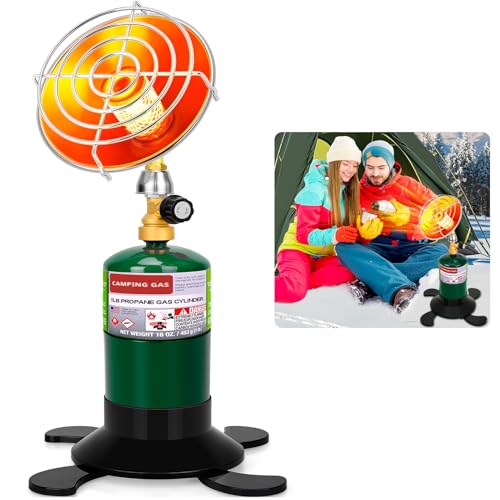
This portable propane heater delivers adjustable heat output with a foldable gas tank holder and built-in windproof lighter for reliable ignition. It’s designed for outdoor use with a stable, anti-tip base and brass fittings to resist wear. Ideal if you want steady, customizable warmth on chilly camping or backyard trips.
Best for Small outdoor spaces like tents and patios where portability matters
The YOUCIDI propane heater stands out for its ultra-lightweight design and upgraded low-pressure valve that keeps flame steady and safe. Its foldable tank holder fits standard propane cylinders securely, and durable materials resist outdoor wear. Perfect for backpackers or campers who need quick, stable heat in small areas.
Best for Camping showers and hot water needs off-grid or in remote locations
This propane tankless water heater runs on 2 D-size batteries to provide instant hot water at 1.32 GPM without pre-heating. It’s CSA certified with six safety features, making it a solid choice for campers who want a portable, battery-powered hot water setup rather than direct space heating.
Brand CAMPLUXFlow rate 1.32 GPM (5L)Fuel type PropaneBattery use 2 D-size batteriesSafety CSA certified 6-in-1 protection
Why it made the cut
Instant hot water with adjustable temperature
Runs on 2 D-size batteries, no electricity needed
Compact design with folding handle
CSA certified with multiple safety protections
Good to know
Not a space heater, only hot water
Requires propane and water supply
Heavier than typical space heaters
Skip it if Skip this if you want direct heat for warming a tent or outdoor space.
Battery-operated heaters rarely deliver enough heat for camping. True electric space heaters powered solely by batteries drain quickly and won’t warm a tent reliably. Instead, most campers find better results using cordless propane heaters with battery ignition, heated blankets, or hot water solutions.
Product 2 is the best overall battery-operated heater for very light, portable use. It’s small and easy to carry but limited in heat output. For steady, stronger warmth, Product 1 offers more propane heat without relying on electric power for the main burner—just a battery for ignition.
Worked example
Say you have an 8 by 10 ft tent, about 80 square feet. A typical household electric space heater runs at 1,500 watts, roughly 5,000 BTU, enough to raise the temperature noticeably in that space. Battery heaters rarely sustain even a fraction of that output for long. Product 2 might put out 3,000 BTU for an hour or two before the battery dies, while Product 1’s propane heat runs continuously until the fuel runs out.
Myth
A battery-operated heater can warm your tent like a household space heater.
Fact
Battery heaters can only run at low wattage for a short time, making them ineffective for sustained heat. Propane heaters with battery ignition deliver practical warmth because the battery only starts the flame, not powers the heat.
In short
Portable battery-operated indoor heaters don’t replace propane or heated blankets for camping heat. Pick Product 2 for light, short-term warmth or Product 1 for more consistent propane heat with battery ignition.
Measure The Camp Space Before You Buy
Battery operated space heaters are rarely suitable for indoor use in camping setups because their runtime and heat output fall far short of what a real indoor-rated heater needs to provide.
If you want to heat a small tent or cabin, you need a heater listed for indoor use with proper ventilation and safety features. Outdoor patio or construction heaters, even if battery operated, are not designed for enclosed spaces and can cause carbon monoxide buildup or fire risk.
Open campsites don’t need room heaters; radiant heat from a portable propane heater is better for warming people and gear. That’s why sizing your heater to the camp space and use matters more than just picking a battery-powered model.
Camp Space
Best Heater Type
Notes
Small Tent (under 100 sq ft)
Indoor-rated propane heater with battery ignition
Must have oxygen depletion sensor and ventilation
Screened Shelter (like a gazebo or canopy)
Portable radiant propane heater
Battery ignition helps start, but ventilation is less critical
Off-grid RV or camper (200+ sq ft)
Propane heater with battery ignition or battery-powered hot water system
Heater must be vented or listed for indoor use
Heater type suited to common camping spaces
Worked example
Say your tent is 12 by 14 feet, about 168 sq ft. An indoor propane heater with battery ignition fits this space if you keep ventilation and safety in mind. A battery-powered electric heater won’t last long enough or put out enough heat to warm this tent effectively.
Hot water is different
Product 3 is a portable tankless water heater that runs on propane and battery ignition for hot water, not room heat. It’s a useful comfort addition but doesn’t replace a space heater for warmth.
Check The Battery And Fuel Claims
Cordless heaters labeled as battery operated rarely run on batteries alone. Most use the battery just to ignite the propane or power a fan and controls. The heat itself comes from burning fuel, not from the battery.
Heaters operated by batteries alone, like rechargeable battery operated room heaters with timers, are typically limited to very small, brief heat bursts—too short and weak for camping needs. The key number to watch is the runtime on the fuel cylinder or water source, not the battery count or voltage.
12.5 A
What a 1,500 W heater draws
This current flow times the voltage means a battery pack would need to be huge and heavy to run a true electric space heater for more than a few minutes.
Battery Role Clarified
Product 1 and Product 2 both use batteries only for ignition and fan power while burning propane for heat. Product 3 uses batteries for ignition but its output is hot water, not space heat. None run solely on battery power for heating.
In short
Battery operated camping heaters mostly mean “battery-assisted ignition.” Look instead at fuel capacity and burn rate to know how long you’ll stay warm.
Safety And Certification Matter More Outdoors
Battery operated space heaters are almost never suitable for indoor camping use because they either lack enough heat output or proper safety features for enclosed spaces.
Propane wall heaters typically don’t have battery-operated fans that run during a power outage; their heat depends on propane flow and ignition systems that may need power or manual lighting.
If you’re looking for a battery operated heater at Walmart or similar stores, expect mostly plug-in electric models with limited run time or small propane heaters with battery ignition but not true cordless electric heat.
Skip Outdoor Patio Or Construction Heaters Indoors
Heaters like the Hykolity 50,000 BTU patio heater are designed strictly for outdoor use. Using them in tents, vehicle cabins, or indoor sleeping areas risks carbon monoxide poisoning and fire hazards. Full stop.
Fuel-burning heaters demand the ventilation their manuals specify. Running one in a tent or enclosed vehicle without fresh air and a working carbon monoxide alarm invites danger. Always plan ventilation before lighting.
The CAMPLUX Portable Tankless Water Heater is CSA approved and includes safety features for outdoor hot water use, not room heating. Its certification means it meets standards for safe water heating outdoors, not for warming a tent or shelter.
Pre-Buy Safety Check
Is the heater listed by a reputable testing agency (CSA, UL)?
Does it use fuel you can supply safely (propane, kerosene, etc.)?
Do you have a ventilation plan for the space you’ll use it in?
Will the heater sit on a stable, non-flammable base?
Is there a working carbon monoxide alarm where you’ll camp?
In short
Battery powered heaters are mostly for ignition or small outdoor use, not indoor warmth. Never use outdoor-only heaters inside. Ventilation and CO alarms save lives.
Choose Between Heat, Hot Water, And Sleep Warmth
Many searches for the best battery operated heater actually mask a different need: comfort rather than heating a space. A battery heated blanket or sleep pad can use far less power than any heater and keep you warm directly, making them a smart first choice if your goal is staying cozy in a sleeping bag.
If you want to warm your bed or tent, check out the battery-operated camping heated blanket page for options that run on low wattage but deliver targeted warmth to your body without wasting energy on the air around you.
For campers who need hot water off the grid—whether for washing up, showering, or a small outdoor wash station—the hot water output matters more than BTU ratings. Product 3, the CAMPLUX Portable Tankless Water Heater, offers 1.32 gallons per minute (about 5 liters), enough flow for practical use without a large tank to carry or heat.
Winter birdbath heater battery operated units are rare and generally not practical for camping. Instead, using a small heated water container or hot water on demand serves better for washing and cleaning.
Battery operated toilet heated seats are another comfort gadget but don’t compare to heaters for space warmth. They use minimal power and suit campers focused on personal comfort rather than heating the whole area.
The best battery operated heaters for camping often come down to cordless propane models with battery ignition systems. They deliver more heat and longer runtime than electric battery heaters, which tend to be weak and short-lived. For small outdoor spaces, a portable propane heater like Product 2 works well, while Product 1 fits users needing stronger, steadier heat.
Targeted Comfort Often Beats Space Heat
A heated blanket or hot water heater might solve your winter camping comfort better than trying to heat a whole tent or outdoor area with a battery-powered space heater.
Useful for this step
CAMPLUX Portable Tankless Water Heater
The CAMPLUX Portable Tankless Water Heater meets off-grid hot water needs with a steady flow rate, handy for washing or showering without carrying heavy tanks.
Confirm if you need indoor or outdoor heating; most battery-operated heaters suit outdoor or well-ventilated spaces only
Identify your fuel source: propane with battery ignition offers longer runtime than pure battery power
Check expected run time and battery or fuel capacity to avoid early shutdowns
Look for stability features like tip-over protection on portable units
Ensure proper ventilation if using combustion heaters to avoid carbon monoxide buildup
Verify certifications for safety and compliance with local codes
Never use extension cords or power strips with electric heaters; plug directly into a wall outlet
Do not leave any heater unattended unless the manual explicitly states it is safe to do so
Packing Tip
Always pack a working carbon monoxide alarm and spare fuel before your first cold snap to stay safe and avoid running out of heat.
Frequently Asked Questions
Is there a true battery operated heater for camping?
A true heater running only on batteries that delivers enough heat for camping is rare. Most so-called battery operated camping heaters use batteries just to ignite a propane flame or power a pump. Pure electric heaters on batteries alone usually can’t run long or heat enough space.
What is the best battery operated heater for a tent?
A propane heater with battery ignition and safety features designed for indoor tent use is usually the best choice. They provide steady heat without relying on heavy battery packs. Battery-powered heated blankets or hot-water systems are good alternatives for personal warmth inside a tent.
Can I use a battery operated space heater indoors?
Battery operated electric space heaters are typically not rated or safe for indoor use in tents or enclosed camping spaces. They often lack oxygen depletion sensors and proper ventilation requirements. Use only heaters specifically listed for indoor tent use, and always run a CO alarm.
Are propane camping heaters safe in a tent?
Propane heaters designed for indoor tent use have oxygen depletion sensors and tip-over switches that improve safety. Still, you must follow ventilation guidelines and never leave them unattended. Using a carbon monoxide alarm is essential to detect unsafe conditions early.
What does battery operated mean on a camping heater?
In camping heaters, “battery operated” often means batteries power ignition or fans, not the heat source itself. The actual heat usually comes from burning fuel like propane. Understanding this distinction helps set expectations about runtime and heat output.
Should I buy a heated blanket instead of a heater for camping?
Heated blankets or pads are a practical alternative for personal warmth with lower power needs and longer battery life. They don’t heat the air but keep you warm directly. If your goal is to stay warm inside a sleeping bag or tent without heating the whole space, a battery powered heated blanket is often smarter.
What size heater do I need for a small campsite or tent?
A small tent around 50 to 100 square feet needs roughly 1,000 to 1,500 watts of heat or the equivalent in propane BTUs to stay warm in cool weather. Battery operated electric heaters rarely reach this output for long. Propane heaters rated for indoor tent use usually list the square footage they cover—choose accordingly.