Skip to content
HeaterGuides
Blog

My Go-To Heated Hummingbird Feeders Use About 12 Cents per Hour

On this page 8 sections
  1. Heated Hummingbird Feeder Features at a Glance
  2. Top Heated Hummingbird Feeders for Reliable Winter Feeding
  3. Match the Heater to Your Feeder’s Shape and Size
  4. Calculate Electricity Use and Running Costs for Outdoor Heaters
  5. Check Safety Features and Weatherproof Ratings
  6. Why Battery vs Plug-In Matters for Your Setup
  7. What Makes a Heated Feeder Your Go-To for Winter Bird Care
  8. Questions People Ask
At a glance
Heated hummingbird feeders that prevent nectar from freezing are your best go-to solution for winter bird feeding. They attach to most feeders and provide gentle warmth to keep nectar liquid, ensuring your hummingbirds can feed even in freezing weather.
What to remember
Heated hummingbird feeders prevent nectar from freezing, supporting winter feeding.
Look for models that fit your feeder’s bottom shape and size for easy attachment.
Energy-efficient heaters use low wattage to run safely outdoors without high electricity costs.
Check for weatherproof ratings and durable materials to ensure long-term use.
Battery or plug-in options suit different yard setups; choose based on power availability.
The shortlist
1
Best Universal FitMr. Hummingbird Feeder Heater Pad
Most feeders with 2-inch flat bottom areas
Check today’s price
2
Best for Secure FitRAPTURA Heated Hummingbird Feeder
Flat or round bottom feeders with ring perches
Check today’s price
3
Best Heavy-Duty Buildmoobee Heated Hummingbird Feeder
Feeders with bases 5.5 to 7.87 inches wide
Check today’s price
4
Best Budget HeaterKISKISBY Hummingbird Feeder Heater
Flat or round bottom feeders with annular perches
Check today’s price
5
Best Made in USABackyard Bird Centre Hearth Heater
Flat-bottom feeders with ring-style perches
Check today’s price

Say your backyard hummingbird feeder is 8 inches in diameter and faces freezing temperatures overnight. Without a heater, nectar freezes, cutting off your birds’ food source. A heated feeder gently warms the nectar to just above freezing, keeping it liquid for hours and letting you enjoy hummingbird visits all winter long.

Heated Hummingbird Feeder Features at a Glance

ModelBest forPower SourceCompatibilityHeating ElementWeatherproof RatingPrice
Mr. Hummingbird Feeder Heater PadBest Universal FitPlug-inMost feeders with 2-inch flat bottomHeater padIP67 heating element, IP44 power supplyWhy it is here
RAPTURA Heated Hummingbird FeederBest for Secure FitPlug-inFlat or round bottom feeders with ring perches15-watt incandescent bulb—Why it is here
moobee Heated Hummingbird FeederBest Heavy-Duty BuildPlug-inBases 14–20 cm (5.5–7.87 in) wide15-watt bulb—Why it is here
KISKISBY Hummingbird Feeder HeaterBest Budget HeaterPlug-inFlat or round bottom feeders with annular perches——Why it is here
Backyard Bird Centre Hearth HeaterBest Made in USAPlug-inFlat-bottom feeders with ring-style perch——Why it is here

Top Heated Hummingbird Feeders for Reliable Winter Feeding

#1Best Universal Fit
Mr. Hummingbird Feeder Heater Pad

Mr. Hummingbird Feeder Heater Pad

Best for Most feeders with 2-inch flat bottom areas
This heater pad fits almost any feeder with a small flat area and uses gentle heat to keep nectar liquid. Its peel-and-stick design installs in seconds and detaches for cleaning. Weatherproof ratings IP67 and IP44 ensure durability outdoors, making it ideal for long winter seasons.
Compatibility Fits most feeders with 2 inch flat bottomWeatherproof Rating IP67 heating element, IP44 power supplyPower Cord 11 ft detachableHeating Element Heater padWarranty 1 year
Why it made the cut
Fits most feeders with a small flat bottom
Detachable pad for easy cleaning
Waterproof and weatherproof design
Extra-long 11 ft power cord with mounting hooks
Good to know
Requires a flat surface to attach
Needs power outlet nearby
Skip it if Skip if your feeder base is irregularly shaped or you need a battery-powered option.
Check today’s pricePaid link · live price on Amazon
#2Best for Secure Fit
RAPTURA Heated Hummingbird Feeder

RAPTURA Heated Hummingbird Feeder

Best for Flat or round bottom feeders with ring perches
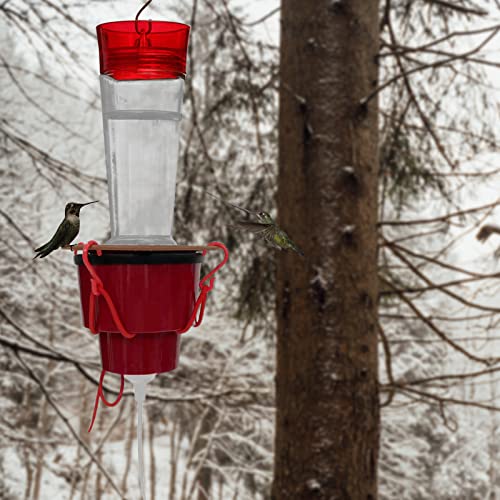
This heater attaches with hooks and adjustable elastic cords, holding securely under feeders. It uses a 15-watt incandescent bulb to gently warm the feeder’s interior, preventing nectar freeze. The heat-resistant outer ring seals out snow and water, making it a solid choice for cold, wet climates.
Compatibility Flat or round bottom feeders with ring perchesHeating Element 15-watt incandescent bulbWeatherproof Rating —Installation Hooks and elastic cordsPower Source Plug-in
Why it made the cut
Simple, effective 15-watt bulb heating
Heat-resistant, sealed design
Adjustable straps for snug fit
Easy to install and remove
Good to know
Bulb heating uses more electricity
Not suitable for feeders without ring perches
Skip it if Skip if you want a low-profile pad or need a plug-in cord longer than 11 feet.
Check today’s pricePaid link · live price on Amazon
#3Best Heavy-Duty Build
moobee Heated Hummingbird Feeder

moobee Heated Hummingbird Feeder

Best for Feeders with bases 5.5 to 7.87 inches wide
Constructed from thick, hard plastic with a sealing ring, this heater resists snow and moisture well. It uses a 15-watt bulb to maintain nectar temperature safely. Elastic straps and hooks make it easy to attach and remove, fitting a range of flat or round bottoms.
Compatibility Bases 14–20 cm (5.5–7.87 in)Heating Element 15-watt bulbMaterial Thick hard plasticInstallation Elastic straps and hooksPower Source Plug-in
Why it made the cut
Durable, heavy-duty plastic construction
Sealing ring blocks snow and moisture
15-watt bulb prevents freezing
Fits bases 14–20 cm wide
Good to know
Heavier than some models
Not for feeders outside size range
Skip it if Skip if your feeder is smaller than 5.5 inches or you want a pad-style heater.
Check today’s pricePaid link · live price on Amazon
#4Best Budget Heater
KISKISBY Hummingbird Feeder Heater

KISKISBY Hummingbird Feeder Heater

Best for Flat or round bottom feeders with annular perches
This separate heater attaches to the bottom of many feeders and provides simple, efficient warmth to prevent nectar freeze. It’s a straightforward solution for basic winter hummingbird care. The product does not include the feeder itself and fits many common feeder shapes.
Compatibility Flat or round bottom feeders with annular perchesIncludes Feeder NoInstallation Attaches to feeder bottomPower Source Plug-inUse Outdoor
Why it made the cut
Easy to attach to various feeders
Simple, efficient heating
Saves electricity compared to other warmers
Good customer support
Good to know
Does not include feeder
May not fit specially shaped feeders
Skip it if Skip if you want integrated feeders or need detailed weatherproof specs.
Check today’s pricePaid link · live price on Amazon
#5Best Made in USA
Backyard Bird Centre Hearth Heater

Backyard Bird Centre Hearth Heater

Best for Flat-bottom feeders with ring-style perches
Made in the USA and rated to US electrical standards, this heater keeps smaller feeders thawed to about 15°F. It attaches easily and is designed for outdoor use with safety in mind. It’s a solid choice for buyers prioritizing domestic manufacturing and electrical safety.
Compatibility Flat-bottom feeders with ring-style perchHeating Element —Power Source Plug-inMade In USAUse Outdoor
Why it made the cut
Made in USA with US electrical standards
Effective thawing to 15°F
Fits flat-bottom feeders with ring perches
Designed for outdoor use
Good to know
Limited heating range
No feeder included
Skip it if Skip if you want a heater with higher wattage or wider compatibility.
Check today’s pricePaid link · live price on Amazon

Match the Heater to Your Feeder’s Shape and Size

Choosing the right hummingbird feeder heater starts with matching it to your feeder’s shape and size. Most heaters are designed to fit flat-bottom or round-bottom feeders that have ring perches. These shapes let the heater sit snugly beneath the feeder without slipping or tilting.

Measure the base diameter of your feeder’s reservoir before you buy a heater. Most heater models specify the range of diameters they fit, usually between 3 and 6 inches. A heater too small won’t provide even warmth, and one too large might not attach securely or could shift in wind.

Attachment methods vary. Some heaters use hooks that latch onto the feeder’s hanger or perch ring. Others rely on elastic straps that wrap around the feeder base, or adhesive pads for a semi-permanent bond. Check which method your feeder supports and what the heater offers—it’s key for stability and safety outdoors.

Specialty feeders such as four-hole fountains or those with odd shapes often don’t work well with standard heaters. These feeders lack the flat or round base needed for a heater to make good contact. In those cases, consider a different heating approach or a heater model made specifically for your feeder type.

Heater Compatibility
Not all heated feeders fit every feeder. Confirm your feeder’s shape matches the heater’s design—flat or round bases with ring perches are the most common compatible types.
Best Size for Heated Hummingbird Feeders
A heater that fits a 4- to 5-inch diameter base covers most standard feeders, providing enough warmth to keep nectar liquid without overheating.

Calculate Electricity Use and Running Costs for Outdoor Heaters

My Go-To: Calculate Electricity Use and Running Costs for Outdoor Heaters

Most hummingbird feeder heaters run on about 15 watts. That’s 0.015 kilowatts of power, which is low compared to household appliances but adds up over time if left on continuously.

Running a 15-watt heater 24 hours a day consumes 0.015 kW × 24 h = 0.36 kWh daily. At an average electricity rate of 17 cents per kilowatt-hour, that costs roughly 6 cents per day to keep your feeder nectar from freezing.

Battery-powered heaters don’t plug in, so their running cost depends on battery life and replacement frequency. Frequent battery changes can add up, especially in cold weather when batteries drain faster. Rechargeable battery packs or solar options can reduce ongoing expenses.

Look for heaters with long power cords and weatherproof plugs. These features let you position the feeder where hummingbirds visit most without worrying about exposed connections or limited reach.

Electricity Cost
At 15 watts and 17¢/kWh, running the heater 24/7 costs about 6 cents a day—affordable but worth considering for months-long winter use.
Energy Efficiency Outdoors
Lower-wattage heaters that maintain a gentle, steady warmth prevent nectar freezing efficiently without wasting power or overheating.
Hummingbird Feeder Heater in Freezing Outdoors Bird Feeder Heater Att…
Useful for this step
Hummingbird Feeder Heater in Freezing Outdoors Bird Feeder Heater Att…
The Hummingbird Feeder Heater in Freezing Outdoors Bird Feeder offers a 15-watt draw with weatherproof plug and cord, balancing low electricity use and outdoor durability.
Check today’s price

Check Safety Features and Weatherproof Ratings

Outdoor hummingbird feeder heater safety depends on meeting electrical codes and resisting harsh weather. Look for UL or ETL listings to confirm the heater passes standard electrical safety tests. These certifications mean it has built-in protections against overheating and electrical faults.

Weatherproof hummingbird feeder heaters carry an IP rating, like IP44 or IP67, indicating their resistance to water and dust. An IP44 rating guards against splashing water, while IP67 protects against immersion up to one meter. Higher ratings are better for snowy and rainy winter conditions.

Sealed heating elements are crucial. They keep moisture and snow from reaching electrical parts, preventing short circuits and corrosion that ruin the heater quickly. Avoid heaters with exposed bulbs or heating coils, which risk failure when wet or frozen.

A heater designed for outdoor use also has durable housing and wiring rated for cold temperatures and UV exposure. Plastic or metal housings should be sturdy enough to handle wind and snow without cracking.

Choosing a heater without proper weatherproofing or safety listings risks short circuits, fire, or quick breakdowns. When in doubt, find models specifying outdoor use and listing their IP rating and safety marks.

Why Battery vs Plug-In Matters for Your Setup

Battery powered hummingbird feeder heaters offer convenience where outdoor outlets are absent. They let you place feeders freely, even in trees, without worrying about cords or extension cables. You’ll need to swap batteries regularly, especially in cold weather that drains them faster.

Plug in hummingbird feeder heater pros cons depend on your yard’s electrical setup. Plug-in heaters provide continuous power without battery replacement. However, they require a weatherproof outdoor outlet and safe wiring to avoid hazards. Long detachable cords let you reach feeders far from outlets but can create tripping or snagging risks.

The best power source for a hummingbird feeder heater depends on your priorities. If you want set-and-forget operation and have easy outlet access, plug-in models are a reliable choice. Battery models suit remote or decorative setups but come with ongoing battery costs and maintenance.

Assess your yard’s electrical access and how often you want to change batteries. Some feeders work well with rechargeable batteries to cut costs, but that requires charging space and remembering the schedule. Plug-in models run nonstop at about 15 watts, costing roughly 25 cents a day at 17 cents per kWh if left on for 12 hours.

Long cords on plug-in heaters increase placement options but inspect them for outdoor rating and damage regularly. Battery models avoid cord clutter but check battery compartments for weatherproof sealing.

Balancing convenience, safety, and cost will guide you to the right choice for your hummingbird feeder heater.

Consider Hummingbird Feeder Heaters for Outdoors for plug-in options with long cords or Hummingbird Feeder Heater Warmer if portability is your priority.

What Makes a Heated Feeder Your Go-To for Winter Bird Care

A go-to hummingbird feeder heater is one you rely on every winter because it combines ease, effectiveness, and durability.

Look for a heater that fits snugly on several feeder styles, so you can switch feeders or replace one without hunting for a new heater.

Minimal power use matters: a good model prevents nectar freezing with about 15 watts, which keeps your electricity bill low while ensuring birds have liquid nectar on cold mornings.

Weather resistance is key. A sealed, rustproof heater withstands snow, rain, and freezing temperatures season after season, saving you from frequent replacements.

Extras like detachable power cords make storage and cleaning simpler, and extra adhesive pads add security where surfaces vary or get slippery with moisture.

Clear instructions and responsive customer support turn a good product into a preferred one by easing installation and troubleshooting, especially for first-time users.

Choosing your preferred feeder heater starts with matching your feeder’s size and shape, then picking one designed to run efficiently through winter’s worst.

Durability, power efficiency, and thoughtful design features combine to make a heater your dependable winter companion, not just a seasonal gadget.
Questions People Ask

What does “My Go-To” mean in the context of hummingbird feeders?
“My Go-To” refers to a reliable hummingbird feeder or heater you trust and use regularly for winter feeding. It’s the option you turn to because it consistently works well, fits your setup, and meets your feeding needs without hassle.
Can I use a heated feeder with any type of hummingbird feeder?
Heated feeders usually attach to standard hummingbird feeders, but compatibility depends on size and shape. Some heaters are designed for specific feeder models or styles, so check the manufacturer’s guidelines to ensure a proper fit and effective heating.
How much electricity does a hummingbird feeder heater use?
Most hummingbird feeder heaters use about 15 watts of power. Running one continuously for 8 hours consumes 0.12 kWh; at 17 cents per kWh, that costs roughly 2 cents a day, making them very economical for winter use.
Are battery-powered hummingbird feeder heaters reliable in cold weather?
Battery-powered heaters can be reliable if they use high-quality batteries and have efficient power management. Cold temperatures reduce battery capacity, so expect shorter run times and have spare batteries or a charging plan ready during extended freezes.
What safety certifications should I look for in a feeder heater?
Look for UL, ETL, or CSA listings indicating the heater meets electrical safety standards. Weatherproof ratings like IPX4 or higher ensure the heater resists moisture and outdoor conditions safely.
How do I maintain and clean a heated hummingbird feeder?
Turn off and unplug the heater before cleaning. Remove the heater component if possible and clean the feeder with warm soapy water regularly to prevent mold and bacteria. Avoid submerging the heater in water and inspect electrical parts for damage before each winter.

Joye Editor

HeaterGuides covers home heating, water heating and HVAC: how the equipment works, what it costs to run, and how to use it safely.

More in Blog