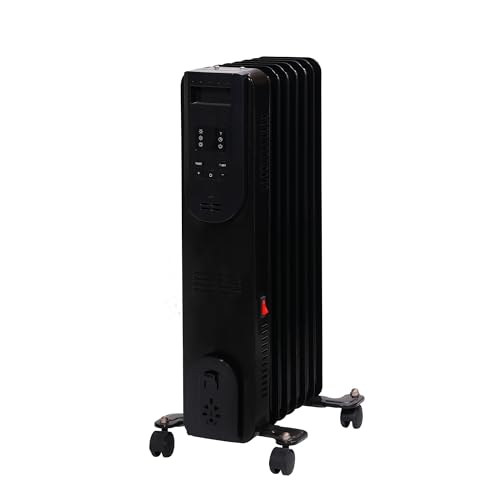
The Comfort Zone 1,500W Oil-Filled Radiator is the best bathroom oil heater for most people because it offers quiet, adjustable heating with top safety features and easy portability.
The essentials
The Comfort Zone 1,500W model is best overall for quiet, efficient heating in medium bathrooms up to 250 sq ft.
Look for adjustable thermostats and multiple heat settings to tailor warmth and save energy.
Tip-over and overheat protection are essential safety features in bathroom heaters.
Compact design and smooth wheels make moving the heater between rooms easy.
Running costs depend on wattage and usage hours; 1,500 W for 8 hours at 17¢/kWh costs about $2.04 per day.
Bathroom oil heaters provide steady, safe warmth ideal for small to medium spaces like bathrooms, bedrooms, or offices. Their silent operation and sealed oil reservoirs make them a reliable choice for winter comfort without constant refilling or noisy fans.
Choosing one means balancing heat output, safety features, size, and running costs to match your space and usage. This guide highlights five top models with clear specs and buying advice so you can pick the right heater fast.
Top 5 Bathroom Oil Heaters Ranked by Quiet, Safety, and Heat Control
#1Best Overall
Comfort Zone Oil-Filled Radiator 1,200W
Best for Quiet, adjustable warmth in medium-sized bathrooms
The 1,200W unit offers three heat settings—500W, 700W, and 1,200W—so you can use less output once the room feels comfortable. Its adjustable thermostat, tip-over switch, overheat protection, and oversized back wheels suit anyone who wants simple controls and easy room-to-room movement. Whisper-quiet operation is a good fit when fan noise would be irritating.
Heat settings 500W, 700W, and 1,200WDimensions 24.5 inches high × 8.5 inches wide × 13 inches deepSafety Tip-over switch and overheat protectionMobility Oversized back wheels and solid front end
Why it made the cut
Three selectable heat settings
Tip-over and overheat protection
Oversized back wheels for movement
Whisper-quiet operation
Good to know
Lower maximum output than the 1,500W models
The data does not specify a bathroom rating
Skip it if Skip it if your room needs the maximum output of a 1,500W heater or you need controls designed for use from across the room.
Best for Larger bathrooms needing stronger adjustable heat
A 1,500W maximum output gives this radiator more heating capacity than the 1,200W model, while three heat settings let you reduce output after the room warms. The permanently sealed 5-channel design never needs an oil refill, and the stay-cool molded handle, tip-over switch, and overheat protection make moving and operating it more manageable. Choose it for a medium-sized room where faster warm-up matters more than the smallest footprint.
Maximum output 1,500WDesign 5-channel permanently sealed radiatorControls Adjustable thermostat and three heat settingsSafety Stay-cool molded handle, tip-over switch, and overheat protePortability Compact design with 360-degree swivel capability
Why it made the cut
1,500W maximum output
Three heat settings and adjustable thermostat
Permanently sealed 5-channel design
Stay-cool molded handle
Good to know
Higher maximum electrical draw than the 1,200W model
The data does not specify the wattage of each heat setting
The data does not specify a bathroom rating
Skip it if Skip it if your bathroom is small and you prefer the lower 500W setting available on product 1.
Best for Indoor spaces up to 250 sq ft with simple manual controls
Product 3 combines a 1,500W setting with 600W and 900W options, giving you a broad range for warming a bathroom or nearby indoor space. Its adjustable thermostat, seven fins, tip-over protection, overheat protection, smooth-rolling wheels, and built-in handle cover the basics well. The stated coverage is up to 250 sq ft, so it suits a larger room better than a tiny powder room.
Heat settings 600W, 900W, and 1,500WCoverage Up to 250 sq ftSafety Built-in overheat and tip-over protectionMobility Smooth-rolling wheels and built-in handleRadiator design 7-finned, oil-filled radiator
Why it made the cut
Heat settings from 600W to 1,500W
Rated for spaces up to 250 sq ft
Seven-finned radiator design
Wheels and built-in handle
Good to know
The data does not specify quiet operation
The data does not specify a bathroom rating
Its stated coverage may exceed what a small bathroom needs
Skip it if Skip it if quiet operation is your first priority or you need a model whose controls are explicitly remote-operated.
Best for Small spaces where compact controls and adjustable output matter
The compact design is aimed at small spaces, while 600W, 900W, and 1,500W settings let you match output to the room. Front-mounted digital controls and a built-in automatic thermostat make adjustments straightforward, and the overheat and tip-over shut-offs provide basic protection. Product 4 is a practical pick when a small footprint matters more than a stated quiet-operation claim.
Power settings 600W, 900W, and 1,500WCoverage Up to 250 sq ftControls Front-mounted digital controlsThermostat Built-in automatic thermostatSafety Overheat and tip-over safety shut-off
Why it made the cut
Compact design for small spaces
Three power settings
Front-mounted digital controls
Overheat and tip-over shut-off
Good to know
The data does not specify quiet operation
The data does not specify wheels or a built-in carrying handle
The data does not specify a bathroom rating
Skip it if Skip it if you need clearly described wheels and a handle for frequent room-to-room movement.
How to Choose a Bathroom Oil Heater That Matches Your Space
The best bathroom oil heater features are adjustable heat, a thermostat, tip-over and overheat protection, and a stable design you can move without carrying a hot metal cabinet. To choose an oil-filled radiator for your bathroom, match its wattage to the room, confirm the manual allows bathroom use, and keep the heater away from water and splashes.
Feature
What to look for
Why it matters
Wattage
About 10 W per square foot as a starting point
A larger room needs more output; insulation and drafts change the result.
Thermostat
An adjustable thermostat
The heater can cycle instead of running at full power continuously.
Heat settings
At least two output levels
A lower setting suits mild mornings and uses less electricity.
Tip-over switch
Automatic shutoff if the heater falls
It cuts power if the radiator is knocked over.
Overheat protection
Automatic shutoff if internal temperature rises too far
It provides a second layer of protection if airflow is blocked.
Portability
Wheels and a cool-touch handle
You can move the radiator after switching it off without gripping the hot fins.
Start with the room size, then check the features that control heat and reduce avoidable risk.
Wattage tells you how much heat the radiator can add, while the thermostat controls how often it runs. A 1,500-watt model such as the Comfort Zone 1,500W Oil-Filled Radiator suits many small and medium bathrooms, but a high ceiling, poor insulation, or a draft under the door can make the room feel colder than its floor area suggests.
Look for simple controls you can set before the room gets cold. The Comfort Zone Oil-Filled Radiator and Comfort Glow Oil Filled Radiator are useful examples of the traditional portable format; the Comfort Glow Oil Filled Radiator Remote adds remote control for adjusting heat without reaching toward the unit.
Before You Buy
Confirm the manufacturer permits use in a bathroom or damp location; a general indoor heater isn’t automatically bathroom-rated.
Choose a model with a thermostat, multiple heat settings, tip-over shutoff, and overheat protection.
Check that the wheels and handle make moving practical after the heater cools.
Plan a position with 3 feet of clearance and a direct wall outlet—never an extension cord or power strip.
If floor space is tight, compare a wall-mounted option in the bathroom wall heaters guide.
Placement Check
Warm the room from a dry, stable spot away from the tub, shower, sink, towels, and curtains. A heater that has to share a cramped corner with damp towels is being asked to do too much.
How to Size Your Bathroom Oil Heater and Estimate Running Costs
For a small bathroom, a 1,500W oil-filled radiator is often more capacity than you need, but it can work if the heater is adjustable and your bathroom has poor insulation or an outside wall. Start with the 10-watts-per-square-foot rule: a 100-square-foot room calls for about 1,000W. A 1,500W unit such as the De’Longhi Dragon Digital is listed for rooms around 150 square feet.
Size It to the Room
A 10-by-10-foot bathroom is 100 square feet, so 100 × 10W gives a starting estimate of 1,000W. A 1,500W heater gives you extra capacity for a colder, draftier room, but oil radiators warm a cold room more slowly than fan heaters. If you need heat quickly before a shower, start the radiator ahead of time rather than expecting instant warmth.
Bathroom10 × 10 ft
Floor area100 sq ft
Starting estimateAbout 1,000W
A 1,500W oil heater costs the same to run as a 1,500W fan heater at the same output; the thermostat and heat setting determine how long it draws full power. For example, at $0.17 per kWh, the calculation for eight hours at full output is 1.5 kW × 8 hours × $0.17. The cost block shows the daily and monthly estimate.
Heater
Watts
Per hour
Per day (8 h)
Per month (30 days)
1,500W oil-filled radiator
1,500 W
26¢
$2.04
$61.20
Calculated at 17¢ per kWh. Assumes full rated output for 8 hours a day and electricity at $0.17 per kWh. Thermostat cycling can lower actual use.
Treat that estimate as a full-output ceiling, not a prediction of your bill. At the same rate, a 1,000W heater running for two hours uses 1 kW × 2 × $0.17; a thermostat that cycles the element off after the room warms can reduce consumption further.
Why Safety Certifications and Features Matter in Bathroom Oil Heaters
Bathroom heater safety features start with a recognized safety listing, a tip-over switch, overheat protection, and a design that keeps hot surfaces away from your hands and water. UL or ETL listing means the specific heater was tested against applicable electrical and fire-safety requirements; check the mark on the heater or its packaging rather than assuming every oil-filled radiator has been evaluated.
Do oil heaters have tip-over protection? Many do, including models that use a switch in the base to cut power when the heater falls or lifts off a level surface, but you still need to confirm that feature in the model’s specifications. The switch is a backup, not permission to run a heater on a towel, bath mat, or uneven floor.
Overheat protection shuts the heater down if its internal temperature rises too far, which can happen when curtains, clothing, dust, or a blocked air path traps heat around the cabinet. A thermostat controls room temperature; overheat protection is the separate emergency guard. Both should be present.
Check Before Use
UL or ETL listing for the specific model
Tip-over shutoff and overheat protection
Stable feet and a clear, level floor
Stay-cool handles for moving the heater after shutdown
No cracks, damaged cord, loose plug, or bent housing
Stay-cool handles and molded plastic parts reduce the chance of a hand burn while you position the radiator or adjust a control. The metal fins and cabinet can still become hot, so keep at least 3 feet of clearance from towels, shower curtains, paper, and furniture, and never drape anything over the heater.
Water And Electricity
Keep a plug-in heater outside the tub and shower area, away from sink splashes, and follow the manual’s bathroom-use instructions. A GFCI receptacle can help protect against electrical leakage, but it doesn’t make a heater designed for dry rooms safe to splash. Plug the heater directly into a wall outlet—never an extension cord or power strip—and don’t use it if the cord or plug is damaged.
Before Leaving The Room
Turn the heater off before bathing, sleeping, or leaving home unless the manufacturer specifically says the model is designed for that use. An oil-filled radiator stores heat in its oil and metal fins, so the surface won’t become harmless the instant the thermostat clicks off.
Quiet Operation and Warm-Up Speed
An oil-filled radiator is quieter than a fan-forced bathroom heater, but it warms a cold room more slowly. Its heating element warms the thermal oil, then the metal fins release heat without a fan; you may still hear thermostat clicks or occasional ticking as the metal expands and cools.
For quiet operation, the De’Longhi Dragon Digital TRD40615E has no fan and runs silently, according to its review; it’s rated at up to 1,500W and has a digital control panel and 24-hour timer. Give it time to warm the bathroom before your shower. If you need fast heat on arrival, a fan heater moves warm air sooner, but you’ll hear it running.
Heater type
Sound and warm-up
Best fit
Oil-filled radiator
No fan; may click or tick. Slower to warm a cold room.
Quiet heating started ahead of time
Fan-forced bathroom heater
Fan noise; pushes warm air into the room sooner.
Quick spot heat when some noise is acceptable
The wattage sets the maximum power draw, not the noise or warm-up speed.
A 1,500W oil radiator and a 1,500W fan heater draw the same power at full output. The oil radiator’s quiet operation doesn’t make it cheaper to run; thermostat cycling, heat setting, and runtime affect consumption.
A ceiling fan heater can also pair heat with ventilation, but it’s an installed option rather than a portable oil radiator. For example, the Broan-NuTone 9093WH combines a 1,500W heater with an exhaust fan and light, and is listed for rooms up to 65 square feet. Compare that setup with an oil radiator only if you want built-in ventilation and are planning installation.
Quiet Still Needs Safe Placement
Keep a portable electric heater at least 3 feet from water, towels, and other combustibles, and plug it directly into a wall outlet—never an extension cord or power strip. Use it in a bathroom only if the manufacturer allows that location; a standard portable oil radiator is not automatically bathroom-rated.
More Questions, Answered
Can I use an oil-filled radiator heater safely in a bathroom?
Only use one in a bathroom if the manufacturer explicitly allows bathroom use and the installation follows local electrical rules. Keep the heater well away from sinks, tubs, showers and splashing water, plug it directly into a wall outlet, and never use an extension cord or power strip. A standard oil-filled radiator without bathroom approval belongs in a dry room.
How long does an oil-filled radiator heater take to warm a small bathroom?
A small bathroom may feel warmer within roughly 15 to 30 minutes, but the exact time depends on the heater’s wattage, room insulation, starting temperature and drafts. A 1,500-watt unit supplies 1.5 kilowatt-hours during one hour of continuous operation; the thermostat may cycle it off before that hour is over once the room reaches its setting. Closing the door helps keep the heat where you want it.
Do oil-filled heaters require refilling or maintenance?
Oil-filled radiators are sealed at the factory, so you don’t refill the oil or change it. Unplug the cool heater before wiping dust from its fins, inspect the power cord and plug for damage, and keep the wheels and controls clear. A leak, bent casing or unusual odor is a reason to stop using it rather than attempt a repair.
What is the difference between oil-filled heaters and ceramic heaters?
Oil-filled heaters warm a sealed fluid that transfers heat to metal fins, so they operate quietly and continue releasing heat after the thermostat switches the element off. Ceramic heaters usually use a fan to move air across a heating element, which can warm a small room faster but adds motor noise and dust movement. Choose the oil-filled type for quiet, steady warmth; choose ceramic when quick air movement matters more and the model is approved for your bathroom.
Is it safe to leave an oil-filled radiator heater on overnight?
Don’t leave a bathroom oil-filled heater running overnight unless the manufacturer specifically says the model is designed for that use. Even with tip-over and overheat protection, keep three feet of clearance, use a direct wall outlet and follow the manual’s bathroom restrictions. Turning it off before sleep removes the heater from an unattended wet-room environment.