
Skip to content
Heater GuidesHeaterGuides
Electric Heaters

Top 5 Baseboard Heater Timer Switches That Will Transform Your Comfort

Bottom line
The best baseboard heater timer for most readers is a line-voltage thermostat or timer made for electric baseboards, not a lamp timer, because it matches the heater’s load and keeps you out of nuisance trips and melted plastic. If your heater draws 12.5 amps at 120 volts, you need a switch rated for that job, not a bargain box from the junk drawer.
Top picks, ranked
1
Best for PrecisionYeloDeer Manual Electric Baseboard Thermostat
120V or 240V electric baseboards needing accurate manual control
View on Amazon
2
Best for Easy MountingCadet Built-In Thermostat Kit BTF1W
Cadet baseboard heaters on 120, 208, or 240 volts without extra wiring
View on Amazon
3
Best for Programmable Heatshinic Digital Baseboard Heater with Timer
Rooms needing quick heat with programmable timer and safety features
View on Amazon
4
Best for Small SpacesCadet 30″ 500W Baseboard Heater
Small rooms up to 170 sq. ft. needing quiet convection heat
View on Amazon
5
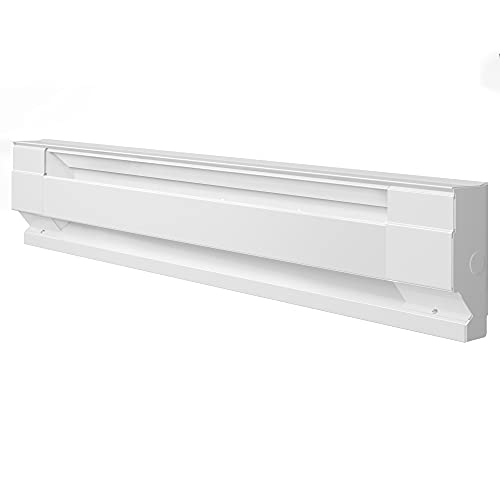
Best for Durable HeatCadet F Series 36″ Electric Baseboard Heater
Medium rooms needing convection heat with simple installation
View on Amazon

Say your bedroom heater runs 8 hours a night and draws 1,500 W. That’s 12 kWh a day, or about 360 kWh in a 30-day month; at 17 cents per kWh, the bill lands around $61.20 before the coffee gets a vote.

A timer can trim that by shutting the heater off when the room is already warm, but only if the timer is rated for line-voltage heat and wired to the right type of baseboard. The wrong switch turns a simple comfort upgrade into a very warm lesson.

Baseboard Timer Switches Comparison

ModelBest forLoad ratingVoltage fitControl typeBest usePrice
YeloDeer Manual Electric Baseboard ThermostatBest for PrecisionCompatible with 120/240V baseboard loads110-265 VManual thermostatAccurate manual control for 120/240V baseboardsView on Amazon
Cadet Built-In Thermostat Kit BTF1WBest for Easy Mounting22 Amps120/208/240 VBuilt-in twist dial thermostatEasy mount on Cadet baseboards without extra wiringView on Amazon
shinic Digital Baseboard Heater with TimerBest for Programmable Heat—120 VDigital thermostat with timerProgrammable heat with safety for bedrooms/officesView on Amazon
Cadet 30″ 500W Baseboard HeaterBest for Small Spaces—120 VRemote control heaterSmall room convection heat with remote controlView on Amazon
Cadet F Series 36″ Electric Baseboard HeaterBest for Durable Heat—240/208 VSimple convection heaterDurable heat with easy install for medium roomsView on Amazon

Top Baseboard Timer Switch Picks

#1Best for Precision

YeloDeer Manual Electric Baseboard Thermostat

Best for 120V or 240V electric baseboards needing accurate manual control
This thermostat works with both 120 and 240 volts, matching typical baseboard loads. It offers precise temperature control from 40°F to 80°F with a smooth dial that isn’t limited to fixed increments. Its compatibility with 12 AWG wire and detailed instructions make it a solid choice for reliable, manual baseboard heating control.
Power 2400W @ 120 Vac; 4800W @ 240 Vac, Voltage: 110V-265V, TerminVoltage 110V-265VTemperature Range 40°F to 80°FTerminal Wire Size Max.12AWG
Why it made the cut
Supports typical baseboard loads at 120V and 240V
High accuracy electronic sensing
Easy manual adjustment with smooth dial
Compatible with 12 AWG wiring
Good to know
No programmable timer function
Requires manual temperature setting
Skip it if Skip this if you want a digital timer or programmable thermostat.
View on AmazonPaid link · live price on Amazon
#2Best for Easy Mounting

Cadet Built-In Thermostat Kit BTF1W

Best for Cadet baseboard heaters on 120, 208, or 240 volts without extra wiring
This built-in thermostat kit mounts directly on Cadet baseboard heaters, eliminating extra wiring work. It supports up to 22 amps and works across common voltages for Cadet heaters. The large twist dial is straightforward and matches the heater’s white finish for a neat install.
Load Rating 22 AmpVoltage Fit 120, 208, 240 VoltColor White
Why it made the cut
22 amp rating covers most baseboards
No additional wiring needed
Large, easy-to-use dial
Mounts on heater ends for clean look
Good to know
Only for Cadet brand baseboards
No timer or programmable features
Skip it if Skip if you have a non-Cadet heater or want programmable timing.
View on AmazonPaid link · live price on Amazon
#3Best for Programmable Heat

shinic Digital Baseboard Heater with Timer

Best for Rooms needing quick heat with programmable timer and safety features
This plug-in electric baseboard heater heats fast with 750W or 1500W modes and a digital thermostat you can program. It has a timer to auto shut off, tip-over and overheat protection, and a child lock. Silent operation and portability make it ideal for bedrooms or offices where you want controlled warmth and peace of mind.
Power 1500W/750WVoltage 120VSafety Overheat & tip-over protection
Why it made the cut
Fast heating in 3 seconds
Digital thermostat with timer
Built-in safety features
Silent operation under 30 dB
Good to know
Plug-in unit, not hardwired
Limited to 120V, 1500W max
Skip it if Skip if you want a hardwired baseboard timer switch instead of a heater.
View on AmazonPaid link · live price on Amazon
#4Best for Small Spaces

Cadet 30″ 500W Baseboard Heater

Best for Small rooms up to 170 sq. ft. needing quiet convection heat
This 500 watt baseboard heater delivers convection heat quietly and fits small rooms or offices. It mounts easily on the floor and includes remote control for convenient temperature adjustment. Its compact design blends into decor while providing steady warmth.
Power 500 WVoltage 120 VLength 30 in.
Why it made the cut
500W convection heat suitable for small rooms
Remote control included
Easy floor mount installation
Compact and lightweight
Good to know
Lower wattage not suitable for large rooms
No built-in timer or thermostat
Skip it if Skip if you need a timer switch or higher wattage heater.
View on AmazonPaid link · live price on Amazon
#5Best for Durable Heat

Cadet F Series 36″ Electric Baseboard Heater

Best for Medium rooms needing convection heat with simple installation
This 36-inch Cadet baseboard heater offers reliable convection heat with universal wiring and pre-punched knockouts for easy installation. It supports multiple wattages and voltages, making it versatile for different setups. Its limited lifetime warranty adds confidence for long-term use.
Power 750/563 WVoltage 240/208 VLength 36 in.
Why it made the cut
Multi-watt options: 750/563 W
Works on 240 or 208 volts
Universal wiring with knockouts
Limited lifetime warranty
Good to know
No timer or thermostat included
White finish only
Skip it if Skip if you want integrated timer controls or a digital thermostat.
View on AmazonPaid link · live price on Amazon

Baseboard Heater Timer Switches That Match Your Heater

You can add a timer to an electric baseboard heater only if it’s a line-voltage device rated for your heater’s amperage and voltage. Ordinary plug-in timers work for corded appliances, but not for hardwired baseboards that run on 120 or 240 volts directly.

Many shoppers confuse built-in thermostats, wall timers, and countdown timers. A built-in thermostat kit replaces or supplements your baseboard’s internal thermostat and works best if the heater model supports it. Wall-mounted line-voltage timers or thermostats control the whole heater circuit and fit many standard baseboard heaters. Countdown timers count down once turned on but aren’t usually made for baseboard heaters’ load.

How to put a timer on a baseboard heater? You install a line-voltage timer or thermostat switch rated for the heater’s amperage and voltage in the circuit feeding the heater. The switch has to handle the load without tripping or melting.

Heater Power (W)Voltage (V)Current Draw (A)Required Timer Rating (A)
1,50012012.515 or more
Example: a 1,500 W heater at 120 V draws about 12.5 A, so the timer needs some headroom.
Safety Warning
Never use a plug-in timer rated for lamps or appliances on a hardwired baseboard heater. The heater’s current draw is too high and will cause the timer to fail or create a fire hazard.

Measure Load, Voltage, And Wire Size Before You Buy

Before buying a baseboard heater timer, check three key specs: the heater’s voltage, amperage (load), and the wire size or terminal limits. These specs decide compatibility and keep your installation safe and reliable.

Baseboard heaters commonly come in 120 V or 240 V versions. Even if two heaters heat the same size room, their control switches aren’t interchangeable. A 240 V heater requires a timer rated for 240 V circuits, which differs from a 120 V timer.

Wire size matters because it determines how much current the circuit can safely carry. Typical wire sizes for baseboards are 14 gauge for 15 A circuits and 12 gauge for 20 A circuits. Your timer’s terminals must accept the wire size on your heater’s circuit.

ModelLoad Rating (A)Voltage Range (V)Control Style
YeloDeer 4-Wire Manual15110–265Manual timer switch
Cadet Built-In Thermostat Kit15120Built-in thermostat
Shinic Digital Thermostat12120Digital thermostat switch
Cadet Baseboard Heater 500W4.17120Heater with built-in control
Cadet F Series 750W6.25120Electric baseboard heater
Load and voltage ratings vary; pick a timer that matches your heater and circuit.
Power Off Before Installation
If your heater is hardwired and the control is built-in, turn off power at the breaker and verify the circuit is dead before opening the control box. This prevents electric shock.
Breaker Size
The circuit breaker must match the wire size and the heater’s current draw, not just the heater’s marketing wattage. Check your breaker rating before choosing a timer switch.

Choose The Right Timer Style For How You Heat

A baseboard heater timer must be designed for line-voltage use and match your heater’s amperage and voltage to avoid trouble.

If you’re adding a timer to a baseboard heater, your choice boils down to manual dial timers, built-in thermostat kits, or digital and smart units. Manual dials are straightforward and usually the quietest option, perfect for bedrooms or simple spaces where you want easy control without fuss.

Built-in thermostat kits like the Cadet Single Pole Built-In Thermostat Kit fit certain Cadet heaters exactly, offering stable temperature control and quiet operation without the need for additional mounting. They reduce temperature swings by cutting heat precisely when the room reaches the set point, preventing overshoot and the uncomfortable hot-cold cycling you might notice with cheaper thermostats.

Digital timers and thermostats offer set-and-forget convenience with programmable schedules and sometimes backlit displays. They’re ideal if you want heaters to turn off automatically after certain hours, but only pick one that’s rated for your heater’s load and voltage. Smart controls add remote scheduling, but they’re only useful if both the heater and control are line-voltage compatible; otherwise, you risk nuisance trips or worse.

Renters or those with non-Cadet baseboard heaters may want to avoid built-in kits and opt for manual or digital timers instead. Smart timers often require more complex wiring and might not fit older installations, so consider your setup carefully.

Good for
Simple manual dials suit bedrooms and renters.
Built-in kits match Cadet heaters for integrated control.
Digital timers provide automatic off schedules and stable temps.
Not for
Manual dials lack advanced scheduling.
Built-in kits only fit specific Cadet models.
Smart controls need compatible line-voltage heaters and wiring.
Choosing Your Timer
Confirm the timer matches your heater’s voltage and amperage.
Pick manual dials for simple, quiet control in bedrooms.
Use built-in kits only with matching Cadet heaters.
Choose digital or smart timers if you want automatic schedules.
Avoid smart timers if your wiring or heater isn’t line-voltage compatible.

Check Safety And Codes Before You Install

Can you add a timer to an electric baseboard heater? Yes, but only if the timer is rated for the heater’s voltage and amperage and installed with the power off.

Electric baseboard heaters must be wired to controls listed for the heater’s load to prevent overheating or fire risk. Always de-energize the circuit at the breaker before starting work to avoid shocks.

Look for UL, ETL, or CSA listings on timer switches or thermostats. These certifications show the product has passed safety standards relevant to heating controls.

Avoid Unsafe Practices
Never use extension cords or power strips with baseboard heaters, and do not install undersized switches or timers. This can cause overheating, melted parts, or nuisance breaker trips.

If your heater’s wiring, electrical box, or circuit breaker appears incorrect—damaged wires, loose connections, or wrong breaker size—hire a licensed electrician. Also call a pro if the new timer requires hardwiring beyond a simple replacement.

Thermostat Failures Matter
A thermostat failure can leave a heater running too long, risking overheating. That’s why overheat protection inside the heater and a properly rated breaker are more important than fancy digital displays.
Safety Steps Before Installing
Confirm the timer switch is rated for your heater’s voltage and amperage.
Turn off power at the breaker before installation.
Use only UL, ETL, or CSA listed controls.
Avoid extension cords or power strips.
Inspect wiring and breaker for damage or improper sizing.
Call an electrician if unsure about wiring or hardwiring needs.

Run The Numbers Before Winter Sets In

A baseboard heater timer saves money only if it reduces run time without making the heater work harder to maintain comfort.

Say you have a 1,500-watt baseboard heater running 8 hours a day. That’s 1.5 kW × 8 hours = 12 kWh daily. At 17 cents per kWh, you pay about $2.04 each night. Over a 30-day month, that’s 360 kWh and $61.20 just to keep the room warm.

If a timer cuts the heater’s run time by 3 hours nightly, you save 4.5 kWh a day, or around $1.53 daily. But if the room cools too much and the heater cycles back on to rewarm it, savings shrink or vanish.

Baseboard heaters work best in smaller, well-insulated rooms. The heat radiates steadily, so a timer can comfortably reduce hours without big temperature swings. In large or drafty spaces, the heater must run longer or at higher power, making timers less effective for bills.

If your room is big or leaky, consider a bigger heater, adding a second zone, or improving insulation before relying on a timer switch alone to cut costs.

HeaterWattsPer hourPer day (8 h)Per month (30 days)
1,500 W baseboard heater1,500 W26¢$2.04$61.20
Calculated at 17¢ per kWh. Monthly running cost for a typical 1,500 W baseboard heater at 17¢/kWh
Before You Buy or Install
Check your heater’s wattage and daily run time to estimate costs.
Confirm your room size and insulation quality — smaller and tighter is better.
Decide if reducing run time with a timer won’t cause constant reheating.
Consider upgrading insulation or heater size if your room is large or drafty.
Make sure your timer switch matches your heater’s voltage and amperage.

More Questions, Answered

What is a baseboard heater timer switch?
A baseboard heater timer switch is a device that controls when your electric baseboard heater turns on and off. It replaces or works alongside your regular thermostat to schedule heating periods, which can save energy and reduce costs by limiting heater run time to when you need it.
Can you add a timer to an electric baseboard?
Yes, but only if you use a timer designed for line-voltage electric baseboard heaters. It must match the heater’s voltage and amperage to handle the load safely. Using a standard lamp timer or lower-rated switch risks failure or fire hazards.
How do I put a timer on a baseboard heater?
First, turn off power at the circuit breaker. Remove the existing thermostat or switch, then install the timer switch rated for your heater’s voltage and amperage. Follow the wiring instructions exactly, and secure all connections. If you’re unsure about electrical work, hire a licensed electrician.
What should I check before buying a baseboard heater timer?
Check your heater’s voltage and amperage rating, usually on the nameplate or manual, and match the timer switch accordingly. Confirm the wire gauge and terminal compatibility. Also, verify that your local electrical codes allow timer installation on baseboard heaters.
Do I need an electrician to install a baseboard heater timer switch?
You should hire a licensed electrician unless you have experience with line-voltage wiring. The work involves turning off circuit power, handling high-current wiring, and complying with local codes. Improper installation can cause electrical hazards or code violations.
Share
Written by Joye

HeaterGuides covers home heating, water heating and HVAC: how the equipment works, what it costs to run, and how to use it safely.

Free newsletter

Heater deals and guides, worth opening

Price drops, new guides and safety recalls. One email, only when it matters.

No spam. Unsubscribe in one click. Privacy policy.