For most homes needing an 80-gallon hot water heater, Product 4 is the best pick because its heat-pump design, 4.00 UEF rating and 91-gallon first-hour delivery suit high daily demand. Product 5 is the smaller-flow tankless alternative, while Product 3 helps maintain an existing tank rather than replace it.
An 80-gallon tank gives you a large reserve, but tank size alone doesn’t tell you how quickly a household will run out of hot water. First-hour delivery, recovery rate, electrical service and installation space matter just as much.
One belief is only half true: natural gas can heat water quickly, but that doesn’t automatically make a gas heater more efficient than a heat-pump electric model. Efficiency depends on the unit’s rated performance, fuel cost and how your home uses hot water.
The Best 80-Gallon Water Heater Picks
#1Best Overall
Rinnai 80-Gallon Heat Pump Water Heater
Best for Households of 5 or more with high daily hot-water demand
Product 4 is the clear replacement pick because its heat-pump design extracts heat from surrounding air instead of creating all of it electrically. The 80-gallon tank can deliver up to 91 gallons in the first hour, and its 4.00 UEF rating suits homes trying to reduce water-heating energy use. Plan for its 240V, 30A electrical requirement.
Type Electric heat pump water heaterPower 240V / 30ACapacity 80 gallonsFirst-hour delivery Up to 91 gallonsCertification Energy Star Certified; UL and NSF certified
Why it made the cut
80-gallon tank with up to 91-gallon first-hour delivery
Heat-pump design with 4.00 UEF
Demand-response enabled and zero clearance required on top, back and sides
Good to know
Requires 240V / 30A electrical service
Larger installation than a tankless unit
Skip it if Skip it if your electrical service cannot support 240V / 30A or you don’t have space for an 80-gallon tank.
Best for Homes needing on-demand hot water with modest simultaneous flow
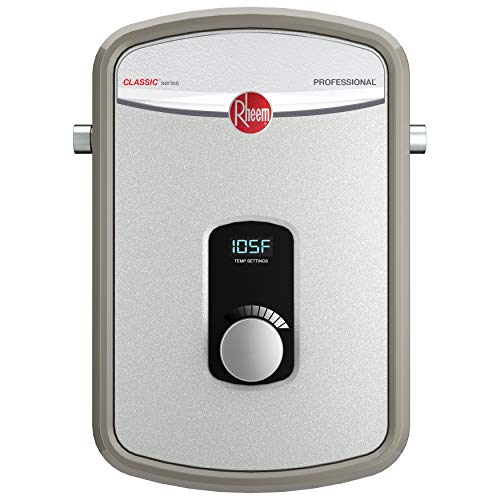
Product 5 heats water only when a tap opens, so it avoids the standby energy used to keep a storage tank hot. Its 8kW heating element provides up to 1.95 GPM, which can work for multiple fixtures when demand stays within that limit. The required 40-amp double-pole breaker and recommended minimum 100-amp service panel deserve a check before installation.
Type Electric tankless water heaterPower 8kW; 240V single-phaseOutput Up to 1.95 GPMTemperature control 80°F – 140°FElectrical requirement One 40-amp double-pole breaker; #8 AWG copper conductors wit
Why it made the cut
On-demand heating without a storage tank
Digital temperature control from 80°F to 140°F
Up to 1.95 GPM for multiple fixtures
Good to know
Lower flow than a large storage tank can provide during heavy demand
Requires a 40-amp double-pole breaker and #8 AWG copper conductors
Skip it if Skip it if several showers or fixtures may run at once and 1.95 GPM won’t cover your peak demand.
Best for Cleaning sediment from an existing gas or electric tank
Product 3 is a flushing tool, not a replacement water heater. It uses compressed gas, an air compressor or a hand pump to break up sediment clogs that can restrict hot-water pressure. The clear viewing window lets you watch the cleaning process instead of guessing what came out of the tank.
Type Water heater flushing and draining toolUse Gas or electric tanksPower source Compressed gas cartridge, air compressor or hand pumpSafety verification UL Verified V699054
Why it made the cut
Works with gas or electric storage tanks
Full-port design helps break up sediment clogs
Clear window shows the cleaning process
Good to know
Doesn’t heat or store water
Requires a separate CO2 cartridge, air compressor or hand pump
Skip it if Skip it if you need a new water heater rather than maintenance for an existing tank.
Best for Supplemental heat in rooms up to 200 square feet
Product 1 is a portable room heater, so it cannot replace an 80-gallon water heater. Its 1,500W ceramic PTC element, thermostat and four operating modes make it useful for a cold bedroom, office or basement. Tip-over shutoff, overheat protection and ETL certification add useful safeguards for portable use.
Type Portable ceramic electric space heaterPower 1,500WCoverage Up to 200 sq. ft.Noise level 35dBCertification ETL-certified
Why it made the cut
1,500W heating with thermostat control
45° tip-over shutoff and overheat protection
Remote, timer, ECO mode and child lock
Good to know
Heats rooms rather than water
Must be used as a supplemental heater
Skip it if Skip it if your problem is insufficient hot water rather than a cold room.
Best for Supplemental zone heat and fireplace ambiance in rooms up to 400 square feet
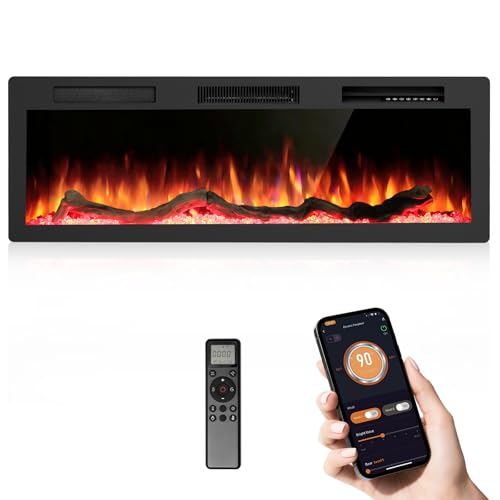
Product 2 adds room heat and a built-in fireplace display, but it has no water-heating capacity. Its 750W and 1,500W modes cover supplemental heating, while remote, touch, smartphone and Alexa controls make adjustment easy. Choose it for a living room or bedroom where appearance matters as much as warmth.
Type Recessed and wall-mounted electric fireplace heaterPower 750W / 1,500WCoverage Up to 400 sq. ft.Temperature range 59°F – 95°FDimensions 50L x 17.32H x 5.71W
Why it made the cut
750W and 1,500W heating modes
Designed for wall-mounted or recessed installation
Remote, touch, smartphone and Alexa controls
Good to know
Doesn’t heat domestic water
Requires a suitable wall-mounted or recessed installation space
Skip it if Skip it if you’re replacing a water heater or need hot water for showers and fixtures.
Natural gas water heaters aren’t automatically more efficient or cheaper to run; the model’s efficiency rating, fuel price, installation and demand matter. For an 80-gallon water heater, Product 4 is the stronger match because its heat-pump system is rated at 4.00 UEF.
A heat pump moves heat from the surrounding air into the tank instead of creating every bit of heat with resistance elements. That lets Product 4 deliver stored hot water with less electrical input than a conventional resistance tank. Its Energy Star certification, UL and NSF certifications, and 240V/30A listing also give you concrete specifications to verify before installation.
4.00 UEF
Product 4’s heat-pump efficiency rating
UEF is the uniform energy factor used to compare water-heater efficiency; a higher rating generally means more hot water delivered per unit of energy.
The Rheem 8kW Multi Fixture Tankless Electric Water Heater makes a different tradeoff. It heats water on demand rather than storing it in an 80-gallon tank, and its maximum flow is up to 1.95 GPM. That can suit a smaller home or a replacement where tank storage isn’t wanted, but it belongs in a different buying decision.
Option
What it does
Best fit
Product 4
Stores hot water and uses a heat pump
High daily demand needing an 80-gallon tank
Product 5
Heats water as it flows, up to 1.95 GPM
Smaller-flow tankless applications
Fuel type alone doesn’t tell you which heater will cost less or serve your home better.
In short
Natural gas can be efficient, but gas alone doesn’t settle the question. Product 4 is the best match for someone specifically searching for an 80-gallon water heater; Product 5 is a tankless alternative, not an 80-gallon replacement.
If you’re comparing more models, this best 80 gallon heat pump water heaters guide is the useful next stop. Check the rating and installation requirements rather than choosing by fuel label alone.
From HeaterGuides · our own guidePage 15 sizes your next heater for your household and flow rate.Water Heater Owner's ToolkitFix the common faults yourself, keep it running for years, and know when a repair is money wasted.No-hot-water flowcharts, gas and electricFlush, anode, relief valve and descaling stepsRepair-or-replace calculator (Excel)$14.99$9.99Get it for $9.99See what's inside and watch the 2-minute video →18-page printable PDF + Excel calculator · instant download · 30-day refund
Match Capacity To Your Peak Hour
An 80-gallon water heater stores up to 80 gallons, but the hot water you can use depends on incoming water temperature, thermostat setting and how quickly the heater recovers. The main benefit is a large reserve for a busy period, not a promise that every fixture can run without limit.
First-hour delivery is the more useful sizing number because it combines the tank’s stored hot water with the fresh hot water the heater can make during the same hour. Product 4 is listed at up to 91 gallons of first-hour delivery, so compare your household’s busiest-hour demand with 91 gallons instead of stopping at the 80-gallon label.
Worked example
Say five or more people use hot water during the same morning peak. Write down the household’s actual hot-water events in that hour, then compare the resulting demand with Product 4’s up-to-91-gallon first-hour delivery. If that peak stays within 91 gallons, the listed capacity gives you a useful planning margin; if it exceeds 91 gallons, ask a professional about demand changes or a different system.
Tank storageUp to 80 gallons
Product 4 first-hour deliveryUp to 91 gallons
Household exampleFive or more people
Number to check
Why it matters
80 gallons
Maximum stored tank volume
Up to 91 gallons
Product 4’s first-hour delivery
Incoming water temperature
Colder water changes recovery needs
Thermostat setting
Changes usable hot-water conditions
Tank size and first-hour delivery answer different questions.
When 80 gallons is too much
A smaller household with spread-out usage may rarely empty a large tank. In that case, you’re paying for storage and space you may not use; size from the busiest hour, not from the biggest tank available.
The Rheem tankless model’s 1.95 GPM maximum can become limiting when multiple fixtures run together, since each fixture shares the available flow. Professional sizing matters because incoming water temperature, desired temperature and simultaneous demand determine whether that flow is enough.
Calculate The Cost Before Installation
An 80-gallon water heater’s efficiency depends on its fuel and design; its actual electricity use depends on how much hot water you use and how cold the incoming water is. UEF is a standardized efficiency measure, not a promise of a fixed monthly bill. There’s no reliable single kWh figure for every 80-gallon heater or household.
Estimate electric running cost with watts ÷ 1,000 × hours used × your electricity price per kWh. A useful estimate needs your local rate, hot-water use and inlet-water temperature; a tankless heater’s run time varies with demand. The example below uses Product 5’s stated 8 kW rating and assumes one hour of operation per day—not a prediction of your household’s use.
Heater
Watts
Per hour
Per day (1 h)
Per month (30 days)
Rheem 8kW tankless heater, assumed one hour of use
8,000 W
$1.36
$1.36
$40.80
Calculated at 17¢ per kWh. Illustration only: assumes $0.17 per kWh and one operating hour daily for 30 days. Actual use and cost will differ.
Myth
A high UEF tells you exactly what the heater will cost each month.
Fact
UEF helps compare standardized efficiency; it doesn’t account for your household’s hot-water use, local electricity rate or incoming-water temperature.
Product 4 supports demand response, which can let a participating utility adjust operation during certain grid conditions. Any bill savings depend on whether your utility offers and supports the program, and on its terms. Don’t treat that feature as guaranteed savings.
Budget For Installation Separately
Purchase price, operating cost and installation are different expenses. A heat-pump model may require electrical work, and an older home may need panel work if the existing service can’t support the installation. Get a site-specific quote before choosing a heater; don’t infer Product 4’s average power use from its 30A circuit requirement.
Check The Electrical Service And Space
Product 4 lists a 240V/30A electrical requirement and 3/4-inch MNPT water connections; that doesn’t mean every existing 30A circuit is suitable. A licensed electrician should verify the breaker, conductors, disconnecting means and panel capacity before installation. The right breaker depends on the heater’s requirements and the wiring—not tank capacity alone.
An 80-gallon heat-pump heater can’t go just anywhere: the location must work for its electrical supply, water connections, airflow and condensate management. Product 4’s listed zero-clearance claim applies at the top, back and sides, but you’ll still need enough room to service the unit and reach its connections.
Confirm Before You Buy
Have an electrician check the existing circuit and panel against Product 4’s 240V/30A requirement.
Confirm the 3/4-inch MNPT water connections fit the planned plumbing.
Ask how condensate will be managed at the chosen location.
Check that the unit can get the airflow its installation instructions require and can be accessed for service.
Don’t Guess At Electrical Or Plumbing Work
A listed zero-clearance dimension doesn’t remove service-access needs or override installation instructions and local code. Have licensed trades handle 240V electrical work and water-heater installation where required; gas connections also need to follow local code and be handled by licensed trades where required.
Protect The Tank And The People Around It
Plan on roughly 10 to 15 years from an 80-gallon tank water heater, although water quality, anode condition, temperature and maintenance can shorten or extend that span. Product 4 has a glass-lined steel tank and a stated 10-year residential tank-and-parts warranty; that warranty covers specified defects for its term, not a guaranteed 10-year service life.
Maintain an 80-gallon water heater by following the manual for sediment flushing, anode inspection and service intervals. Sediment settles at the bottom of a storage tank, so the right flushing procedure helps keep the tank and heating system working as designed.
Leave The Relief Valve Clear
The temperature-and-pressure, or T&P, valve protects the tank if temperature or pressure rises too far. Its discharge pipe must be installed and left open as the manual and local code require; never cap, plug or otherwise block the valve. A leaking tank, failed relief valve or damaged wiring needs a licensed plumber or electrician rather than a parts swap at the kitchen sink.
Before You Call The Job Done
Confirm the T&P discharge piping is present, secure and unobstructed.
Keep the thermostat setting at or below 120°F unless a professional has established a safer control plan; hotter tap water raises scald risk.
Follow the manual’s flushing, anode inspection and service schedule.
Check for tank leaks, unusual moisture and damaged wiring without opening electrical covers.
Raise the thermostat only with care, because water above 120°F can scald quickly at the tap. A mixing valve or another temperature-control method may be appropriate in some installations, but its selection and adjustment should follow the heater instructions and local requirements.
Useful for sediment service
The Original Sediment Buster® Water Heater Flushing Tool
The Original Sediment Buster® Water Heater Flushing Tool is a UL Verified V699054 cleaning and draining tool, but it needs compressed gas, an air compressor or a hand/bicycle pump, sold separately; use it only in the flushing method your heater manual allows.
Certification matters because the heater and its safety controls must suit the installation, so check the model documentation and local code before replacing an existing tank. Stop and get professional help if water comes from the tank body, the T&P valve keeps discharging, or wiring shows heat damage.
More Questions, Answered
Are natural gas water heaters becoming more efficient?
Yes, newer natural-gas models can improve efficiency through better insulation, electronic controls and condensing heat exchangers. A high-efficiency gas unit still needs proper venting and may cost more to install, so compare the efficiency rating with local gas prices.
What is the capacity of an 80-gallon hot water heater?
An 80-gallon water heater holds about 80 gallons in its storage tank. The usable hot-water supply can be greater after mixing with cold water at the tap, but recovery speed and incoming-water temperature still limit long showers or back-to-back loads.
What are the benefits of an 80-gallon water heater?
The larger tank gives your household more stored hot water for simultaneous showers, baths and laundry. It also reduces the chance of running cold during a demand spike, although the larger cabinet needs more floor space and a suitable installation area.
How long does an 80-gallon hot water heater last?
A tank commonly lasts roughly 10 to 15 years, with water chemistry and anode-rod condition making a large difference. Replacing a worn anode and checking for leaks can help protect the steel tank; a leaking tank itself usually calls for replacement.
Is a tankless water heater better than an 80-gallon tank?
Tankless models save storage space and don’t keep a full tank hot, but their flow rate can limit how many fixtures run together. An 80-gallon tank is usually the safer fit for heavy simultaneous demand, while tankless suits homes with adequate gas or electrical capacity and manageable peak flow.
How many people can an 80-gallon water heater serve?
An 80-gallon tank can often serve a larger household than a 50-gallon tank, but headcount alone isn’t a reliable sizing rule. Count showers, tubs, appliances and the busiest hour; two long showers plus a washing machine may use more hot water than several people with staggered schedules.
What electrical service does an 80-gallon electric water heater need?
Product 4 specifies 240 volts and a 30-amp circuit, but the breaker, wire size and disconnect must match the unit’s installation instructions and local code. Have an electrician verify the existing circuit before purchase, especially if the panel or wiring is older.
Before you go · a welcome giftGet the Water Heater Owner's Toolkit for $4.99Fix the common faults yourself, keep it running for years, and know when a repair is money wasted. Normally $14.99; your welcome price saves $10.00. We'll email your link right now.or buy it now for $9.99 without the gift →One email with your link now. We never share your address.




 Water Heater Owner's ToolkitFix the common faults yourself, keep it running for years, and know when a repair is money wasted.No-hot-water flowcharts, gas and electricFlush, anode, relief valve and descaling stepsRepair-or-replace calculator (Excel)