Skip to content
HeaterGuides
Blog

Upgrade Your Home: The Best 40 Gallon Short Electric Water Heater!

On this page 8 sections
  1. Water Heater Comparison Table
  2. Best Water Heater Picks For A Fast Home Upgrade
  3. How To Choose The Right Home Water Heater
  4. Where The Sizing Mistakes Start
  5. Running Costs You Can Check On Paper
  6. Safety And Installation Checks
  7. The Detail Most Buyers Miss
  8. More Questions, Answered
Straight answer
Product 1 is the best pick for most homes because a 40-gallon tank gives you familiar whole-home hot water without the electrical service jump a large tankless unit can demand. If you want a straightforward replacement that fits many standard setups, start there.
The essentials
Pick Product 1 if you want a standard whole-home tank replacement and already have the electrical setup for a 240 V unit.
Pick Product 3 if your panel can handle a 240 V, 50 amp tankless unit and you want on-demand hot water for multiple fixtures.
Skip small 110 V tankless units for whole-house use; they are point-of-use fixes, not a magic substitute for a full system.
Check the installation work before you shop: 240 V wiring, breakers, venting, and gas lines can turn a cheap unit into an expensive project.
If your current heater runs out fast, look at tank size and recovery rate before you blame the brand.
Top picks, ranked
1
Best for Most HomesRheem 40 Gallon Electric Water Heater
Standard home replacement with familiar tank capacity
View on Amazon
2
Best for Multiple FixturesRheem 11kW Tankless Electric Water Heater
Homes needing on-demand hot water for several taps
View on Amazon
3
Best Gas TanklessThermoMate Natural Gas Tankless Water Heater
Gas homes needing up to 5 GPM for simultaneous showers
View on Amazon
4
Best Compact 110Vxwdzswgs 3000W Electric Tankless Water Heater
Small spaces needing point-of-use hot water
View on Amazon
5
Best Under-Sinkxwdzswgs 3000W 110V Tankless Water Heater
Under-sink or small-point-of-use hot water
View on Amazon

A home hot water upgrade lives or dies on three things: tank size, electrical or gas supply, and how many fixtures you expect to run at once.

The wrong pick is usually obvious after the first cold shower. The right one is the unit that matches your peak demand, fits the space you have, and doesn’t force a bigger panel or plumbing job than you planned.

Water Heater Comparison Table

ModelBest forTypePower or fuelCapacity or flowKey install needPrice
Rheem 40 Gallon Electric Water HeaterBest for Most HomesElectric Tank4500W40 Gallon240V electrical supplyWhy it is here
Rheem 11kW Tankless Electric Water HeaterBest for Multiple FixturesElectric Tankless11kW2.68 GPM240V, 50-amp breakerWhy it is here
ThermoMate Natural Gas Tankless Water HeaterBest Gas TanklessGas Tankless113,000 BTU5 GPMNatural gas, venting requiredWhy it is here
xwdzswgs 3000W Electric Tankless Water HeaterBest Compact 110VElectric Tankless3000W—110V, vertical wall mountWhy it is here
xwdzswgs 3000W 110V Tankless Water HeaterBest Under-SinkElectric Tankless3000W—110V, vertical wall mountWhy it is here

Best Water Heater Picks For A Fast Home Upgrade

#1Best for Most Homes
Rheem 40 Gallon Electric Water Heater
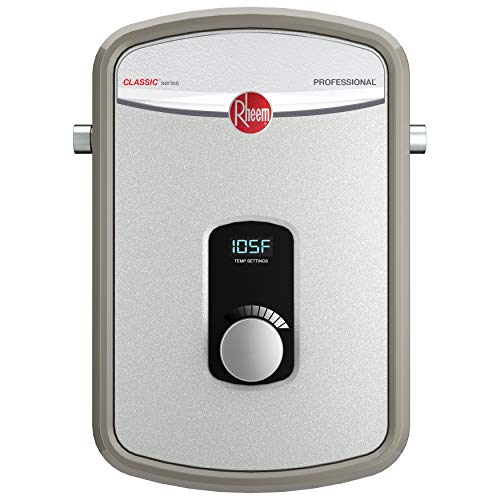
Rheem 40 Gallon Electric Water Heater

Best for Standard home replacement with familiar tank capacity
This Rheem model offers a 40-gallon Rheemglas lined tank with R-Foam insulation and an anode rod to resist corrosion. It has an automatic temperature control thermostat and a direct immersion heating element for reliable, whole-home hot water. It fits many standard electrical setups without needing an upgrade to your home’s service panel, making it a straightforward replacement choice.
Voltage 240VPower 4500WCapacity 40 GallonTank Rheemglas linedFeatures Automatic thermostat, Anode rod
Why it made the cut
40-gallon capacity suits typical households
Anode rod extends tank life by preventing corrosion
Automatic thermostat keeps water temperature steady
Good to know
Requires space for the tank
Slower to recover than tankless units
Skip it if Skip this if you need instant hot water or have limited installation space.
View on AmazonPaid link · live price on Amazon
#2Best for Multiple Fixtures
Rheem 11kW Tankless Electric Water Heater

Rheem 11kW Tankless Electric Water Heater

Best for Homes needing on-demand hot water for several taps
The Rheem 11kW tankless heater delivers up to 2.68 gallons per minute, enough for multiple fixtures. It features digital thermostatic controls adjustable in 1-degree increments. This model requires a 240V power supply with a 50-amp breaker and a 100-amp service panel minimum, so it suits homes with adequate electrical capacity looking to save energy by heating water only when needed.
Power 11kWVoltage 240VFlow rate 2.68 GPMTemperature range 80°F – 140°FBreaker 50-amp double-pole
Why it made the cut
Saves energy by heating water on demand
Precise digital temperature control
Supports multiple fixture applications
Good to know
Needs a 240V, 50-amp breaker and strong electrical service
Higher upfront installation complexity
Skip it if Skip this if your home’s electrical panel can’t support a 50-amp breaker or you want a simple tank replacement.
View on AmazonPaid link · live price on Amazon
#3Best Gas Tankless
ThermoMate Natural Gas Tankless Water Heater

ThermoMate Natural Gas Tankless Water Heater

Best for Gas homes needing up to 5 GPM for simultaneous showers
This natural gas tankless heater delivers up to 5 gallons per minute with 113,000 BTU input, enough for two showers at once. It features a copper heat exchanger for efficient heat transfer and corrosion resistance, plus a smart diagnostic LED display. Its compact size and UL-certified power cord make it a space-saving and safe choice for whole-house gas heating.
Fuel Natural GasMax flow 5 GPMBTU input 113,000 BTUEfficiency 98% thermalDimensions 21″ H × 13″ W × 7″ D
Why it made the cut
High flow rate for multiple simultaneous uses
Energy efficient with 98% thermal efficiency
Compact size saves space
Advanced safety and diagnostic features
Good to know
Requires natural gas connection and venting
Professional installation recommended
Skip it if Skip this if you don’t have natural gas or need electric heat.
View on AmazonPaid link · live price on Amazon
#4Best Compact 110V
xwdzswgs 3000W Electric Tankless Water Heater

xwdzswgs 3000W Electric Tankless Water Heater

Best for Small spaces needing point-of-use hot water
This compact, wall-mounted electric tankless heater runs on 110V power and offers instant hot water with a 3000W element. It has an LED display and multiple safety protections including dry-burning and over-temperature shutoff. Its small size fits under sinks or in apartments where space and electrical upgrades are limited.
Power 3000WVoltage 110VInstallation Vertical wall-mountedFeatures LED display, safety protections
Why it made the cut
Compact, space-saving design
Easy wall-mounted installation
Multiple safety features including leakage and dry-burning protection
Good to know
Limited flow rate due to 110V power
Vertical installation only
Skip it if Skip this if you need whole-house hot water or higher flow rates.
View on AmazonPaid link · live price on Amazon
#5Best Under-Sink
xwdzswgs 3000W 110V Tankless Water Heater

xwdzswgs 3000W 110V Tankless Water Heater

Best for Under-sink or small-point-of-use hot water
Designed for under-sink use, this electric tankless heater runs on 110V with a 3000W element. It uses stainless steel and ABS materials and offers quick water heating with an LED display. Safety protections include water-electricity isolation and automatic power-off under overheating. Its compact size frees up valuable space in kitchens or bathrooms.
Power 3000WVoltage 110VInstallation Vertical onlyMaterials Stainless steel, ABS
Why it made the cut
Compact for tight spaces like under sinks
Water and electricity isolation for safety
Quick temperature rise with digital display
Good to know
Vertical installation only
Limited to point-of-use applications
Skip it if Skip this if you want whole-house water heating or higher power capacity.
View on AmazonPaid link · live price on Amazon

How To Choose The Right Home Water Heater

gas heaters for homes: How To Choose The Right Home Water Heater

The best home water heater depends on your hot water needs, electrical setup, and space. For whole-home use, most people pick a 40-gallon electric tank that balances storage and recovery speed. Tankless units, however, are sized by how many gallons per minute (GPM) they can deliver at your expected temperature rise.

A 40-gallon tank usually provides enough hot water for a family of three to four. It heats water continuously and stores it ready to use. Tankless electric units often come in 2.68 GPM or 5 GPM models. A 2.68 GPM unit suits a small household or single fixtures, while 5 GPM can support multiple uses, like showers and faucets running at once.

240-volt electric water heaters need dedicated circuits and possibly panel upgrades. If your home’s electrical panel lacks room or capacity, installing a 240 V tankless or tank model could require an electrician. Gas tankless heaters need proper venting and combustion air supply, so check local code and venting options before buying.

110-volt tankless heaters are mostly for point-of-use spots where you want quick hot water—say, a bathroom sink or a workshop. They don’t replace your main water heater because they can’t keep up with whole-house demand.

TypeSizing BasisTypical UseInstallation Note
40-gallon electric tankGallons of storageWhole-house hot waterRequires 240 V circuit, panel check
Tankless electric (2.68 or 5 GPM)Gallons per minute flowWhole-house or point-of-use240 V, dedicated circuit, panel check
110 V tanklessGallons per minute flowPoint-of-use onlyPlug-in, no panel upgrade needed
Gas tanklessGallons per minute flowWhole-houseNeeds venting and combustion air
Comparing water heater types for home use.
Choosing Your Water Heater
Estimate your daily hot water use in gallons or GPM.
Check your electrical panel capacity and voltage.
Consider venting needs for gas units.
Decide if you need whole-house or point-of-use hot water.
Water Temperature Settings
Set your water heater to 120°F for safety and energy savings. Higher temperatures increase scald risk and energy use without significant comfort gain.

For 2025 and beyond, efficient models with smart controls or hybrid features are the best home heating solutions. If you want straightforward replacement or upgrade, a 40-gallon electric tank like the Rheem 72-40-2 fits most homes without complex electrical work. For more specialized needs, look into tankless options that match your flow and installation requirements.

Portable heaters are a different category altogether. They provide spot warmth, not hot water, so when choosing portable heaters for the home, focus on size, safety features, and the space you want to heat rather than flow or gallons.
From HeaterGuides · our own guidePage 15 sizes your next heater for your household and flow rate.Water Heater Owner's Toolkit: the printable guide and its Excel calculatorWater Heater Owner's ToolkitFix the common faults yourself, keep it running for years, and know when a repair is money wasted.No-hot-water flowcharts, gas and electricFlush, anode, relief valve and descaling stepsRepair-or-replace calculator (Excel)$14.99 $9.99Get it for $9.99See what's inside and watch the 2-minute video →18-page printable PDF + Excel calculator · instant download · 30-day refund

Where The Sizing Mistakes Start

The most efficient home heating method depends on matching supply to demand without oversizing. A 40-gallon tank like the Rheem 72-40-2 stores enough hot water for typical use but doesn’t provide endless flow. That’s why it’s about storage and recovery, not constant output.

Worked example
Say a family runs one shower and one sink at the same time. A shower uses roughly 2 gallons per minute (GPM), and a sink about 1 GPM. That totals 3 GPM demand. Product 1’s 40-gallon tank can supply that easily, recovering with 4,500 watts at 240 volts in a couple of hours. But if two showers run together, that demand jumps to about 4 GPM, and the tank can’t keep up without running out or dropping temperature.

By contrast, Product 3, the Rheem 11kW Multi Fixture Tankless Electric Water Heater, delivers about 2.68 GPM on demand. It won’t store water but heats it as it flows. This suits smaller or staggered demands but struggles serving two showers simultaneously, since 4 GPM exceeds its capacity.

Product 2 and Product 4 are compact point-of-use tankless units designed for a single fixture like a sink. They offer instant hot water without storage, but they’re not sized for multiple fixtures or whole-home use.

ProductTypeCapacityBest For
Rheem 72-40-240-gallon electric tankStorage + recoveryWhole-home, one or two fixtures
Rheem 11kW Multi Fixture TanklessTankless electric2.68 GPM flow rateSmall homes, staggered demand
110V Tankless Water Heater ElectricPoint-of-use tanklessUnder 2 GPMSingle sink or small fixture
Tankless Water Heater ElectricPoint-of-use tanklessUnder 2 GPMSingle sink or small fixture
Comparing water heater types and sizing

Oversizing wastes energy by heating more water than you use, while undersizing leaves you cold when demand spikes. The right size balances storage and flow for your household’s peak use without straining your electrical service.

Myth
The most efficient home heating system is always a tankless water heater
Fact
Efficiency depends on your actual demand, electrical service, and the fuel used. A tankless unit can save energy if hot water use is low and spread out, but a well-sized tank heater can be more cost effective and reliable for families needing continuous flow.

Cost efficiency follows the same rule. Tank heaters like Product 1 run on standard 240 V circuits and avoid the electrical upgrades tankless units sometimes require. That keeps installation and operating costs manageable. The best choice depends on your hot water patterns and power supply.

Matching your hot water demand to the right heater size avoids common mistakes that cost comfort and money. Start by estimating peak flow needs, then pick a unit that meets or slightly exceeds that without unnecessary oversize.

In short
Sizing matters more than type for efficiency and cost. A 40-gallon tank suits most homes with one or two fixtures running, while tankless units need careful matching to demand and electrical capacity.

Running Costs You Can Check On Paper

Electric water heaters with tanks keep water hot all day, using energy even when no one’s running the tap. Tankless models heat water only when flow triggers the heating element, saving standby energy but using more power during use.

Electric power consumption is watts divided by 1,000, times hours used. A 4,500-watt tank heater running for 3 hours a day uses 4.5 kW × 3 h = 13.5 kWh daily. An 11,000-watt tankless unit heating water for 1 hour uses 11 kW × 1 h = 11 kWh.

HeaterWattsPer hourPer day (3 h)Per month (30 days)
4,500 W tank heater4,500 W77¢$2.30$68.85
11,000 W tankless heater11,000 W$1.87$5.61$168.30
Calculated at 17¢ per kWh. Estimated monthly electricity cost comparison with typical usage and 17¢ per kWh.

Electric tank heaters cycle on and off to maintain temperature, so their runtime spreads over the day. Tankless heaters need enough power to heat water instantly, so their higher wattage ratings mean larger electrical service requirements—often a bigger breaker and thicker wiring, which add installation cost.

Gas tankless units advertise high efficiency, but they still require a proper gas supply line and venting to safely handle combustion byproducts. These installation demands add upfront cost and complexity, even if fuel savings look good on paper.

Oil heat is generally the most expensive home heating option today. Its fuel cost per BTU is higher than natural gas or propane, and oil heaters usually need more maintenance. For home hot water, electric or gas options offer better efficiency and running cost.

Check your breaker
Before upgrading to a larger electric tankless water heater, verify your home’s electrical panel and wiring can handle the load without costly upgrades.
Efficiency claims vs installation
High efficiency ratings on gas tankless heaters don’t remove the need for venting and proper gas supply. Installation costs and safety requirements can outweigh fuel savings.

Safety And Installation Checks

Gas heaters can be safe indoors if they have proper venting, combustion air, and a working carbon monoxide alarm, but any mistake risks deadly poisoning.

The safest electric heaters for home water heating plug directly into a 240 V circuit and have built-in safety features like overheat protection and ground fault interrupters.

Installing a home thermostat for water heating should be done or inspected by a licensed electrician or plumber, especially when it involves 240 V wiring or panel upgrades.

Keep your tap water temperature near 120°F to avoid scald injuries; only a professional should adjust anti-scald controls for other settings.

Product 5 is an indoor gas tankless heater requiring venting and combustion air; 110 V point-of-use electric units serve sinks and small fixtures but aren’t suitable for space heating.

Safety Warning
Attempting to install or modify 240 V water heaters yourself risks electric shock or fire if breakers, conductors, or service upgrades aren’t handled by a licensed pro.
Pre-Buy Inspection
Confirm breaker size matches the heater’s rating
Verify panel capacity can handle the new load
Check for a proper vent path if gas-fired
Locate a shutoff valve accessible for emergencies
Ensure required clearance around the unit to combustibles

The Detail Most Buyers Miss

Older homes can save energy by insulating pipes and lowering the water heater thermostat to 120°F, which cuts standby loss and scald risk. Adding low-flow fixtures reduces hot water demand and the workload on your heater, improving comfort without a bigger unit.

Maintenance matters more than flashy features. A quality anode rod prevents rust inside the tank by attracting corrosive elements, extending the unit’s life. Good insulation like R-Foam limits heat loss, so the heater runs less. Tank linings such as Rheemglas shield the metal from water damage.

Tank water heaters usually fit existing setups, making replacements straightforward and less costly. Switching to a tankless model often means upgrading your electrical service or gas line, which bumps up installation expenses beyond the unit’s price alone. For a single sink or small area, point-of-use units provide quick hot water without a whole-house overhaul.

Myth
High-efficiency water heaters always save more energy.
Fact
Efficiency gains are wasted if the heater is too small for your household’s demand or if installation can’t meet venting and power needs. A well-sized, properly installed unit is the real key to energy savings.

Product 1’s Rheemglas lining, R-Foam insulation, durable anode rod, and reliable thermostat are examples of specifications that influence reliability and operating costs far more than cabinet style or brand name.

Home Comfort Solutions
Heating the water efficiently supports overall home comfort. Pair your water heater upgrade with a thermostat that maintains consistent temperatures and consider adding a scent diffuser for a pleasant indoor environment.
Energy Saving Tip
Lower your water heater’s thermostat to 120°F and fix leaks promptly. Insulate hot water pipes to reduce heat loss between the tank and taps.

Choosing the most efficient home heating equipment includes matching water heater capacity to your routine needs and installation constraints. When unsure, a reputable plumber or electrician can advise on whether your home supports a tankless upgrade without costly rewiring or gas line work.

If your main goal is straightforward replacement and reliability, Product 1’s specs offer a balance of durability and performance without triggering major electrical or plumbing work. For faster hot water at a single fixture, a dedicated point-of-use heater might be a better fit.

More Questions, Answered

What size water heater do I need for a 2- to 3-bath home?
A 40- to 50-gallon tank is usually sufficient for 2 to 3 bathrooms, balancing capacity and recovery rate. This size handles typical morning and evening routines without frequent shortages. Larger homes or heavy simultaneous use might need tankless models or bigger tanks.
Is a tankless water heater better than a 40-gallon tank?
Tankless heaters save space and run only when you need hot water, cutting standby losses. But they require more electrical or gas capacity and a higher upfront cost. For many homes, a 40-gallon tank offers reliable whole-home hot water with simpler installation.
Can I install a 240 V water heater myself?
Installing a 240 V water heater involves high-voltage electrical work and plumbing connections. Local codes usually require a licensed electrician and plumber to ensure safety and compliance. DIY installation risks fire, shock, or code violations, so professional help is strongly recommended.
What tap temperature should I set on a home water heater?
Setting the water heater thermostat to 120°F balances safety and comfort, reducing scald risk while keeping water hot enough for most uses. Lower settings save energy by cutting standby heat loss. Avoid temperatures above 130°F to prevent burns, especially in homes with children or elderly.

Joye Editor

HeaterGuides covers home heating, water heating and HVAC: how the equipment works, what it costs to run, and how to use it safely.

More in Blog