

You plug in a heater, set the thermostat, and walk away. That moment of trust is where most people stop thinking about safety. The reality is more complicated. A space heater is a high-wattage appliance operating inches from flammable materials, often on carpet, sometimes near pets. The question isn’t just whether the brand is reputable. It’s whether the specific model has the right protections and whether you’re using it correctly.
This article is a safety audit of Honeywell heaters. We’ll break down which safety features matter, which Honeywell models actually have them, and where most people make critical mistakes. You’ll learn how to calculate whether your bedroom circuit can even handle a 1500W heater without tripping a breaker. You’ll also learn why a certification sticker doesn’t mean you can leave the heater running while you sleep. By the end, you’ll know exactly what to check before you plug one in.

Honeywell
Honeywell HHF360V 360 Degree Surround Fan Forced…
- 360 DEGREE ALL AROUND WARMTH – Use the Honeywell 360 Degree Surround Heater in small to mid-sized rooms for additional comfort. Th…
- SAFETY MATTERS: This small heater offers multiple safety options including a 360-degree tip over switch, 2x overheat protection, a…
- INCREASE YOUR COMFORT – Always be comfortable, no matter what season it is. This personal heater has fan forced technology and pro…
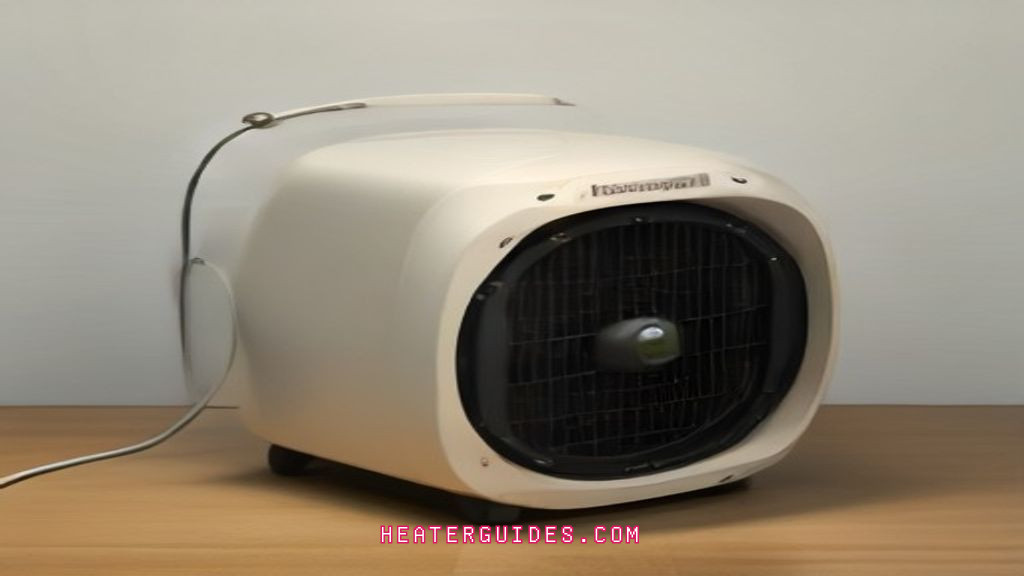
One model worth examining closely is the Honeywell 360 Degree Surround Fan Forced Heater, HHF360V. It’s a compact fan-forced unit with a 360-degree tip-over switch and dual overheat protection, which makes it a good reference point for the features we’ll discuss. We’ll use it as an example throughout, but the principles apply to the whole Honeywell lineup.
Are Honeywell Heaters Safe? The Short Answer
Yes, Honeywell heaters are safe when you buy a current model with the right certifications and use it according to the manual. But that answer comes with conditions. Honeywell sells several types of heaters: ceramic fan-forced, infrared quartz, and oil-filled radiators. Each has different safety characteristics. The common thread is that all modern Honeywell heaters sold in the US carry ETL or UL certification, which means an independent lab tested them for electrical and fire safety.
The bigger issue is user error. The National Fire Protection Association reports that space heaters cause about 44% of home heating fires. Most of those fires happen because the heater was placed too close to combustible materials like curtains, bedding, or upholstered furniture. A heater with a perfect safety record can still start a fire if you put it two inches from a couch.
So the honest answer: Honeywell builds safe equipment, but safety is a system. The device is one part. Your outlet, your circuit, your floor, and your habits are the rest.
The 5 Non-Negotiable Safety Features (and Which Honeywell Models Have Them)
Not all safety features are created equal. Some are essential, some are nice-to-have, and some create a false sense of security. Here’s the list you should actually care about, with specific model references.
- Tip-over switch: This kills power if the unit tilts past a certain angle. The HHF360V has a 360-degree version, meaning it triggers regardless of which direction it falls. Most Honeywell models include this, but older or cheaper units might not.
- Overheat sensor: This shuts off the heater if the internal temperature exceeds a safe limit. The HHF360V has dual overheat protection, which means two separate sensors must both fail before overheating becomes a risk. That’s redundant engineering, and it’s good.
- Cool-touch housing: The exterior stays below a certain temperature during operation. The HHF360V has a cool-touch carry handle. But note: cool-touch doesn’t mean bite-proof or burn-proof for prolonged contact. We’ll get to that.
- ETL or UL certification: This is not a marketing badge. It means an independent lab tested the unit for electrical shock, fire risk, and mechanical hazards. Look for the mark on the bottom or back of the unit.
- Auto-off timer: This lets you set the heater to run for a specific duration. It’s a convenience feature, but it also reduces the chance you’ll forget the heater is running. The HHF360V includes this.
Tip-Over Switch vs. Overheat Sensor: Know the Difference
People use these terms interchangeably, but they protect against completely different failures. A tip-over switch responds to physical orientation. If a dog bumps the heater and it falls over, the switch cuts power within a second. An overheat sensor responds to internal temperature. If the air intake gets blocked by a blanket, the heat builds up inside, and the sensor trips before the plastic melts or the element ignites nearby material.
You need both. A tip-over switch won’t help if the heater is upright but smothered. An overheat sensor won’t help if the heater falls behind a curtain and lands face-down. The HHF360V has both, which is why it’s a solid choice for households with pets or kids.
Why ETL/UL Certification Matters More Than a Logo
ETL and UL are both Nationally Recognized Testing Laboratories (NRTLs). They follow the same standards, mainly UL 1278 for portable electric heaters. The difference is administrative. UL is more famous, but ETL is equally rigorous. Both require ongoing factory inspections, not just a one-time test.
What certification doesn’t mean: that the heater is safe to leave unattended for hours. Certification tests for foreseeable misuse, not for deliberate neglect. A certified heater can still fail if you run it on an extension cord that’s too thin, or if you plug it into a worn outlet with loose connections. The certification covers the device, not your wiring.
Honeywell Safety by Type: Ceramic vs. Infrared vs. Radiator
Honeywell’s lineup breaks into three main technologies, and each has distinct safety considerations.
Ceramic fan-forced heaters (like the HHF360V) use a ceramic element and a fan to push warm air into the room. They heat up fast and cool down fast. The surface temperature on the grille can reach 150-200°F, so they’re not touch-safe during operation. The advantage is that the fan keeps the internal temperature lower than a passive radiant heater, which reduces overheat risk. The downside is noise and dust circulation.
Infrared quartz heaters use a quartz element that glows red and emits infrared radiation. They heat objects directly rather than the air. The element surface gets extremely hot, often over 1000°F. That’s a serious burn hazard if the grille is wide enough for a finger or a paw. Honeywell models typically have tight mesh grilles, but you should still keep these away from kids and pets. They also pose a higher ignition risk if placed near paper or fabric, because the radiant energy can ignite materials without direct contact.
Oil-filled radiator heaters are the safest for surface temperature. The oil is heated internally, and the metal fins stay below 200°F. They take 20-30 minutes to warm up, but they cool down slowly and don’t have exposed elements. They’re heavier and slower, but they’re the best choice for a bedroom where you might brush against the unit in the dark.
If you’re weighing options, our guide on oil space heaters covers that technology in more depth. For a family with toddlers, the oil-filled type is usually the safer pick. For quick, targeted warmth in an office, the HHF360V’s fan-forced ceramic design is more practical.
The #1 Safety Mistake: Circuit Overload (How to Calculate Your Amps)
Most people never think about their electrical circuit until the breaker trips. That’s backwards. A 1500W heater draws 12.5 amps at 120V. A standard residential circuit is rated for 15 amps. That leaves only 2.5 amps of headroom for everything else on that circuit. Plug in a lamp, a phone charger, and a TV, and you’re close to the limit. Add a second heater on the same circuit, and you’ll trip the breaker or, worse, heat up the wiring in the wall.
Here’s how to check your situation. First, find your breaker panel. Identify which breaker controls the outlet you plan to use. The breaker label says 15 or 20. That’s the maximum amps for that entire circuit. Now add up the amps of every device you’ll plug into that circuit simultaneously. A 1500W heater uses 12.5A. A typical LED TV uses about 1A. A desktop computer uses 3-5A. A space heater plus a computer plus a monitor is already at the limit.
The rule of thumb: never run a heater on a circuit that also powers large appliances like refrigerators, microwaves, or hair dryers. Those draw 10-15A on their own. Also, never use an extension cord or a power strip with a space heater. The cord gauge is usually too thin, and the resistance heats up the cord, which can melt the insulation. Plug directly into a wall outlet. If you must use an extension cord, use a 12-gauge cord rated for 15A, and keep it fully uncoiled. But the safest answer is no extension cord at all.
Where NOT to Place Your Heater (Beyond the 3-Foot Rule)
The standard advice is to keep the heater three feet away from anything flammable. That’s a good start, but it’s not sufficient. Here are the specific scenarios that cause real problems.
Under a desk or table. Many people slide a heater under their desk to warm their feet. The problem is that desks often have paper, cables, and fabric chairs underneath. The heater’s intake is usually on the bottom or back. If you block it, the overheat sensor will eventually trip, but the unit will cycle on and off, which is hard on the components. More critically, the heat rises directly into the underside of the desk, which can warp the surface over time.
On carpet. Most heaters have a base that keeps the heating element at least a few inches above the floor. But thick shag carpet can block the intake vents on the bottom. Place the heater on a hard, flat surface like a tile floor or a piece of plywood. If you must use carpet, put a non-flammable board underneath the heater.
Near curtains or bedding. The three-foot rule is designed for this. Curtains can sway in the breeze and touch the heater. Bedding can fall off the bed and cover the unit. The HHF360V’s 360-degree output means it radiates heat in all directions, so the clearance needs to be three feet in every direction, not just the front.
In a bathroom or near water. Unless the heater is specifically rated for bathroom use and has a GFCI plug, keep it out of wet areas. Water and electricity are a lethal combination. The HHF360V is not a bathroom heater.
For pet owners, the stakes are higher. Cats especially like warm surfaces and may sit on top of a heater. The HHF360V’s top grille gets hot enough to cause a burn. A cat’s paw is small and can fit through many grilles. We have a detailed guide on space heater safety for cats that covers this exact issue. The short version: choose a model with a solid top or a cage that paws can’t penetrate, or place the heater somewhere the cat can’t reach.
Honeywell Warranty & Recall Check: What to Do If Something Fails
Even with all the certifications, a defective unit can slip through. Here’s what you need to know about Honeywell’s process.
Honeywell heaters sold in the US come with a limited warranty, typically 1-3 years depending on the model. The warranty covers defects in materials and workmanship. It does not cover damage from misuse, which includes using an extension cord, running it without proper clearance, or plugging it into an outlet with the wrong voltage. If you have a safety-related defect, like a melting plug or a burning smell, stop using the heater immediately. Unplug it and contact Honeywell customer service.
Before you call, check the CPSC recall database. Search for ‘Honeywell heater’ to see if your specific model has been recalled. Recalls happen for a reason, and if your model is listed, stop using it and follow the recall instructions. This is rare, but it happens to every brand eventually.
When you call Honeywell, have your model number (printed on the bottom or back) and your proof of purchase ready. The customer service team will typically ask you to describe the issue and may send a replacement or a refund. The process takes a few days. It’s not fast, but it’s straightforward. If the issue is a fire or electrical shock, report it to the CPSC as well. That’s how future recalls get initiated.
Final Verdict: Are They Safe for Your Family?
Honeywell heaters are among the safer options on the market, provided you buy a current model with ETL/UL certification and the features we’ve outlined. The HHF360V is a good example: 360-degree tip-over switch, dual overheat protection, cool-touch handle, and an auto-off timer. Those features address the most common failure modes.
But the heater is only half the equation. Your circuit must handle the load. Your placement must respect the three-foot clearance. Your outlet must be a direct wall connection, not an extension cord. And your pets or kids must not have access to the hot surfaces.
If you’re still weighing options, consider the safety profile of infrared heaters before choosing that type. Each technology has trade-offs. The safest choice is the one that matches your room, your floor, and your household’s specific risks.
Here’s what to take with you:
- Check for ETL or UL certification on the bottom of the unit before buying.
- Confirm the model has both a tip-over switch and an overheat sensor. The HHF360V has both.
- Never run a 1500W heater on a circuit with other high-draw appliances. Do the amp math.
- Skip extension cords and power strips entirely. Plug into a wall outlet.
- Keep three feet of clearance on all sides, including the top.
- Place the heater on a hard, flat surface, not carpet.
- If anything smells like burning or the plug feels hot, unplug it and contact Honeywell support.

I am a mechanical engineer and love doing research on different home and outdoor heating options. When I am not working, I love spending time with my family and friends. I also enjoy blogging about my findings and helping others to find the best heating options for their needs.
Related guides

Metal-Body Space Heaters: Durability vs Heat Retention
What makes a metal space heater safe and efficient? Get expert buying insights to choose the best one…
Is the Lasko CD08200 Space Heater the Best for Your Bathroom?
Stay warm and cozy this winter with our Lasko CD08200 Space Heater review. Find out what makes it…
Best Space Heaters With Long Cords for Flexible Heating
Space heaters with long cords provide flexible placement options, ensuring warmth in larger areas without being limited by…