You plug in a space heater, the cold air fades, and then your electric bill arrives. The numbers climb. That little box by your feet might feel like a lifesaver in January, but the cost question nags: did it waste power all winter? That’s what this article answers.
We are going to strip the marketing talk away from electric heater efficiency. You’ll learn what the efficiency numbers actually mean, why one heater might cost you twice as much to run as another, and how to pick a unit that won’t punish your wallet. No fluff, just the math and the trade-offs.

DREO
DREO Space Heater, Portable Electric Heaters for…
- Powerful heat that fits everywhere: DREO space heaters for indoor combines Hyperamics 1500W advanced PTC system with a new heat fu…
- Unbreakable safety:DREO goes beyond the unexpected to deliver peace of mind with every room heater. The innovative tilt-detection…
- Ultimate temperature control: The enhanced NTC chipset brings more precision to turn your space heater with thermostat into a smar…
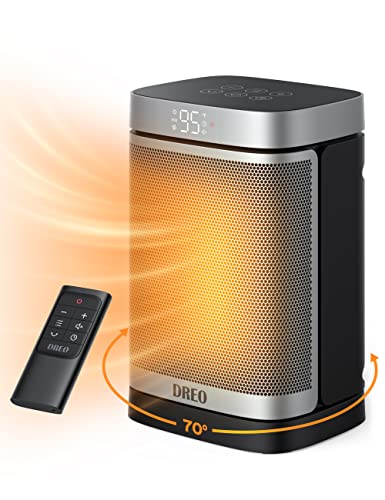
A good example of modern heater design is the DREO Space Heater (ASIN B0C6FCKQML), which uses a 1500W PTC ceramic system with a heat funnel that pushes warm air farther. Its NTC chipset allows temperature control in 1-degree increments from 41 to 95°F, which helps avoid overheating an empty room. Not every heater handles precision that well.
What ‘Energy Efficiency’ Actually Means for Electric Heaters
Every electric resistance heater — the kind with coils, ceramic plates, or oil-filled fins — converts nearly 100% of the electricity into heat. That’s physics. You put in 1500 watts, you get 1500 watts of heat. So technically, they are perfectly efficient at converting power to warmth.
But that number misses the real story. The inefficiency isn’t inside the heater; it’s in the way you use it. Heaters that run all day in an unoccupied room waste energy because the heat escapes faster than the room needs it. The thermostat matters more than the heating element.
Then there is the source. If your electricity comes from a coal plant at 35% efficiency, the overall chain from fuel to heat is lower than a gas furnace. But if you run solar panels on your roof, that same 100% electric heater suddenly looks different. Context changes everything.
Efficiency vs. Cost Per BTU – The Real Number That Matters
People ask me all the time: is it cheaper to heat with electric or gas? The answer depends on local utility rates. One kilowatt-hour (kWh) of electricity produces 3,412 BTUs. One therm of natural gas (100,000 BTUs) costs about $1 to $1.50 in many areas. A kWh might cost $0.12 to $0.30.
Do the math. At $0.15/kWh, that 3,412 BTUs comes to $0.15. To get the same 100,000 BTUs from electric resistance heat, you’d pay roughly $4.40. Natural gas at $1.20 per therm gives you the same heat for $1.20. So electric resistance costs three to four times more per BTU in most places.
That does not mean electric heaters are a bad choice. If you only need to warm one room for a few hours a day, running a 1500W heater is cheaper than blasting the central furnace for the whole house. Zone heating saves money when used carefully.
How to Maximize Electric Heater Efficiency in Real Life
Stick to these rules and your electric bill will stay reasonable. First, only heat the room you occupy. A 1500W heater pulls about $0.18 to $0.45 per hour depending on your rate. Running it eight hours a day for a month adds roughly $43 to $108. Compare that to raising the whole house thermostat by 5 degrees — the central system costs more.
Second, use the thermostat. Many heaters run full power until you manually shut them off. That is the most wasteful way to use one. Models like the DREO let you set a target temperature, so the heater cycles off when the room hits 68°F, then kicks back on only when needed. The NTC chipset in that unit is more precise than basic bimetallic thermostats common in cheaper models. That precision cuts run time without making the room uncomfortable.
Third, place the heater where airflow helps. A heater under a desk or behind a curtain will overheat the corner and leave the rest of the room cold. Put it in an open spot, near the floor, aimed toward the center of the room. The DREO’s winglet fan design reduces turbulence and pushes air farther, which helps the warm air mix evenly instead of pooling near the ceiling.
| Type of Electric Heater | Typical Efficiency (conversion) | Best Use Case | Notable Trade-off |
|---|---|---|---|
| PTC Ceramic (fan-forced) | ~100% at the plug | Quick heating small to medium rooms | Fan noise, can dry air slightly |
| Oil-filled radiator | ~100% at the plug | Long, quiet warmth in bedrooms | Slow to heat up, heavy |
| Infrared quartz | ~100% at the plug | Heating a person directly, not air | Does not warm the whole room well |
| Heat pump (mini-split) | 200-300% (COP 2-3) | Whole-room year-round climate control | Higher upfront cost, installation needed |
The table shows why heat pumps are the real efficiency champions — they move heat instead of creating it. But if you cannot install one, a well-controlled ceramic or oil heater is the next best option. The DREO is a ceramic fan-forced unit, so it heats fast but you will hear the fan. At 34dB, it’s quieter than many competitors, about the level of a soft whisper.
Frequently Asked Questions
Are electric heaters 100% efficient?
Yes, in the sense that all the electricity becomes heat. No energy leaves as light or motion. But that doesn’t mean you get $1 of heat for $1 of electricity — the cost depends on your rate and how long the heater runs. Also, heat that escapes through walls or windows makes the overall system less effective.
Do electric heaters waste electricity?
They only waste electricity if you heat an empty room or run them longer than needed. A heater with a programmable thermostat wastes far less than one you leave on all day. The waste is in your habits, not the device.
Is electric heat cheaper than gas heat?
Usually no, unless you live somewhere with very cheap electricity or expensive gas. In the U.S., electric resistance heat is about 2-3 times more expensive per BTU than natural gas. But for small spaces or occasional use, it can still be cheaper than heating the whole house.
Does a thermostat save energy on an electric heater?
Absolutely. A thermostat stops the heater from running when the room is warm enough. Without one, the heater runs full blast until you unplug it. That can double or triple the run time. The DREO’s ECO mode automatically adjusts based on temperature, which cuts energy use significantly.
Are ceramic heaters more efficient than other types?
All resistance heaters are the same efficiency at the plug. Ceramic models just heat up faster and distribute air better because of the fan. The real efficiency difference comes from how quickly they can warm a room, which means you can turn them off sooner. So yes, in practice a ceramic fan heater often uses less total energy than an oil radiator for quick spot heating.
Things Worth Remembering About Electric Heater Efficiency
- Every electric resistance heater is 100% efficient at turning power into heat — but efficiency is not the same as cost.
- Zone heating saves money only if you heat the room you’re in and turn it off when you leave.
- A precise thermostat (like the NTC system in the DREO) can cut run time by 20-30% compared to a basic on/off switch.
- Place your heater in open floor space, not behind furniture, to avoid wasted heat that never reaches you.
- Check your electricity rate per kWh and compare it to your gas rate per therm before committing to electric-only heat for large spaces.
- For whole-home heating, a heat pump is far more efficient than any resistance heater — consider it for long-term savings.
- A 1500W heater running 8 hours a day can add $40-$100 to your monthly bill; use a timer or smart plug to limit run time automatically.
For more context, read our comparison of energy efficient space heaters to see which models perform best in real homes. You might also want to check the benefits of electric heaters for specific situations like apartments or workshops.

I am a mechanical engineer and love doing research on different home and outdoor heating options. When I am not working, I love spending time with my family and friends. I also enjoy blogging about my findings and helping others to find the best heating options for their needs.
Related guides

Best Propane Pool Heater: Worth Every Penny for Summer Fun!
Ready to enjoy your pool year-round? Find out why the best propane pool heater is a game-changer for…
Finally Found the Best 40 Gallon Gas Water Heater!
Searching for the best 40-gallon gas water heater? Find top-rated options that deliver efficiency and comfort for your…
Reliable and Efficient: Best Stock Tank Heater Reviewed
Cheap heaters freeze—but Farm Innovators DPH-15 delivers warmth! When it comes to keeping your livestock's water from freezing,…