AO Smith vs Rheem Water Heaters: Which Is Better?
On this page 8 sections
- A. O. Smith vs Rheem at a Glance
- Rheem vs A. O. Smith Water Heaters: Match Capacity First
- Energy Costs Depend on Fuel and Efficiency
- Warranty Terms Belong to the Model
- Installation Depends on Fuel and the Existing Space
- Maintenance and Water Chemistry Affect Tank Life
- Choose the Model That Fits Your Home
- More Questions, Answered
The costliest mistake is choosing by brand reputation or tank capacity alone. A unit can fit the space and still run short of hot water, need electrical or venting upgrades, or carry warranty terms that differ from the model you thought you were buying.
A. O. Smith and Rheem both sell tank and tankless water heaters, including gas, electric and hybrid heat-pump options. Their model names and sales channels vary, so compare matching units rather than treating either company’s whole catalog as one product.
A. O. Smith vs Rheem at a Glance
| Factor | A. O. Smith | Rheem |
|---|---|---|
| Tank and tankless options | Offers tank and tankless models. | Offers tank and tankless models. |
| Fuel and model range | Gas, electric and hybrid heat-pump options are represented in the research. | Gas and electric options are represented in the research. |
| Capacity and recovery | Compare the exact model’s capacity, first-hour rating or flow rate. | Compare the exact model’s capacity, first-hour rating or flow rate. |
| Energy efficiency | Compare the unit’s efficiency rating and fuel cost. | Compare the unit’s efficiency rating and fuel cost. |
| Warranty terms | Coverage varies by model and tier; check the unit’s terms. | Coverage varies by model and tier; check the unit’s terms. |
| Installation requirements | Check fuel, dimensions, ventilation and the specific model’s installation requirements. | Check fuel, dimensions, ventilation and the specific model’s installation requirements. |
| Retail availability and service access | Commonly installed by plumbers through wholesale supply houses. | Available through retail stores such as Home Depot. |
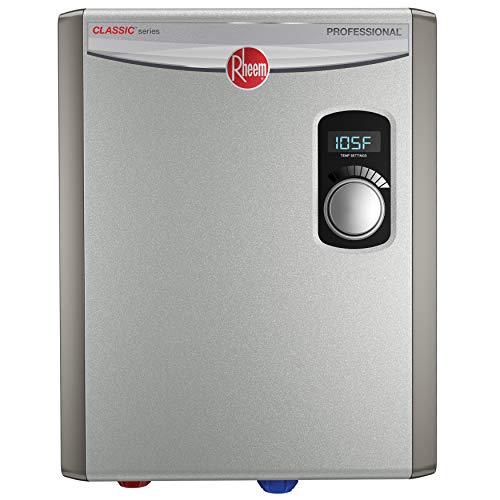
Rheem 18kW Tankless Electric
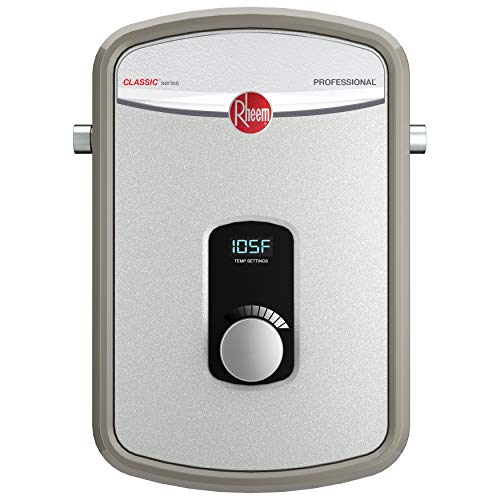
Rheem 11kW Tankless Electric
Rheem vs A. O. Smith Water Heaters: Match Capacity First
For Rheem vs A. O. Smith water heaters, neither brand is universally better: choose the model that meets your household’s peak demand and fits your fuel, space and service options. That’s the useful answer to “AO Smith vs Rheem,” “Rheem vs A.O. Smith,” and “which is better?” Compare the exact models, not the logos.
For a fair gas-tank comparison, put the Rheem Performance Plus 50-gallon gas model beside the A. O. Smith Signature 300 50-gallon gas model. Before comparing performance or warranty, confirm each unit’s full model number and current spec sheet; series names alone don’t establish matching recovery, dimensions or coverage. Check that both use the same fuel and have the same nominal capacity.
| What to compare | Why it matters |
|---|---|
| Fuel and capacity | A 50-gallon gas tank should be compared with a similar-size gas tank, not a propane or electric model. |
| First-hour rating | Shows how much hot water the heater can deliver in an hour, including stored hot water and recovery. |
| Dimensions and venting | The replacement has to fit the available space and meet the gas model’s installation requirements. |
| Efficiency and warranty | Compare the values and terms on the exact model’s current spec sheet. |
Tank capacity is the hot water stored in the tank; first-hour rating also accounts for how quickly incoming water is heated as hot water is drawn. Size for your household’s busiest hour, not a people-per-gallon shortcut. List which fixtures run together at peak time, then use the first-hour rating to check whether the heater can keep up.
For tankless models, compare flow at the temperature rise your home needs, not the headline maximum. The Rheem 18 kW 240V Tankless Electric Water Heater lists up to 4.4 GPM, while the Rheem 11 kW Multi Fixture Tankless Electric Water Heater lists up to 2.68 GPM; useful flow falls as incoming water gets colder or the required temperature rise increases. For more on choosing that type, see our tankless water heater guide.
Match efficiency figures by fuel and capacity: a model-specific UEF or Energy Factor comparison can’t establish that one brand is more efficient across the board. The A. O. Smith GCR-40LP is a 40-gallon liquid-propane tank, so it isn’t a like-for-like match for a 50-gallon natural-gas model. Voltex is A. O. Smith’s hybrid heat-pump line; compare those units separately, and see our hybrid heat pump water heater guide if that option fits your home.
Energy Costs Depend on Fuel and Efficiency

For AO Smith vs Rheem gas water heaters, or electric models, the brand name alone won’t predict the lower bill; compare the exact unit’s UEF, your fuel price and how much hot water your household uses. That applies to a Rheem vs A. O. Smith gas water heater comparison, Rheem gas water heaters vs AO Smith, and searches for AO Smith vs Rheem electric water heaters—including 40- or 50-gallon tanks.
A higher Uniform Energy Factor (UEF) means a model performed more efficiently under the rating method; it isn’t a bill estimate. Your actual cost depends on usage, energy rates and, for gas, the heater’s fuel consumption. For an AO Smith vs Rheem 100 electric water heater comparison, compare the same capacity and use assumptions rather than review claims; the same goes for a 40-gallon Rheem versus AO Smith electric water heater.
The winner is the exact model with the lower estimated annual operating cost while still meeting your household’s peak hot-water demand.
 Water Heater Owner's ToolkitFix the common faults yourself, keep it running for years, and know when a repair is money wasted.No-hot-water flowcharts, gas and electricFlush, anode, relief valve and descaling stepsRepair-or-replace calculator (Excel)
Warranty Terms Belong to the Model
For “are AO Smith water heaters more reliable than Rheem electric water heaters,” the available evidence doesn’t establish that either brand is more reliable: there’s no comparable failure-rate or service dataset, and individual units lasting longer can’t prove a brand ranking. Warranty periods vary by model and series, so conflicting claims about six-year terms, ten-year terms or paid upgrades don’t establish a universal winner.
Compare the written warranty for the exact model before you buy. Check the tank and parts terms separately, along with any registration deadline, installation conditions, exclusions and labor coverage. A longer parts warranty doesn’t automatically mean longer labor coverage or fewer failures.
For the least-maintenance liquid-propane 50-gallon water heater, A. O. Smith or Rheem, don’t assume one brand needs less care. Check the exact model’s manual for anode inspection, flushing and any other maintenance requirements; water conditions and the model’s instructions matter.
Choose the specific model whose written coverage and service access best fit your needs.
Installation Depends on Fuel and the Existing Space
For an A. O. Smith vs. Rheem tankless water heater, the better choice is the model your home can supply and vent safely; an 11 kW electric unit may need electrical upgrades before it can run. The same rule answers “Rheem or A. O. Smith?” for a tank: check the exact installation, not only the brand or gallon label. A tank swap can still require changes.
Rheem and A. O. Smith are separate manufacturers. State is an A. O. Smith-owned sister brand, not Rheem, and Rheem doesn’t make A. O. Smith water heaters. The relationship is the same regardless of how the question is phrased, including “relación entre A. O. Smith y Rheem.” For a “Giant vs. Rheem vs. A. O. Smith” comparison, compare model requirements across all three rather than assuming shared parts or installation needs.
Check Before You Replace
Gas water heaters need an installation space and venting that meet the manufacturer’s requirements and local code. Gas connections and vent changes are work for a qualified professional; improper venting can put combustion gases in the home.
Tankless is a different job from swapping a tank. Check gas or electrical capacity, water connections and venting where applicable, then confirm the unit can raise incoming water to the target temperature at your home’s flow rate. For the Rheem 11 kW Multi Fixture Tankless Electric Water Heater, the listed breaker, wire and service-panel requirements may make it a poor fit without electrical upgrades. Have an electrician check the panel before you buy.
A hybrid heat-pump water heater needs a suitable location, enough air volume and a plan for condensate; confirm the exact model’s manual. Retail availability can make Rheem easier to find in some areas, while A. O. Smith models are also commonly supplied through plumbing contractors. Both vary by model and location, so check local stock and who can install the unit.
Maintenance and Water Chemistry Affect Tank Life
For Rheem vs. A. O. Smith water heaters, neither brand has a proven lifespan advantage; the glass lining, anode condition, water chemistry, installation and model-specific upkeep all matter. That’s the useful answer to “which is better, A. O. Smith or Rheem?” and “is A. O. Smith better than Rheem?” The brand name alone can’t establish which tank will last longer.
A tank’s glass lining separates much of its steel shell from the water, but it isn’t a perfect barrier. The anode rod is sacrificial: it corrodes in place of the tank steel, and may need inspection or replacement as it wears. A depleted rod can leave the tank with less corrosion protection.
Follow the manual’s schedule for anode inspection and sediment flushing rather than treating either as an identical annual requirement for every heater. Water conditions and model design differ. If corrosion, scale or sediment keeps returning, ask a plumber about local water chemistry and suitable maintenance for your unit.
Claims that Rheem averages 12–15 years while A. O. Smith averages 10–12 aren’t established by comparable evidence, so don’t use those figures to choose a brand. There’s no proven winner for tank lifespan; maintenance, water chemistry, installation and the specific unit matter.
Choose the Model That Fits Your Home
Neither Rheem nor A. O. Smith is universally better. For which electric water heater is best, Rheem or A. O. Smith, compare specific models that meet your hot-water demand and installation requirements; the brand name alone can’t settle it.
- Record your current heater’s fuel, capacity and model number from its rating plate.
- Estimate peak demand: note how many showers and fixtures may run at once, and check the heater’s first-hour rating or tankless flow rate.
- Measure the installation space, including the room needed to access connections and service the unit.
- Verify the electrical supply or gas line, and check venting requirements for gas models. Have a licensed professional assess work that requires it.
- Compare matching spec sheets and warranty documents, including exclusions, registration conditions and labor coverage.
For electric tankless buyers, the Rheem 18kW 240V Tankless Electric Water Heater is listed with a maximum flow rate of 3.51 GPM; the Rheem 11kW Multi Fixture Tankless Electric Water Heater is listed at 2.68 GPM. Those are maximums, not a promise of that flow at your winter inlet-water temperature. Have an electrician or qualified installer check that your home’s electrical capacity can support the selected unit before you buy.
If you’re comparing electric models only, continue with our A. O. Smith vs Rheem electric water heater comparison for a focused, like-for-like look.
Choose A. O. Smith If
Choose A. O. Smith if a specific model fits your fuel, capacity and space, and your plumber can source it through the contractor channel. The 40-gallon A. O. Smith GCR-40LP is one model to compare if you need a liquid-propane tank; confirm its current specifications and written warranty before choosing it.
Choose Rheem If
Choose Rheem if a matching model suits your installation and its retail availability works better for you, or if one of its electric tankless models fits your verified electrical capacity and demand.
Winner rule: Choose the unit that meets demand, fits the site and has clear written coverage at a workable installed cost.