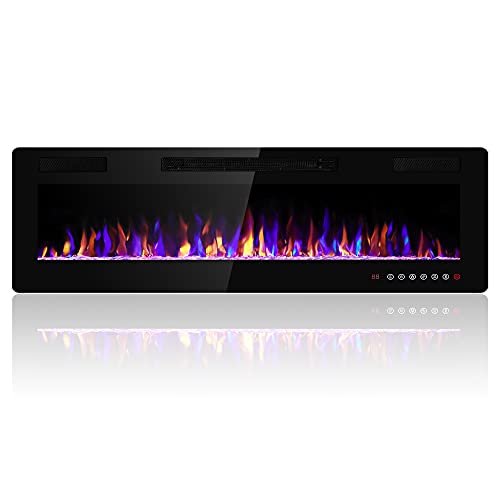
Xbeauty 50″ Electric Fireplace Recessed and Wall Mounted Insert
Electric fireplaces have changed how many people heat their homes by eliminating the need for venting and offering customizable warmth with ambiance. The 50-inch electric fireplace heater hits a sweet spot in size and power, fitting well in living rooms or bedrooms while providing enough heat for spaces up to 400 square feet.
This model blends modern design with practical features like adjustable flame colors and remote control, making it both a heating solution and a decorative centerpiece for contemporary homes.
What the Spec Sheet Says
| Size | 50″(W) x 18.11″(H) x 3.86″(D) |
|---|---|
| Flame colors | 12 including red, orange, blue |
| Flame speeds | 5 |
| Heating output | Heating output: Up to 1,500 W (approx. 5,100 BTU equivalent) |
| Control modes | Remote and touch screen |
| Installation | Recessed, semi-recessed, wall mounted |
Why the 50-Inch Electric Fireplace Heater Transforms Home Heating

The 50-inch electric fireplace heater offers a unique combination of size, heat output, and design flexibility that sets it apart for home heating. Sized to fit standard 2×4 stud walls, it suits typical room dimensions without awkward gaps or complex modifications.
This model typically delivers up to 5,100 BTUs, enough to heat about 400 square feet efficiently. That covers most living rooms, bedrooms, or open-plan spaces where supplemental or zone heating is needed. The ventless electric fireplace design means no chimney or gas line is required, simplifying installation and improving safety.
Installation options are one of the biggest reasons this size stands out. You can recess it fully into a wall for a flush, built-in look, semi-recess it to add depth and style, or mount it directly on the wall like a flat-screen TV. This versatility suits new builds, remodels, or renters who want to avoid permanent alterations.
Modern LED flame technology adds to the appeal. The flames are customizable with multiple colors and adjustable brightness, so you get ambiance without the heat if you want it year-round. Independent flame and heat controls let you run the visuals without turning on the heater, cutting electricity use and allowing the fireplace to be a decorative feature during warmer months.
Running Costs of the 50-Inch Electric Fireplace Heater
Understanding running costs helps decide if the 50-inch electric fireplace heater fits your budget. Most models have two power settings: 750 watts and 1,500 watts. These correspond to roughly 2,559 BTUs and 5,118 BTUs, respectively, letting you adjust heat output and electricity use.
Running the heater on the full 1,500-watt setting for 8 hours uses 12 kilowatt-hours (kWh) of electricity. At a typical US residential rate of 17 cents per kWh, that works out to about $2.04 per night. The lower 750-watt setting halves that cost to around $1.02 for 8 hours.
Compared to central heating, which warms the whole house including unused rooms, electric fireplaces save money by focusing heat where you need it. Gas or wood fireplaces can have higher upfront costs, require venting, and lose significant heat through chimneys, making them less efficient overall for zone heating.
Electric fireplace heater inserts like this one provide a flexible, plug-and-play option without pipe or vent installation. Using zone heating reduces your total heating bill by cutting down on wasted energy and allowing you to keep the main thermostat lower.
Safety Features for Homes with Children and Pets
The 50-inch electric fireplace heater includes multiple safety features specifically designed to protect homes with children and pets, making it a reliable choice for family living spaces.
One key safety certification to look for is the ETL listing. This means the unit meets strict North American safety standards for electrical and fire safety. Alongside this, built-in overheat protection automatically shuts off the heater if internal components reach unsafe temperatures, preventing fire hazards.
Unlike traditional fireplaces, electric units feature a cool-touch glass surface. This glass stays safe to touch even when the heater is running at full heat, greatly reducing burn risks for curious hands and paws.
Freestanding 50-inch models often include a tip-over switch that instantly cuts power if the unit is knocked over. Wall-mounted units usually lack this feature since they are securely fastened, but freestanding models rely on it to prevent accidents in active households.
Most electric fireplaces separate the flame effect controls from the heater controls through independent physical switches. This design limits accidental operation of the heat—so the flame can run for ambiance without warming the room unintentionally.
Electric fireplaces like these do not emit real flames, smoke, or carbon monoxide, making them safe for apartments and condos without special venting or emissions concerns. This also means they can be installed where gas or wood fireplaces cannot.
If you see an error code like e5 on the control panel, it usually signals a sensor or overheating issue. Checking the manual will guide you through safe troubleshooting steps or when to call for service.
Taking apart an electric fireplace heater for any internal cleaning or repair should only be done after unplugging the unit. Most models open at the back or bottom panel with screws and require careful handling of electrical components and flame effect LEDs.
Together, these features make the 50-inch electric fireplace heater safe for active homes with children and pets, while providing flexible, worry-free warmth and ambiance.
Comparing the 50-Inch Electric Fireplace to Gas and Wood Models
Electric fireplaces convert almost all the electricity they use directly into heat, with no loss through a chimney or vent. That means 100% of the electric power goes into warming your room, unlike gas or wood fireplaces that lose heat up the flue.
You won’t find a chimney, vent, or gas line with a 50-inch electric fireplace heater. Installation is plug-and-play: just mount it on the wall or insert it into a suitable opening, then plug it into a standard outlet. This simplicity avoids the structural work and permits usually needed for gas or wood units.
Because there’s no combustion, electric fireplaces don’t produce emissions or carbon monoxide, making them safer indoors. That’s a stark difference from gas and wood fireplaces, where proper venting and fresh air supply are critical to avoid health hazards.
The heat output of a typical 50-inch electric fireplace heater runs up to about 5,100 BTUs, which is lower than a large wood or gas fireplace that can easily exceed 20,000 BTUs. It won’t heat a whole house but works well for zone heating — like a living room or den — where you want targeted warmth without wasting energy on unused rooms.
Electric fireplaces offer adjustable heat settings and flame effects controlled by remote or app, but they don’t produce the natural crackling sound, smell, or authentic flame flicker you get from burning wood or gas. Instead, they use LED or 3D flame technology to simulate the look of fire without the maintenance or mess.
Indoor non-electric fireplaces require ventilation and a gas or wood supply, plus regular cleaning of ashes or soot. Electric inserts avoid all that, making them practical for apartments, condos, and rooms where venting isn’t possible or allowed.
| Feature | 50-Inch Electric Fireplace | Gas or Wood Fireplace |
|---|---|---|
| Heat Output | Up to 5,100 BTUs | Typically 20,000+ BTUs |
| Installation | Plug-in, no vent or gas line | Requires venting, gas line or chimney |
| Emissions | Zero, no combustion | Carbon monoxide, smoke emissions |
| Maintenance | Minimal, no ashes or chimney cleaning | Regular chimney cleaning and fuel supply |
| Flame Realism | Simulated LED or 3D flames | Real flames, sound, and smell |
If you want guidance on the electric fireplace insert settings, start with low heat to warm the zone and adjust flame brightness for ambiance. Most units let you run the flame effect without heat year-round, adding style even in warm months.
Choosing between electric, gas, or wood depends on your priorities. Electric fireplaces excel in easy installation, safety, and efficiency for zone heating, while gas or wood fireplaces deliver higher heat and the sensory experience of real fire but at the cost of complexity, maintenance, and emissions.
For homeowners seeking a clean, simple, and efficient heating option with modern features and flexible placement, the 50-inch electric fireplace heater offers an appealing alternative to traditional fireplaces, especially when full-house heating isn’t required.
If you want to explore more electric fireplace insert options and their features, check out electric fireplace inserts for detailed comparisons and buying advice.
Styles and Installation Tips for the 50-Inch Electric Fireplace
The 50-inch electric fireplace offers a sleek linear design that fits naturally with modern decor and works well under TVs or in entertainment centers. Its dimensions typically range around 50 inches wide, about 20 inches high, and 6-8 inches deep, making it a perfect fit for many common wall spaces without overwhelming the room.
Installation flexibility is a major advantage. You can choose recessed, semi-recessed, or wall-mounted setups depending on your wall construction and room layout. Recessed installation gives a flush, built-in look but may require a buildout kit to cover gaps if your wall studs don’t align perfectly with the fireplace’s depth. Semi-recessed units partially sit in the wall for a slimmer profile, while wall-mounted models hang entirely on the surface for easy placement and removal.
Most 50-inch fireplaces are designed to fit within standard 2×6 stud walls thanks to a physical switch panel positioned on top or the side, allowing access without cutting into drywall or disrupting wiring. This switch design simplifies installation and controls without needing remote operation exclusively.
Lifespan and Repair Considerations for the 50-Inch Electric Fireplace
A typical 50-inch electric fireplace lasts between 10 and 15 years under normal use. The lack of moving parts and no real flame reduces wear compared to gas or wood units. Still, some components may need attention over time.
Maintenance is low since you don’t have to clean chimneys or store fuel. The main upkeep is dusting vents and keeping the glass clean to maintain both appearance and efficient heat delivery.
LED flame lights and heating elements can fail after years of use but are usually replaceable. Replacing the heater element involves unplugging the unit, removing the front panel, and swapping the faulty heating component with a compatible part—usually a task for someone comfortable with basic electrical repairs or a technician.
Physical switches and remote controls may require battery replacement or fixing contacts if they stop working. Check the warranty coverage before purchasing as some models offer longer protection on electrical components than others.
Top 50-Inch Electric Fireplace Heaters Reviewed

Manastin 50″ Electric Fireplace Heater Multi-Color Recessed Wall Mounted

Westinghouse 50″ Electric Fireplace Heater Alexa & Google Compatible
More Questions, Answered
What does error code E5 mean on an electric fireplace heater?
Can the 50-inch electric fireplace heater be used year-round?
Are electric fireplaces effective as the main heat source in cold climates?
How do I safely take apart an electric fireplace heater for maintenance?

HeaterGuides covers home heating, water heating and HVAC: how the equipment works, what it costs to run, and how to use it safely.