A water heater extra pipe is usually a vent, drain, or safety discharge line, and the right answer depends on which end is open and where it goes. A pipe cover is a protective housing that shields exposed plumbing from weather and damage. Outdoor tankless units often need one because the pipes sit outside in the cold like they drew the short straw.
The most common mistake is treating every extra pipe as cosmetic and ignoring it until the fittings freeze, leak, or crack. That can turn a cheap fix into a plumber visit, a wet wall, or a no-hot-water morning.
On a water heater, the pipe tells you more than the label does. A discharge line, condensate drain, and vent all do different jobs, and only one of them belongs in a cover made for outdoor plumbing.
What to remember
Trace the pipe before you touch it; where it ends tells you what it does.
A T&P discharge line must stay open and unobstructed, never capped or plugged.
Outdoor tankless heater piping benefits from a proper cover when weather can hit the lines directly.
If the pipe carries exhaust, condensate, or relief water, the fix is different from a simple cosmetic cover.
Water Heater Extra Pipe: What It Usually Is
A water heater extra pipe usually carries exhaust, condensation, or pressure relief water; it isn’t leftover plumbing waiting for a purpose. Where the pipe starts and ends tells you what it does: a pipe rising from the heater may vent combustion gases, while one ending at a drain or outside may handle condensate or emergency discharge.
Gas water heaters use a vent from the top of the unit to a chimney or an outdoor termination, depending on the design. High-efficiency condensing models can also have a condensate drain that runs to an approved drain. Every storage water heater has a temperature-and-pressure relief valve, commonly called the T&P valve, with a discharge line directed toward a safe termination point.
Pipe type
What it does
What not to do
Vent or flue
Carries combustion gases from a gas water heater to the approved vent termination.
Don’t cap it, disconnect it, reduce its size, or substitute random pipe. Venting changes can send carbon monoxide indoors.
Condensate drain
Moves acidic water produced by a high-efficiency condensing heater to an approved drain or disposal point.
Don’t block, kink, or route it where water can damage the building.
T&P discharge line
Provides a path for hot water or steam if the temperature or pressure becomes unsafe.
Never cap, plug, valve off, or remove it. Don’t touch the end after a discharge; the water may scald.
The pipe’s origin, destination, and connection to the heater matter more than its size or appearance.
Myth
An extra pipe is always leftover plumbing from an old installation.
Fact
Most visible extra pipes serve a specific job. A vent removes combustion gases, a condensate drain removes water made during operation, and a T&P line provides an emergency escape path. An abandoned pipe can exist, but you can’t identify it safely by appearance alone.
In short
Trace both ends before moving, covering, or cutting any pipe. A line connected to the vent or T&P valve is part of the heater’s safety system, not a spare fitting.
A vent may look like ordinary metal duct, while a condensate line can resemble a small plastic drain tube. The T&P line normally connects to the relief valve near the upper part of a tank and terminates where a discharge can be seen without creating a burn hazard. If the pipe is part of the exhaust system, a guide to double wall vent pipe for water heaters can help you identify the arrangement without guessing.
Before You Touch It
Photograph the pipe and trace its route to the termination point first. Don’t tape over an open end, add a valve, or disconnect a line simply because it looks unused; gas connections, venting, and relief-valve work often require a licensed plumber or other qualified professional.
Why Water Heater Pipes Need A Cover Outdoors
A water heater pipe cover shields exposed plumbing from weather and knocks; an outdoor tankless water heater pipe cover is meant for the water connections and fittings outside the cabinet, not automatically for the burner or vent.
Wind can flex or chill exposed lines, rain can reach fittings, sunlight can age some plastics, and freezing temperatures can expand trapped water until a fitting cracks. A cover reduces that exposure, but it isn’t a substitute for the freeze protection, insulation, heat tape, or clearance requirements in the heater’s manual. Cold weather remains annoyingly good at finding the weak link.
Before buying anything, check the heater’s model number and the manufacturer’s outdoor piping kit. A model-specific assembly should fit the connection layout and leave the parts that technicians need to reach accessible.
For compatible Rheem outdoor models
Rheem Tankless Gas Water Heater Pipe Cover Assembly for Outdoor Use
Product 1 is a pipe cover assembly for RTG-X-3, RUTG-X-3, RMTG-X-3, and ECO-X-3 outdoor tankless water heaters, and it protects home plumbing from exterior elements. It won’t fit every outdoor tankless heater or replace the unit’s required venting and freeze protection.
Trace the exposed pipes from the heater to the wall and compare that shape with the kit’s installation information. A plumbing cover should protect those lines and fittings; a vent cover or burner enclosure is a different part with different requirements.
Don’t Seal In A Problem
A cover must not block the service panel, drainage path, pressure-relief discharge, combustion-air openings, vent termination, or the clearances listed for the heater. Never wrap or enclose the vent system unless the heater and the cover are specifically listed for that use.
Freeze protection deserves separate attention because a cover alone may only slow heat loss. If the manual calls for pipe insulation, a built-in heater, heat-trace cable, or a minimum ambient temperature, follow that instruction instead of treating the cover as a winter guarantee.
How To Tell A Safe Pipe From A Problem
Why does my water heater have an extra pipe? Usually, that pipe is a vent, drain, or temperature-and-pressure relief discharge line doing a specific safety job. Its location, temperature, and open end tell you more than its existence does.
If your water heater extra pipe is leaking, first identify what is dripping. A T&P discharge line near the tank should be open at the end and aimed downward toward a safe drain or approved termination point; it must never be capped or plugged. Occasional discharge needs inspection, while steady hot water usually means the valve or the heater has a problem.
Check These Four Clues
Location: a pipe at the top or side of the tank may be a T&P discharge, while a pipe connected to a flue collar is part of the exhaust system.
Temperature: a vent can become dangerously hot during operation; don’t touch it to test it. A warm or hot discharge line may indicate that water has left through the relief valve.
Water: look for active dripping, a wet floor, mineral deposits, or a white trail where evaporated water dried.
Open end: a relief discharge line needs a visible, unobstructed termination. A capped end, shutoff valve, or pipe that disappears into an unsafe spot needs attention.
Rust, mineral streaks, dripping, or heat damage are warning signs even when the heater still makes hot water. Corrosion can weaken a fitting, and heat damage near plastic pipe or wiring can point to a venting or clearance problem.
Worked Example
Say a hypothetical gas tank water heater has three nearby pipes. The copper line at the top ends open and points downward toward a floor drain, so it likely serves the T&P valve. A larger pipe attached to the flue collar carries exhaust and should remain intact, correctly supported, and routed as the installation requires. A small line from a drain pan may carry pan water away. Water from the relief line, rust around a joint, or scorching near the vent calls for inspection rather than a plug or patch.
Don’t Cap A Relief Line
A T&P valve and its discharge line are safety equipment. Never cap, plug, narrow, or add a shutoff valve to stop a leak; shut down the heater if needed and have a licensed plumber inspect the cause.
From HeaterGuides · our own guidePages 9 to 13 are the fault flowcharts: no hot water, noises, smells and leaks, in order.Water Heater Owner's ToolkitFix the common faults yourself, keep it running for years, and know when a repair is money wasted.No-hot-water flowcharts, gas and electricFlush, anode, relief valve and descaling stepsRepair-or-replace calculator (Excel)$14.99$9.99Get it for $9.99See what's inside and watch the 2-minute video →18-page printable PDF + Excel calculator · instant download · 30-day refund
Running Cost And Room Fit For Covered Outdoor Lines
Water heater extra pipe cost depends on the heater model, the cover’s fit, and installation labor; the cover itself usually changes fuel cost very little. Its practical value is protecting exposed connections from weather, impact, and freeze damage that can lead to a repair or service call.
A tankless outdoor pipe cover matters most when the unit sits on a side wall, in an exposed utility area, or anywhere wind and freezing weather reach the water connections. If your outdoor tankless heater has exposed connections and the cover is made for its model, a fitted assembly can shield that plumbing without pretending to improve the burner’s efficiency.
For specified outdoor Rheem models
Rheem Tankless Gas Water Heater Pipe Cover Assembly for Outdoor Use
Product 1 is a pipe cover assembly for RTG-X-3, RUTG-X-3, RMTG-X-3, and ECO-X-3 outdoor tankless water heaters. It protects exterior plumbing, but it won’t correct wrong clearances, bad venting, or a leak.
Protect connections if the installation leaves them exposed.
Outdoor tankless
Often yes
Match the cover to the heater model and protect the exterior water connections.
The heater’s location and exposed plumbing matter more than the word tankless.
In short
A cover is a protection purchase, not a fuel-saving upgrade. It suits outdoor tankless installations and exposed utility spaces; an indoor tank heater in a conditioned room generally doesn’t need one.
What To Do Before You Buy A Cover
A water heater pipe cover assembly must match your heater series and pipe layout, especially on an outdoor tankless model. A generic box can block an access panel, pinch a connection, or leave the freeze-prone fitting exposed.
For a compatible Rheem outdoor tankless model, product 1 is the outdoor-use assembly made for the RTG-X-3, RUTG-X-3, RMTG-X-3, and ECO-X-3 series.
For a compatible outdoor Rheem model
Rheem Tankless Gas Water Heater Pipe Cover Assembly for Outdoor Use
It shields the exterior water connections and plumbing from weather. It doesn’t replace the heater’s built-in freeze protection or correct a pipe layout it wasn’t made to fit.
Confirm the exact heater model and series on the rating plate.
Measure the cover area, pipe spacing, pipe projection, and available height and width.
Check that the cover won’t hide the access panel, controls, shutoff valves, or drain points.
Take clear photos of the front, both sides, the pipe connections, and the rating plate.
Confirm the installation manual’s service clearance and freeze-protection requirements.
When no cover is right
Skip a cover when the heater is indoors, the plumbing is already inside a protected enclosure, or the proposed cover would reduce service clearance. A cover also won’t solve a leaking fitting, failed freeze protection, or a pipe that needs rerouting.
When The Extra Pipe Means Call A Pro
Water heater extra pipe code questions deserve a licensed professional when the pipe involves gas venting, a water heater discharge pipe, or work near gas, flue, or electrical parts. Those systems can affect combustion, carbon monoxide safety, scald protection, and the heater’s listing.
Never cap a relief pipe
A T&P relief discharge line must remain able to discharge safely; capping or plugging it is never the fix. A leaking discharge line, scorched pipe, or recurring pressure relief needs inspection before the heater keeps operating.
Gas vent changes require the correct vent material, joints, clearances, and termination for that heater. A professional should also handle gas connections, 240-volt electrical work, and any repair that requires removing a flue panel or opening the combustion area.
1
Shut down safely
If you smell gas, see scorching, or suspect flue-gas leakage, leave the area and follow your gas utility or emergency instructions. Don’t troubleshoot a combustion appliance in place.
2
Document the pipe
Photograph where the pipe starts and ends, note any dripping or staining, and record the heater model. Don’t alter the pipe before the inspection.
Local rules apply
Local code can change vent and relief requirements, and some installations need permits or approved materials. The heater manual and your local authority having jurisdiction decide what is allowed.
Questions People Ask
What is the extra pipe on top of my water heater?
It may be the cold-water inlet, hot-water outlet, gas vent, or temperature-and-pressure relief discharge pipe. Trace where it starts and ends before touching it; an open-ended pipe near the tank can be a safety discharge line, not spare plumbing.
Is a water heater discharge pipe supposed to drip?
A brief drip during pressure or temperature changes can happen, but steady dripping signals a relief valve or pressure problem. The pipe must end visibly and safely; never cap or plug it, since the valve needs to release dangerous tank pressure.
Do outdoor tankless water heaters need a pipe cover?
Many do when water connections and fittings are exposed to weather, freezing temperatures, or impact. Choose a cover made for the heater series and leave required access and clearances; a cover won’t replace freeze protection built into the heater or required by its manual.
Can I cap the extra pipe on my water heater?
Don’t cap a temperature-and-pressure relief discharge pipe, drain line, or vent. Blocking a safety path can turn a small leak or pressure event into equipment damage or a serious hazard; identify the pipe and have a licensed plumber correct it.
Before you go · a welcome giftGet the Water Heater Owner's Toolkit for $4.99Fix the common faults yourself, keep it running for years, and know when a repair is money wasted. Normally $14.99; your welcome price saves $10.00. We'll email your link right now.or skip the email and buy it now for $4.99 →One email with your link now. We never share your address.


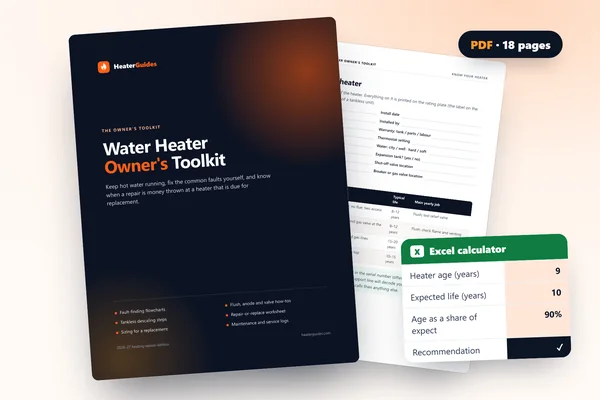 Water Heater Owner's ToolkitFix the common faults yourself, keep it running for years, and know when a repair is money wasted.No-hot-water flowcharts, gas and electricFlush, anode, relief valve and descaling stepsRepair-or-replace calculator (Excel)