

You live on a few acres, miles from a natural gas line. Every winter you face the same choice: spend weekends splitting and stacking firewood or watch your propane gauge drop faster than a hot knife through butter. Wood heat is cheap if you have time and a chainsaw, but it’s also dirty, inconsistent, and requires constant attention. Propane is convenient but expensive and subject to price spikes. There needs to be a middle ground.
Pellet stoves fill that gap better than any other option for rural homeowners. They burn compressed wood or biomass pellets, look like a modern wood stove, but run with almost no work on your part. You fill a hopper, set a thermostat, and the stove feeds itself for days. This article will walk you through what pellet stoves really cost, how they compare to other heat sources, and bust a few myths that keep people from buying them.
UNITED STATES STOVE Co
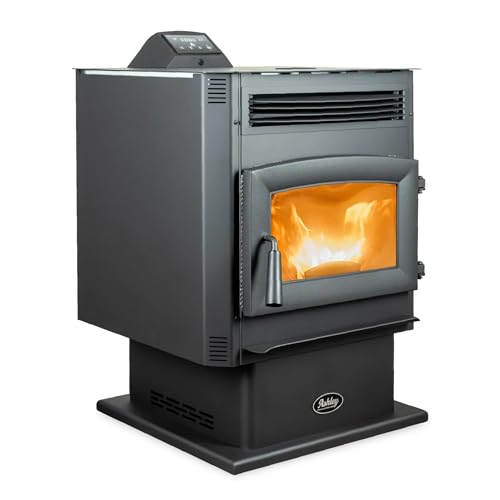
Ashley 2,200 Sq. Ft. Pellet Stove w/Wi-Fi
- Heats Up To 2,200 Square Feet of Living Space
- Up to 30,000 BTUs
- Up to 90 lbs hopper capacity
One model worth a close look from the start is the Ashley 2,200 Sq. Ft. Pellet Stove w/Wi-Fi from United States Stove Co. It handles up to 2,200 square feet, puts out 30,000 BTUs, and holds 90 pounds of pellets. On the lowest setting it runs over 47 hours without refilling. The top-mounted digital controls and Wi-Fi connectivity let you adjust heat from your phone, which matters if you come home to a cold house after work.
Myth #1: Pellet Stoves Are Just Fancy Wood Stoves
I hear this one constantly. A wood stove and a pellet stove both burn wood, so they must be the same. They are not. A wood stove is a big metal box with a door. You load logs, adjust an air intake, and hope the fire burns evenly until you add more wood. It works, but your heat output follows a sawtooth pattern: hot after loading, cool as the fire dies, then hot again.
A pellet stove has a motor, an auger, and a combustion fan. Pellets drop from the hopper into a burn pot at a controlled rate. That means steady heat output hour after hour. You can set a thermostat to 68°F and the stove modulates its burn rate to stay there. No more waking up to a cold house because the fire went out at 3 AM.
Efficiency numbers tell the story. Modern pellet stoves often achieve 70-85% thermal efficiency. Compare that to a typical wood stove, which struggles to hit 60-70%, and a lot of that heat goes up the chimney. Pellet stoves also produce almost no creosote, so chimney fires are far less common. A wood stove requires you to split, stack, season, and haul logs. Pellets come in 40-pound bags that stack neatly in a garage or shed.
Myth #2: Pellet Stoves Cost Too Much to Run
People look at the price of pellets and assume they are expensive. At current rates, a ton of premium hardwood pellets runs between $250 and $350 delivered to the rural areas I work with. A typical home in a cold climate burns 3 to 6 tons per winter. That works out to $750 to $2,100 per season. How does that compare?
Propane at $3.00 per gallon (common in the Northeast) will cost you $1,800 to $3,600 to heat the same space. Electric resistance heat is even worse: at $0.12/kWh, you are looking at $2,500 or more for a moderately sized home. Heat pumps can beat pellet costs in mild weather, but below 20°F they lose efficiency quickly and need backup heat.
The real savings come from buying pellets in the summer when demand is low. Many dealers offer a discount of $30-50 per ton. If you have dry storage space, buy a whole winter’s worth at once. And do not forget the side benefit: pellet stoves qualify for a federal tax credit (26% in 2026-2032 for qualifying units, check current rules). That knocks hundreds off the purchase price.
Yes, you need electricity to run the fans and auger. But a small backup battery or generator solves that for power outages. Modern stoves draw only 150-400 watts while running, less than a typical TV.
What Size Pellet Stove Do You Actually Need?
Bigger is not always better. Oversizing a pellet stove causes short cycling — the stove reaches the set temperature, shuts off, and cools down fast, then fires up again. That wastes pellets and wears out components. Correct sizing depends on your home’s square footage, ceiling height, insulation, and window quality.
As a rule of thumb, you need about 30 BTUs per square foot in a reasonably insulated home in a moderate climate. That means a 30,000 BTU stove like the Ashley model handles 1,000 square feet in a cold climate or up to 2,200 square feet in a milder area with good insulation. If your house is drafty or has vaulted ceilings, go up one size. If you live in Minnesota, you might need more.
Hopper size matters too. A 90-pound hopper on low burn runs nearly two full days. That means you can leave for a weekend trip and come back to a warm house. Smaller 40-pound hoppers require daily refills. I would not buy a stove with less than a 60-pound hopper for primary heating.
Here is a quick comparison of the four main heating options for rural homes:
| Factor | Pellet Stove | Wood Stove | Propane Furnace | Electric Resistance |
|---|---|---|---|---|
| Fuel cost per million BTU | $15-25 | $10-20 (if you cut own wood) | $30-45 | $35-50 |
| Maintenance work | Weekly ash bin, annual cleaning | Daily reload, frequent ash removal, chimney sweeping | Annual professional tune-up | None |
| Autonomy without attention | 24-48 hours (hopper size dependent) | 4-8 hours (logs) | Infinite (fuel supply) | Infinite |
| Installation complexity | Moderate: needs venting, electricity | High: needs chimney or insulated flue | High: ductwork, gas line, permits | Low: plug in |
| Backup during power outage | Battery/generator required | Works without electricity | Works without electricity (gas) | Dead |
The Wi‑Fi Factor – Helpful Gimmick or Genuine Upgrade?
Wireless control on a heating appliance sounds like something you would never use. I thought the same until I had a Wi‑Fi pellet stove for one winter. The Ashley model includes Wi‑Fi, and it’s not just a novelty. You adjust temperature, check pellet level, and set schedules from your phone. If you leave for work and forget to turn down the heat, you fix it from the road. That saves pellets.
The real value comes if you have a vacation home or spend weekends away. You can turn the stove on a few hours before you arrive, so the house is warm when you walk in. Without Wi‑Fi, you would either waste fuel keeping it hot all week or arrive to a freezing house and wait hours for heat.
That said, Wi‑Fi adds complexity. If your home internet goes down, the stove still works manually — the controls are physical. But you lose remote access. For most people, it’s a nice upgrade, not a dealbreaker. If you never adjust heat remotely, save the money.
Frequently Asked Questions
Do pellet stoves smell?
Less than a wood stove. During normal operation, you smell almost nothing inside the house. When the stove shuts off or you open the door to clean, you get a faint dusty smell. Quality pellets produce less ash and odor than cheap ones. Keep the burn pot clean and you won’t notice it.
Can I run a pellet stove without electricity?
Not without a battery backup or generator. The auger and fans need power. A small 12V battery system rated for 300-400 watt-hours can run a stove for 6-10 hours. Or use a compact generator. Some newer models offer DC versions that are more efficient off-grid, but they are less common.
How often do I need to clean a pellet stove?
Every 1-3 days you should empty the ash pan and scrape the burn pot. Once a month, clean the heat exchangers and exhaust vent. Full annual maintenance includes a deep clean of the blower, auger, and chimney. Skipping cleaning leads to reduced efficiency and risk of a back burn.
Are pellet stoves safe for a mobile home?
Yes, but only if the stove is listed for mobile home installation. Look for a UL or ULC listing that specifies mobile home. You also need an outside air intake kit and proper clearance from combustibles. Many modern stoves, including the Ashley model, are approved for manufactured homes.
What’s the lifespan of a pellet stove?
With good maintenance, 15-20 years. The combustion chamber and heat exchanger can last longer. The motors and electronics might need replacement after 10 years. Buy from a reputable brand like United States Stove Co so parts are available. Cheap off-brand stoves often have short-lived control boards that are hard to replace.
What You Should Do Next
- Measure your home’s square footage and check insulation quality before shopping. Do not guess.
- Budget for a professional installation with proper venting, especially if you are converting from a fireplace.
- Buy pellets in bulk during summer to lock in lower prices. Stack bags off the floor on pallets to keep them dry.
- Look for a hopper size of at least 60 pounds if the stove will be your primary heat source. The Ashley’s 90-pound hopper is ideal.
- Consider Wi‑Fi models if you travel frequently or want to set heating schedules from your phone.
- Factor in the federal tax credit for qualifying pellet stoves — it can offset a chunk of the purchase cost.
- Read the owner’s manual cover to cover before lighting your first fire. Clean the stove regularly and keep spare auger motor on hand.
Pellet stoves combine the romance of wood heat with the convenience of a modern furnace. They are not perfect — electricity dependence and pellet storage are real downsides. But for rural homeowners who want steady, affordable heat without the daily grind of a wood stove, they are the best compromise you can buy. Head over to Amazon and check the current price on the Ashley 2,200 Sq. Ft. Pellet Stove w/Wi‑Fi. It is a solid starting point for any off‑gas‑line home.

I am a mechanical engineer and love doing research on different home and outdoor heating options. When I am not working, I love spending time with my family and friends. I also enjoy blogging about my findings and helping others to find the best heating options for their needs.
Related guides

Pellet Stoves as Primary Heat: Costs, Benefits & Setup Tips
Pellets serve as an efficient and eco-friendly primary heating source, providing consistent warmth while reducing carbon emissions compared…
Pellet Stove Troubleshooting: Fix Common Issues Fast
Troubleshooting common pellet stove issues: Start by checking the power supply, ensuring the hopper is filled with pellets,…
Pellets vs Firewood: Which Fuel is Better for You?
Choosing how to heat your home is a big decision. It's about comfort, cost, and your lifestyle. The…
