

Living in a desert means living with a building that bakes all day and then refuses to cool down at night. You run the AC at 72°F, yet the walls still radiate heat like a brick oven at midnight. The problem isn’t your AC unit. The problem is the thermal envelope surrounding it.
Most desert homeowners fight the sun with brute force — oversized air conditioners and astronomical electric bills. There’s a smarter way. This guide walks through the physics of desert heat, the passive strategies that actually move the needle, and how to automate it all with modern smart home gear. You’ll get specific numbers, not vague advice, and a clear path from cheap retrofits to full new-build strategies.
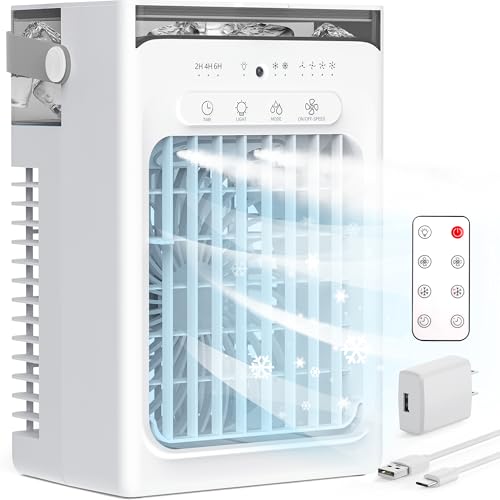
SOLEEY
Portable Air Conditioners, Air Cooler Evaporative Personal…
- ❄【Cool Down the Air Effectively】Our portable air conditioners use the dual ultrasonic nebulizer and upgraded motor triple refriger…
- ❄【1100 ML Water Tank & Anti-drip design】Our portable air conditioner is with upper 1100 ml water tank design and lower anti-drip d…
- ❄【Multifunctional with Remoter】The air cooler can be adjusted multi-function by remoter. 4 adjustable wind speeds (1/2/3/4 Level)…
For immediate relief in a single room or while you work on the bigger picture, a portable evaporative cooler like the SOLEEY Portable Air Conditioner offers a practical stopgap. It uses dual ultrasonic nebulizers and a 1100 ml water tank to drop temperatures in dry air, and its low 8W draw won’t punish your power bill.

The Desert Heat Problem: Why Standard Cooling Fails
Desert climates throw a specific curveball: extreme diurnal temperature swings. A typical summer day in Phoenix sees 108°F at 3 PM and 82°F at 3 AM. That’s a 26-degree swing. Conventional cooling systems treat the house as a closed box, recirculating the same air while the structure itself absorbs heat all day.
Here’s the kicker: your walls, roof, and windows store that heat. By evening, when you want to sleep, those surfaces slowly release the stored energy back into the living space. Your AC runs longer, cycles harder, and consumes more power just to maintain a constant temperature. This is called the thermal flywheel effect, and it’s the primary reason desert homes feel stuffy even with a powerful AC.
Standard cooling also fails because it ignores humidity. Desert air is dry, which is actually an advantage. Dry air makes evaporative cooling highly effective, but it also means your skin loses moisture fast, and dust becomes a constant nuisance. A smart strategy uses this dryness to your benefit rather than fighting it.
The Thermal Envelope: Insulation and Radiant Barriers
Before you touch landscaping or smart thermostats, fix the building shell. The thermal envelope — the barrier between conditioned indoor air and the brutal outdoors — determines how much heat enters in the first place.
Attic and Wall Insulation R-Value Targets
Most desert homes built before 2026 have inadequate insulation. The U.S. Department of Energy recommends R-38 to R-60 for attics in hot climates, but many older homes sit at R-19 or lower. Upgrading attic insulation from R-19 to R-49 can reduce cooling load by up to 40%. That’s not a small number.
Walls matter too, but they’re harder to retrofit. For new builds, target R-21 to R-25 in wall cavities. For existing homes, consider blown-in cellulose insulation, which can be injected through small holes in the siding without a full remodel. Cellulose also adds thermal mass, which helps dampen temperature swings.
Reflective Roofing and Cool Coatings
A standard dark asphalt shingle roof absorbs about 90% of solar radiation. A white or highly reflective cool roof reflects 60-80% of that energy. The difference in attic temperature is dramatic: 140°F under a dark roof versus 105°F under a cool roof on the same 100°F day.
Cool roof coatings are a cheap retrofit. A high-quality elastomeric coating costs roughly $1.50 to $3.00 per square foot and can lower surface temperatures by 30-40°F. You don’t need to replace the roof; you just need to paint it with a reflective material. Radiant barriers in the attic — essentially a layer of foil facing an air gap — block radiant heat transfer from the hot roof deck to the insulation below. They’re inexpensive and can cut cooling costs by 5-10% in hot climates.
Passive Cooling: Design and Architecture
Passive cooling means designing the building to shed heat without mechanical assistance. It’s not about adding gadgets; it’s about working with the physics of the desert.
Thermal Mass Materials (Adobe, Concrete, Rammed Earth)
Thermal mass is the unsung hero of desert architecture. Materials like adobe, concrete, and rammed earth absorb heat during the day and release it at night when temperatures drop. This creates a natural time delay, keeping interiors cooler in the afternoon and warmer in the early morning.
A 12-inch-thick adobe wall has a thermal lag of roughly 8-12 hours. That means the peak heat from noon sun reaches the interior around 8 PM, exactly when outdoor temperatures are falling. The effect is a naturally modulated indoor climate. Concrete and rammed earth perform similarly, though rammed earth has a lower embodied energy footprint.
The catch: thermal mass only works if it’s exposed to the indoor air and shaded from direct sun. Covering adobe walls with drywall or placing them in direct sunlight negates the benefit. If you’re building new, orient mass walls to the north and south, and shade them with deep overhangs.
Strategic Shading and Overhangs
Shading is the cheapest passive cooling strategy, and it’s wildly effective. A well-designed overhang on a south-facing window blocks summer sun entirely while still allowing winter sun to penetrate. The sun’s angle in summer is high (about 80° in Phoenix); in winter it’s low (about 33°). An overhang sized for the local latitude exploits this difference.
For existing homes, exterior shade screens or retractable awnings can block up to 70% of solar heat gain through windows. Interior blinds help with glare but do little to stop heat — the sun’s energy already passes through the glass and heats the room. Exterior shading is always superior.
Night Flushing and Natural Ventilation
Desert nights are cool, and you should use that. Night flushing is the practice of opening windows and vents at night to purge stored heat from the thermal mass, then closing everything tight in the morning before the sun rises.
Operable skylights, clerestory windows, and transom windows create a natural stack effect — warm air rises and exits through high openings while cooler air enters low. A simple whole-house fan can accelerate this process, pulling cool night air through the living space and exhausting hot air through the attic. In a 2,000-square-foot home, a whole-house fan can flush the entire volume of air in 3-4 minutes.
Smart Landscaping for Microclimates
The area around your house matters as much as the house itself. A barren yard of gravel and dirt absorbs heat and radiates it back at your walls. Strategic landscaping creates a microclimate that reduces the heat load on the building.
Windbreaks and Fencing
Desert winds are hot and dry, and they carry dust. A windbreak — a row of trees, a solid fence, or a berm — blocks this airflow and reduces convective heat transfer. A well-placed windbreak on the west and south sides can lower cooling costs by 10-20%.
Solid fences work, but they can create a heat trap if placed too close to the house. A better approach is a semi-permeable windbreak, like a row of drought-tolerant shrubs or a louvered fence, which breaks the wind’s velocity without blocking all airflow. This prevents the stagnant heat bubble that solid barriers sometimes create.
Drought-Tolerant Plant Grouping
Grouping plants with similar water needs — a technique called hydrozoning — reduces water waste and improves plant health. Native plants like palo verde, mesquite, and desert willow provide shade with minimal irrigation. They also transpire moisture, which cools the surrounding air slightly.
Place deciduous trees on the east and west sides of the house. They provide shade in summer when leaves are full, then drop leaves in winter to allow sunlight through. Evergreen trees should go on the north side, where they block winter winds without shading summer sun.
Hardscaping and Mulching Techniques
Bare dirt and concrete absorb heat and re-radiate it at night. Replace large expanses of concrete with permeable pavers, decomposed granite, or gravel. These materials have higher albedo and lower thermal mass, so they stay cooler.
Mulch around plants and trees keeps soil moisture from evaporating quickly. Organic mulch like wood chips cools the ground surface by up to 20°F compared to bare soil. Inorganic mulch like gravel works too, but it stores more heat. Use organic mulch near the house foundation and gravel farther out.
Automation and Smart Home Integration
Passive strategies work, but only if you execute them at the right times. That’s where smart home automation shines. It turns good design into a self-operating system.
Smart Thermostats and Zoned Cooling
A smart thermostat learns your schedule and pre-cools the house before you arrive, then lets the temperature drift while you’re away. In a desert climate, this can save 10-15% on cooling costs without sacrificing comfort. But the real win is zoning.
Zoned cooling uses motorized dampers in the ductwork to direct airflow only to occupied rooms. Instead of cooling the whole 2,500-square-foot house to 75°F, you cool the living room to 75°F and let the bedrooms drift. This can cut cooling energy use by 20-30% in a typical home.
Motorized Shades and Weather Sensors
Motorized exterior shades connected to a smart hub can automatically deploy when the sun hits a window and retract when it passes. A simple light sensor or a geofenced schedule does the job. This is passive cooling with zero daily effort.
Weather sensors add another layer. A rain sensor can retract shades before a monsoon storm hits, protecting them from wind damage. A temperature sensor can trigger the whole-house fan at dusk when outdoor temperature drops below indoor temperature. This is the essence of smart temperature regulation strategies for desert climates — automation that anticipates the environment.
Budget-Friendly Retrofits vs. New Build Strategies
Not everyone can build a rammed-earth home. Here’s how to prioritize based on budget.
| Strategy | Cost Range | Expected Temperature Impact | Best For |
|---|---|---|---|
| Attic insulation upgrade (R-19 to R-49) | $1,500 – $3,000 | Reduces cooling load 30-40% | Existing homes |
| Cool roof coating | $1.50 – $3.00/sq ft | Lowers roof surface temp 30-40°F | Existing homes with asphalt roofs |
| Exterior shade screens | $200 – $600 per window | Blocks 70% of solar heat gain | Existing homes with large windows |
| Whole-house fan + smart thermostat | $500 – $1,500 | Enables night flushing, saves 10-15% | Existing homes |
| Radiant barrier in attic | $300 – $800 | Cuts cooling costs 5-10% | Existing homes |
| Thermal mass walls (new build) | $10 – $20/sq ft (materials) | Reduces peak temp swings 8-12 hours | New construction |
| Deep overhangs & proper orientation | Design cost, varies | Blocks summer sun, allows winter sun | New construction |
| Smart zoning with motorized dampers | $2,000 – $5,000 | Cuts cooling energy 20-30% | Homes with ducted HVAC |
The table makes one thing clear: the highest-impact retrofits are insulation and cool roofing. They’re relatively cheap and deliver outsized results. New build strategies like thermal mass and orientation are more expensive but provide permanent, passive benefits.
Seasonal Adjustments: Monsoon vs. Extreme Dry Heat
Desert climates aren’t uniform year-round. The Sonoran Desert, for example, has a distinct monsoon season from July through September. Humidity spikes from 10% to 60% in a matter of days. This changes everything.
During extreme dry heat (May-June), evaporative cooling is incredibly effective. The air is so dry that adding moisture drops temperatures substantially. This is when you want the portable air cooler running at full spray. During monsoon season, the air is already saturated with moisture. Evaporative cooling stops working — the air can’t absorb more water. You’ll need to switch to a compressor-based AC or rely on night flushing and thermal mass.
Your smart home system should track humidity, not just temperature. When dew point rises above 55°F, switch the evaporative cooler off and rely on the AC. When dew point drops below 40°F, you can run the evaporative cooler and save significant energy.
Dust control also varies seasonally. Monsoon winds kick up dust storms (haboobs) that clog air filters. Check and replace HVAC filters monthly during storm season. Also, seal any gaps around windows and doors — dust finds every crack.
Measuring Success: Tracking Energy Savings and Comfort
You can’t manage what you don’t measure. Track your energy consumption before and after each retrofit. Most utility companies provide online dashboards with daily usage data. Compare week-over-week and month-over-month, accounting for temperature variations.
Use a simple data logger or smart plugs to monitor individual devices. A smart plug on your portable cooler tells you exactly how many kWh it uses per day. Multiply by your electric rate to calculate cost. This data-driven approach reveals which strategies deliver real savings and which are just nice-to-haves.
Comfort metrics matter too. A hygrometer and thermometer in each room tell you if the temperature and humidity are within the ASHRAE comfort zone (73-79°F, 30-60% humidity). If a room is still hitting 85°F at 6 PM, your passive strategies aren’t adequate — you need to add shading or increase insulation.
Smart home integrations can help here. A system that logs temperature, humidity, and AC run time gives you a complete picture. Over a few weeks, you’ll see patterns: which rooms overheat, when the AC cycles most, and how weather affects performance. Use that data to refine your approach.
Common Myths About Desert Cooling
Myth: Cranking the AC lower cools the house faster
No. An AC unit runs at one speed. Setting the thermostat to 60°F doesn’t make the air come out colder; it just makes the AC run longer. It will cool the house to 75°F and then keep running, wasting energy and freezing the coils. Set the thermostat to your target temperature and let the system do its job.
Myth: Ceiling fans cool the room
Ceiling fans cool people, not rooms. They create a wind chill effect that makes you feel 4-5°F cooler, but the air temperature stays the same. Turn off fans when you leave the room — they waste electricity and generate heat from their motors.
Myth: More insulation is always better
In a desert climate, you can over-insulate. Very high R-values (R-60+ in attics) can trap heat inside the living space at night when you want to let it escape. The goal is to slow heat transfer, not to create a sealed thermos. Balance insulation with night flushing and ventilation.
Real Questions People Ask
Is evaporative cooling better than a regular AC in the desert?
For most of the year, yes. Evaporative coolers use 75-90% less electricity than compressor-based ACs and add beneficial humidity to dry air. They stop working when humidity rises above 50%, which is why you need a hybrid approach — evaporative for dry months, compressor AC for monsoon season.
What’s the ideal indoor humidity for a desert home?
Target 30-50% relative humidity. Below 30%, you’ll experience dry skin, static shock, and cracked wood. Above 50%, you risk mold growth and a clammy feeling. An evaporative cooler naturally adds humidity; a compressor AC removes it. Balance the two to stay in the sweet spot.
Should I run my whole-house fan all night?
Only if the outdoor temperature is below the indoor temperature. Running it when it’s hotter outside just pulls hot air in. Use a smart thermostat or a simple timer to start the fan at 9 PM and stop it at 6 AM. Check the weather forecast — on unusually hot nights, skip the fan.
Do dark-colored roofs really make a difference?
Yes, and the difference is measurable. A dark roof can reach 170°F on a 100°F day. A white cool roof stays around 120°F. That 50°F difference translates directly to less heat radiating into the attic and living space below.
Can I retrofit thermal mass into an existing home?
Partly. You can’t add adobe walls easily, but you can add thermal mass internally. A concrete floor slab or a large water wall (a sealed container of water) acts as a heat sink. Place them where they receive indirect sunlight during the day. They’ll absorb heat and release it at night.
What Actually Works: A Practical Recap
- Start with the attic: upgrade insulation to R-38 or higher and add a radiant barrier. This is the highest ROI retrofit.
- Apply a cool roof coating to reflect solar radiation and drop roof surface temperatures by 30-40°F.
- Use exterior shading — awnings, screens, or overhangs — to block solar heat gain before it enters the glass.
- Install a whole-house fan and program it to flush heat at night when outdoor temps drop below indoor temps.
- Plant deciduous trees on the east and west sides of the house to shade walls in summer without blocking winter sun.
- Automate it all: smart thermostat, motorized shades, and humidity sensors take the guesswork out of daily operation.
- Track your energy usage and room temperatures to verify each strategy’s impact. Adjust based on data, not anecdotes.
Desert living doesn’t have to mean sky-high electric bills or a house that never feels comfortable. The principles are straightforward: block the sun before it hits the building, store coolness in thermal mass, and flush heat at night. Pair those passive strategies with smart automation and a portable evaporative cooler for targeted relief, and you’ll have a home that’s livable even in the dead of summer. The smart systems for optimal temperature control can tie these elements together seamlessly. For a broader look at how temperature management applies to other environments, check out daily temperature trends and adaptation. And if you’re curious about seasonal shifts, this guide on seasonal temperature adjustments offers useful parallels.

I am a mechanical engineer and love doing research on different home and outdoor heating options. When I am not working, I love spending time with my family and friends. I also enjoy blogging about my findings and helping others to find the best heating options for their needs.
Related guides

How Temperature Control Supercharges Carbon Sequestration
You've probably seen the headlines: carbon sequestration is a key tool for net-zero goals. Companies and governments toss…
How Smart Temperature Control Boosts Reforestation Success
Temperature regulation through strategic planting and forest management enhances biodiversity, promotes soil health, and supports successful reforestation efforts.…
Smart Strategies for Temperature Control in Natural Reserves
To control temperature in natural reserves, implement strategies like shade management, water conservation, and habitat restoration to enhance…
